
Last updated: · By Thomas Reed
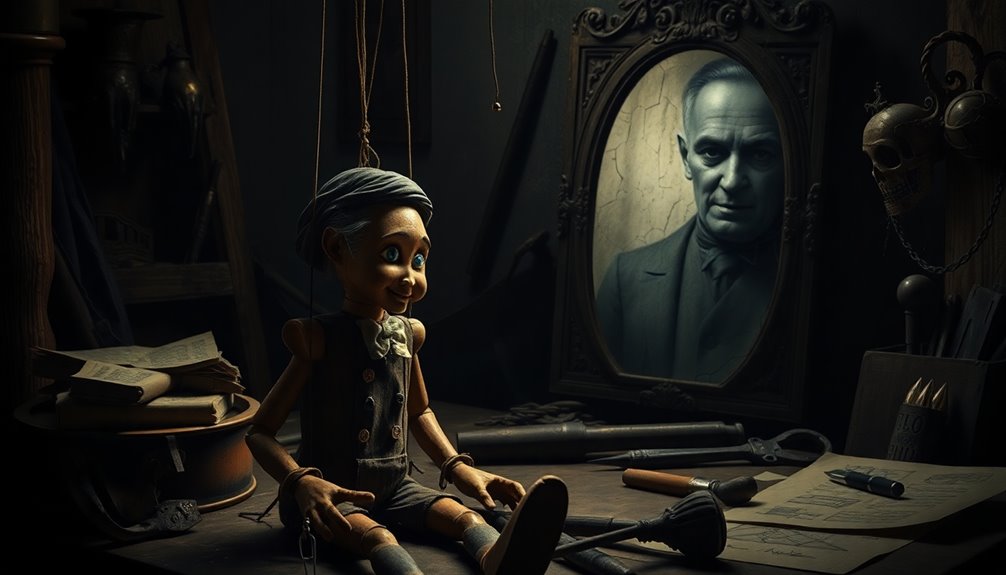
Pinocchio’s dark origins are far more unsettling than the cheerful Disney film most readers know. Carlo Collodi’s The Adventures of Pinocchio first appeared as a serial in 1881 and was published as a book in 1883. In the original, the wooden puppet is impulsive and disobedient, he kills the Talking Cricket, and he suffers punishments that include hanging and near-death experiences.
The book is a cautionary tale about a poor, unruly child in a harsh world. This guide explains what the original contains, what the historical context was, and how Disney changed the story.
Key Takeaways
- Carlo Collodi’s The Adventures of Pinocchio first ran as a serial in the children’s magazine Giornale dei bambini in 1881 and was published as a book in 1883.
- In the original, Pinocchio throws a mallet at the Talking Cricket and kills him, a violent act the 1940 Disney film does not depict.
- The Fox and the Cat rob Pinocchio and then hang him from an oak tree, and he survives only through a rescue.
- A University of Chicago seminar argues that Collodi’s puppet has a seemingly natural attraction to transgressive and delinquent behavior, which sets him apart from the Disney version.
- NPR’s review of Geoffrey Brock’s translation of the 1881 original found the puppet far darker than the Disney version, which still kept traces of the book’s danger.
Who Was Carlo Collodi?
Carlo Collodi was the pen name of Carlo Lorenzini, a Florentine writer born in 1826 who worked as a journalist and wrote satire and children’s stories. Many readers know him only by the pseudonym on the cover. If you are curious why writers take such names, read about why famous authors hide behind pseudonyms.
Collodi’s politics shaped his fiction. He was a supporter of Italian unification, and his writing often mocks pompous authority and the hypocrisy of respectable adults. Those targets appear throughout Pinocchio, which reads as social observation as much as fairy tale.
When Was Pinocchio First Published?
Pinocchio first appeared as a serial in 1881, and the complete book followed in 1883. According to Britannica’s entry on The Adventures of Pinocchio, the serial ran in the children’s magazine Giornale dei bambini.
The publication context matters. Italy had been unified as a kingdom in 1861, and the book’s first readers lived through a period of rapid political and economic change. Those pressures show up in the story’s focus on schooling, poverty and obedience.
Is Pinocchio Really Darker Than the Disney Version?
Yes, the original is considerably darker than the Disney film. Critics have noted the gap for decades, and it is one of the main reasons the book is still discussed as serious literature rather than only as children’s entertainment.
NPR’s review of Geoffrey Brock’s translation of the 1881 original described the puppet as far darker than the Disney version. The reviewer also noted that Disney’s film kept traces of the original’s danger, including puppet masters who love money and boys sold into slavery.
Scholars also point to the puppet’s character. A University of Chicago seminar on Pinocchio’s literary heirs argues that Collodi’s puppet has a seemingly natural attraction to transgressive and delinquent behavior. That trait separates him from the innocent figure many adults remember.
How Violent Is the Original Pinocchio?
The original book contains several scenes of physical harm, death and cruelty that the Disney film removes or softens. Most of the violence follows directly from Pinocchio’s own choices, which is part of what makes the story a warning rather than a simple adventure.
Why Does Pinocchio Kill the Talking Cricket?
Early in the book, the Talking Cricket lectures Pinocchio on his behavior, and the puppet responds by throwing a mallet at him. The blow kills the Cricket. The scene establishes early that Pinocchio has little patience for advice, and that his anger can turn violent.
Do the Fox and the Cat Hang Pinocchio?
Yes. The Fox and the Cat trick Pinocchio into planting his gold coins in a field, then steal them. They later hang him from an oak tree, and he survives only because of a rescue. The episode shows how easily the puppet’s naivety is exploited.
What Hardships Does Geppetto Face?
Geppetto is a poor woodcarver who struggles to provide for his household. In one well-known episode, he sells his only coat to buy Pinocchio a schoolbook. Pinocchio also burns his feet in a fire early in the story, leaving his father to care for him in hardship.
Why Does Pinocchio Behave So Badly?
Pinocchio behaves badly because he is impulsive, lazy and quick to trust the wrong people. Collodi presents ignorance and idleness as the root of his troubles, and each mistake leads to a harsher consequence than the last.

Readers often find these flaws frustrating, but the book treats them as the source of its moral lessons. The main character’s failures are presented as correctable through schooling, work and obedience to a parent.
- Pinocchio runs away from home and trusts strangers who want his money.
- He skips school and chooses pleasure over learning.
- He ignores repeated warnings from Geppetto and the Cricket.
- Each mistake brings a harsher consequence, which the book uses as a lesson.
What Was Collodi Criticizing in Pinocchio?
Collodi used the book’s violence and exploitation to criticize adults, authority and the economic conditions of his time. The text supports this reading through its portrayal of con artists, struggling parents and institutions that fail children, though readers disagree about how far the satire goes.
The main targets include predatory adults who prey on the vulnerable, such as the Fox and the Cat. Geppetto represents the struggles of the poor, and his sacrifices show the financial strain on working families. The book’s emphasis on education and hard work reflects the era’s belief that schooling was a route out of poverty.
Collodi vs. Disney: Key Differences
Collodi’s Pinocchio is harsher, more selfish and more violent than the character most viewers know. Disney kept the basic premise but changed the moral framework, the tone and the fate of several characters.
| Element | Collodi’s original (1881 serial, 1883 book) | Disney film (1940) |
|---|---|---|
| The Talking Cricket | Killed by Pinocchio with a mallet | Survives as Jiminy Cricket, a moral guide |
| Hanging scene | The Fox and the Cat hang Pinocchio | Omitted |
| Pinocchio’s character | Impulsive, selfish and disobedient | Naive and cheerful |
| Geppetto | Poor woodcarver who sells his coat for a schoolbook | Kindly, lonely craftsman |
| Tone | Satirical, violent and morally severe | Lighthearted, musical and sentimental |
How Did Disney Soften the Story?
Disney removed the story’s most disturbing episodes and turned the cricket into a friendly conscience. The result is a family film about being good and wishing upon a star, rather than a satire about a violent, poorly supervised childhood.
Some darker elements survived the adaptation, which is why viewers who return to the book often recognize scenes they half remember. The film is a reinterpretation, not a faithful translation, and it reflects 20th-century expectations about what children should see.
Where Can You Read the Original and Learn More?
The best way to see the difference is to read the original text, preferably in a modern translation. Start with a translation that keeps the narrator’s sharp, sometimes sarcastic voice, then compare it with a film adaptation.
The Fondazione Nazionale Carlo Collodi maintains the Collodian Library, which holds more than 6,000 books on Collodi’s life and work. It includes Italian and foreign editions of Pinocchio and materials on 19th-century Italy, making it a useful resource for students.
- Read the 1883 book, not only the Disney film or picture books.
- Note how often Pinocchio’s choices lead to harm, and what the narrator says afterward.
- Compare two translations to see how the tone changes.
- Look at the historical context of post-unification Italy.
If you want more short reads of this kind, see this guide to short classic books you can finish in an afternoon.
What Is the Legacy of the Dark Original?
The original Pinocchio endures because it works on several levels, as a warning for children and a satire for adults. Its characters, from the Fox and the Cat to the Talking Cricket, remain widely recognized long after the book’s first readers have gone.
Classic stories often change as they move into popular culture, and folklore and adaptation shape how new readers encounter them. The same process affects other famous tales, as explored in the real history and folklore behind Alice in Wonderland.
Frequently Asked Questions
Is the original Pinocchio a horror story?
The original is not a horror novel, but it contains frightening scenes of violence, near-death and cruelty. Its tone is closer to a dark fable or satire than to the gentle fairy tale most people remember. Readers who expect a light adventure are often surprised by how grim it becomes.
Did Disney remove the hanging scene?
Yes, the Disney film does not include the hanging scene from the original book. The film also changes the Talking Cricket’s fate, turning him into Jiminy Cricket, a friendly guide who survives. NPR noted that the film still kept some of the original’s danger.
Who wrote the original Pinocchio?
Carlo Collodi, the pen name of Carlo Lorenzini, wrote the original story. It first appeared as a serial in the children’s magazine Giornale dei bambini in 1881. The complete book was published in 1883.
Is the original Pinocchio appropriate for children?
It depends on the child and the reader’s age, and many children read the book in school. The violence is brief but serious, and the book can prompt useful conversations about consequences and obedience. Parents may want to read it first and decide how to discuss the darker scenes.
Why is Pinocchio called a cautionary tale?
The story shows what happens when a child ignores advice, trusts the wrong people and avoids school and work. Each mistake brings a harsher consequence, which is the basic structure of a cautionary tale. The lesson is that bad choices carry real costs.
Conclusion
Pinocchio’s dark origins are not a footnote to the Disney classic; they are the core of Collodi’s book. The original is violent, morally severe and sharply satirical, and it asks readers to think about obedience, poverty and the failures of the adults around a child. If you want the full story, read the 1883 text and compare it with the film, and you will see how much of the book’s edge was softened over time.