
Last updated: · By Thomas Reed
The Alice mushrooms are one of the most discussed details in Alice in Wonderland, yet the book never names the fungus. The mushroom most often linked to the story is the red-and-white fly agaric (Amanita muscaria), and that link comes mainly from folklore and later interpretation rather than from any documented choice by Lewis Carroll. This guide explains where the story came from, what the text actually says, why the fly agaric became the favorite candidate, and where the drug readings of the 1960s came from.
Key Takeaways
- Lewis Carroll first told the story on a boating trip on the Thames in 1862, and the book first appeared on July 4, 1865.
- The text never identifies the species of the mushroom Alice eats, so the fly agaric identification is an interpretation.
- In fairyland imagery, the mushroom is usually the red-and-white fly agaric, not the psilocybin-bearing liberty cap.
- Fly agaric contains muscarine, muscimol and ibotenic acid, and its effects are unpredictable, which makes it an unreliable psychedelic.
- No documented evidence shows Carroll wrote the book to describe drug use; the drug reading grew mainly during the 1960s counterculture.
Where Did Alice in Wonderland Come From?
The story began as a spoken tale on a real afternoon. According to The Morgan Library & Museum, its online exhibition on 150 years of Wonderland notes that Carroll improvised the tale in 1862 on a boating trip on the Thames for the Liddell sisters, including Alice Liddell. In 1864 he handed Alice Liddell a finished handwritten manuscript, and the published book followed in 1865.
Carroll was a pen name. The author was Charles Lutwidge Dodgson, a logician and mathematician who also worked as a photographer and novelist. Encyclopaedia Britannica’s biography of Lewis Carroll describes him this way and identifies Alice’s Adventures in Wonderland (1865) and its 1871 sequel, Through the Looking-Glass, as his best-known works. For more on why writers of this period used alternate names, read why famous authors hide behind pen names and secret identities.
The first printed edition has a specific publication history. EBSCO Research Starters on the book’s publication reports that it first appeared on July 4, 1865, and that the reprint carries the date 1866 because it was ready by Christmas 1865. Knowing this timeline helps you separate the original text from the many later readings built on top of it.
Does the Book Actually Name the Mushroom?
No. The book never names the species of the mushroom in the caterpillar scene. The Caterpillar tells Alice that one side of the mushroom will make her grow taller and the other side will make her grow shorter, and she breaks off pieces to test the effect on her size.
That silence is important. Any claim that Carroll chose a specific mushroom is an inference from later art, folklore and commentary. Students writing about the book should quote the text for what it says and label anything beyond that as interpretation.
Why Is the Fly Agaric Linked to Alice’s Mushroom?
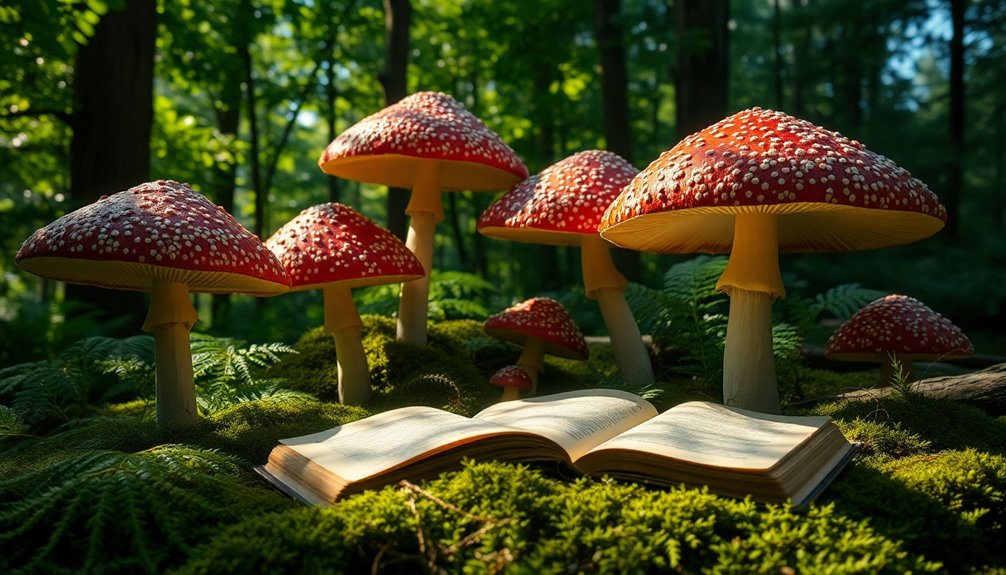
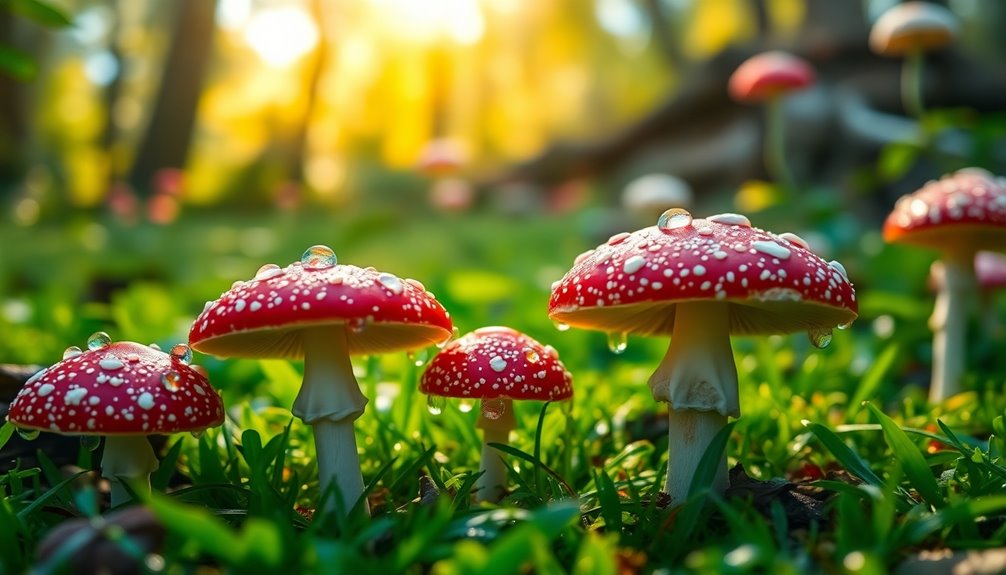
The fly agaric is the mushroom most often linked to Alice because it is the classic fairyland mushroom in European imagery. The Public Domain Review’s essay on fungi, folklore and fairyland explains that the fairyland mushroom motif in literature is usually the red-and-white fly agaric rather than the psilocybin-bearing liberty cap. Its bright cap and white spots make it instantly recognizable in illustrations, which is why readers reach for it when they picture Wonderland.
Folk tradition also gives the fly agaric a mysterious reputation. Stories about transformation and strange encounters often appear in the same folk settings, which is one reason readers connect the mushroom to Alice’s shifting size. If you want to see how folk tradition handles magic and transformation in other tales, compare it with common folklore methods for breaking a curse.
The fly agaric and the liberty cap are often confused in popular writing, but they differ in important ways. The table below summarizes the contrast.
| Feature | Fly agaric (Amanita muscaria) | Liberty cap (psilocybin mushrooms) |
|---|---|---|
| Typical appearance | Bright red cap with white spots | Small, brownish cap |
| Main active compounds | Muscarine, muscimol and ibotenic acid | Psilocybin |
| Effects | Unpredictable, with risks such as nausea and confusion | More reliable at set doses |
| Role in Alice interpretations | The usual fairyland mushroom in illustrations | Rarely the image readers picture |
Did Lewis Carroll Intend the Alice Mushrooms as Drug References?
There is no documented evidence that Carroll wrote the story to describe drug use. The drug reading is a later interpretation, and historians who study his life have not found records tying him to psychedelic mushrooms. The question remains open because it depends on reading symbols rather than on confirmed statements from the author.
What Does the Text Actually Show?
The text shows dreamlike logic, sudden size changes and nonsense conversations. These features fit a Victorian tradition of nonsense and children’s fantasy, where characters are confused by rules that do not make sense. Size shifts are a central comic device, and they do not require a drug explanation to work as storytelling.
What Does the Caterpillar’s Hookah Symbolize?
The Caterpillar smokes a hookah while questioning Alice, and this image is often cited as proof of drug content. The book does not say what is in the hookah, and the scene mainly signals that the Caterpillar is an unsettling, adult figure who speaks in riddles. Treat the hookah as a symbol of the story’s odd, grown-up world rather than as a confirmed drug reference.
How Did Alice Become a Psychedelic Symbol in the 1960s?
The psychedelic reading of Alice became popular in the 1960s, when counterculture writers and artists reinterpreted children’s classics. The most famous example is Jefferson Airplane’s song “White Rabbit” (1967), which borrows Alice imagery to describe altered states of mind. The song made the connection between Wonderland and hallucinogens part of popular culture.
Visual adaptations followed the same path. Jonathan Miller’s 1966 BBC adaptation embraced surreal, dreamlike imagery, and Alice in Acidland (1969) explicitly tied the story to drug experimentation. Critics still debate whether such works promote drug use or warn against it, and the debate says as much about the decade as it does about Carroll. Themes of forbidden knowledge also appear in novels like Donna Tartt’s The Secret History, a study of dark academia and moral ambiguity.
What Was Curious Alice, and Did It Work?
Curious Alice was a 1971 educational film designed to warn children about drug use. It used Wonderland imagery and animation to make its message appealing to young viewers. The film is a notable example of how the Alice story was repurposed for public messaging rather than for entertainment alone.
Whether the film succeeded is debated. Supporters credit its use of familiar characters to hold children’s attention, while critics question whether the imagery made drug experiences seem more appealing. Its unusual history shows why Alice became such a flexible symbol in both counterculture and public education.
What Are the Biggest Myths About Amanita Muscaria?
The most common myth is that the fly agaric is a safe or reliable psychedelic. In fact, its effects are unpredictable and the mushroom is toxic. Use this checklist to sort fact from myth:
- Myth: It is a safe, reliable hallucinogen. Fact: Its alkaloids produce unpredictable effects, unlike the more consistent doses associated with psilocybin.
- Myth: Its name shows that it is edible. Fact: The name “fly agaric” reflects a historical use against flies, not safe consumption.
- Myth: Every culture that uses it treats it the same way. Fact: Some cultures use it ritually, but its compounds differ from those in psilocybin mushrooms.
- Myth: Foragers can identify it by looks alone. Fact: Similar-looking species exist, so identification should always be confirmed by a qualified mycologist.
How Should Students Read the Alice Mushrooms Today?
Read the Alice mushrooms as a literary symbol first and a botanical or pharmacological claim second. The steps below help you build a sound argument about the mushroom and its meaning.
- Quote the caterpillar scene directly and note exactly what the text says about size and the mushroom.
- Mark where the fly agaric identification enters, and whether it comes from illustrations, later adaptations or critics.
- Check dates. Separate the 1865 text from 1960s readings and 1970s films.
- Compare at least two sources before stating that Carroll intended a drug meaning.
- State your claim as an interpretation and support it with a quotation or documented fact.
Frequently Asked Questions
Does Alice in Wonderland Mention Magic Mushrooms?
The book mentions a mushroom that changes Alice’s size, but it never names the species or uses the term magic mushroom. The idea that the mushroom is a psychedelic comes from later readings and adaptations. For a strict reading, describe the mushroom as an unnamed fungus with size-changing effects.
Did Lewis Carroll Take Drugs?
There is no documented evidence that Carroll used psychedelic mushrooms. The claim is based on later interpretation of his work rather than on records of his life. Serious students should treat it as an open speculation rather than an established fact.
Is Amanita Muscaria Safe to Eat?
No. The fly agaric is toxic, and its effects are unpredictable, including nausea and confusion. Do not eat it or prepare it based on folklore or online claims.
What Is the Difference Between Fly Agaric and Psilocybin Mushrooms?
The fly agaric contains muscarine, muscimol and ibotenic acid, while psilocybin mushrooms contain psilocybin. The fly agaric is known for unpredictable effects, and psilocybin is more reliable at set doses. The two are different species with different chemistry, so they should not be treated as interchangeable.
Was Curious Alice a Real Film?
Yes. Curious Alice was released in 1971 as an educational film meant to warn children about drug use. It combined animation with Wonderland imagery and remains a frequently cited example of the story’s reuse in public messaging.
Why Is Alice Linked to the 1960s?
The 1960s counterculture reinterpreted children’s classics, and Alice’s dreamlike world suited that mood. Songs such as “White Rabbit” and adaptations such as Jonathan Miller’s 1966 BBC version helped establish the link. The connection grew from cultural reinterpretation, not from documented intent by Carroll.
Conclusion
The Alice mushrooms are a rich part of the story’s afterlife, but they are not a documented feature of Carroll’s text. The fly agaric became the favorite image through folklore and illustration, and the drug reading took shape mainly in the 1960s. If you read Alice in Wonderland closely, you can enjoy the mushroom as a symbol of change while keeping the facts clear.