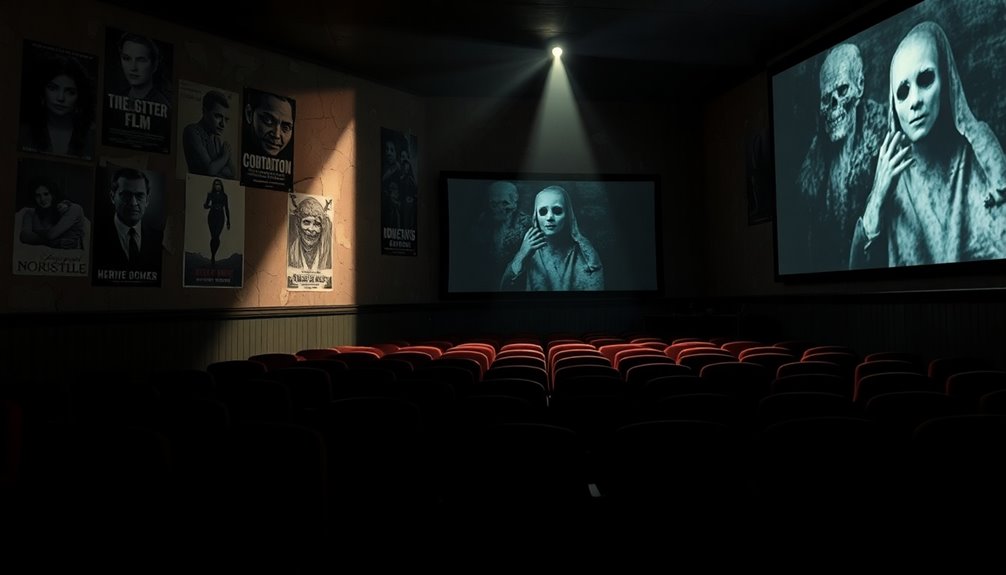
Black and white horror movies still chill audiences today with their eerie visuals and complex themes. They tap into deep psychological fears, using innovative sound design and lighting techniques to evoke dread. Iconic films like *Nosferatu* and *Psycho* showcase a potent blend of atmosphere and character development. These timeless classics continue to influence modern horror, making them enthralling for today’s viewers. Discover more about these haunting gems and what makes them unforgettable.
The Enduring Allure of Black and White Horror
Themes of isolation and madness, present in *Cat People* and *The Haunting*, resonate with modern anxieties, showcasing timeless fears. The cultural legacy of black-and-white horror films continues to inspire filmmakers, pushing boundaries while maintaining that unsettling allure that keeps you on edge. Notably, the intricate plots of these films often mirror the complexity found in timeless literature, blending suspense with deep psychological themes.
How Cinematic Techniques Heighten Fear
Sound design in *The Haunting* relied on ambient noises, shifting focus to psychological horror and evoking dread. Ultimately, unexpected plot twists in films like *Psycho* manipulated your expectations, making the emotional impact and fear even more profound. These techniques make black-and-white horror movies truly chilling, illustrating the significance of courage in confronting the unknown and unsettling.
Iconic Films That Shaped the Genre
Black-and-white horror films have left an indelible mark on the genre, shaping the way fear is portrayed on screen.
Classics like *Nosferatu* (1922) revolutionized filmmaking with its eerie visuals, ensuring its survival despite legal battles.
*Frankenstein* (1931) introduced audiences to a sympathetic creature, blending themes of creation and monstrosity, enhanced by groundbreaking makeup.
*Cat People* (1942) took a psychological approach, using suggestion over graphic imagery to explore sexual repression.
Meanwhile, *The Cabinet of Dr. Caligari* (1920) employed expressionist techniques, presenting an unreliable narrator that deepened its unsettling atmosphere.
Finally, *The Haunting* (1963) captivated viewers with psychological tension, proving that black and white horror can chill without relying on explicit scares.
Each of these films shaped the genre profoundly, echoing the aestheticism and moral corruption themes that resonate through artistic expressions of fear.
Psychological Themes in Classic Horror
** In classic black-and-white horror, you’ll find rich psychological themes that unravel guilt and obsession. These films often tap into your fear of the unknown, forcing you to confront unsettling truths about human nature. This exploration mirrors the themes of inherent human evil found in literature like *Lord of the Flies*, illustrating the darkness that can emerge when societal structures collapse.
Unraveling Guilt and Obsession
While horror often evokes fear through monsters and mayhem, its psychological depths reveal the haunting effects of guilt and obsession.
In Eyes Without a Face, Dr. Genessier’s toxic obsession drives him to commit horrific acts for his daughter, showcasing how guilt can warp love into something destructive.
Repulsion illustrates a woman’s mental breakdown as unresolved guilt leads to terrifying hallucinations, highlighting the fragility of sanity.
In The Innocents, the governess grapples with her guilt over the children’s dark past, creating a suffocating dread.
M presents Hans Beckert, whose guilt over his crimes spirals into a chilling psychological turmoil, while What Ever Happened to Baby Jane? reveals how sibling rivalry and guilt can manifest into obsession, leading to devastating consequences.
Fear of the Unknown
Amidst the shadows of classic horror, the fear of the unknown grips viewers, drawing them into a psychological labyrinth where certainty dissolves. Films like *The Haunting* (1963) masterfully exploit this fear, using psychological tension to unsettle rather than relying on explicit scares.
In *Cat People* (1942), the lurking danger surrounding Irena’s character amplifies suspense, reflecting deeper themes of identity.
*Nosferatu* (1922) presents Count Orlok as a figure shrouded in mystery, embodying dread and the fear of the unknown.
Meanwhile, *The Cabinet of Dr. Caligari* (1920) uses expressionist techniques to create paranoia, blurring reality and illusion.
Ultimately, *Eyes Without a Face* (1960) dives into identity crises, leaving you haunted by the unknown facets of humanity.
The Role of Sound in Black and White Horror
Sound plays an essential role in shaping the atmosphere of black and white horror films, often elevating the tension to unsettling heights. The absence of color shifts focus to innovative sound design, which creates a chilling ambiance that enhances psychological horror.
Sound is pivotal in black and white horror films, heightening tension and crafting a chilling ambiance that amplifies psychological fear.
Here are three key aspects of sound in these films:
- Eerie Effects: Sounds like creaking floors and distant whispers amplify dread, making you feel the presence of unseen threats.
- Minimalistic Scores: Subtle musical cues evoke fear, letting your imagination fill in the gaps, as seen in *The Haunting* (1963).
- Silence and Sound Interplay: The balance between quiet and noise immerses you deeper into the experience, forcing you to confront your own fears.
These elements remind you that sound can be as impactful as visuals in evoking terror. Additionally, the narrative’s psychological horror often relies on sound to create an immersive experience that resonates deeply with viewers.
Unforgettable Characters and Their Impact
In black and white horror movies, unforgettable characters shape our understanding of fear and identity.
You’ll see how figures like Irena and the Phantom not only embody psychological complexity but also leave a lasting mark on our culture.
Their stories resonate deeply, inviting reflection on the darker aspects of human nature. This exploration of moral ambiguity parallels the intricate character dynamics found in Donna Tartt’s *The Secret History*.
Iconic Horror Figures
Horror cinema has gifted us with unforgettable characters that linger in our minds long after the credits roll.
Black and white horror films introduced iconic figures who shaped the genre and redefined fear. Here are three characters that stand out:
- Count Orlok from *Nosferatu* (1922) – His grotesque form and eerie presence created the template for vampire lore.
- The Creature in *Frankenstein* (1931) – Played by Boris Karloff, he evokes sympathy, blurring the lines between monster and human.
- Norman Bates in *Psycho* (1960) – Anthony Perkins’ chilling portrayal of duality revolutionized the concept of villainy in horror.
These characters not only haunt our memories but also continue to influence modern horror storytelling.
Psychological Depth Explored
The unforgettable characters of black and white horror films often serve as gateways into deeper psychological themes.
Take Dr. Genessier from *Eyes Without a Face*, whose obsession with beauty reveals the destructive nature of societal standards. You’ll find yourself questioning reality alongside the unreliable narrator in *The Cabinet of Dr. Caligari*, challenging your perceptions of sanity.
In *Repulsion*, Catherine Deneuve’s mental breakdown illustrates how psychological issues lead to horrific actions, creating an unsettling atmosphere.
Meanwhile, *The Uninvited* intertwines ghostly hauntings with emotional depth, enhancing the narrative’s psychological impact.
Finally, Boris Karloff’s creature in *Frankenstein* complicates the nature of evil, evoking sympathy and exploring themes of creation and responsibility, resonating with you on a profound psychological level.
Lasting Cultural Influence
While many films come and go, the unforgettable characters from black and white horror movies have left an indelible mark on popular culture.
These figures not only shaped the genre but also influenced modern storytelling in profound ways. Here are three key impacts:
- Archetypes: Characters like Count Orlok and Frankenstein’s Monster set the standard for horror icons, inspiring countless adaptations.
- Empathy: Boris Karloff’s portrayal blurred lines between monster and human, sparking conversations about monstrosity that echo today.
- Psychological Complexity: Films like *The Haunting* emphasized mental dread, paving the way for deeper emotional narratives in contemporary horror.
The legacy of these black-and-white horror films continues to resonate, reminding us of the power of haunting figures to shape our fears and fascinations.
Exploring the Visual Aesthetics of Black and White
Films such as *The Haunting* prioritize atmosphere over special effects, demonstrating the power of visuals in horror storytelling. This unique aesthetic has become a hallmark of the genre, enabling filmmakers to manipulate lighting and shadow, leaving a lasting impact on viewers. The emotional depth in these films often parallels the complexities of love and loss, illustrating how personal experiences shape broader narratives.
The Evolution of Horror From Silent to Contemporary
As you explore the evolution of horror, you’ll notice how silent films like *Nosferatu* laid the groundwork with their innovative visual storytelling. The shift to sound brought a new layer of intensity, shifting narrative techniques to heighten psychological terror. This journey from the shadows of early cinema to today’s complex narratives reveals the lasting impact of those foundational techniques, including the Gothic themes that continue to inspire modern horror.
Silent Film Innovations
- Expressive Acting: Actors conveyed intense emotions through exaggerated movements, making fear palpable even without dialogue.
- Creative Use of Shadows: Filmmakers manipulated lighting and angles to create suspense and evoke terror, enhancing the atmosphere.
- Atmospheric Soundscapes: While silent, many films incorporated music and ambient sounds that set the mood, influencing future sound design.
These innovations laid the foundation for the evolution of horror, proving that the impact of silent horror films endures in contemporary cinema.
Shifts in Narrative Techniques
While silent horror films laid the groundwork for the genre, the evolution of narrative techniques transformed how stories are told. Early black-and-white horror films, like *The Cabinet of Dr. Caligari*, introduced expressionistic visuals and unreliable narrators, setting a foundation for narrative complexity.
With the advent of sound, filmmakers began using dialogue and sound design to amplify suspense, as seen in *The Haunting*. Character development took center stage in films like *Psycho*, where intricate arcs and unexpected twists kept audiences on edge.
Additionally, movies like *Invasion of the Body Snatchers* incorporated social commentary, reflecting cultural anxieties. Today, modern horror blends genres and employs advanced cinematography, building on these classic techniques to resonate with contemporary viewers.
Cult Classics: Hidden Gems in Black and White Horror
Cult classics in black and white horror often slip under the radar, yet they offer a rich tapestry of chilling narratives and unique aesthetics. Here are three hidden gems that showcase the genre’s versatility:
- Brand Upon the Brain (2006) – This film blends classic horror with silent film storytelling, immersing you in a haunting atmosphere through its unique narration.
- Spider Baby (1967) – Merging black comedy with horror, it explores mental decline in children, delivering both laughs and chills through its sympathetic characters.
- Carnival of Souls (1962) – With its surreal narrative, this film follows a woman unraveling after a car accident, creating a haunting experience that lingers long after viewing.
Each of these films showcases the depth and creativity of black and white horror, making them must-sees for genre enthusiasts, much like the complex relationships explored in *The Help*, which reflect the emotional depth of human experiences.
Why Do These Films Continue to Haunt Modern Audiences?
Why do black and white horror films still resonate with modern audiences? These films, like *Cat People* and *Nosferatu*, use stark contrasts and shadows to create an unsettling atmosphere that heightens psychological tension.
They often rely on suggestion-over-show techniques, tapping into your imagination and making the horror feel deeply personal. Themes of alienation and obsession in classics like *The Cabinet of Dr. Caligari* echo today’s societal fears, keeping their relevance alive.
Furthermore, pioneering sound design and cinematography in films like *The Haunting* show how effectively visuals and sound can evoke dread.
The lasting legacy of these black and white horror films inspires remakes, ensuring their chilling themes continue to haunt audiences long after their initial release.
Recommendations for a Spine-Chilling Movie Night
For a spine-chilling movie night, you can’t go wrong with a selection of black and white horror classics that promise to keep you on the edge of your seat.
These films masterfully blend atmosphere, suspense, and psychological thrills. Here are three must-watch black and white horror films:
Masterfully blending atmosphere, suspense, and psychological thrills, these black and white horror films are essential viewing for any fright night.
- Nosferatu (1922) – This groundbreaking adaptation of *Dracula* sets the standard for vampire lore with its eerie visuals and haunting score.
- The Haunting (1963) – Renowned for its subtle scares, it uses sound design to create an unsettling experience that lingers long after the credits roll.
- Cat People (1942) – A pioneer in suggestion over explicit horror, this film explores themes of identity and repression, offering a chilling atmosphere that captivates.
Grab your popcorn and prepare for a night of thrills!
Conclusion
In the dim glow of your living room, as the credits roll on a classic black and white horror film, you might feel like you’ve opened a forgotten door to a haunted past. Just like a shadowy figure lurking in the corner, these films remind us that fear transcends time. They echo the primal instincts within us, proving that sometimes, the scariest monsters are the ones we can’t see—just waiting for the right moment to strike.