

Rethinking the role of white mothers in literature reveals how maternalism shaped racial identities and family dynamics. You see this through the narratives of mixed-heritage authors like Rebecca Carroll, who challenge conventional views on race and belonging. White women have often been framed as superior caregivers, reinforcing colonial ideals while inflicting trauma on Indigenous families. This complicated relationship highlights the emotional weight and cultural disconnect many struggle with today—continue to explore these themes and their profound impact.
The Role of Maternalism in Colonial Policies
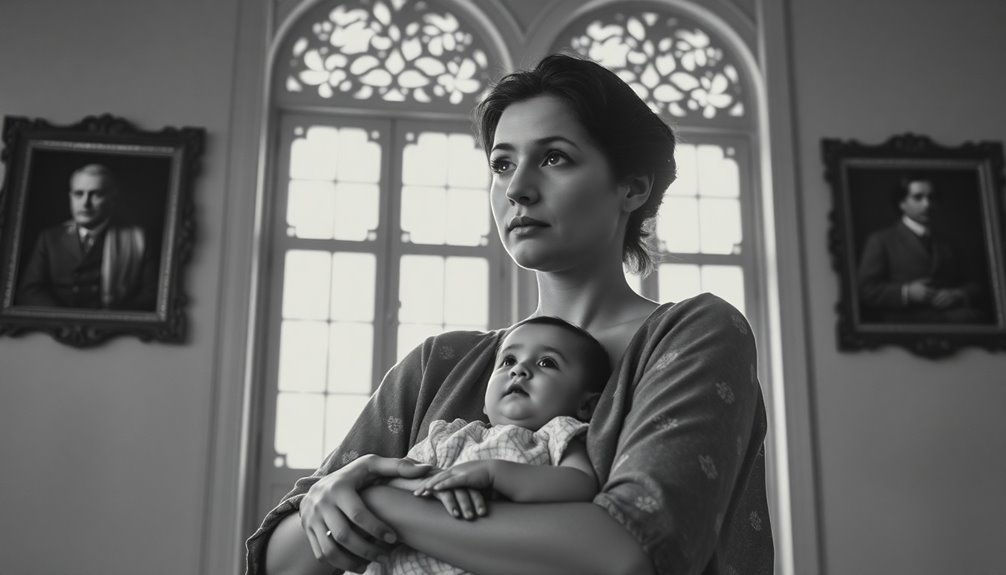
Maternalism considerably shaped colonial policies by framing white women as ideal caretakers, justifying their involvement in the removal of Indigenous children. You see, this ideology positioned white women as morally superior, leading to the belief that Indigenous mothers were “unfit.” These child-removal policies aimed at assimilation stripped Indigenous children of their cultural identities, deepening the trauma within their communities. While white women engaged in maternalist movements with a sense of care, these actions often perpetuated colonial harm and cultural disconnection. The systemic racism inherent in these policies echoes through history, revealing how maternalism rationalized the oppression of Indigenous families. This legacy of systemic oppression continues to resonate in contemporary discussions about race and identity.
Unpacking the Historical Context of Child Removal
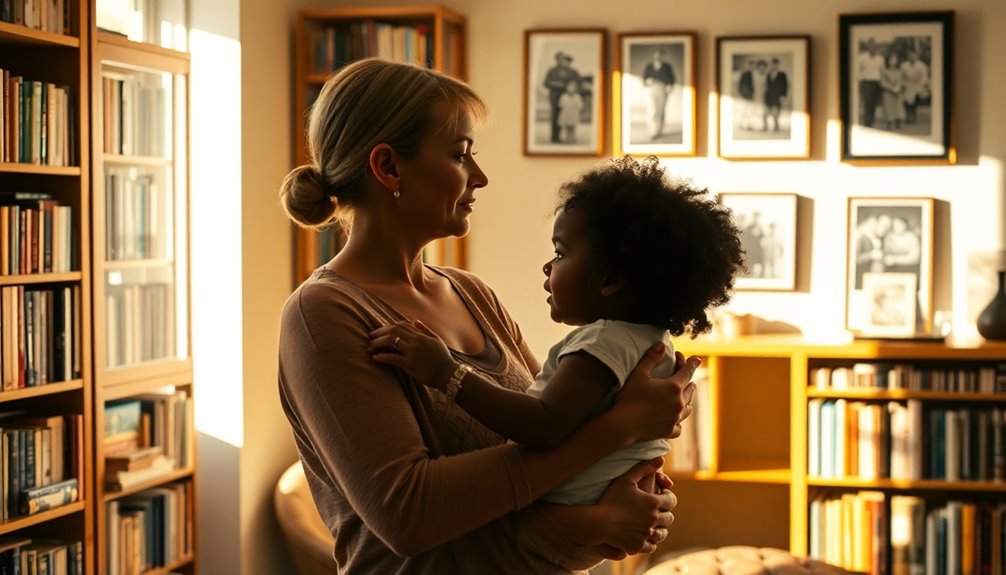
In exploring the historical context of child removal, you’ll see how policies framed as benevolent often masked deep-seated racism and trauma. These measures targeted Indigenous families under the guise of maternalism, positioning white women as superior caregivers. Understanding this connection reveals the lasting impact on cultural identity and familial structures today. This dynamic mirrors the systemic racism depicted in Richard Wright’s *Native Son*, highlighting the intersection of racial oppression and family structures that continue to affect marginalized communities.
Historical Policies Overview
As you explore the historical context of child removal policies, it’s essential to understand the late 19th to early 20th centuries, when both the U.S. and Australia implemented widespread practices aimed at Indigenous children.
Framed as benevolent efforts, these policies deemed Indigenous mothers “unfit,” revealing deep-seated racism and ethnocentrism. The removal of children often led to trauma, severing familial bonds and disrupting cultural heritage.
Assimilation schools employed harsh methods, stripping children of their identities through renaming and cultural derision.
Comparative analyses of these policies highlight shared ideologies rooted in colonialism, emphasizing the long-lasting impacts on Indigenous communities.
Understanding this history is vital in rethinking race, family, and the legacies that continue to affect these populations today.
Maternalism and Colonialism Link
While examining the link between maternalism and colonialism, it becomes clear that the nurturing ideals of the late 19th to early 20th centuries were often weaponized to justify the removal of Indigenous children. This approach led to profound trauma and cultural disconnection.
Key factors include:
- Perception of ‘Unfit’ Mothers: Settler nations deemed Indigenous mothers inadequate, positioning white women as better caretakers.
- Government-sanctioned Assimilation: Child removal policies were framed as benevolent acts, masking the harsh realities of cultural erasure.
- Shared Motivations: A comparative analysis of U.S. and Australian policies reveals a foundation of racism and economic interests driving these actions.
These policies exemplify the complexities of maternalism intertwined with colonialism, resulting in devastating impacts on Indigenous communities.
How White Women Became Agents of Assimilation

In exploring how white women became agents of assimilation, you’ll see how maternalism shaped their roles in child removal policies. These women often believed they could provide a superior upbringing for indigenous children, viewing their own cultural values as the ideal. This assumption not only disregarded the children’s heritage but also led to lasting trauma in indigenous communities. Such dynamics reflect systemic racism that persists in various forms, impacting marginalized groups across generations.
Role of Maternalism
The role of white women in the assimilation of Indigenous children reveals a troubling intersection of maternalism and colonialism.
These women acted as agents of a maternalism movement, believing they could better nurture and educate Indigenous children than their biological mothers. This belief perpetuated several harmful practices:
- White women implemented child-removal policies, viewing them as compassionate acts.
- They formed nurturing relationships with Indigenous children while ignoring the cultural disconnection and trauma caused by assimilation.
- Their actions often masked the colonial violence inherent in these policies.
This paradox highlights how maternalism was co-opted to justify oppression, demonstrating a complex dynamic where the compassion of white women contributed to the dismantling of Indigenous families and cultures.
Assumptions of Superiority
Believing they were inherently more capable, many white women embraced their roles as agents of assimilation, viewing Indigenous mothers as “unfit” to raise their own children. This perspective was rooted in a maternalism that framed their actions as benevolent, yet it perpetuated systemic violence and reinforced racial hierarchies.
By removing Indigenous children, white women aimed to “civilize” them, often stripping away cultural identity through renaming and enforced derision in boarding schools. While some white women formed genuine bonds with these children, many others contributed to the erasure of heritage, disrupting the transmission of cultural legacies.
This complex interplay of care and harm continues to resonate, leaving lasting trauma in Indigenous communities and challenging the narrative of maternal benevolence.
The Psychological Impact of Assimilation on Indigenous Children
Assimilation practices inflicted deep psychological wounds on Indigenous children, often severing their ties to culture and family. This removal led to significant trauma, manifesting through:
- Cultural disconnection: Children lost their heritage, leading to a fractured sense of identity.
- Intergenerational trauma: The emotional scars of forced removal ripple through families, affecting mental health and relationships.
- Reinforced inequalities: Many were prepared for servitude rather than equality, perpetuating systemic injustices.
The harsh methods used in boarding schools, like renaming and haircutting, stripped Indigenous children of their individuality.
The harsh techniques of boarding schools erased individuality, forcing Indigenous children into a mold that denied their true selves.
The repercussions echo today, impacting contemporary Indigenous families as they navigate disrupted dynamics and ongoing struggles. Additionally, fostering healing and empowerment is essential for overcoming the lasting effects of these traumatic experiences.
Understanding this psychological impact is vital for fostering healing and cultural revival.
Racial Identity and Its Complexities in Literature
As you explore the complexities of racial identity in literature, you’ll find that characters often grapple with the intricate interplay of their heritage, community, and personal experiences.
Works like *Surviving the White Gaze* and *Raceless* investigate the struggles of those with mixed heritage, maneuvering societal expectations and the emotional weight of their identities.
These narratives reveal how familial relationships can be both nurturing and fraught with misunderstandings about race, leading to feelings of isolation.
Literature critiques societal pressures and highlights how cultural norms and historical contexts shape personal narratives. Additionally, the exploration of systemic racism in works like *Native Son* underscores the profound impact of societal oppression on identity formation and personal choices.
Memoirs That Challenge Racial Narratives
Both Rebecca Carroll and Georgina Lawton share their journeys of traversing a world that often ignores their true selves.
These stories challenge you to rethink the narratives surrounding race and family, highlighting the complexities of belonging and recognition. Additionally, their experiences resonate with the themes of systemic racism that profoundly affect individual identities and societal perceptions.
Racial Identity Exploration
When exploring racial identity, memoirs like Rebecca Carroll’s “Surviving the White Gaze” and Georgina Lawton’s “Raceless” provide powerful insights into the struggles of growing up Black in primarily white families.
These narratives reveal the emotional struggles faced by children maneuvering mixed-race identities within environments marked by familial silence. They challenge societal expectations and illustrate the impact of white mothers who often deny their daughters’ cultural roots.
Key themes include:
- The profound confusion stemming from a lack of acknowledgment of racial identity.
- The isolation resulting from the denial of Black heritage.
- The necessity of cultural acknowledgment to foster understanding and connection.
These memoirs underscore the importance of recognizing and celebrating racial identity within family dynamics.
Parental Influence on Identity
Growing up in environments where your racial identity isn’t acknowledged can profoundly shape your sense of self.
Memoirs like *Surviving the White Gaze* and *Raceless* reveal the impact of parental influence on mixed-race identities, particularly for Black girls raised by white mothers.
Georgina Lawton’s narrative highlights the emotional toll of her mother’s refusal to acknowledge her Black heritage, leaving her feeling isolated.
These stories emphasize the love within family dynamics, yet expose a critical lack of acknowledgment that hinders understanding.
As you navigate mainly white spaces, the struggle for representation and recognition becomes a constant challenge, creating a cultural disconnection that complicates your identity.
These memoirs challenge narrow racial narratives and underscore the importance of understanding heritage.
The Intersection of Race and Family Dynamics
While maneuvering through the complexities of identity, literature often reveals how race intertwines with family dynamics, shaping characters’ experiences in profound ways. You see mixed-race individuals, like those in Georgina Lawton’s *Raceless*, grappling with the tension of having white parents who ignore their racial heritage. This tension can lead to isolation and confusion.
Here are some key themes that emerge:
- Maternal figures often impose societal expectations of whiteness, complicating identity for their children.
- Hidden racial histories, as explored by Gail Lukasik, reveal how family dynamics suppress truths about race.
- Narratives critiquing assimilation highlight the erasure of indigenous identities and the emotional scars of historical injustices.
These elements illustrate the intricate relationship between race and family. Additionally, characters like Bigger Thomas in Richard Wright’s *Native Son* demonstrate how systemic oppression can profoundly impact family dynamics and individual identity.
Contemporary Reflections on Colonial Legacies
Colonial legacies continue to shape narratives in contemporary literature, revealing the lasting scars of historical injustices on marginalized communities.
Authors like Margaret D. Jacobs explore how white women, through maternalism, perpetuated colonial ideologies that affected Indigenous children. The trauma inflicted by child removal policies remains a potent theme, highlighting the struggles of mixed-race individuals as they navigate race and identity.
Works like Jacobs’ *White Mother to a Dark Race* illustrate these complex dynamics, questioning familial relationships and cultural heritage.
Memoirs, such as Gail Lukasik’s exploration of her grandfather’s racial identity, further emphasize the intersections of race and family, urging society to confront hidden histories. Additionally, literature often reflects the systemic racism that shapes personal identities and societal interactions.
Ultimately, literature serves as a crucial space for acknowledgment and representation of these ongoing legacies.
Analyzing the Emotional Resonance in Literary Works
**
Emotional resonance in literary works exploring race and family invites readers into the intricate struggles of identity and belonging.
These narratives often highlight:
- The emotional impact of maternalism and colonialism, underscoring the trauma of child removal policies on Indigenous families.
- Personal stories that reveal the complexities of familial love and the conflicts of racial identity, as seen in memoirs like *Surviving the White Gaze*.
- The use of vivid imagery and anecdotes to convey cultural disconnection and the weight of racial secrets.
Through this lens, authors challenge you to confront the legacies of colonialism, prompting a deeper understanding of how love and recognition intersect within diverse family dynamics.
Additionally, works like *Native Son* emphasize the impact of systemic oppression on familial relationships, inviting reflection on your own perceptions of identity and belonging.
The Influence of Societal Expectations on Identity
Literature not only captures the emotional landscape of race and family but also reveals how societal expectations shape personal identity. For women of mixed race, maneuvering cultural norms often feels like walking a tightrope.
Authors like Georgina Lawton and Rebecca Carroll show how white parents’ neglect of their daughters’ racial identities fosters isolation and confusion.
The neglect of racial identity by white parents can lead to profound isolation and confusion for their mixed-race daughters.
Gail Lukasik’s journey through her family’s hidden heritage highlights the emotional complexities of reconciling societal perceptions with personal identity.
Standards of beauty and behavior, pushed by charm schools and media, create restrictive norms that complicate acceptance in primarily white societies.
Ultimately, the narrative of racial identity intertwines with behavioral expectations and the pursuit of social mobility, considerably impacting how you define yourself. In this context, the idea of immigrant resilience becomes essential as individuals navigate their identities in a society that often overlooks their struggles.
Lessons From Cultural Representations in Film and Media
While films and media often reflect societal norms, they also challenge and reshape our understanding of race and family dynamics. You can learn valuable lessons about cultural narratives through various representations:
- Identity Struggles: Mixed-race characters, like those in Rebecca Carroll’s and Georgina Lawton’s stories, highlight the complexities of racial identity and the impact of family dynamics.
- Social Expectations: Iconic films such as “Giant” and “A Place in the Sun” shape perceptions of femininity, especially for women of color, emphasizing the pressure to conform to societal ideals.
- Emotional Legacies: The exclusion of African American women from beauty pageants illustrates systemic racism, revealing the profound emotional legacies that affect storytelling and identity formation in media.
Engaging With Related Literature on Race and Family
Films and media provide a rich backdrop for exploring race and family, but engaging with literature deepens your understanding of these themes. Works like *Surviving the White Gaze* and *Raceless* unpack the complexities of racial identity and familial ties, especially for those raised by parents of different races.
Gail Lukasik’s memoir reveals how hidden racial heritage shapes maternalism and familial dynamics, illustrating the impact of historical barriers on identity. These narratives offer powerful representation, highlighting the struggles for recognition in largely white spaces.
Additionally, shared experiences in grief groups showcase trauma and emotional intricacies, reinforcing the importance of storytelling in traversing race and family. Delving into these texts can transform your perspective on identity and belonging.
Conclusion
In examining the intersections of race and family, you might think that focusing on white maternalism oversimplifies complex histories. However, understanding how white women shaped colonial policies reveals deeper dynamics of power and identity. By challenging traditional narratives, you gain insight into the emotional landscapes of those affected. This exploration not only enriches your perspective on literature but also invites you to reflect on the broader implications of race and family in contemporary society.