
Yorgos Lanthimos’s adaptation of “Poor Things” captivates you with its fresh take on identity and autonomy. It blends fantasy and reality, challenging societal norms and exploring deep themes of self-identity amidst constraints. The film’s unique visual style heightens emotional depth, while complex characters navigate moral dilemmas that resonate today. Critics praise its bold storytelling and innovative narrative structure, making “Poor Things” a significant cultural artifact. Discover how this vision reshapes cinematic expectations.
The Essence of Alasdair Gray’s “Poor Things”
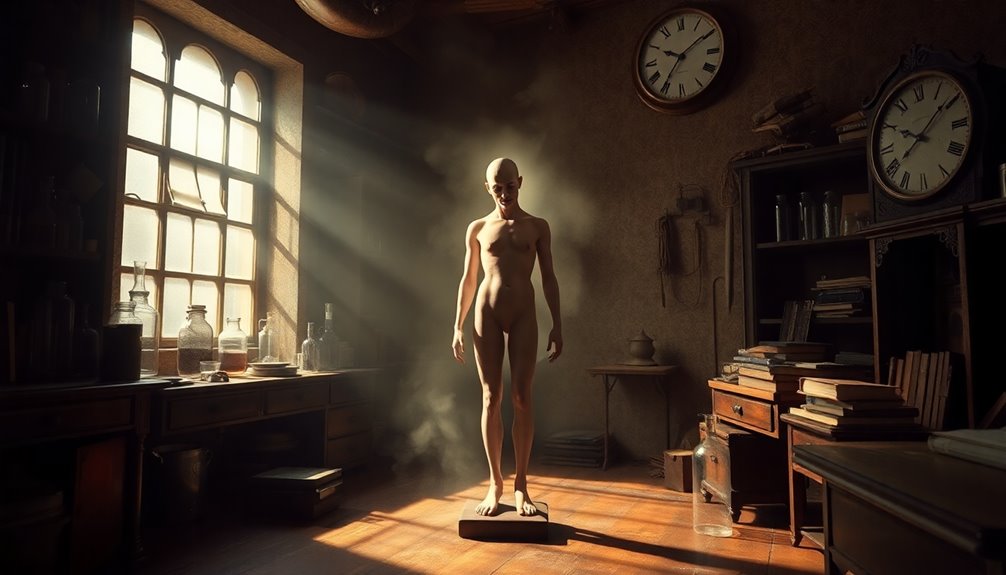
In “Poor Things,” Alasdair Gray masterfully blends fantasy and reality, crafting a narrative that explores themes of identity and autonomy. You’ll find that Gray’s unique style challenges traditional storytelling, inviting you to question societal norms and personal freedom.
His vivid characters, particularly Bella Baxter, embody the struggle for self-definition in a world filled with constraints. As you explore the text, you’ll notice how Gray’s literary influence extends beyond mere entertainment; it sparks critical thought about gender roles and the nature of existence.
This narrative doesn’t just entertain; it compels you to reflect on your own identity and choices. Gray’s work pushes boundaries, making “Poor Things” an essential read for anyone seeking deeper understanding in literature. Additionally, much like Bigger Thomas’s journey in Richard Wright’s “Native Son,” the exploration of self-identity in Gray’s work reveals the profound impact of societal constraints on personal freedom.
How Yorgos Lanthimos Transforms the Source Material
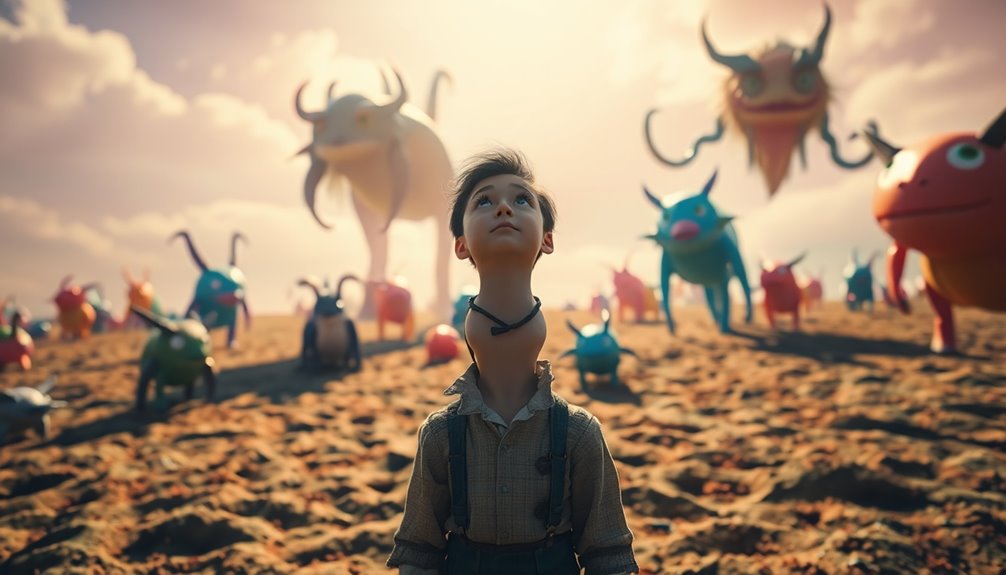
In “Poor Things,” Yorgos Lanthimos puts his unique spin on the source material through striking visual choices that captivate your attention.
He also reimagines character development, adding depth and complexity that wasn’t as pronounced in the original.
Plus, the altered narrative structure keeps you engaged, shifting your perspective on the story in unexpected ways. Additionally, his adaptation mirrors the intricate plot twists found in Agatha Christie’s works, enhancing the suspense and engagement for the audience.
Unique Visual Aesthetic Choices
While adapting the source material for *Poor Things*, Yorgos Lanthimos infuses the film with a striking visual style that redefines its narrative.
His use of a bold color palette enhances visual symbolism, drawing you into the story’s emotional core.
Framing choices create dynamic movement, guiding your eye and emphasizing key moments.
The lighting techniques evoke mood, casting shadows that deepen the film’s themes.
Costume design plays a vital role, reflecting character evolution and societal norms.
Set aesthetics are meticulously crafted, immersing you in a unique world that feels both familiar and surreal.
This combination of imagery impact and movement dynamics elevates the film, transforming the source material into a visually enthralling experience that resonates on multiple levels.
Character Development Innovations
Yorgos Lanthimos reimagines character development in *Poor Things*, breathing new life into the source material.
You’ll notice how he crafts complex character arcs that reveal emotional depth, allowing you to connect with each character’s transformative journeys. The relationship dynamics shift dramatically, highlighting the impact of internal conflicts and moral dilemmas faced by the characters.
As you investigate deeper, you’ll witness identity shifts that challenge traditional roles and expectations. Characters’ motivations become more nuanced, driving their actions in unexpected directions.
Lanthimos invites you to explore these intricacies, making each character’s journey feel both personal and universal. This innovative approach not only enriches the narrative but also encourages you to reflect on your own understanding of identity and morality.
Altered Narrative Structure
Building on the innovative character arcs, Lanthimos also transforms the narrative structure of *Poor Things*, creating a unique storytelling experience. He employs narrative experimentation that pushes boundaries and invites you to engage deeply.
Here’s how he achieves this storytelling evolution:
- Non-linear timelines keep you guessing, enhancing suspense.
- Multiple perspectives offer a richer understanding of characters and themes.
- Fragmented scenes reflect the chaotic nature of the protagonist’s journey.
- Surreal elements challenge conventional storytelling, making you question reality.
Through these techniques, Lanthimos crafts a narrative that not only captivates but also provokes thought.
You’re not just a passive viewer; you’re an active participant in this reimagined world.
Key Themes Explored in “Poor Things”
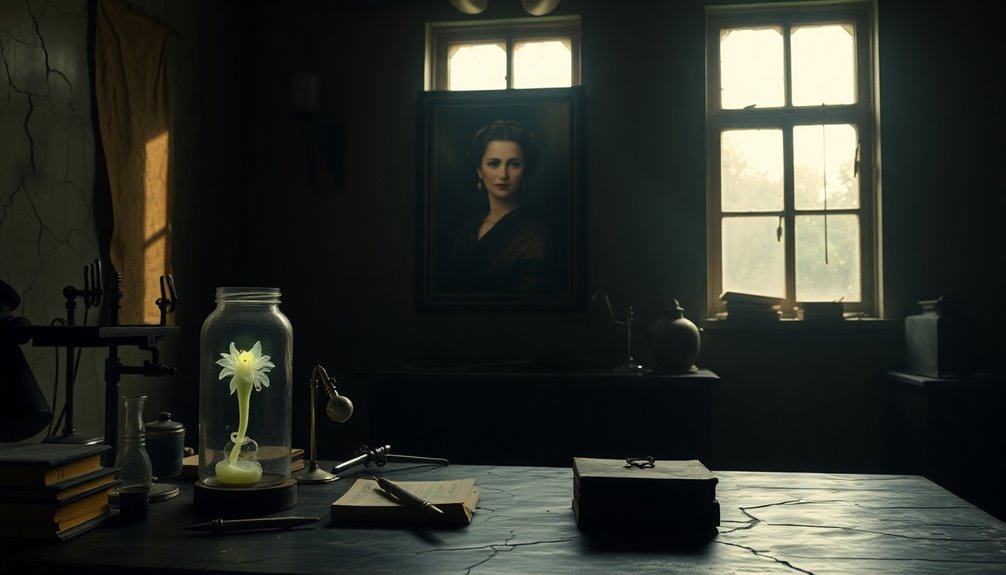
As you plunge into “Poor Things,” you’ll find that the narrative explores profound themes such as identity, autonomy, and the nature of humanity. The identity exploration unfolds through surreal elements, challenging your perceptions.
You’ll notice character contrasts that highlight autonomy themes, pushing against societal norms. Visual symbolism adds layers to this thematic depth, enriching your understanding of the characters’ journeys.
Character contrasts illuminate themes of autonomy, challenging societal norms and deepening our appreciation of their transformative journeys.
Lanthimos’s narrative innovation masterfully intertwines societal critique with poignant commentary on gender dynamics and class disparities. Each scene invites you to reflect on how these themes resonate with contemporary issues.
Ultimately, “Poor Things” isn’t just a story; it’s a compelling examination of human existence, urging you to question the very fabric of identity and societal roles. Engaging with emotional independence can deepen your insight into the characters’ struggles for autonomy and self-definition.
The Role of Identity in Lanthimos’s Adaptation
While exploring the surreal world of “Poor Things,” you’ll find that identity isn’t just a backdrop but a central force driving the narrative.
Lanthimos crafts a complex tapestry of identity exploration, where characters undertake a self-discovery journey rife with psychological depth.
The film highlights:
- Character autonomy: Each character navigates their own path, challenging societal norms.
- Personal transformation: Identities shift as characters confront existential themes.
- Narrative identity: The story weaves a rich critique of societal expectations.
- Societal critique: Through absurdity, Lanthimos exposes the fragility of identity in a rigid society.
As you engage with these layers, you’ll uncover the profound implications of identity and its role in shaping the characters’ realities, paralleling the exploration of sexual identity found in Baldwin’s *Giovanni’s Room*.
Autonomy and Agency: A Deep Dive
In “Poor Things,” autonomy and agency emerge as essential themes that shape characters’ journeys and decisions. You’ll notice how the autonomy exploration allows characters to define their paths, challenging societal norms and expectations.
Through their actions, they assert their right to choose, demonstrating that true freedom comes from self-determination. Agency representation is vital here; it illustrates the struggle against external forces that seek to control or define them.
Through their choices, characters embody self-determination, highlighting the tension between personal freedom and external control.
As you investigate deeper into the narrative, you’ll see how these themes intertwine, revealing the complexities of choice in a world that often limits it. Notably, the characters’ experiences echo the systemic oppression and racial inequalities found in works like “Native Son,” which further emphasizes the impact of systemic injustice on personal autonomy.
Ultimately, Lanthimos invites you to reflect on what it means to truly own one’s life, making this adaptation resonate on multiple levels.
Surrealism and Visual Style: What to Expect
**
In “Poor Things,” you’ll encounter a distinctive visual aesthetic that transforms the mundane into the extraordinary.
The dreamlike narrative techniques pull you into a world where reality bends and shifts in unexpected ways.
Get ready to experience a blend of surrealism that challenges your perception and sparks your imagination.
This unique visual storytelling mirrors the transformative power of nature, inviting viewers to explore deeper themes of healing and self-discovery.
Distinctive Visual Aesthetic
- Bold color palettes that clash and harmonize, creating striking visuals.
- Unconventional framing techniques that alter your perception of space.
- Eccentric character designs that embody their psychological states.
- Layered imagery that invites multiple interpretations.
This unique style not only enhances the narrative but also makes you question the boundaries of life and identity.
In *Poor Things*, every visual element serves a purpose, deepening your engagement with the story.
Dreamlike Narrative Techniques
As you explore *Poor Things*, you’ll quickly notice the dreamlike narrative techniques that blur the lines between reality and imagination.
Yorgos Lanthimos employs dreamlike symbolism to create a world where the bizarre and the familiar intertwine seamlessly. This narrative fluidity invites you to lose yourself in a landscape where emotions and thoughts take on a surreal form, challenging your perception of what’s real.
Characters morph and evolve in unexpected ways, reflecting the complexities of identity and existence. You’ll find yourself captivated by the way scenes shift, evoking a sense of disorientation that enhances the story’s themes.
This unique approach not only enriches the viewing experience but also encourages deeper contemplation of the human condition.
Character Analysis: Who Are the Central Figures?
Here are the key players:
- Bella Baxter – A complex character grappling with her identity and autonomy.
- Dr. Godwin Baxter – The ambitious scientist whose obsession with creation complicates relationships.
- Duncan Wedderburn – A charming yet flawed figure, representing societal ideals and contradictions.
- The Narrator – An insightful observer, guiding you through the emotional landscapes of each character.
Each figure not only contributes to the plot but also highlights the nuanced connections that shape their world, making the adaptation truly compelling. The exploration of gender roles in “Poor Things” resonates with similar themes found in Laura Esquivel’s work, enriching the narrative’s depth.
The Societal Expectations Reflected in the Film
In “Poor Things,” you’ll see how the film challenges traditional gender roles, forcing you to question societal norms.
It vividly illustrates class struggles, highlighting the stark divides that shape characters’ lives.
You’ll also notice a tension between conformity and individuality, pushing you to reflect on your own place within these expectations.
Gender Roles Explored Deeply
Exploring gender roles in “Poor Things” reveals how societal expectations shape identity and behavior.
The film’s nuanced approach offers a rich feminist critique, challenging traditional gender stereotypes through:
- Identity exploration that highlights the fluidity of self-perception.
- Empowerment narratives that resonate with modern relevance, showcasing characters defying norms.
- Role reversal that subverts expectations, illustrating the absurdity of rigid gender roles.
- Cultural commentary that provokes thought about the impact of societal pressures on personal freedom.
Class Struggles Illustrated Vividly
Class struggles in “Poor Things” vividly illustrate how societal expectations can trap individuals in their circumstances.
You see the stark class disparity as characters navigate a rigid societal hierarchy that dictates their lives. The economic divide manifests in power dynamics, with the wealthy exploiting the labor struggles of the lower classes.
You can’t help but notice the limited social mobility, as characters grapple with their positions in the unforgiving landscape of wealth distribution.
This film brings class conflict to the forefront, making you reflect on how these struggles shape identities and choices.
Conformity Versus Individuality Tension
While societal expectations loom large, “Poor Things” masterfully unravels the tension between conformity and individuality.
You see characters grappling with conformity pressures, revealing profound truths about their struggles.
The film invites you to reflect on:
- The weight of societal norms that stifle individuality expression.
- The courage it takes to defy expectations and embrace authenticity.
- The consequences of succumbing to external pressures on personal identity.
- The transformative power of self-discovery through rebellion.
Critical Reception: How Is It Being Reviewed?
As critics explore *Poor Things*, they’re praising its bold storytelling and unique visual style. Many critical perspectives highlight how Yorgos Lanthimos captures the essence of the source material, blending dark humor with thought-provoking themes.
You’ll notice that reviews often commend the film’s visual aesthetics, describing it as a feast for the eyes. Audience reactions have been equally enthusiastic, with viewers captivated by the film’s eccentric characters and imaginative narrative.
Some fans appreciate how it challenges traditional norms, sparking discussions about identity and autonomy. Overall, the film is generating a buzz, with critics and audiences alike recognizing its artistic ambition and cultural significance, making it a standout piece in contemporary cinema. Additionally, the film echoes themes of personal freedom, resonating with the ongoing dialogue about autonomy and resistance in today’s society.
Why “Poor Things” Matters in Today’s Cultural Landscape
- Existential Themes: It explores the essence of what it means to be human.
- Feminist Critique: The narrative boldly questions gender roles and empowerment.
- Visual Storytelling: Its striking visuals enhance the emotional depth of the narrative.
- Identity Exploration: The characters undertake journeys that reflect our own struggles for self-definition.
- Historical Context: The film’s narrative resonates with themes of healthcare disparities that challenge our understanding of societal norms and injustices.
What Does This Adaptation Mean for Future Film Interpretations?
Given the innovative approach of “Poor Things,” this adaptation sets a new benchmark for future film interpretations. By blending surrealism with poignant themes, it challenges filmmakers to explore deeper cultural implications.
You’ll notice that this film doesn’t just retell a story; it reinvents it, urging audiences to confront societal norms in fresh ways. As you think about future adaptations, consider how this film encourages creators to push boundaries, embrace diverse narratives, and foster unique perspectives.
The success of “Poor Things” signals that viewers are ready for bold storytelling. It invites you to wonder: what can future adaptations achieve when they prioritize originality and cultural relevance? Moreover, this film’s approach resonates with the need for authentic narratives that reflect the complexities of societal issues. This film could very well inspire a new wave of cinematic creativity.
Conclusion
In “Poor Things,” you witness a mesmerizing dance between identity and autonomy, a vivid tapestry woven from Alasdair Gray’s brilliance and Lanthimos’s unique vision. As the film unfolds, it challenges societal norms, urging you to question what it means to truly be alive. This adaptation isn’t just a retelling; it’s a mirror reflecting our own struggles for agency in a chaotic world. In its haunting beauty, it invites you to embrace your own narrative and forge your path.