Movies based on Shakespeare bring timeless themes like love, ambition, and jealousy to life, reflecting their enduring relevance across cultures. Iconic directors transform classic texts with unique styles, while modern adaptations like *O* and *Gnomeo & Juliet* offer fresh interpretations. You’ll find powerful performances and innovative cinematic techniques that breathe new life into these narratives. Explore how these films highlight Shakespeare’s impact and discover the exciting future of adaptations waiting for you.
Why Shakespeare’s Works Are Timeless Adaptations
These films investigate themes like love, jealousy, and ambition, allowing fresh explorations in various genres. This global cinematic landscape, including Indian adaptations like “Omkara,” highlights how Shakespeare’s timeless themes continue to engage and inspire filmmakers, making his works perpetually relevant. Additionally, the exploration of identity in Shakespeare’s plays resonates with the same depth seen in contemporary family sagas like “The Thorn Birds.”
The Best Classic Adaptations of Shakespeare
When you explore classic adaptations of Shakespeare, you’ll find timeless themes that resonate across cultures and eras.
Iconic directors like Orson Welles and Akira Kurosawa brought their unique styles to these stories, creating memorable cinematic experiences.
With standout performances that breathe new life into beloved characters, these films continue to impact audiences today. Many adaptations, like those of Agatha Christie’s works, showcase intricate plots that captivate viewers.
Timeless Shakespearean Themes
While timeless themes of ambition, jealousy, and betrayal resonate throughout Shakespeare’s works, filmmakers have often sought to reinterpret these narratives in fresh, compelling ways.
In Orson Welles’ *Chimes at Midnight*, you see a unique adaptation that blends multiple plays, focusing on Falstaff with a noirish flair.
Akira Kurosawa’s *Ran* offers a grand take on *King Lear*, using thousands of extras to explore leadership failures.
Roman Polanski’s *Macbeth* presents a raw portrayal of tragedy, capturing horror reflective of his personal experiences.
Meanwhile, Kurosawa’s *Throne of Blood* recontextualizes *Macbeth* in a samurai setting, critiquing ambition and corruption.
Each of these adaptations showcases Shakespeare’s timeless themes, proving their relevance across cultures and eras.
Iconic Directorial Styles
The best classic adaptations of Shakespeare showcase distinct directorial styles that breathe new life into his timeless narratives. Orson Welles’ *Chimes at Midnight* creatively melds multiple plays, emphasizing Falstaff through expressive lighting and low-angle shots.
In contrast, Akira Kurosawa’s *Ran* reimagines *King Lear* within a feudal Japanese setting, using vibrant colors and an epic score to highlight chaos and leadership.
Roman Polanski’s *Macbeth* brings a gritty edge, employing innovative cinematography that intensifies horror and violence.
Kurosawa’s *Throne of Blood* critiques post-war Japanese imperialism while retaining the original’s themes of ambition.
Together, these iconic directorial styles reflect how Shakespeare adaptations can resonate across cultures and eras, transforming classic texts into visually stunning experiences.
Memorable Performances and Impact
Iconic directorial styles in classic Shakespeare adaptations not only shape the visuals but also elevate the performances, making them unforgettable.
In Chimes at Midnight, Orson Welles masterfully blends multiple plays, showcasing Falstaff’s complexity through striking cinematography.
Kurosawa’s Throne of Blood reimagines Macbeth with samurai elements, offering a poignant critique of ambition and corruption, while delivering memorable performances that resonate deeply.
Polanski’s Macbeth captures raw violence and psychological horror, reflecting personal turmoil that enhances its intensity.
Similarly, Welles’ Othello employs innovative low-angle shots and shadow-play, creating a Gothic atmosphere that amplifies its dramatic tension.
Each film stands as a cinematic masterpiece, proving that innovative adaptations can breathe new life into Shakespeare’s timeless narratives.
Modern Takes: How Contemporary Films Reinterpret the Bard?
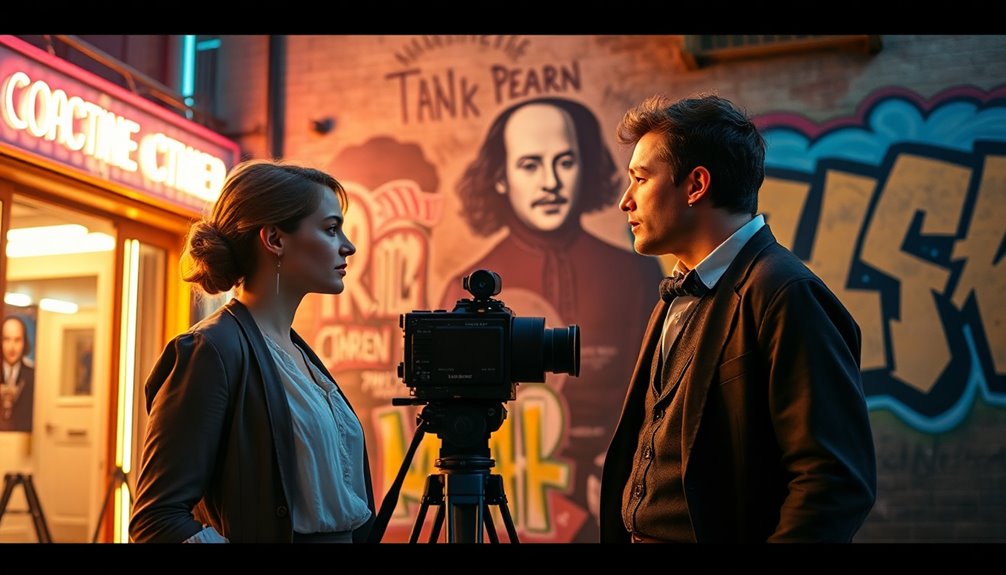
How do contemporary films breathe new life into Shakespeare’s timeless themes? Modern takes on Shakespeare’s plays often adapt them to fit our current realities, making them relatable and fresh.
For instance, *10 Things I Hate About You* transforms *The Taming of the Shrew* into a high school romcom, while *O* reimagines *Othello*, addressing race and jealousy within a teenage context.
Similarly, *My Own Private Idaho* shifts the focus of *Henry IV* to street hustlers, highlighting urban vulnerability.
My Own Private Idaho reimagines Henry IV, exploring themes of urban vulnerability through the lives of street hustlers.
Baz Luhrmann’s *Romeo + Juliet* captivates younger audiences with its modern visuals and music, yet retains the original dialogue.
Even Vishal Bhardwaj’s adaptations, like *Haider*, bring local cultural elements into play, showcasing the universal themes of power and betrayal that resonate across time. Additionally, these films often emphasize the importance of cultural identity and tradition, reflecting how Shakespeare’s explorations of human emotion remain relevant today.
Unique Interpretations: Creative Twists on Shakespearean Themes
When you explore adaptations of Shakespeare, you’ll find unique twists that breathe new life into his themes.
Films like “Tromeo and Juliet” and “O” show how his stories can be reimagined in modern contexts, making them relevant today.
These creative interpretations not only entertain but also highlight the enduring nature of Shakespeare’s insights into human experience.
Modern Adaptations Redefined
While Shakespeare’s themes are timeless, modern adaptations breathe new life into his works by recontextualizing them for today’s audience.
You’ll find that films like *10 Things I Hate About You* cleverly turn *The Taming of the Shrew* into a relatable teen rom-com.
In *Romeo + Juliet*, vibrant visuals and modern settings reinvigorate the classic tragedy, making it feel fresh and urgent.
*My Own Private Idaho* shifts the narrative focus to street hustlers, exploring identity through elements of *Henry IV*.
Meanwhile, *O* gives a high school twist to *Othello*, tackling race and jealousy.
Ultimately, *Were the World Mine* transforms *A Midsummer Night’s Dream* into a musical that embraces LGBTQ themes, creating an engaging new narrative.
Cultural Contextualization of Themes
Shakespeare’s themes resonate across cultures and time periods, leading filmmakers to creatively reinterpret his works in unique ways. These adaptations often shift settings and contexts, making them relevant to contemporary audiences.
Here are some standout examples:
- *O* (2001) transforms *Othello* into a high school drama, exploring race and jealousy.
- *My Own Private Idaho* (1991) reinterprets *Henry IV*, delving into identity and vulnerability among street hustlers.
- *Gnomeo & Juliet* (2011) offers a light-hearted take on *Romeo and Juliet*, appealing to younger viewers with core themes of love.
- *Omkara* (2006) relocates *Othello* to rural India, blending cultural nuances with jealousy and caste dynamics.
These reinterpretations showcase how Shakespeare’s themes continue to thrive in diverse contexts.
Exploring Cultural Context in Shakespearean Films
Though Shakespeare’s themes often emerge from a distinct historical context, filmmakers have skillfully adapted his works to resonate with diverse cultural backgrounds.
Modern adaptations like *10 Things I Hate About You* and *My Own Private Idaho* shift Shakespeare’s narratives to contemporary settings, exploring themes of love and identity.
Akira Kurosawa’s *Throne of Blood* and *Ran* reinterpret the themes of ambition and leadership through Japanese history, showcasing the timeless nature of the Bard’s works.
Vishal Bhardwaj’s films, such as *Omkara* and *Maqbool*, incorporate Indian cultural nuances, revealing how Shakespeare’s plays resonate within different frameworks.
These adaptations enhance emotional depth while emphasizing universal themes, proving the lasting relevance of Shakespeare’s insights across cultures. Additionally, similar to Baldwin’s exploration of queer identity, these films challenge societal norms and reflect the complexities of human relationships.
The Impact of Cinematic Techniques on Shakespeare Adaptations
Cinematic techniques play an essential role in shaping how Shakespeare’s works are interpreted on screen, enhancing both emotional depth and thematic resonance. You’ll see how different adaptations utilize these techniques to create compelling narratives:
- *Chimes at Midnight* (1965) uses low-angle shots and expressive lighting to amplify dramatic tension.
- In *Ran* (1985), bright colors and large-scale battles visually depict chaos, echoing *King Lear*’s original themes.
- *Macbeth* (1971) features visceral cinematography that starkly contrasts traditional decorum, emphasizing horror.
- The minimalist sets in *The Tragedy of Macbeth* (2021) create an eerie atmosphere, heightening psychological tension.
These adaptations showcase how effective cinematic techniques can deepen your understanding of the original text while enriching the overall viewing experience. Additionally, the exploration of moral ambiguity in these adaptations mirrors the complexities found in works like *The Secret History*, enhancing their dramatic impact.
Awards and Recognition: Celebrating Shakespeare on Screen
While many classic works have been adapted for the screen, few have achieved the acclaim that Shakespeare’s plays have garnered in film. Adaptations like *Hamlet* (1948) set a high standard, winning Academy Awards for Best Picture and Best Actor.
Similarly, *Macbeth* (1971) earned critical acclaim for its intense portrayal of tragedy, showcasing Shakespeare’s darker themes. Orson Welles’ *Chimes at Midnight* (1965) is celebrated for its innovative blend of works, while Akira Kurosawa’s *Ran* (1985) won Best Foreign Language Film, highlighting Shakespeare’s global impact.
Kenneth Branagh’s *Henry V* (1989) further solidified Shakespeare’s relevance in modern filmmaking, earning recognition for its realistic depiction of war.
These awards and accolades affirm the enduring legacy of Shakespeare on screen.
Future of Shakespeare Adaptations in Cinema
As filmmakers continue to explore Shakespeare’s timeless themes, the future of adaptations promises to be both innovative and engaging. Here’s what to expect:
- Contemporary Adaptations: Expect fresh takes on classic narratives that resonate with modern contexts, addressing social issues like race and gender dynamics.
- Global Influence: International filmmakers will create culturally resonant interpretations, expanding Shakespeare’s reach beyond Western audiences.
- New Technologies: Streaming platforms will facilitate broader access to Shakespeare adaptations, allowing diverse audiences to engage with these stories.
- Experimental Storytelling: The mix of traditional and experimental formats will appeal to both classic literature enthusiasts and newcomers alike.
- Historical Context: Filmmakers may draw inspiration from historical mystery novels to incorporate rich narratives that resonate with Shakespeare’s themes of power and corruption.
These elements will guarantee that Shakespeare adaptations remain relevant and vibrant in today’s cinematic landscape.
Conclusion
As you wander through the cinematic forest of Shakespearean adaptations, you’ll find vibrant trees of creativity and flowers of interpretation blooming all around you. Each film invites you to dance with the ghosts of the Bard’s characters, revealing timeless truths that resonate today. Just like the seasons change, so too will these stories evolve, reminding you that art, like life, is an ever-turning wheel of inspiration. Embrace the journey; the Bard’s magic awaits in every frame.