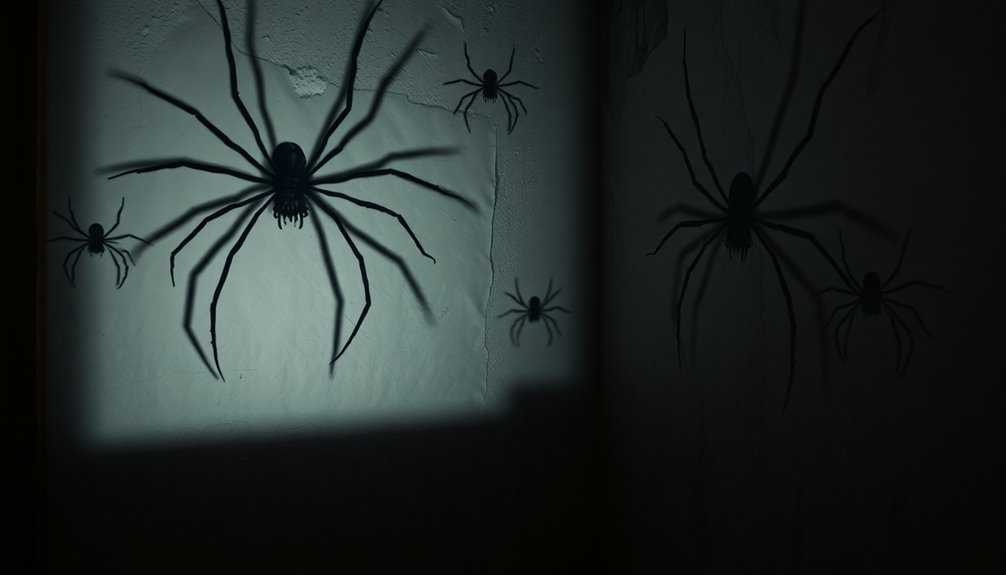
Scary spider drawings tap into deep-rooted fears linked to our evolutionary instincts and childhood experiences. You might remember those unexpected encounters that left a lasting impression. Cultural beliefs further amplify this fear, often portraying spiders as symbols of bad luck or danger. Artistic exaggerations heighten anxiety, as large eyes and long legs evoke panic. These images don’t just scare; they reflect our complex emotions. Explore how this fear shapes art and what it reveals about our psyche.
The Origins of Arachnophobia
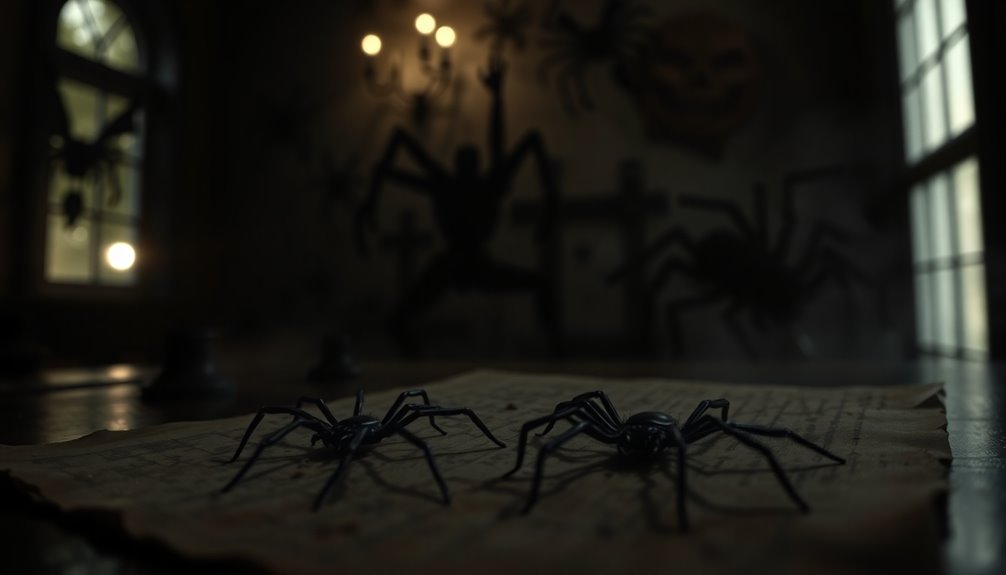
Many people don’t realize that arachnophobia, the intense fear of spiders, likely has deep evolutionary roots. You might fear spiders like the black widow due to a heightened sensitivity developed over millennia. This survival instinct helped our ancestors avoid potentially dangerous creatures.
Studies show that negative experiences or cultural narratives surrounding spiders can amplify these fears. When you see a spider, your body instinctively reacts—your heart races and you may even hyperventilate. These physiological responses link back to primal instincts, pushing you to steer clear of perceived threats.
Cultural beliefs also play a role, often painting spiders as symbols of bad luck or malevolence, further entrenching your fear of them. Understanding these origins can help you confront your fears. Additionally, exploring hidden histories of human interactions with nature reveals how fears have evolved over time.
How Childhood Experiences Shape Our Fears
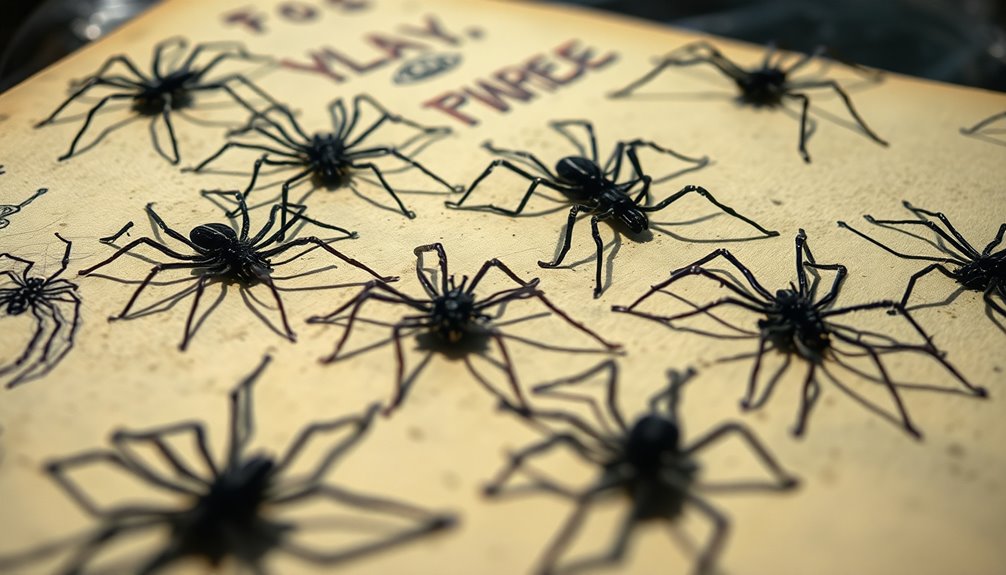
Think back to your childhood encounters with spiders—those unexpected moments can stick with you.
Whether it was a spider crawling out of your clothes or a scary story from a friend, these experiences shape how you view these creatures.
Add in cultural beliefs about spiders, and it’s no wonder many people carry these fears into adulthood.
Early Encounters With Spiders
While you mightn’t remember every detail of your childhood, those unexpected encounters with spiders—whether they crawled out of your clothes or surprised you in the shower—can leave a lasting impact.
You might recall the panic of stumbling upon a big, black spider, feeling your heart race as you screamed or gasped for air. These moments often trigger strong emotional reactions, planting seeds of fear that flourish into anxiety later in life.
Tales of spiders multiplying after being squished only deepen your dread, reinforcing negative associations with these creatures. Even if you share a laugh about these experiences today, they shape your perception, making it easy to understand why so many people become afraid of spiders as adults.
Cultural Influences on Fear
Cultural influences often shape how you perceive spiders, blending your childhood experiences with societal narratives. Unexpected encounters, like finding a spider in your clothes, can create lasting fears that follow you into adulthood.
These pivotal moments often turn black and white; you either love them or fear them. Cultural beliefs, such as the idea that killing a spider brings bad luck, deepen this aversion, reinforcing anxiety.
Personal stories reveal how these encounters, combined with media portrayals emphasizing spiders’ creepiness, shape your perceptions.
Psychological studies suggest that early exposure to these fearful stimuli conditions your response, making it tough to shake off arachnophobia later in life. Your childhood experiences, colored by cultural influences, form a lasting impression of fear.
The Role of Cultural Beliefs in Spider Anxiety

Cultural beliefs play a huge role in your feelings about spiders. From folklore that paints them as cunning to superstitions that warn against harming them, these narratives can intensify your anxiety. Understanding these influences can help you unpack why spiders evoke such fear in many people. Additionally, the psychological impact of fear can be traced back to historical narratives that shape our perceptions of certain creatures.
Cultural Symbolism of Spiders
Throughout history, various cultures have woven spiders into their narratives, often linking them to bad luck and misfortune. These cultural myths shape how you perceive spiders, intensifying your fear narratives.
In many societies, spiders symbolize deceit and danger, fostering anxiety whenever you encounter them. The belief that killing a spider invites misfortune reinforces this fear, making you think twice before swatting one away.
Folklore frequently portrays spiders as harbingers of doom, embedding these ominous ideas into the collective consciousness. Artistic representations further amplify their eerie characteristics, influencing how you view these creatures.
Myths and Superstitions Impact
While many people admire nature’s wonders, myths and superstitions around spiders can deepen your anxiety. Cultural narratives often paint spiders as symbols of bad luck, with some believing that killing one invites misfortune.
Mythological interpretations reinforce this fear, suggesting that spiders herald danger or even death. Superstitious beliefs vary widely—some see them as protectors of crops, while others view their presence as ominous. This duality complicates your feelings, making it hard to see spiders as beneficial creatures.
Additionally, historical beliefs, like the notion that spiders can predict the weather, continue to influence modern perceptions. These layers of fear can lead you to perceive spiders as threats, compounding the anxiety of arachnophobia.
Visual Representations: How Art Amplifies Fear
Art has an uncanny ability to tap into our primal fears, and when it comes to spiders, visual representations can amplify that dread.
Artists often use fear symbolism through artistic exaggeration, depicting spiders with oversized eyes and long, spindly legs that heighten anxiety. Illustrations of frightened characters, especially children, evoke empathy, making societal fears more relatable.
Artists amplify our primal fears by exaggerating spiders’ features, creating relatable illustrations that evoke empathy through frightened characters.
Dark, web-filled environments enhance the creepiness of these creatures, tapping into cultural associations of danger and the unknown. Halloween-themed art frequently employs spider motifs to trigger those primal fears, connecting us to a collective consciousness that views spiders as horrific.
Psychological studies suggest that these visual depictions intensify personal phobias, reinforcing the shared narrative surrounding our fears. This phenomenon is reminiscent of how intricate plots in mystery novels can keep readers engaged and on edge.
The Psychological Impact of Scary Spider Drawings
When you encounter scary spider drawings, it’s hard to ignore the strong emotional responses they can trigger. These illustrations tap into deep-seated fears, activating the same pathways in your brain as real spider encounters.
The exaggerated features often found in these artworks—like massive fangs and glaring eyes—heighten your anxiety, reinforcing negative spider symbolism. This reaction can lead you to develop avoidance behaviors, steering clear of anything spider-related in real life.
Additionally, cultural narratives that depict spiders as malevolent further solidify their status as objects of fear. In this way, artistic expression plays an essential role in fear management, helping you confront and understand your fears, even if it feels overwhelming at times. The blend of supernatural elements and psychological depth in horror literature reveals how art can mirror and magnify our anxieties.
Common Themes in Spider-Related Art
Scary spider drawings often share common themes that resonate deeply with viewers. These artworks tap into spider symbolism and evoke strong emotional responses, making them intriguing yet unsettling.
Scary spider drawings evoke strong emotional responses, tapping into deep-seated fears and fascinating symbolism that intrigue and unsettle viewers.
Here are some common themes you might notice:
- Exaggerated Traits: Large eyes and elongated limbs amplify the creepiness.
- Panic and Distress: Characters often reflect states of fear, showcasing widespread arachnophobia.
- Childhood Fears: Illustrations may depict children encountering spiders, reinforcing early fears.
- Halloween Aesthetics: Dark colors and intricate webs enhance the ominous feel of spiders.
- Juxtaposition of Humor: Some pieces combine humor with fear, creating playful yet unsettling depictions.
These themes not only highlight our fears but also the complex relationship we’ve with these fascinating creatures, similar to how hidden histories reveal the overlooked contributions of individuals who shaped our understanding of the world.
The Connection Between Fear and Humor in Spider Encounters
Fear and humor often dance together in our encounters with spiders, creating a unique blend of emotions that many can relate to.
For those with arachnophobia, fearful humor acts as a coping mechanism, allowing you to share spider anecdotes that resonate within a community of fellow spider-fearers. These stories often highlight the absurdity of your fear, sparking laughter and camaraderie.
Whether it’s a creative method for dealing with a spider or a meme that perfectly captures your terror, these interactions validate your feelings. The juxtaposition of fear and humor fosters supportive connections, encouraging community laughter among those who struggle with arachnophobia.
Embracing this blend helps transform fear into shared joy, making the experience less intimidating. Additionally, engaging in reflective writing can enhance your self-awareness and provide deeper insights into your emotional responses to fear.
Exploring the Paradox: Fascination vs. Fear
While you might find yourself recoiling at the sight of a spider, it’s fascinating how this small creature can simultaneously spark intrigue. This paradox stems from our primal instincts, where even harmless arachnids can evoke intense reactions.
Consider these elements:
Consider the intricate balance of fear and fascination that defines our relationship with spiders, revealing both primal instincts and shared humor.
- Arachnid allure: Their intricate webs and unique forms captivate our attention.
- Evolutionary adaptations: Spiders play vital roles in ecosystems, controlling pests.
- Exaggerated perceptions: Many describe them as “prehistoric” or “venomous,” despite their benefits.
- Personal anecdotes: Encounters often blend horror with curiosity, revealing our complex emotions.
- Community humor: Shared fears foster camaraderie, highlighting the absurdity of our reactions.
This duality of fascination and fear showcases the intricate relationship we’ve with these misunderstood creatures, much like Tita’s culinary creations that express deep emotions while revealing the complexities of love and identity.
Coping Mechanisms: How Artists Help Us Face Fears
Our complex relationship with spiders often leads to a mix of fascination and dread, prompting many to seek ways to confront these feelings.
Artists play an essential role in this process, using illustrations and animations to make frightening subjects more approachable. Through art therapy techniques, you can explore your fears in a safe environment, reaping the creative expression benefits that come from visualizing them.
Cute or exaggerated spider representations can shift your perception from fear to humor, helping to desensitize you.
Furthermore, engaging with spider-themed art fosters community dialogue facilitation, allowing you to share experiences and coping strategies with others. This shared exploration can normalize your fears, making them easier to face together. Additionally, the impact of art therapy techniques can significantly enhance your understanding of your emotions, contributing to personal growth.
The Influence of Media on Our Perception of Spiders
Media shapes how you perceive spiders, often casting them in a negative light that fuels fear and misunderstanding. This pervasive media influence can trigger deep-seated fears and misconceptions.
Consider these factors:
- Horror Films: They frequently portray spiders as malevolent creatures, amplifying arachnophobia.
- Social Media: Memes exaggerate spiders’ creepiness, embedding negative views in your mind.
- Nature Documentaries: While educational, they can sensationalize spiders, making you associate them with fear.
- Graphic Illustrations: Images emphasizing fangs and legs tap into primal fear triggers.
- Spider Symbolism: Often misrepresented, spiders symbolize creativity and patience, which media neglects.
Additionally, the dark academia sub-genre often explores themes of fear and obsession, paralleling how media influences our perceptions of creatures like spiders.
Real-Life Stories: How Spider Encounters Shape Perspectives
Spider encounters can leave lasting impressions, often shaping how you view these eight-legged creatures. Many of your childhood memories might include unexpected encounters, like finding a spider in your clothes or during chores.
These alarming sightings often lead to humorous anecdotes, as family members bond over their fearful reactions. You might recall a time when someone resorted to creative removal methods, like using a vacuum or a catch-and-release technique.
The belief that squished spiders multiply only adds to the anxiety, making you think twice before smashing one. Sharing these stories with friends can validate your feelings, blending fear with a strange affection for these critters, proving that even terror can spark camaraderie and laughter. Such experiences reflect a form of collective action that showcases how shared fears can unite people in unexpected ways.
Embracing Fear: Turning Anxiety Into Art
Finding humor in childhood spider encounters often leads to a deeper exploration of fear, revealing how these anxieties can transform into powerful artistic expressions. Embracing fear through art offers a unique way to confront your phobias, turning negative emotions into compelling narratives. Here’s how this journey can unfold:
- Fear expression becomes a canvas for personal stories.
- Artistic catharsis allows you to process trauma and anxiety.
- Exaggerated spider features amplify emotional impact.
- Community engagement fosters shared experiences and humor.
- Therapeutic creativity creates a supportive environment for discussion.
Through these artistic lenses, you can discover empathy and understanding, making your fears not just bearable but also a source of inspiration.
Conclusion
To sum up, your fear of spiders might stem from deep-rooted origins, but you’re not alone—about 30% of adults share this phobia. By exploring scary spider drawings and the emotions they evoke, you can confront these fears rather than hide from them. Art not only amplifies our anxieties but also offers a unique way to embrace them. So, the next time you see a spider, remember, there’s beauty in its terrifying charm, waiting to be understood.