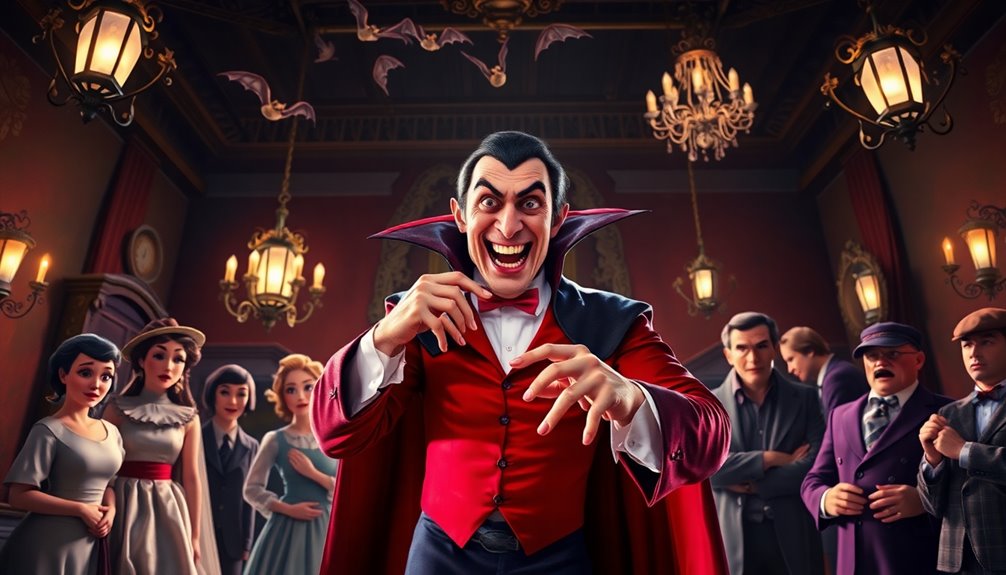
If you’re looking for a unique take on the classic vampire tale, *Dracula: A Comedy of Terrors* is a must-see. This fast-paced, 90-minute performance blends campy humor with sharp societal critiques, all while playfully subverting gender roles. With standout performances from a talented cast, including James Daly’s charming Count Dracula and a hilariously reimagined Van Helsing, the show keeps you entertained. You’ll discover more about its clever reimaginings and audience reactions as you explore further.
What Makes *Dracula: A Comedy of Terrors* Unique?
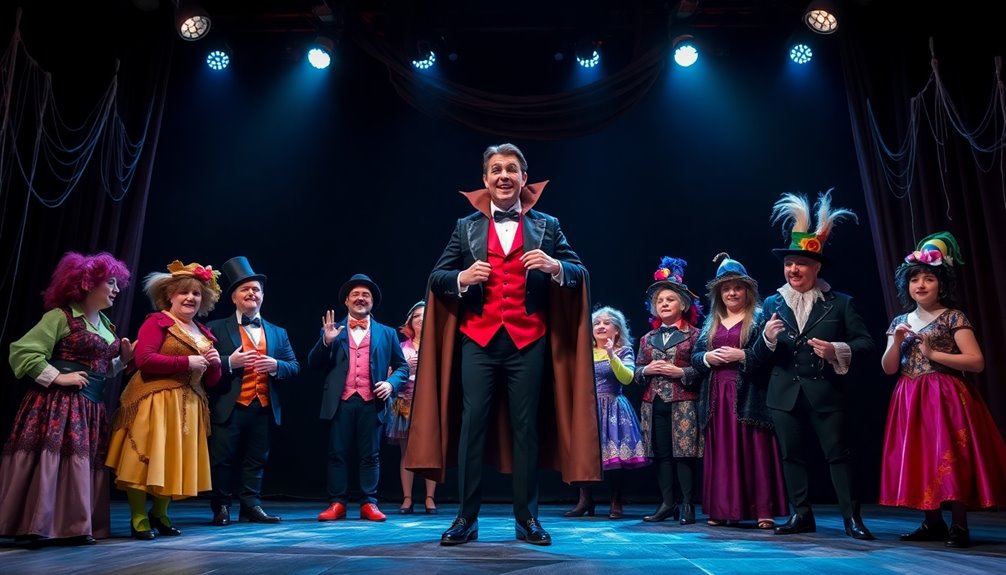
Under Gordon Greenberg’s direction, the play condenses the iconic tale into a fast-paced 90-minute performance, showcasing five actors in over a dozen roles. This dynamic character transformation keeps you on your toes while delivering laugh-out-loud moments.
The humor cleverly intertwines traditional vampire lore with contemporary comedic styles reminiscent of Mel Brooks and Monty Python.
Additionally, the production embraces gender subversion, allowing actors of any type to step into various roles.
Through its campy aesthetic, the play offers a sharp societal critique, highlighting the tension between Victorian norms and individual desires in a way that’s both entertaining and thought-provoking. This critique parallels the exploration of societal rejection in *Phantom of the Opera*, emphasizing how societal standards shape personal identity and relationships.
Key Performances That Steal the Show
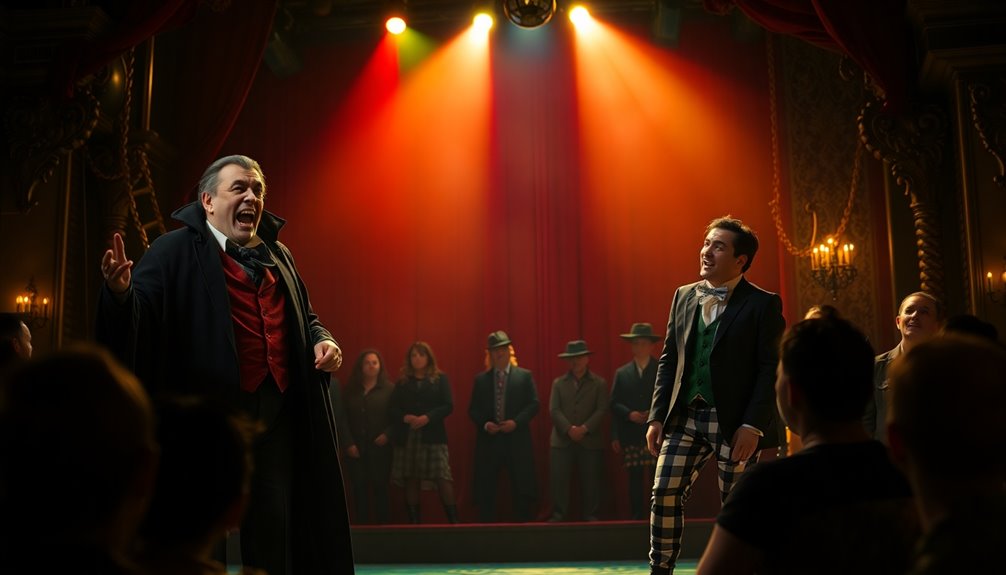
James Daly’s Count Dracula shines with humor and charm, perfectly embodying the egotistical vampire.
Andrew Keenan-Bolger’s portrayal of Jonathan Harker offers a meek counterbalance, providing comedic relief against Dracula’s bravado.
Jordan Boatman captivates as Lucy, especially in a striking boudoir scene that highlights her ambition.
Arnie Burton electrifies the stage, effortlessly morphing into multiple characters, including a scene-stealing Van Helsing.
Finally, Ellen Harvey showcases her versatility, delivering a comedic take on a character often critiqued for miscasting.
Together, these performances create a vibrant tapestry that makes this adaptation truly unforgettable, resonating with the timeless themes that continue to captivate audiences today.
How Does Humor Reimagine Classic Vampire Lore?
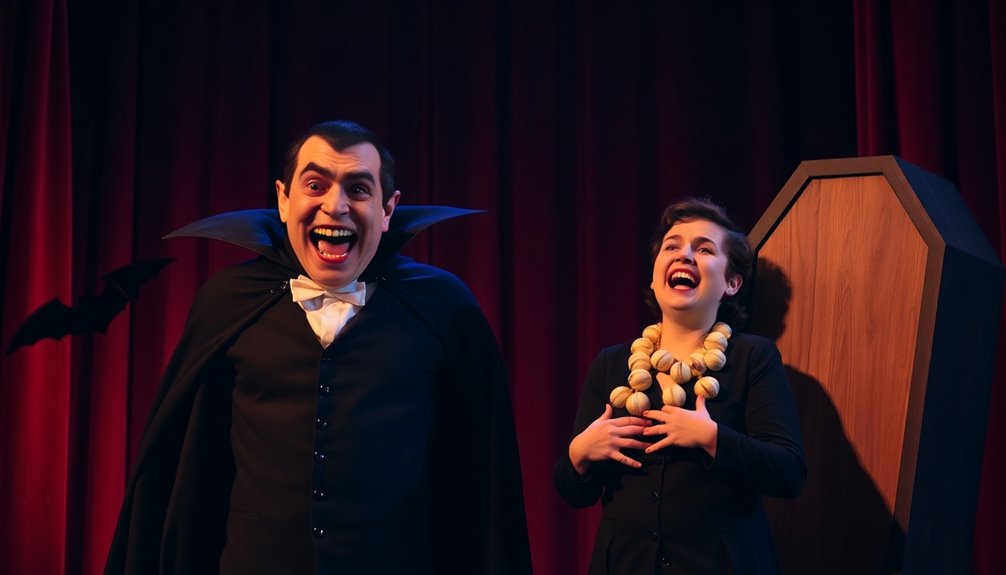
- It subverts gender roles, presenting a female Van Helsing and diverse character portrayals.
- Fast-paced, witty dialogue draws inspiration from Mel Brooks and Monty Python, enriching the vampire tale.
- Dracula’s pursuit of a bachelor pad highlights modern relationship dynamics.
- Quick-change antics by five actors showcase the production’s comedic brilliance.
This unique blend of humor and horror not only entertains but also adds depth to the traditional vampire narrative, making it relevant for today’s audience, reflecting Victorian themes that resonate with contemporary discussions on gender and sexuality.
The Role of Gender and Camp in the Adaptation
While traversing the whimsical world of “Dracula: A Comedy of Terrors,” you’ll find that gender and camp play essential roles in redefining classic characters.
The adaptation features a gender-bending reimagining of iconic figures, especially a female Van Helsing, which subverts traditional gender norms.
With just five actors portraying over a dozen characters, the flexible casting highlights the campy, humorous nature of the production.
The use of drag powerfully critiques Victorian gender politics, allowing a playful exploration of identity and sexuality throughout the performance.
The dialogue thrives on camp, providing a lighthearted approach to themes of desire and societal constraints, ensuring the show remains both entertaining and thought-provoking.
It’s this delightful blend that captures audiences and keeps them engaged. Additionally, much like Laura Esquivel’s use of magical realism, the adaptation cleverly intertwines the extraordinary with the mundane, enriching the narrative experience.
Audience Reactions: What Are People Saying?
Attendees are buzzing about:
- Clever Humor: Many praised the fast-paced comedy and its ability to keep the audience engaged.
- Costume Design: Viewers admired the campy, sexy vibe of the costumes, contributing to the overall aesthetic appeal.
- Gender-Bending Elements: Reactions varied, with some appreciating the subversion of traditional roles, while others found certain jokes contentious.
- Future Engagement: Excitement for upcoming performances is palpable, with many planning to return based on the show’s impressive reception.
Gordon Greenberg’s adaptation has clearly struck a chord, making it a memorable theater experience. Additionally, the show’s success echoes the enduring legacy of Gothic themes that continue to captivate audiences in various forms of storytelling.
Conclusion
In the end, *Dracula: A Comedy of Terrors* brilliantly flips the classic tale on its head, blending humor with horror. You can’t help but appreciate how the performances bring new life to familiar characters. The playful take on vampire lore and the campy elements add a fresh twist that resonates with modern audiences. So, whether you’re a die-hard fan or a curious newcomer, this adaptation proves that even Dracula could use a good laugh—just like a TikTok trend gone viral!