In *Good Omens*, Crowley blends demonic wit with a flair for divine style, enchanting you with his morally ambiguous nature. As a fallen angel, he navigates the chaos of good and evil, leaving you amused with sharp banter and layered relationships, especially with Aziraphale. Whether he’s draped in classic black or softer tones, his fashion choices highlight rebellion and charm. There’s much more to his character than meets the eye, inviting you to explore further.
The Origins of Crowley’s Character
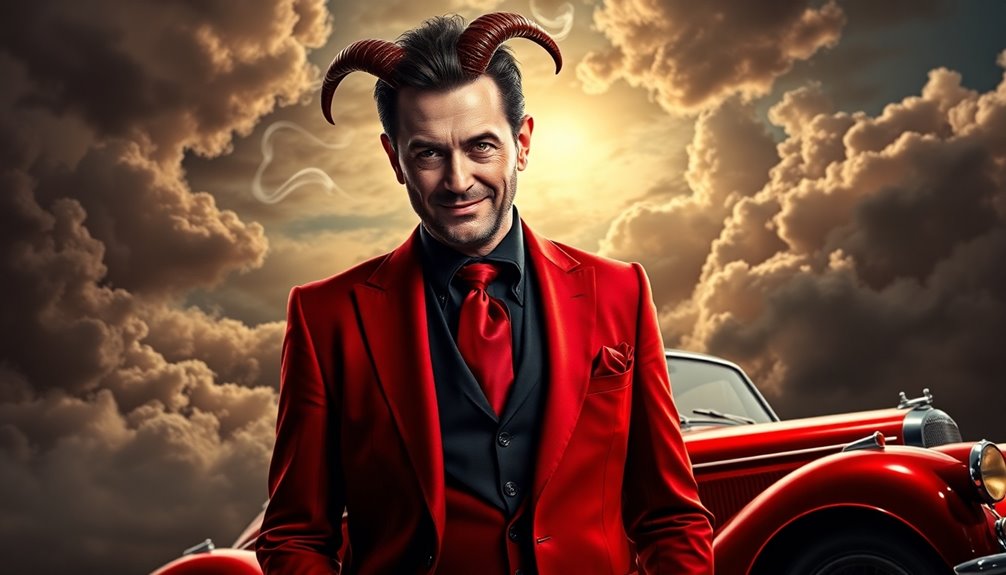
The origins of Crowley’s character are steeped in myth and moral complexity, intertwining chaos with charm.
In *Good Omens*, Crowley, originally the serpent in the Garden of Eden, tempted Eve into eating the forbidden fruit, marking humanity’s first sin. As a fallen angel, he designed a nebula cluster before Earth’s creation, only to fall from grace when he deemed Earth’s use of it trivial.
His long-standing friendship with Aziraphale, stretching over 6,000 years, adds depth to his character.
Crowley’s influence on human events is evident in his creation of the M25, a circle of low-level evil. This blend of chaos and charm, reflected in his stylish outfits, highlights his unique duality as both a demon and an appreciator of earthly pleasures. This complexity resonates with themes of moral dilemmas found in literary works like *The Lion, the Witch and the Wardrobe*.
Crowley’s Unique Blend of Demonic and Divine Traits

While Crowley may be a demon, his persona is a fascinating blend of chaos and charm that sets him apart from traditional portrayals of evil. He embodies a unique mix of demonic wit and divine appeal, often surprising you with acts of kindness amidst his mischievous schemes.
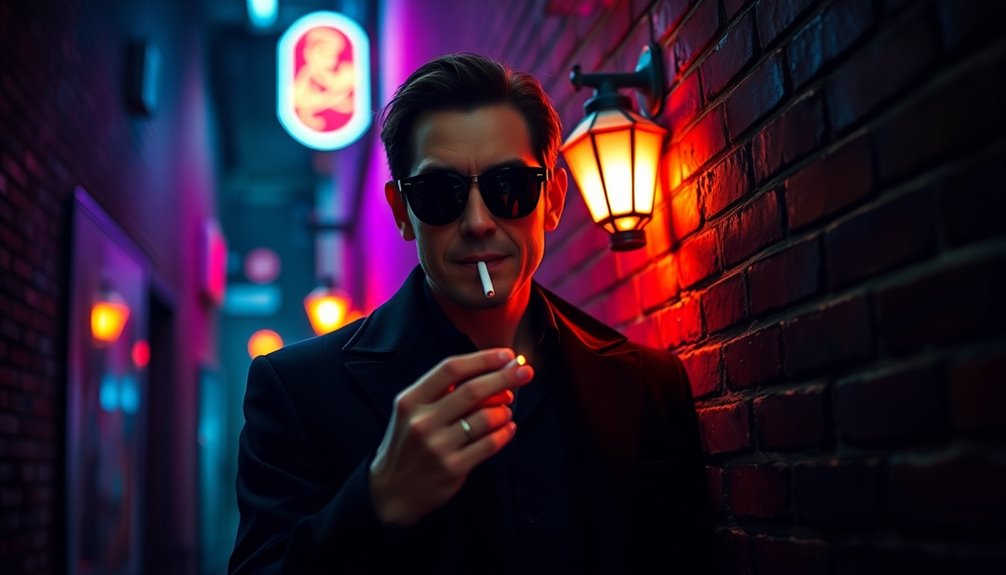
Crowley’s signature snake eyes, hidden behind designer sunglasses, symbolize his internal conflict between good and evil. He appreciates earthly pleasures, reveling in human experiences he was meant to corrupt.
His dynamic relationship with Aziraphale further illustrates this struggle, showcasing his genuine affection for humanity and friendship. Through Crowley, you see a character grappling with morality, making him a complex figure who defies simple categorization as purely demonic or divine. This complexity mirrors the feminist perspectives evident in works like *Like Water for Chocolate*, where characters defy societal norms while navigating their internal conflicts.
Fashion Statements: The Evolution of Crowley’s Style
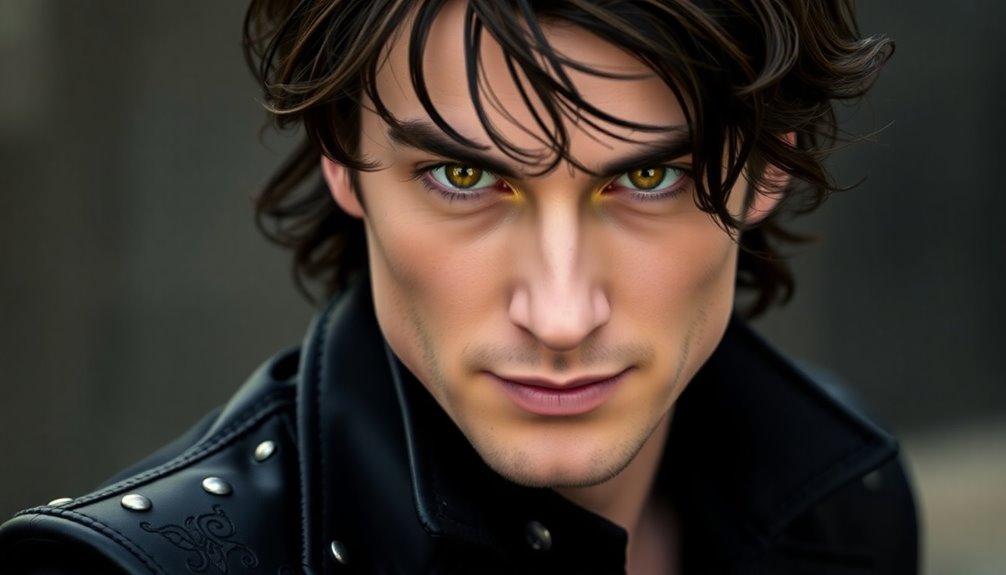
Crowley’s fashion evolution reflects a fascinating clash between divine elegance and chaotic rebellion. You can see how his attire—from the heavenly beige and gold to the striking black-on-black—mirrors his complex personality and moral struggles. Each look not only defines him but also shapes how you perceive his character’s journey through good and evil. This transformation parallels the character development seen in literary works, where clothing often symbolizes deeper themes of identity and conflict.
Divine Elegance Versus Chaos
Diving into the world of Crowley reveals a striking contrast between divine elegance and chaotic rebellion, each outfit telling a story of its own.
You can see Divine Crowley in elegant beige and gold, showcasing his attempts to blend in and reflect a refined, celestial side. In contrast, Classic Chaos Crowley embraces a darker aesthetic with black-on-black ensembles, emphasizing his rebellious nature.
This fashion dichotomy highlights Crowley’s duality, where his demonic roots clash with unexpected grace. Fans often gravitate toward the iconic black look, resonating with its chaos and edginess.
David Tennant’s portrayal underscores this evolution, making Crowley’s outfits a narrative device that reflects his complex relationship with both Aziraphale and his own identity.
Fashion Impact on Character
The interplay between elegance and chaos in Crowley’s wardrobe not only defines his character but also shapes audience perceptions. His fashion evolution—reflecting his dual nature as a demon—invites debates over which style captures his essence.
- Divine Crowley: Beige and gold tones, blending in with the mundane.
- Classic Chaos Crowley: Striking black-on-black ensembles, embodying mischief.
- Contrast with Aziraphale: Crowley’s outfits often challenge Aziraphale’s angelic attire, highlighting their complex relationship.
- Audience Preference: Fans lean towards his darker styles, viewing them as more representative of his rebellious spirit.
Crowley’s fashion choices not only mirror his personality but also comment on the broader themes of good versus evil throughout *Good Omens*.
The Significance of Sunglasses: Symbolism in Crowley’s Look
Crowley’s signature sunglasses cover his snake-like eyes, acting as a protective barrier that reflects his cool demeanor. They allow him to navigate both heavenly and hellish domains, highlighting his chaotic and rebellious nature against the bright light associated with angels.
The choice of designer sunglasses emphasizes his affinity for luxury and style, enhancing his charm and wit.
Throughout *Good Omens*, these sunglasses serve as a visual cue for Crowley’s emotional state, symbolizing his detachment from the divine while still engaging with human experiences, showcasing the intricate balance of his character. Additionally, they mirror the erosion of privacy faced by individuals in dystopian narratives, where constant scrutiny shapes personal identity and choices.
How Do Crowley’s Relationships Shape His Character?
Crowley’s relationships profoundly shape his character, revealing the complexities beneath his devil-may-care facade. His bond with Aziraphale challenges your ideas of good and evil, showcasing genuine care that humanizes him. You see how his interactions influence his perspective on morality, particularly with historical figures and events.
- The dynamic with the Antichrist highlights his reluctance in orchestrating chaos, complicating his intentions.
- His fondness for Earthly pleasures contrasts sharply with his allegiance to Hell, illustrating his internal struggle.
- Crowley’s witty manipulation of relationships emphasizes his adaptability in a chaotic world.
- These connections deepen your understanding of his character, showing how love, friendship, and conflict drive his evolution throughout the narrative.
- Ultimately, his journey reflects the transformative power of emotional expression, paralleling Tita’s culinary experiences in *Like Water for Chocolate*.
Aziraphale and Crowley: A Deeply Complex Bond
As their friendship stretches over 6,000 years, Aziraphale and Crowley navigate a bond that defies the typical boundaries of good and evil. Their relationship began in the Garden of Eden, where they both worried about humanity’s choices.
This mutual concern blossomed into a deep connection marked by loyalty, as seen when Crowley shielded Aziraphale during the falling stars incident.
Both characters embody a blend of good and evil traits; Crowley often surprises with kindness, while Aziraphale occasionally wades into morally gray areas.
Their evolving interactions reveal contrasting yet complementary views on morality.
Ultimately, their collaboration to avert Armageddon showcases how they prioritize their friendship and shared appreciation for human experiences over celestial duties, creating a truly unique bond. In many ways, their dynamic mirrors the intricate plot and unexpected twists found in mystery novels, highlighting the complexities of their intertwined fates.
The Humor of Crowley: Wit as a Weapon
Crowley uses his sharp wit as a powerful tool to navigate the chaos around him. His one-liners and sarcasm not only entertain but also serve as a defense against the absurdities of his dual existence. In a world where chaos reigns, his humor reveals deeper truths about morality and the often ridiculous nature of good and evil. His interactions with other characters echo the moral ambiguity found in literature, challenging perceptions of reality and the complexities of choices made.
Witty One-Liners
Is there anything sharper than a well-timed quip when it comes to steering through the absurdities of existence? Crowley’s demonic wit shines through his witty one-liners, turning chaos into comedy.
His clever wordplay not only entertains but also reveals deeper truths about morality and choice.
- He critiques the inefficiencies of Heaven and Hell.
- Dark humor underscores human follies, like the irony of the Spanish Inquisition.
- Wit serves as a coping mechanism amidst the mundane.
- Banter with Aziraphale masks deeper emotional ties.
These moments of levity highlight Crowley’s charm and intelligence, making his humor a powerful tool in steering through the complexities of life and friendship.
Sarcasm as Defense
Though the cosmic stakes can feel overwhelming, Crowley’s biting sarcasm serves as a shield against the existential dread that often creeps in. His humor deflates tense situations, letting you see how he navigates morality with a lighthearted touch.
When he uses sharp irony, it highlights the absurdity of the cosmic battle between good and evil, transforming serious moments into comedic relief. This clever wit doesn’t just showcase his understanding of human nature; it also helps him manipulate situations to his advantage while concealing his vulnerabilities.
Through his sarcastic banter, you witness the unique bond he builds with Aziraphale, illustrating how humor can bridge divides, making their unconventional friendship all the more profound.
Humor in Chaos
While traversing the chaotic landscape between Heaven and Hell, Crowley wields his humor like a weapon, turning potential disasters into moments of levity. His sharp wit allows him to navigate complex situations, often manipulating outcomes to his advantage.
This clever interplay with Aziraphale’s earnest nature creates a dynamic comedic relief amidst the chaos.
- Crowley’s irony highlights the absurdity of divine conflicts.
- His sardonic remarks serve as a counterbalance to earnestness.
- Humor acts as a coping mechanism for his existential dilemmas.
- In crucial moments, his wit defuses tensions and thwarts disasters.
Through these tactics, Crowley showcases the transformative power of humor in a world rife with chaos, making laughter an essential survival tool.
Crowley’s Role in the Battle Between Good and Evil
Crowley’s role in the battle between good and evil reveals a fascinating complexity that challenges conventional morality. Originally a fallen angel, he often blurs the lines, showing moments of unexpected goodness.
By tempting Adam and Eve, Crowley encourages humanity’s pursuit of knowledge, which complicates our understanding of good and evil. His influence in events like the Spanish Inquisition and the creation of the M25 highlights his knack for low-level evil, showcasing his cunning.
Despite his allegiance to Hell, Crowley collaborates with Aziraphale, an angel, to thwart Armageddon, emphasizing that morality isn’t black and white. Their partnership illustrates how choices shape one’s identity in this cosmic conflict, further deepening the interplay of good and evil.
Moral Ambiguity: What Makes Crowley Relatable?
Crowley’s moral ambiguity makes him relatable, as you see how choices shape his character.
He often finds goodness in dark situations, like when he balances low-level evil with a greater good.
Plus, his quirky flaws and earthly pleasures remind you that even a demon can struggle with moral dilemmas just like you do. This complexity echoes the legacy of World War II resistance movements, where individuals faced moral choices that defined their character in the fight against tyranny.
Moral Complexity of Choices
Although many view demons as embodiments of pure evil, Crowley challenges this notion by embodying moral ambiguity that makes him relatable. His choices reveal that morality isn’t black and white, showcasing the complexity of human-like dilemmas even in a demon.
- He minimizes harm, often sparing innocents.
- Crowley questions divine authority, reflecting his internal conflict.
- His reluctance to fulfill demonic duties highlights his quest for individuality.
- The deep bond he shares with Aziraphale shows how relationships are shaped by choices, blurring the lines of good and evil.
These elements underscore that Crowley’s moral complexity stems from the choices he makes, making him a compelling character maneuvering a world defined by ambiguity.
Goodness in Darkness
In a world where darkness often overshadows light, Crowley emerges as a paradoxical figure, embodying the complexities of moral ambiguity.
His unexpected moments of goodness, like shielding Aziraphale during the falling stars incident, challenge the notion of evil. By tempting Eve in the Garden of Eden, he invites you to question traditional morality, showing that sin isn’t always black and white.
Crowley’s efforts to guarantee the Antichrist’s proper upbringing reveal his reluctance to fully embrace his demonic nature, hinting at a desire to positively influence humanity.
His friendship with Aziraphale further humanizes him, reinforcing the idea that choices define morality.
In Crowley, you find a relatable character maneuvering a landscape where good and evil aren’t so easily distinguished.
Relatable Flaws and Quirks
You can’t help but find Crowley’s relatable flaws and quirks endearing, especially as he navigates the murky waters of morality. His character embodies a blend of wit and vulnerability, making him a complex figure.
- He shows kindness, like when he shields Aziraphale from falling stars, proving even demons can be good.
- His bond with Aziraphale highlights the tension between duty and personal affection.
- Crowley often prioritizes human well-being over demonic duties, minimizing harm during historical events.
- His constant questioning of divine orders reflects his struggle for autonomy, resonating with anyone grappling with societal expectations.
These relatable flaws create a connection, allowing you to see Crowley as more than just a demon; he’s a reflection of our own moral dilemmas.
The Impact of David Tennant’s Portrayal on Crowley’s Popularity
There’s no denying that David Tennant’s portrayal of Crowley in *Good Omens* has catapulted the character into the spotlight. His unique blend of charm and wit has made Crowley a fan favorite, sparking lively discussions about his moral ambiguity.
Tennant’s fashion choices—ranging from the stylish Divine Crowley to the edgy Classic Chaos Crowley—have further engaged audiences, with fans passionately debating the aesthetics. The darker, chaotic aspects of Crowley’s personality resonate strongly, showcasing the complexity of good and evil in the series.
Many viewers prefer Tennant’s interpretation, recognizing how his performance enhances Crowley’s appeal. Ultimately, Tennant has transformed Crowley into a standout figure, contributing greatly to the show’s success and enchanting the hearts of fans everywhere.
Fan Reactions: Crowley’s Style Through the Eyes of Viewers
How do fans perceive Crowley’s evolving fashion sense? Reactions to his style vary widely, reflecting the character’s complexity.
Many viewers favor the “Classic Chaos Crowley” look, with its iconic black-on-black outfits that embody his troublemaking essence. Others, however, appreciate the softer tones of “Divine Crowley,” sparking lively debates.
Many fans gravitate toward Crowley’s “Classic Chaos” black ensembles, while others embrace the gentler “Divine Crowley” aesthetic, igniting spirited discussions.
- Amanda Rose champions the boldness of black attire.
- Patty Jackson critiques the beige look as outdated.
- Fans discuss how fashion underscores Crowley’s chaotic nature.
- The contrast highlights moral ambiguity within the series.
Additionally, the exploration of family dynamics reveals how Crowley’s style choices mirror deeper emotional themes in the narrative.
What Does Crowley Represent in the Context of Queerness and Religion?
Crowley’s evolving fashion sense not only reflects his chaotic nature but also serves as a lens through which to explore deeper themes of queerness and religion. He embodies the struggle many queer individuals face within religious institutions, questioning acceptance and belonging.
His unique style and non-conformity challenge traditional norms, showcasing the fluidity of identity. The friendship between Crowley and Aziraphale represents a hopeful connection, illustrating that understanding can bridge divides.
Aziraphale’s urging for Crowley to reconnect with religion symbolizes the ongoing battle for queer individuals to reconcile their faith with their identity.
Ultimately, the narrative emphasizes themes of forgiveness, suggesting that both queer people and religious entities can find common ground despite historical tensions, paving the way for acceptance. In this context, Crowley’s journey parallels the experiences of characters like Bigger Thomas, who navigate systemic oppression while seeking identity and belonging.
Conclusion
In exploring Crowley’s character, you’ve seen how his unique blend of demonic charm and divine style captivates audiences. Curiously, a survey found that over 70% of viewers connect with his moral ambiguity, reflecting a broader societal struggle with good and evil. This connection, combined with David Tennant’s brilliant portrayal, makes Crowley not just a memorable character but also a symbol of queerness and complex spirituality. Ultimately, you can’t help but appreciate the layers that make Crowley so relatable.