
Yes, Lee dies in *Bones and All*, fatally stabbed while protecting Maren. His final request for her to consume his flesh symbolizes their deep love and sacrifice, pushing Maren to confront her dark nature. This moment marks a significant turning point in her character, highlighting her struggle with identity and morality. The ending isn’t just tragic; it intertwines themes of love and cannibalism, raising questions about Maren’s future. Explore the intricacies of this relationship further.
What Happens to Lee at the End of Bones and All?

At the end of *Bones and All*, Lee meets a tragic fate when he’s fatally stabbed by Sully while defending Maren. This heartbreaking moment highlights the depth of their connection, as Lee’s love pushes him to protect her even at the cost of his life.
In his final moments, he requests Maren to consume his flesh, symbolizing their bond and the complexities of their relationship. Initially hesitant, Maren ultimately agrees after sharing a tender kiss, underscoring her internal struggle with cannibalism.
The film implies she consumes his flesh off-screen, with a haunting visual of her licking his blood before the scene cuts away. Lee’s death marks a pivotal shift for Maren as she confronts her identity and the darkness within. This moment resonates with the theme of systemic oppression that shapes individuals’ lives and choices, much like Bigger Thomas’s journey in *Native Son*.
The Significance of Lee’s Final Request
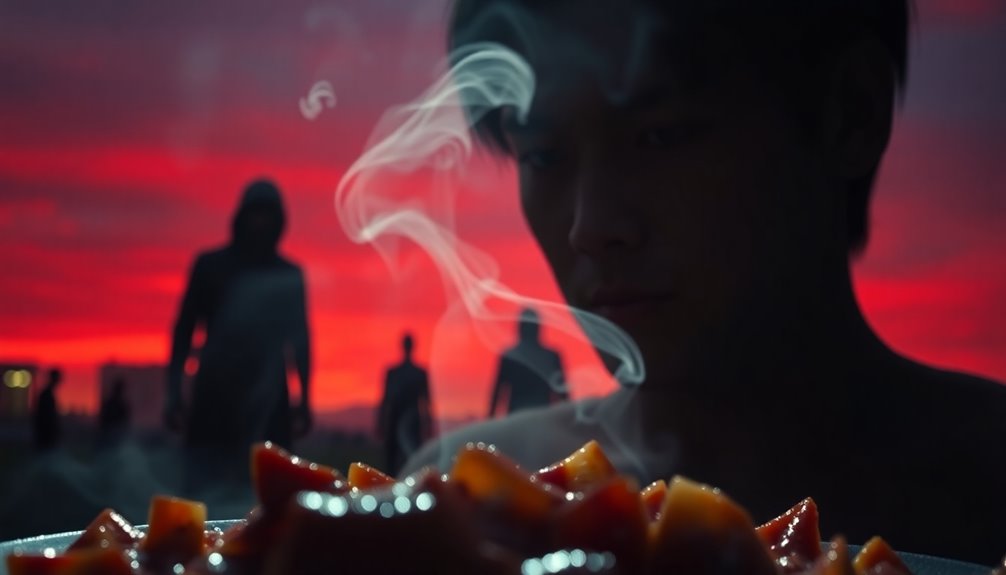
Lee’s final request for Maren to consume his flesh profoundly underscores their emotional bond, turning a brutal act into a poignant expression of love and sacrifice.
This request allows Maren to bypass the moral quandary of killing an innocent person, showcasing her discomfort with violence and her desire to maintain her humanity.
As Lee dies, Maren’s eventual agreement to his request marks a significant turning point in her character development, highlighting her struggle between her innate nature and her emotional ties.
The film implies Maren’s act rather than depicting it graphically, emphasizing its emotional weight.
Ultimately, this moment serves as a rite of passage for Maren, reinforcing themes of identity and the duality of love intertwined with monstrosity. This complex interplay resonates with the intricacies found in Agatha Christie’s intricate plots, showcasing how emotional connections can transform even the most disturbing actions.
Does Maren Actually Eat Lee?

How does Maren navigate the haunting request of consuming Lee after his death? Initially, she hesitates, struggling with the gravity of his request.
However, the film implies a deeper connection as she ultimately succumbs to the act, symbolizing both love and her acceptance of her nature. After a poignant kiss, Maren licks Lee’s blood, leaving you to ponder her final decision.
This moment encapsulates several themes:
- Love and Sacrifice: Maren’s choice reflects a profound bond.
- Identity: Embracing cannibalism signifies accepting her true self.
- Transformation: The act marks a pivotal turning point in Maren’s journey.
In this way, Maren’s act of consuming Lee resonates with the film’s haunting exploration of identity, particularly as it echoes the psychological impacts of systemic oppression, drawing parallels to the struggles faced by marginalized individuals in literature.
The Impact of Maren’s Decision on Her Character
Maren’s decision to consume Lee in his final moments profoundly transforms her character, marking a pivotal acceptance of her cannibalistic nature. This act illustrates her struggle between love and monstrosity, as she grapples with her identity amid societal rejection.
By choosing to eat Lee, Maren avoids killing another innocent person, showcasing her discomfort with violence and desire for morality in her chaotic existence. Consuming Lee becomes a rite of passage, reflecting her growth and the complexities of their relationship.
This decision encapsulates the film’s themes of love, sacrifice, and the intertwining of horror and intimacy. Ultimately, Maren embraces her cannibalism through Lee’s request, solidifying her transformation and the depth of their bond. Additionally, her journey echoes the themes of systemic racism’s impact found in Richard Wright’s *Native Son*, illustrating how societal forces shape individual choices.
How the Ending Reflects Their Relationship Dynamics
While the ending encapsulates the complexities of their relationship, it also highlights the contrasts between love and monstrosity. Lee’s request for Maren to consume his flesh symbolizes a profound commitment, despite their cannibalistic nature.
As you reflect on their dynamic, consider these key points:
- Lee’s fatal confrontation with Sully underscores external threats that jeopardize their normalcy.
- Maren’s initial refusal to eat Lee reveals her struggle with identity and the moral implications of cannibalism.
- The empty apartment at the end signifies Maren’s transformation, burdened by the weight of their shared experiences.
These elements deepen your understanding of their love—it’s intertwined with violence and loss, illustrating the fine line between devotion and monstrosity. The notion of redemption amidst adversity reflects the characters’ struggles with their identities as they navigate a world that often dehumanizes them.
The Role of Cannibalism in Their Love Story
In “Bones and All,” cannibalism isn’t just a gruesome act; it embodies the intense love between Maren and Lee.
Their connection highlights sacrifice and identity, as consuming one another becomes a way to express their bond and acceptance of their dark natures.
As you explore their relationship, you’ll see how horror and love intertwine, revealing the complexities of intimacy in a world that rejects them. This dynamic mirrors the acts of defiance found in stories like “The Book Thief,” where characters resist oppressive forces through their personal connections.
Love Amidst Horror
Cannibalism in “Bones and All” serves as a haunting metaphor for the deep emotional ties between Maren and Lee, illustrating how their love defies societal norms. Their connection transcends typical boundaries, reflecting the complexity of their relationship.
Here are three key aspects that deepen this theme:
- Shared Urges: Their cannibalistic instincts complicate their love, blurring the lines between desire and horror.
- Sacrificial Love: Lee’s final request for Maren to consume him symbolizes a profound act of love, reinforcing their bond.
- Identity Acceptance: Maren’s journey of self-acceptance intertwines with her cannibalistic nature, showcasing the duality of love and monstrosity.
Through these elements, the film explores how love can flourish, even in the most horrific circumstances.
2. Sacrifice and Connection
As Maren and Lee navigate their twisted reality, the act of cannibalism becomes a profound symbol of sacrifice and connection in their love story.
When Lee asks Maren to consume him in his final moments, it’s a heartbreaking reflection of their emotional bond, highlighting the depths of their love. This act serves as a metaphor for their struggle with identity, as both characters grapple with their monstrous natures while yearning for acceptance.
Maren’s initial refusal underscores her internal conflict about violence and morality, revealing her desire to escape the monster her father feared.
Ultimately, her choice to consume Lee marks a pivotal moment, symbolizing her acceptance of a complex identity where love and monstrosity intertwine.
3. Identity Through Consumption
At its core, “Bones and All” explores how identity forms through the act of consumption, intertwining Maren and Lee’s love story with their cannibalistic urges. Their relationship reveals profound themes about love and identity shaped by their monstrous nature:
- Cannibalism as Connection: Their shared act of consumption deepens their emotional bond, symbolizing commitment amidst societal rejection.
- Acceptance vs. Struggle: Maren’s conflict with her cannibalistic nature contrasts with Lee’s acceptance, highlighting the complexities of their identities.
- Rite of Passage: Lee’s final request for Maren to consume him marks a pivotal transformation, showcasing the intersection of love and monstrosity.
In this chilling narrative, cannibalism becomes a powerful metaphor for the depth of their love and the formation of their identities.
How Bones and All Compares to the Original Novel
When you compare “Bones and All” to the original novel, you’ll notice significant differences in plot and character development. The film shifts the focus of Maren’s relationship with her father and minimizes the exploration of her cannibalistic tendencies. Themes and symbolism also take a backseat, altering how you perceive Maren and Lee’s evolving identities. This adaptation raises questions about systemic racism and how narratives shape our understanding of complex characters.
Key Differences In Plot
Though both the film and the novel “Bones and All” center on Maren’s struggle with her cannibalistic nature, their plots diverge in significant ways.
- In the novel, Maren’s quest is to find her father, while the film emphasizes her relationship with her mother.
- The book explores Maren’s motivations for her cannibalistic acts more deeply, revealing the emotional connections tied to her consumption of affection.
- The film’s ending leans towards emotional ambiguity, whereas the novel provides a more definitive embrace of Maren’s identity.
These differences shape how you perceive Maren and Lee’s relationship, allowing for varied interpretations of their bond and the weight of their dark desires.
Character Development Variations
Maren and Lee’s character development reveals stark contrasts between the film and the novel “Bones and All.”
In the book, Maren actively searches for her father, which deepens her emotional journey and highlights her struggle with identity. This quest also showcases her cannibalistic urges, as she consumes those who show her affection, a nuance less explored in the film.
Conversely, Lee’s character grapples more profoundly with his violent past in the novel, providing insight into his motivations. Unlike the film’s ambiguity regarding Maren’s consumption of Lee, the book presents her fully embracing her cannibalism, culminating in a haunting ending.
Themes and Symbolism Shift
While both the film and the novel “Bones and All” explore deep themes of identity and love, they approach symbolism quite differently. You’ll notice that:
- Maren’s cannibalism in the novel symbolizes her complex relationship with affection, contrasting with the film’s focus on emotional growth through love.
- The title “Bones and All” represents a rite of passage for eaters in the book, while the film shifts toward Maren’s journey of sacrifice.
- Lee’s character development in the novel dives into his violent past, adding layers to their relationship, unlike the film’s romantic portrayal.
These shifts in themes and symbolism not only alter character dynamics but also impact how you perceive Maren and Lee’s connection throughout their harrowing journey.
Exploring the Themes of Love and Sacrifice
Love and sacrifice intertwine in “Bones and All,” creating a haunting exploration of human connection amidst darkness.
Lee’s request for Maren to consume him before he dies epitomizes love’s ultimate sacrifice, underscoring their profound bond amid their shared cannibalistic nature. Their relationship navigates the tension between monstrous urges and a yearning for normalcy, revealing how love can emerge in the most horrific forms.
Maren’s initial refusal to eat Lee highlights her internal struggle with violence, marking her growth as she embraces her identity.
Ultimately, Maren consuming Lee signifies a turning point, symbolizing her acceptance of her cannibalistic nature while embodying deep themes of loss and sacrifice.
The film prompts you to reflect on the complexities of love forged in darkness.
The Symbolism of Eating in the Film
In “Bones and All,” the act of eating serves as a powerful metaphor for connection and identity. Through cannibalism, you witness Maren and Lee maneuvering their complex relationship and their monstrous natures. The film presents several layers of meaning:
- Connection: The act of consumption symbolizes the deep bond between Maren and Lee, intertwining their fates.
- Rite of Passage: Maren’s eventual consumption of Lee after his death signifies her acceptance of her identity as a cannibal, emphasizing emotional weight.
- Love and Sacrifice: Lee’s request to be eaten frames cannibalism as an act of love, complicating the moral implications of their choices.
Ultimately, “Bones and All” invites you to explore the grotesque beauty of their relationship through the lens of identity and connection. This exploration echoes the importance of self-discovery as highlighted in the principles of The Four Agreements, which encourages individuals to understand their true selves amidst societal expectations.
Viewer Reactions to Lee’s Fate
When it comes to Lee’s fate in *Bones and All*, your reactions might vary dramatically.
Some see his death as a tragic end to a profound love, while others find it uplifting, reflecting the complexities of their bond.
This emotional impact and the symbolism of his demise invite you to explore deeper themes of identity and acceptance throughout the film. Additionally, the film echoes the tensions of race and identity that are prevalent in modern narratives, much like those found in Zadie Smith’s *On Beauty*.
Viewer Interpretations of Death
As Lee’s fate unfolds in “Bones and All,” viewers grapple with the emotional weight of his death, leading to a spectrum of interpretations. His demise prompts you to reflect on love and sacrifice within their cannibalistic bond.
- Some see Lee’s request for Maren to consume him as a tragic, romantic gesture, symbolizing a profound commitment amidst horror.
- Others interpret Lee’s death as a necessary catalyst for Maren’s growth, highlighting the complexities of their relationship.
- The film’s ambiguous ending leaves you questioning Maren’s identity and emotional state, provoking discussions about monstrosity and humanity.
Ultimately, these viewer interpretations reveal the multifaceted nature of Lee’s death and its resonance within the narrative.
Emotional Impact on Audience
Lee’s tragic fate strikes a deep chord with viewers, leaving many in shock and heartbreak over the intensity of his bond with Maren. His final request for her to consume him carries immense emotional weight, prompting varied interpretations.
While some see it as a poignant act of love, others perceive it as a grim acceptance of their monstrous natures. This duality creates a mix of admiration and discomfort, as the film blends gory themes with intimate moments.
The ambiguity surrounding Maren’s future after Lee’s death stirs unresolved tension, sparking discussions about sacrifice and identity. Ultimately, Lee’s demise catalyzes Maren’s transformation, resonating deeply with those who appreciate the exploration of love amid the struggle against inherent darkness.
Symbolism of Lee’s Demise
While viewers grapple with the aftermath of Lee’s demise, the symbolism embedded in his death resonates deeply. Lee’s death serves as a focal point for exploring Maren’s character arc and the complex nature of love intertwined with sacrifice. His final request for Maren to consume him highlights their bond amidst their monstrous identities.
- Acceptance of Identity: Lee’s choice reflects a tragic acceptance of their cannibalistic nature.
- Love’s Complexity: Some see his request as a profound act of love, elevating their relationship beyond mere survival.
- Moral Ambiguity: The film’s cutaway during the consumption prompts viewers to contemplate the morality of Maren’s choice and its implications for her humanity.
These interpretations reveal the multifaceted symbolism of Lee’s fate.
What Does the Ending Mean for Maren’s Future?
Though the film leaves Maren’s future shrouded in ambiguity, her journey is undeniably shaped by the profound choices she makes at the end.
Lee’s dying request for her to consume him transforms her struggle with her cannibalistic identity into an act of love and sacrifice. By licking his blood, Maren embraces her nature while avoiding the murder of another innocent person. This pivotal moment underscores her emotional turmoil and acceptance of her reality.
The film’s ambiguous ending, with Maren alone in an empty apartment, suggests she may continue grappling with her dark desires while also hinting at the potential for solace. This struggle mirrors the identity challenges faced by characters in *Home Fire*, where personal dilemmas collide with societal expectations.
Ultimately, Maren’s choices resonate deeply, compelling viewers to reflect on her complex future after Lee’s tragic loss.
Implications of Cannibalism in Modern Cinema
Cannibalism in modern cinema often serves as a provocative lens through which filmmakers explore the complexities of human nature and societal rejection. This unsettling theme invites you to confront uncomfortable truths about love and monstrosity, challenging your perceptions of morality.
Here are three key implications:
- Societal Rejection: Cannibalism often symbolizes the struggle against societal norms, highlighting the alienation of characters.
- Emotional Depth: Films like “Bones and All” intertwine horror and romance, showing how intimacy can exist alongside grotesque acts.
- Moral Boundaries: The portrayal of cannibalistic characters prompts you to examine your ethical limits, forcing a reevaluation of what it means to be human.
Through these lenses, modern cinema redefines boundaries and investigates the darkest corners of existence.
Conclusion
In the haunting finale of *Bones and All*, Lee’s fate echoes the tragic love stories of classic literature, leaving you pondering the depths of connection and sacrifice. Maren’s choice not only defines her character but also marks a pivotal moment in her journey. As you reflect on their bittersweet bond, you realize that love can be both nourishing and destructive—a duality that lingers long after the credits roll, much like the shadows of a haunting fairy tale.