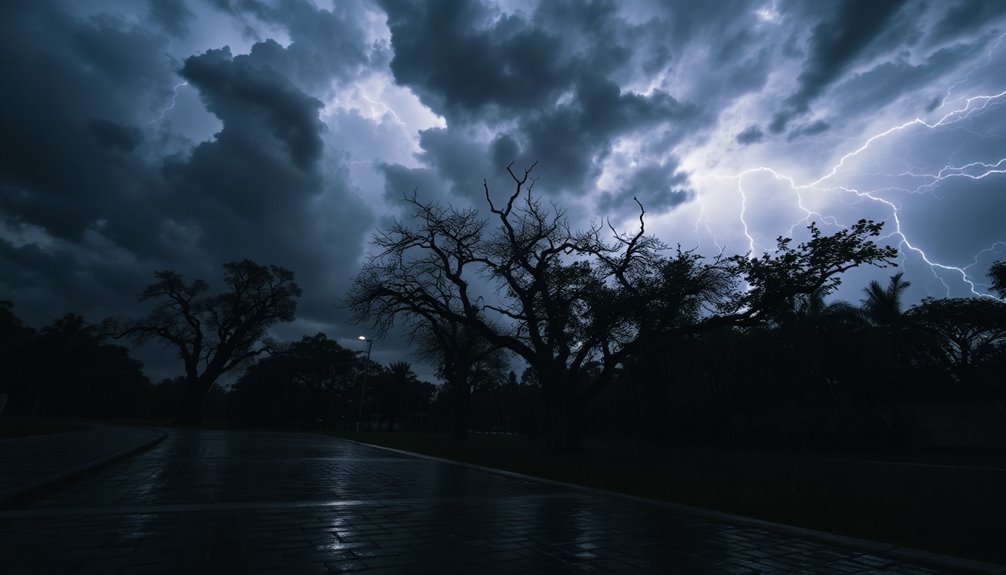
The phrase “It was a dark and stormy night” captures our fascination with bad openings because it reveals the quirks of writing that can be amusing and memorable. You can’t help but chuckle at the over-the-top drama and lack of originality. This cliché weakens engagement right from the start, yet it’s iconic in its failure. Embracing such literary flaws not only entertains but also offers valuable lessons for crafting better narratives. There’s much more to explore!
The Origins of a Literary Cliché
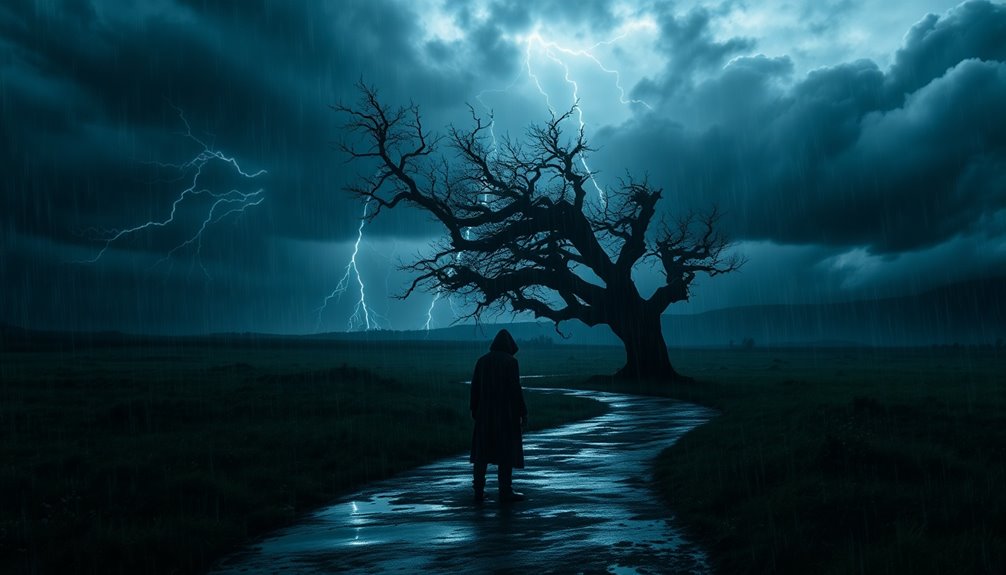
When you think of bad literary openings, “It was a dark and stormy night” likely comes to mind, and for good reason. This phrase originates from Edward Bulwer-Lytton’s 1830 novel *Paul Clifford*, where it epitomizes overly florid prose.
Long before Bulwer-Lytton, Washington Irving used variations of this phrase in his 1809 work *A History of New York*, showcasing its earlier literary presence.
Washington Irving’s 1809 *A History of New York* reveals earlier iterations of the infamous phrase, predating Bulwer-Lytton’s legacy.
Over the years, this line became a cultural cliché, sparking the Bulwer-Lytton Fiction Contest in 1982 to celebrate poor literary openings. Its evolution into a symbol of bad writing highlights its impact on discussions about writing quality.
Furthermore, the phrase’s frequent parody in works like *A Wrinkle in Time* demonstrates its lasting influence in literature. Interestingly, much like the iconic twist endings in mystery novels, it reveals how readers’ expectations can shape their experience of storytelling.
Why Does This Opening Fail to Engage Readers?
How does a phrase like “It was a dark and stormy night” fail to capture your interest? First, its passive construction weakens reader engagement right from the start.
You’re met with excessive adjectives that drown the narrative in melodrama, lacking the immediacy needed to hook you. The reliance on a stormy atmosphere feels cliché, failing to introduce compelling characters or plot dynamics that draw you in.
Critics argue that such openings lack originality and depth, making them feel redundant and uninspired. Instead of setting the stage for excitement, this focus on weather as a narrative device overshadows essential elements, leaving you feeling disengaged.
It’s clear: this opening doesn’t inspire curiosity or connection. This approach contrasts sharply with the unique narrative style of The Book Thief, which uses a compelling perspective to enhance emotional engagement.
Parodies and Cultural References in Popular Media
The phrase “It was a dark and stormy night” hasn’t only become a symbol of poor writing but also a rich source for parody and cultural references across various media.
You can see its influence in *Peanuts*, where Snoopy uses it as a running gag, and in *A Wrinkle in Time*, where Madeleine L’Engle cleverly acknowledges the cliché.
The Bulwer-Lytton Fiction Contest thrives on this line, challenging writers to craft the worst openings.
Other references, like Joni Mitchell’s *Crazy Cries of Love*, showcase how the phrase can be subverted for creative effect.
Moreover, just as resistance movements harnessed the power of collective action, the phrase has evolved into a cultural touchstone that encourages humor and creativity in writing.
- Explore the humor in bad writing
- Laugh at literary missteps
- Appreciate clever subversions
- Recognize its cultural impact
The Bulwer-Lytton Fiction Contest: Celebrating Bad Writing
While some writers aim for literary elegance, the Bulwer-Lytton Fiction Contest invites you to embrace the absurdity of bad writing. Established in 1982 by Professor Scott E. Rice, this quirky contest celebrates the art of the worst possible opening sentence.
Named after Edward Bulwer-Lytton, whose infamous line “It was a dark and stormy night” exemplifies literary excesses, the contest showcases humor and creativity. Each year, participants submit hilariously poor sentences for a chance to win a $250 prize. This cultural phenomenon has inspired countless entries filled with clichés and exaggerated scenarios, proving that bad writing can be both entertaining and memorable, much like how food symbolizes Tita’s emotions in *Like Water for Chocolate*.
Lessons From Bad Openings: What Can Writers Learn?
What can we glean from the pitfalls of bad openings? Avoiding clichés like “It was a dark and stormy night” is essential for crafting an engaging narrative. Instead, aim for originality in your openings to avoid the trappings of bad writing.
Here are some key lessons:
- Use dynamic verbs to create urgency.
- Establish character right away to hook readers.
- Employ vivid imagery to paint a compelling scene.
- Focus on engagement rather than atmospheric fluff.
The Bulwer-Lytton Fiction Contest reminds us that exaggerated prose detracts from storytelling. Additionally, incorporating morning reading habits can help writers refine their skills and enhance their creativity.
Embracing the Humor in Literary Flaws
When you read an opening like “It was a dark and stormy night,” you can’t help but chuckle at its over-the-top drama.
Embracing clichés and excessive prose not only lightens the mood but also highlights the quirks that make writing relatable.
Celebrating these literary imperfections can turn flaws into delightful moments of humor. Additionally, these humorous openings can remind us of the bravery and resilience displayed by characters like Katniss Everdeen and Cinder in their respective narratives.
The Art of Clichés
Consider the joy in clichés:
- They subvert expectations.
- They create instant recognition.
- They invite laughter at bad writing.
- They spark creativity in new contexts.
Authors like Madeleine L’Engle and Neil Gaiman show how clichés can add humor, transforming a tired trope into something delightfully entertaining.
Embrace the art of clichés!
Laughing at Excessive Prose
While some writers aim for elegance and brevity, the joy of excessive prose often lies in its ability to entertain through sheer absurdity.
Take “It was a dark and stormy night”—a phrase that’s become a cultural touchstone for humor in bad writing. The Bulwer-Lytton Fiction Contest celebrates this by inviting you to craft the worst possible opening sentences, turning clichés into a playful art form.
Writers like Madeleine L’Engle and Ray Bradbury have humorously embraced this melodrama, while Snoopy’s antics in *Peanuts* highlight the pitfalls of excessive prose.
Celebrating Literary Imperfections
How can we find joy in literary flaws? Embracing the humor in literary imperfections reveals the charm behind even the most clichéd openings.
The phrase “It was a dark and stormy night” has evolved from a serious line into a comedic staple, thanks to the Bulwer-Lytton Fiction Contest. This celebration of bad writing allows us to appreciate:
- The absurdity of bad writing
- Iconic literary lines transformed into parodies
- Authors who subvert clichés, like Madeleine L’Engle and Ray Bradbury
- Writing workshops that teach us to laugh at our mistakes
Conclusion
So, next time you stumble upon a “dark and stormy night,” don’t roll your eyes just yet. Instead, chuckle at the charm of its overzealous flair and the quirks of literary history. These notorious openings might not always sweep you off your feet, but they remind us that storytelling isn’t just about perfection; it’s about the laughter and the lessons hidden within the lines. Embrace the whimsy, and let the imperfections inspire your own creative journey.