
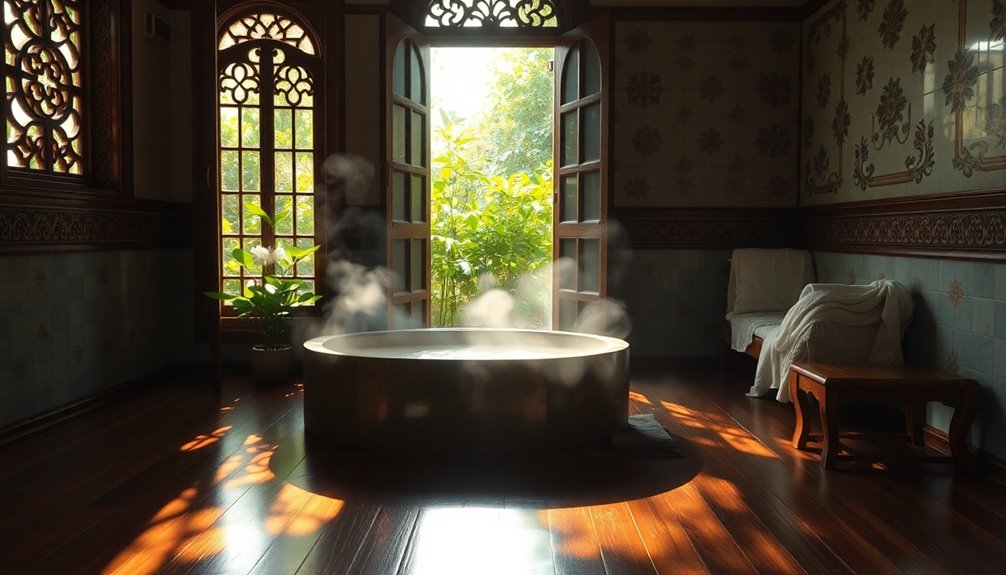
A bathhouse is a communal space where you can relax, connect, and rejuvenate. With roots stretching back to ancient civilizations, they’ve served as social hubs for interaction and healing. Different cultures have their own versions, like Japanese onsens and Middle Eastern hammams, each emphasizing community and tradition. In literature, bathhouses symbolize cleansing and rebirth. You’ll discover how these spaces remain relevant today and their role in promoting well-being and community bonds.
The Origins of Bathhouses: A Historical Overview

Bathhouses have a rich history that dates back thousands of years, originating in ancient civilizations where communal bathing was both a social and hygienic practice. You might be surprised to learn that these establishments weren’t just about cleanliness; they played a significant role in shaping social interactions.
Bathhouse origins trace back to cultures like the Romans and Greeks, who viewed bathing as a communal experience. People gathered not only to cleanse themselves but to engage in conversation and build relationships.
The cultural impact of bathhouses extended beyond hygiene, influencing art, literature, and even architecture. Today, you can still see echoes of these ancient practices in modern spas and wellness centers, highlighting their enduring legacy in promoting community and well-being. The symbolism of resilience and growth in communal spaces mirrors the experiences shared in diverse settings, much like the immigrant narratives depicted in literature.
Bathhouses in Ancient Civilizations: Rome to Greece

In ancient civilizations, bathhouses weren’t just places to clean up; they were cultural hubs.
You’ll notice the impressive architecture of Roman bathhouses, designed for both functionality and grandeur.
Meanwhile, the rituals surrounding Greek bathing reveal deep social and spiritual significance that shaped their society. These communal spaces often mirrored the intricate social dynamics of the time, much like the themes of power and corruption found in historical narratives.
Roman Bathhouse Architecture Features
While exploring ancient Roman architecture, you’ll notice that bathhouses, or thermae, were more than just places for bathing; they were social hubs designed with remarkable features.
Roman baths showcased architectural innovations like vaulted ceilings and intricate layouts, enhancing the overall experience. The sophisticated water management systems guaranteed a continuous flow of hot and cold water, promoting thermal efficiency.
Decorative mosaics adorned floors and walls, reflecting the artistic flair of the time and turning these public spaces into visual masterpieces.
These bathhouses also served as venues for cultural exchange, where diverse social dynamics unfolded among citizens.
Ultimately, they played a pivotal role in daily life, blending relaxation, hygiene, and community engagement in a unique way.
Greek Bathing Rituals Significance
Roman bathhouses laid the groundwork for communal bathing practices, but Greek bathing rituals emphasized a deeper cultural significance. In ancient Greece, these rituals weren’t just about hygiene; they symbolized social connection and spiritual cleansing.
You’d partake in Greek cleansing practices not only to wash away dirt but to purify your body and soul. Bathhouses served as social hubs where friendships flourished and philosophical discussions thrived.
The rituals often included oiling the body and scraping the skin, enhancing the sense of renewal. By participating in these communal bathing traditions, you engaged in a shared experience that reinforced community bonds and cultural values.
Ultimately, Greek bathing rituals transcended mere cleanliness, reflecting a holistic approach to well-being and social interaction.
The Cultural Significance of Bathhouses Worldwide
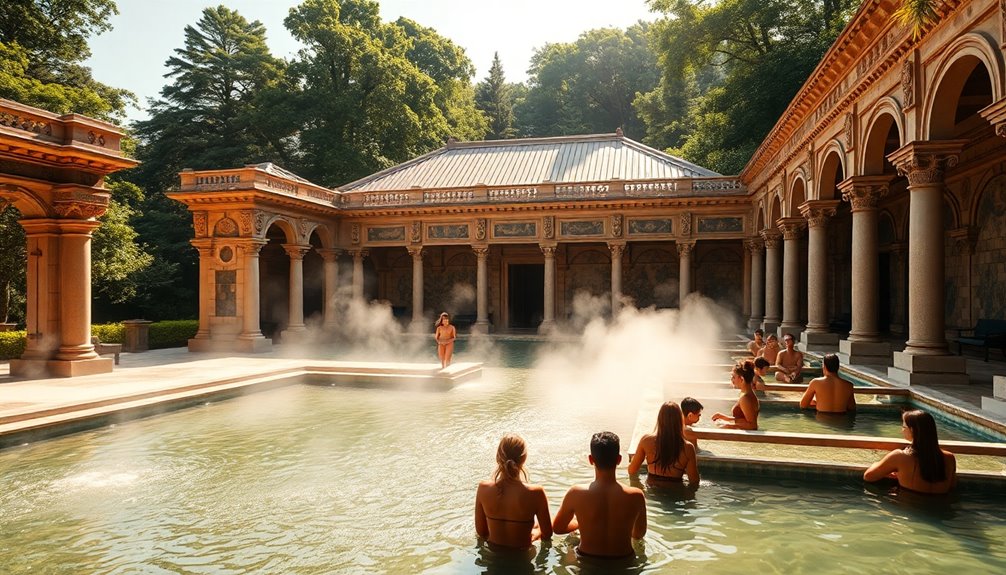
Bathhouses have played an essential role in cultures around the world, shaping social interactions and community bonds. You can trace their historical origins to ancient times, where they served not just for bathing, but as significant spaces for rituals and gatherings. Understanding their evolution helps you appreciate how these places of relaxation foster connections and traditions across different societies. Additionally, the cultural significance of rituals in bathhouses mirrors the way marginalized individuals’ contributions have historically shaped community practices.
Historical Origins and Evolution
Throughout history, people have sought communal spaces for relaxation and social interaction, which is where bathhouses came into play. These establishments reflect diverse historical contexts, serving not just hygiene needs but also as venues for leisure activities.
Architectural influences from various cultures shaped their designs, showcasing unique styles and functions. Bathhouses fostered cultural exchanges, enabling societies to share practices and ideas. They played significant societal roles, acting as centers for community engagement and social bonding.
As hygiene evolved, so did the purpose of these spaces, adapting to modern needs. Artistic representations throughout history often capture the essence of bathhouses, highlighting their importance in communal practices and the human experience.
Rituals and Social Gatherings
Communal bathing has long been interwoven with rituals and social gatherings, reflecting the cultural significance of these spaces across various societies. In many cultures, bathhouses serve as communal hubs where people connect, fostering communal bonding.
You might find that these gatherings often revolve around traditional ceremonies, marking milestones like births or weddings.
The ritual significance of bathhouses extends beyond mere cleanliness; they symbolize purification and renewal. As you soak in the warm waters, you’re participating in a shared experience that transcends generations.
Friends and families come together to relax, share stories, and strengthen their ties. This blend of ritual and social interaction transforms bathhouses into essential cultural landmarks, reinforcing a sense of belonging in an increasingly fragmented world.
Different Types of Bathhouses: From Onsen to Hammams
Across the globe, you’ll find a variety of bathhouses, each reflecting unique cultural practices and traditions. From Japan’s serene onsens to the vibrant hammams of the Middle East, these spaces offer more than just relaxation; they embody cultural rituals and wellness practices.
- Onsen: Emphasizes onsen etiquette for a respectful experience.
- Hammam: Celebrates hammam traditions focused on communal bathing.
- Thermal Springs: Utilizes natural thermal healing properties for health benefits.
- Spas: Incorporates modern wellness practices that blend tradition with innovation.
Each bathhouse invites you to immerse yourself in its distinct atmosphere, fostering connections through shared experiences in water and warmth. Additionally, the significance of systemic injustice mirrors the societal impacts observed in various cultural rituals, highlighting the communal need for healing and understanding.
The Architecture of Bathhouses: Design and Functionality
When you step into a bathhouse, you’re not just entering a space for relaxation; you’re experiencing a carefully designed environment that enhances your well-being.
The architecture often embraces minimalist design, eliminating distractions to create a serene atmosphere. Natural materials like wood and stone harmonize with soft lighting, fostering a sense of tranquility.
The architecture’s minimalist design and natural materials cultivate a tranquil atmosphere, enhancing your overall sense of well-being.
Functional aesthetics are key; every element, from the layout to the fixtures, serves a purpose while maintaining beauty. Open spaces invite airflow, while water features provide soothing sounds.
The strategic arrangement of pools and saunas encourages a seamless flow, allowing you to shift effortlessly between experiences. In this thoughtfully crafted space, every detail contributes to a holistic experience, making your visit both restorative and rejuvenating. This intentional design echoes the intricate plots of mystery novels, drawing readers into a world where every element serves a significant purpose.
The Role of Bathhouses in Social Interaction
Bathhouses serve as vibrant community gathering spaces where you can connect with others. They foster rituals that strengthen social bonds, creating a sense of belonging. Here, you’ll find more than just relaxation; you’ll experience the warmth of shared moments and conversations. In a similar way, the intimate shopping atmosphere at The Abbey Bookshop invites patrons to engage with literature and each other, enriching the community experience.
Community Gathering Spaces
A vibrant atmosphere often fills bathhouses, transforming them into essential community gathering spaces. Here, people connect, fostering community bonding and engaging in cultural exchange. You’ll find:
- Lively conversations that break down barriers
- Shared experiences that strengthen friendships
- Local traditions celebrated and passed down
- A welcoming environment for all, regardless of background
These interactions create a sense of belonging, making bathhouses more than just places to cleanse the body; they nourish the spirit.
As you immerse yourself in this unique setting, you’ll witness the beauty of diverse cultures intertwining. Bathhouses remind us that, in shared spaces, we can celebrate our differences while finding common ground, enriching our lives and communities in the process.
Rituals of Connection
While exploring the rituals of connection at bathhouses, you’ll discover how these spaces facilitate genuine social interactions. Bathhouses aren’t just about bathing; they’re vibrant hubs for communal bonding.
As you step into the warm, steamy atmosphere, you’ll feel a sense of belonging that transcends everyday life. People engage in connection rituals, sharing stories and laughter while relaxing in the soothing waters.
These moments foster a unique intimacy, breaking down barriers between strangers and friends alike. The shared experience of warmth and water nurtures friendships, allowing you to connect on deeper levels.
In a world often defined by isolation, bathhouses remind you of the power of community and the importance of nurturing those bonds through simple, shared experiences.
Bathhouses and Spiritual Rejuvenation: A Deeper Look
Stepping into a bathhouse can feel like entering a sanctuary for the soul, where the stresses of daily life melt away. Here, you experience spiritual cleansing and a sense of communal healing that revitalizes your spirit. The atmosphere invites you to let go and embrace the moment.
- Soothing warmth envelops you, easing tension.
- The sound of water creates a meditative backdrop.
- Shared spaces foster connections with others.
- Rituals enhance your journey toward inner peace.
In this sacred space, you’re not just cleansing your body; you’re nurturing your spirit. The bathhouse becomes a conduit for rejuvenation, allowing you to reconnect with yourself and the community around you, reaffirming the bond between body, mind, and spirit. Just as resistance movements inspired collective action during challenging times, bathhouses foster a sense of unity and shared experience among their patrons.
Literary Depictions of Bathhouses: Themes and Symbolism
Bathhouses have long captured the imagination of writers, symbolizing both physical cleansing and deeper emotional or spiritual renewal. In literature, they often serve as powerful spaces where characters confront their inner struggles.
You’ll find that authors use bathhouses as a backdrop for transformation, embodying themes of vulnerability and rebirth. This literary symbolism highlights the intersection of the personal and communal, allowing characters to shed layers of their identity.
Cultural narratives surrounding bathhouses emphasize connection—both to oneself and to others. As you explore these texts, notice how bathhouses function as liminal spaces, inviting readers to engage with notions of intimacy, healing, and societal norms. The resilience demonstrated by characters in literature, much like the acts of resistance seen in historical contexts, serves to enrich the narrative of transformation.
Ultimately, these literary depictions enrich our understanding of human experience through the lens of cleansing and renewal.
Bathhouses in Folklore and Mythology
Throughout various cultures, bathhouses have been woven into folklore and mythology, often serving as critical settings for transformative journeys. They embody deep folklore symbolism and feature prominently in mythical narratives.
You’ll discover how these spaces become sanctuaries for healing and rebirth, where characters undergo significant changes.
- Bathhouses as portals to other dimensions
- The cleansing of sins and rejuvenation of spirits
- Encounters with deities or mythical beings
- Symbolic rituals that mark changes
In tales, bathing often represents a shedding of old identities, allowing characters to emerge renewed. This transformative aspect mirrors Tita’s journey in female empowerment through cooking in “Like Water for Chocolate,” showcasing the profound connections between personal growth and cultural rituals.
Whether in ancient texts or contemporary stories, bathhouses remain essential cultural symbols, highlighting the universal desire for purification, transformation, and connection to something greater.
Modern-Day Bathhouses: Trends and Popularity
Have you noticed a resurgence in the popularity of bathhouses in recent years? This trend reflects a broader shift in spa culture, where people seek holistic wellness experiences.
Modern bathhouses blend historical influences with architectural innovations, creating spaces that invite relaxation and social interactions. You’ll find that many facilities now offer unique amenities, from saunas to rooftop gardens, enhancing the overall experience.
As wellness trends continue to evolve, these bathhouses serve as communal hubs, fostering cultural exchanges and connections among diverse groups. The healing power of shared experiences emphasizes the importance of self-care and community in today’s fast-paced world.
Whether you’re unwinding after a long week or catching up with friends, the revival of bathhouses emphasizes the importance of self-care and community in today’s fast-paced world.
The Therapeutic Benefits of Bathhouse Experiences
While you might think of bathhouses as just places to unwind, they offer a wealth of therapeutic benefits that can enhance both your physical and mental well-being.
These spaces promote mindful relaxation and communal healing, creating an atmosphere that’s hard to replicate elsewhere.
Here’s what you can gain from a bathhouse experience:
- Stress reduction: Soaking in warm water calms your mind and body.
- Improved circulation: The heat helps boost blood flow, revitalizing your muscles.
- Detoxification: Sweating aids in flushing out toxins, leaving you refreshed.
- Social connection: Engaging with others fosters a sense of belonging and support.
Bathhouses and Community Building: A Contemporary Perspective
Bathhouses serve as vibrant community hubs, fostering connections that transcend mere social interactions. They promote community wellness by creating inclusive spaces where everyone feels welcome.
As you step inside, you’ll experience cultural exchange—traditional practices from various backgrounds come together, enriching your understanding of others. The atmosphere encourages social bonding, allowing you to forge friendships over shared experiences.
Engaging in leisure activities, whether through communal bathing or wellness workshops, enhances emotional healing and nurtures a sense of belonging. By participating in these activities, you actively contribute to local engagement, strengthening community ties.
In today’s fast-paced world, bathhouses remind us of the importance of connection, offering a sanctuary for building relationships and promoting collective well-being.
Why Do Bathhouses Remain Relevant Today?
In a world increasingly defined by technology and isolation, bathhouses continue to offer a much-needed escape and a sense of community. They hold cultural relevance in today’s society by fostering social dynamics that are often lost in our fast-paced lives.
Here’s why they remain significant:
- Connection: You can meet diverse people, breaking down social barriers.
- Relaxation: They provide a space to unwind, promoting mental well-being.
- Tradition: Bathhouses honor ancestral practices, linking you to history.
- Wellness: They encourage holistic health through communal bathing and relaxation.
In essence, bathhouses serve as essential spaces where you can reconnect with yourself and others, making them more relevant than ever in our modern lives.
Conclusion
As you step into a bathhouse, you’re enveloped by warmth and the soothing scent of steam, transporting you to a world where time slows down. This ancient practice, rich in history and community spirit, continues to thrive today, reminding us that self-care and connection are timeless. Whether you’re soaking in a tranquil onsen or unwinding in a bustling hammam, each moment spent here rejuvenates not just your body but your spirit, weaving you into a tapestry of shared experiences.