
If you’re drawn to Dark Academia and its complex themes of obsession and betrayal, you’ll love exploring books like *The Likeness* by Tana French and *If We Were Villains* by M.L. Rio. Both capture the intensity of elite settings and human complexity. *Black Chalk* exposes the darker sides of friendship, while *Bunny* dives into the unsettling dynamics of social cliques. Each title offers a unique glimpse into the rivalries that define academia’s allure. There’s much more waiting for you.
What Is Dark Academia and Why Does It Captivate Readers?
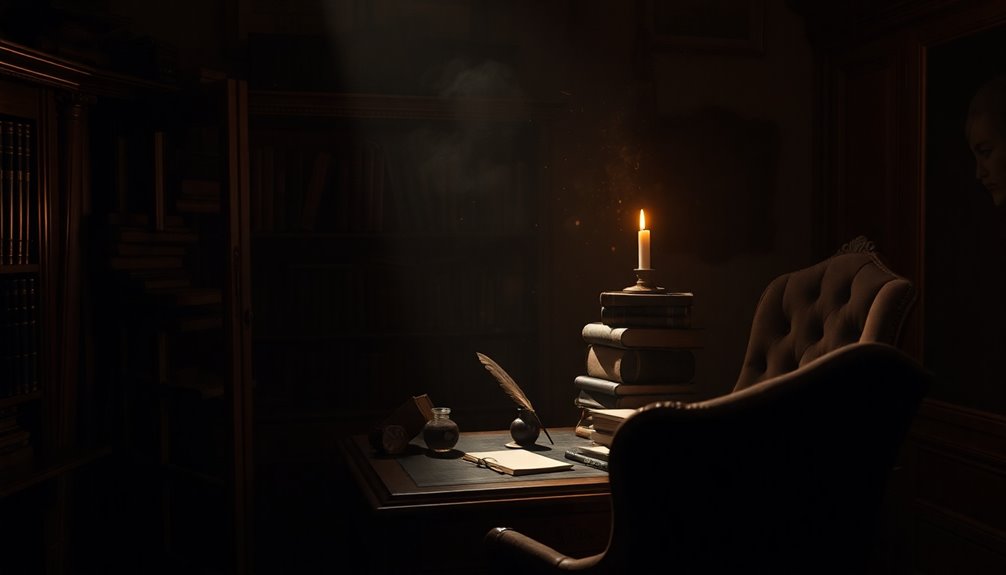
If you’ve ever found yourself fascinated by the allure of elite academic settings, you’re not alone. Dark academia draws readers in with its rich exploration of complex relationships and moral dilemmas.
This genre often unfolds in prestigious institutions, where eccentric student groups engage in discussions about art, literature, and philosophy. Works like *The Secret History* by Donna Tartt have defined dark academia, presenting character-driven narratives filled with psychological tension.
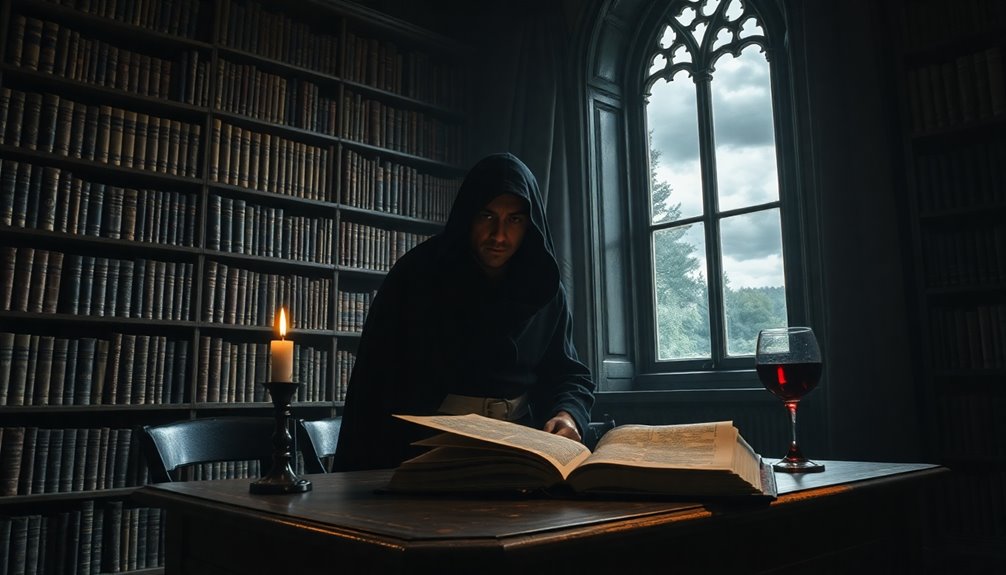
The atmosphere is thick with mystery, often involving gothic elements and tragic outcomes. Readers are enticed by the darker aspects of human nature and the consequences of ambition and hedonism. This genre’s themes of moral ambiguity resonate with those who ponder the complexities of ethical choices in the pursuit of knowledge.
The genre captivates with its blend of gothic mystery and the exploration of ambition’s darker consequences.
It’s no wonder this genre resonates, especially during the reflective autumn season, inviting you to explore deeper into its intriguing world.
Exploring the Themes of Obsession and Betrayal in Literature

While exploring the depths of literature, you’ll often encounter themes of obsession and betrayal that resonate deeply with readers.
These motifs are especially prevalent in dark academia, where characters are drawn into a web of intense emotions and tragic outcomes.
- Obsession often leads to a fixation on knowledge or relationships, as seen in The Secret History.
- Betrayal emerges through jealousy and conflict, like in If We Were Villains where friendships fracture under pressure.
- Gothic atmospheres amplify these themes, revealing moral dilemmas in classics such as Frankenstein and modern works like *Babel*.
In dark academia, the intricate dance between obsession and betrayal creates a haunting reflection of human nature, leaving a lasting impact on those who dare to explore it. The exploration of systemic racism in works like Richard Wright’s *Native Son* exemplifies how societal pressures can fuel personal obsessions and tragic betrayals.
The Likeness by Tana French: A Psychological Masterpiece
As you plunge into *The Likeness* by Tana French, you’ll find yourself captivated by the story of Cassie Maddox, a detective who takes on the identity of her murdered lookalike.
Set in a secluded Irish college, the novel masterfully explores themes of identity and trauma, drawing you into the psychological complexities of a tightly-knit group of friends.
French’s intricate narrative creates a rich atmosphere reminiscent of dark academia, where the lines between reality and pretense blur.
As Cassie navigates her new role, you’ll feel the suspense mount, revealing the characters’ intense connections and hidden secrets.
This psychological masterpiece weaves a tale that resonates deeply, making *The Likeness* a must-read for fans of both thrillers and literary depth. Additionally, the story’s intricate themes of love and obsession reflect the complexities found in *The Phantom of the Opera*, highlighting the dark allure of human connections.
If We Were Villains by M.L. Rio: Shakespearean Drama Meets Dark Mystery
In *If We Were Villains*, you’ll see how ambition and rivalry can twist friendships into something darker.
The characters’ on-stage personas bleed into their real lives, creating a tension that escalates to tragic consequences.
As you navigate this Shakespearean landscape, you’ll uncover the fine line between performance and reality, making you question the true cost of obsession. This exploration of morality and guilt resonates with themes found in The Secret History, highlighting the intricate dynamics of friendship and betrayal.
Themes of Ambition and Rivalry
Ambition and rivalry fuel the intense dynamics in “If We Were Villains” by M.L. Rio, creating a gripping narrative steeped in dark academia.
As you journey through the lives of Shakespearean actors, you’ll witness how their relentless ambitions lead to betrayal and tragic consequences. The characters’ desire for greatness intertwines with their personal conflicts, culminating in a dramatic exploration of human nature.
- Each character embodies ambition, reflecting Shakespearean archetypes.
- Rivalry ignites jealousy and violence, pushing friendships to the brink.
- The blurring lines between performance and reality deepen the sense of betrayal.
In this tale, the interplay of ambition and rivalry reveals the darker sides of art and the human experience, making it a compelling read.
On-Stage Roles and Reality
While the actors in “If We Were Villains” navigate their intense relationships, the boundaries between their on-stage personas and true selves blur dramatically.
As you explore the lives of these young performers, you’re drawn into a world where ambition fuels their desire to excel, yet jealousy simmers beneath the surface.
Each on-stage performance reflects their inner turmoil, and Shakespeare’s themes of betrayal come alive in their real lives, mirroring the tragic narratives they enact.
Oliver Marks’s journey reveals the psychological complexities of friendship and obsession, making you question what’s real.
The novel’s structure, echoing classic plays, deepens this connection, drawing you into a darkly compelling exploration of how art and life intertwine, often with devastating consequences.
Black Chalk by Christopher J. Yates: The Stakes of Friendship and Betrayal
In “Black Chalk,” you’ll see how friendship can fracture under pressure, especially when a seemingly innocent game escalates into something sinister.
The dark twist of the game reveals the true nature of betrayal among friends, forcing you to question the lengths people will go to for ambition and loyalty.
As the story unfolds, you’ll grapple with the heavy consequences that linger long after the game ends. This narrative mirrors the exploration of inherent human evil in “Lord of the Flies,” highlighting how the breakdown of social norms can reveal the darkness within individuals.
Friendship Under Pressure
- The escalating stakes of friendship, where dares become increasingly risky.
- Characters grappling with the consequences of their actions, leading to profound betrayals.
- The haunting realization that obsession can distort relationships beyond repair.
As the characters reunite 14 years later, they confront the emotional fallout of their choices, showcasing how pressure can unravel even the strongest of friendships.
Yates masterfully illustrates the darker side of camaraderie in this gripping tale.
The Game’s Dark Twist
As friendships unravel in the face of pressure, the game in Black Chalk takes a sinister turn, revealing how ambition and obsession can lead to devastating consequences.
You watch as a group of friends, initially drawn together by camaraderie, becomes entangled in escalating dares that blur the line between fun and danger.
With each challenge, the stakes rise, provoking jealousy and mistrust. Betrayal sneaks in, morphing bonds into rivalries, and what began as a thrill spirals into tragedy.
The years unfold, ultimately culminating in a reunion that forces everyone to confront the fallout of their choices.
Yates skillfully illustrates how a seemingly innocent game can expose the darker facets of friendship, leading to an unforgettable exploration of human nature’s complexities.
Consequences of Betrayal
Betrayal, lurking beneath the surface of friendship in Black Chalk, reveals its devastating power as the characters face the consequences of their choices.
This psychological thriller set in the eerie atmosphere of Dark Academia illustrates how quickly trust can shatter. The innocent dares escalate, leading to life-altering repercussions, and the reunion 14 years later forces them to confront their past.
- Trust erodes as the game intensifies, showcasing the fragility of friendship.
- Guilt becomes a haunting specter, lingering long after the dares are done.
- The stakes of betrayal push the characters into a psychological abyss, revealing their true selves.
In Black Chalk, the consequences of betrayal resonate deeply, showcasing the high price of fractured bonds.
Ninth House by Leigh Bardugo: A Supernatural Twist on Dark Academia
While you explore the world of dark academia, “Ninth House” by Leigh Bardugo offers an enthralling blend of supernatural elements and gripping mystery.
Set at Yale University, it follows Alex Stern, a freshman with the unique ability to see ghosts. As she navigates the elite college’s secret societies, each steeped in occult rituals, Alex’s task is to monitor these groups, preventing them from engaging in harmful practices.
This tension heightens her experience, revealing the dark underbelly of privilege and power in academia. As she confronts her traumatic past, Alex uncovers hidden truths that challenge her place within this world.
With its intricate plot and richly developed characters, “Ninth House” redefines dark academia through a supernatural lens, echoing themes of identity and societal expectations that resonate with Baldwin’s exploration of personal struggles.
Bunny by Mona Awad: The Dark Side of Social Cliques
In the twisted halls of a New England university, “Bunny” by Mona Awad explores the unsettling dynamics of social cliques through the eyes of Samantha Mackey.
This darkly humorous tale dives into the grotesque nature of elite academic life, revealing how obsession and identity intertwine.
- You’ll witness Samantha’s struggle against the wealthy, eccentric Bunnies.
- The peculiar rituals they engage in expose the lengths people go to fit in or stand out.
- Awad’s blend of magical realism and psychological tension keeps you questioning reality.
With its chilling portrayal of social dynamics, “Bunny” captivates readers and shines a light on the darker side of belonging in a world steeped in privilege and pretense. It resonates with themes of emotional complexities that challenge conventional norms in relationships, much like Sally Rooney’s exploration of personal connections.
Shadow of the Lions by Christopher Swann: A Haunting Mystery in an Elite School
As Matthias returns to the elite boarding school where he once thrived, he’s not just confronting the academic halls but also the haunting memories tied to his former roommate’s mysterious disappearance.
“Shadow of the Lions” by Christopher Swann immerses you in a gripping mystery that unravels the dark secrets lurking within the institution. This psychological thriller explores themes of friendship, trauma, and the weight of unresolved issues.
As Matthias digs deeper, he navigates a complex web of loyalty and betrayal, revealing the darker side of dark academia. With its blend of nostalgia and suspense, Swann’s novel captures the eerie atmosphere of elite educational environments, making you question the true price of knowledge and the shadows that linger in these hallowed halls. The haunting melodies of emotional expression echo through the story, heightening the sense of mystery and connection to the characters’ inner struggles.
The Rehearsal by Eleanor Catton: Manipulation and Power Among Teens
Manipulation thrives in the halls of Eleanor Catton’s The Rehearsal, where teenage girls wield power like a finely honed instrument. The narrative reveals how students exploit drama and performance to navigate a scandalous school environment, exploring the fallout from a student-teacher affair.
Here, morality is twisted, and identity becomes fluid.
- The blurred lines between reality and theatricality force you to question what’s genuine.
- Ambition fuels manipulation, creating a competitive atmosphere that breeds betrayal.
- The consequences of their actions ripple through relationships, showcasing the darker side of adolescence.
As you explore this complex world, Catton invites you to reflect on the nature of storytelling and the profound impact of power on personal lives. The emotional toll of heroism, akin to the struggles faced by characters in literature, underscores how systemic racism can shape personal relationships and identities.
The Marriage Plot by Jeffrey Eugenides: Navigating Relationships in Academia
In “The Marriage Plot,” you’ll find a gripping exploration of complex character dynamics set against the backdrop of Brown University in the 1980s.
As you navigate the romantic entanglements of Madeleine, Leonard, and Mitchell, you’ll confront the profound themes of mental health that shape their relationships.
This novel captures the chaotic intersection of love and identity in an elite academic environment, making it a compelling read for anyone interested in the darker sides of academia. Furthermore, it resonates with the broader themes of cultural heritage that influence personal identity and relationships throughout the narrative.
Complex Character Dynamics
While traversing the intricate relationships in “The Marriage Plot,” you’ll find that Jeffrey Eugenides masterfully captures the emotional complexities of love and friendship within an academic setting.
The novel’s complex character dynamics reflect the pressures of a Dark Academia environment, where intellectual pursuits intertwine with personal struggles.
- You’ll see how Madeleine, Leonard, and Mitchell navigate their tangled relationships while grappling with identity.
- The academic environment amplifies their emotional turmoil, showcasing the impact of mental health on connections.
- Literary references deepen their interactions, emphasizing the intersection of intellect and emotion.
Eugenides’ portrayal resonates with fans of “The Secret History,” offering a poignant exploration of how university life shapes individuals and their relationships.
Themes of Mental Health
As you explore the complexities of relationships in “The Marriage Plot,” you’ll encounter a poignant examination of mental health woven throughout the narrative.
Set against the backdrop of Dark Academia at Brown University, the story intricately portrays the struggles of college students facing academic challenges.
Leonard’s battle with bipolar disorder serves as a vital lens through which you see how mental illness impacts not only his life but also his relationships with Madeleine and Mitchell.
Eugenides captures the pressures placed on students, especially women like Madeleine, who wrestle with societal expectations while maneuvering their identities.
This nuanced portrayal highlights the often-overlooked mental health struggles faced by students in elite institutions, making “The Marriage Plot” a compelling companion to “The Secret History.”
Romantic Entanglements Explored
Steering through the tangled web of relationships in “The Marriage Plot” reveals how romantic entanglements can both enrich and complicate the lives of college students.
As you explore the dynamics between Madeleine, Leonard, and Mitchell, you’ll see how academic pressures shape their complex relationships and influence their identities within the academic environment.
Consider these key elements:
- The struggle between love and academic ambition, especially for Madeleine.
- The impact of mental health on romantic connections and personal growth.
- The way literary references enhance the narrative and frame the characters’ entanglements.
Eugenides masterfully illustrates that while love can inspire, it also complicates life during this pivotal phase, making you question what truly defines your identity.
Conclusion
So, as you plunge into these dark academia gems, just remember: nothing says “I’m a tortured intellectual” quite like obsessively dissecting betrayal while sipping overpriced coffee in a dimly lit café. Whether you’re contemplating the existential dread of elite institutions or steering through the treacherous waters of friendship, you’re bound to find a little solace in these twisted tales. After all, who wouldn’t want to explore the darker side of academia while pretending to be deep and philosophical? Enjoy!