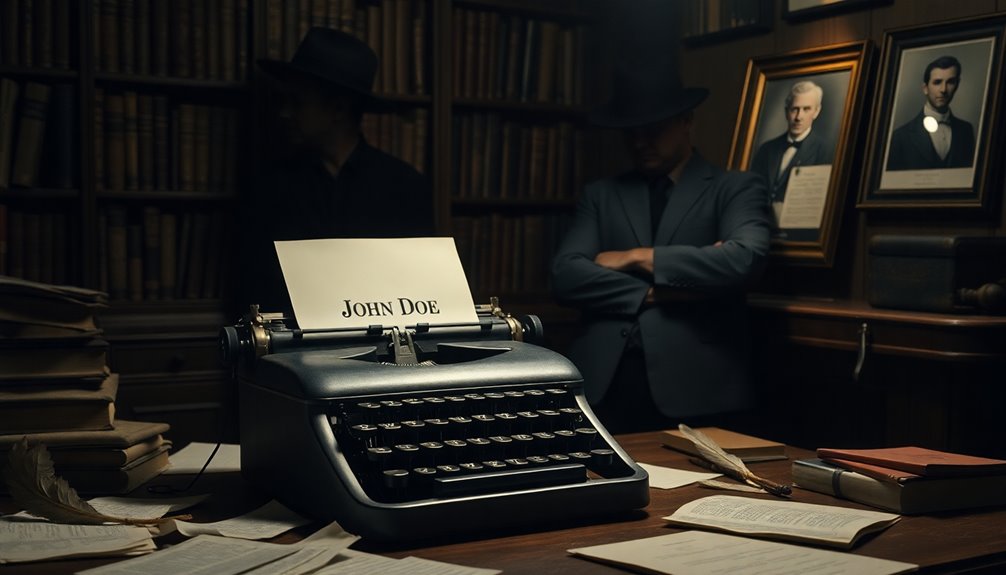
Authors often hide behind pen names to craft unique literary identities and navigate societal norms. Pseudonyms give you the freedom to explore different genres without preconceived labels while safeguarding your privacy. They’ve also historically helped female writers combat gender biases and find credibility in a male-dominated landscape. Plus, a well-chosen pen name can enhance marketability and connection with readers. Discover more about the fascinating world of pseudonyms and their impact on literature.
The Meaning and Importance of Pen Names

Pen names, often seen as a shield for authors, play an essential role in shaping their literary identities. By adopting a nom de plume, you can create a distinct persona, distancing yourself from personal life and works.
This practice has deep historical roots, particularly among female authors like George Eliot, who used male pseudonyms to navigate a male-dominated literary landscape. Pen names help tackle gender bias, enhance marketability, and offer anonymity, allowing you to explore various genres without preconceived notions tied to your real name.
Authors like J.K. Rowling, writing as Robert Galbraith, illustrate how a pen name can open new creative avenues. Similarly, E.L. James adopted a pseudonym to navigate the literary world and explore themes of female empowerment through her works. Ultimately, choosing a pen name reflects your personal journey and the themes you wish to convey to your audience.
Historical Context: Why Authors Have Used Pseudonyms

Throughout literary history, authors have turned to pseudonyms for various reasons, often seeking to navigate societal norms or genre expectations. Many female writers, like George Eliot—who was actually Mary Ann Evans—used pen names to conceal their gender and gain credibility in a male-dominated world.
The Brontë sisters adopted male pseudonyms, such as Currer Bell, for similar reasons. Pseudonyms allowed authors to create distinct identities, as seen with Lewis Carroll and George Orwell, enabling them to explore different genres without the constraints of their real names.
Additionally, the evolution of pseudonyms now includes considerations of marketability and artistic expression, helping authors resonate with their target audiences while preserving their privacy. This practice of using pseudonyms reflects broader themes of systemic racism, similar to how Richard Wright’s *Native Son* challenged societal norms and expectations around race and identity.
Famous Authors Who Embraced Pen Names

Many renowned authors have embraced pen names to craft their identities and navigate the literary landscape.
For instance, George Eliot, a pseudonym for Mary Ann Evans, adopted her name to gain respect in a male-dominated field. Similarly, Samuel Clemens became known as Mark Twain, a famous pen that symbolizes his humor and social commentary.
Joanne Rowling initially published under her initials to attract a wider audience, later adopting the distinctive name Robert Galbraith for her crime fiction.
The Brontë sisters also chose male pseudonyms—Currer, Ellis, and Acton Bell—to combat gender biases of their time.
Each of these authors skillfully used pen names to enhance their literary careers while expressing their unique voices. Additionally, the use of pseudonyms can often reflect systemic racism’s impact on an author’s ability to be accepted in literary circles, as seen in the case of Richard Wright.
Gender and Identity: The Role of Pen Names in Literature
You might notice that many female authors historically used pen names to navigate a male-dominated literary landscape. By adopting male or gender-neutral pseudonyms, they aimed to sidestep bias and gain the respect their work deserved. This practice not only shaped their identities as writers but also sparked ongoing discussions about gender and its representation in literature. The resilience of family dynamics can often mirror these authors’ struggles, as they seek to establish their voices in a challenging environment.
Historical Context of Pseudonyms
While the use of pen names has evolved over the centuries, their historical significance in shaping gender and identity in literature remains profound.
Authors like Mary Ann Evans, known as George Eliot, adopted pen names to combat gender bias and gain respect in a male-dominated field. Similarly, J.K. Rowling chose her initials to attract both male and female readers, highlighting the ongoing relevance of gender in literature.
Historical figures often faced societal backlash, prompting them to use pseudonyms for privacy and safety. For instance, George Orwell, born Eric Blair, sought distance from his work, while Stephen King published horror under the name Richard Bachman.
These choices reflect the complexities of identity within literary spaces throughout history.
Gender Bias in Literature
Gender bias in literature has long influenced how authors present themselves, often pushing them to adopt pen names for better acceptance. Many female authors, like George Eliot and Currer Bell, chose male pen names to gain credibility in a male-dominated literary world.
A survey revealed that 60% of women writers considered using a pseudonym to dodge gender bias and stereotypes tied to their real names. Research shows that female authors using male pseudonyms often achieved greater commercial success and critical recognition than their peers.
Even today, modern authors like J.K. Rowling use pen names, such as Robert Galbraith, to navigate market expectations and mitigate gender bias, proving that the struggle for equality in the literary world continues.
Marketing and Anonymity: Modern Reasons for Using Pseudonyms
Using a pseudonym can boost your marketability by helping you connect with different reader demographics across genres. It also gives you the privacy you need to keep your personal life separate from your writing career. In today’s digital world, this anonymity can be essential for maintaining personal safety while you explore your creative voice. Additionally, adopting a pseudonym can allow authors to delve into hidden histories without the constraints of their established identities.
Marketability Across Genres
When authors choose a pseudonym, they often tap into a powerful marketing tool that can greatly enhance their appeal across various genres. By using a pen name generator, they craft a unique pen name that resonates with target demographics, aligning with readers’ expectations.
This strategic decision allows authors to create a distinct identity, exploring different genres without confusing their audience. Gender-neutral or ambiguous pseudonyms further broaden their reach, avoiding bias that might skew readership.
Enhanced discoverability in a crowded marketplace becomes essential; a memorable name makes marketing easier. Ultimately, authors use these tactics not just for aesthetic presentation, but to effectively engage with their audience while maintaining a degree of privacy in today’s digital landscape.
Privacy and Personal Safety
As authors navigate the complexities of modern publishing, many find that adopting a pseudonym offers essential privacy and personal safety. By using pseudonyms, you can separate your personal life from your writing, allowing you to tackle controversial subjects without fear of public backlash. Anonymity empowers you to express your views freely, especially when addressing sensitive themes.
With the rise of social media, maintaining privacy has become more challenging, prompting authors to choose transparent pseudonyms that still offer some level of anonymity. Additionally, pseudonyms enhance marketability, helping you connect with specific reader demographics. They also provide genre flexibility, letting you publish across multiple genres without confusing your audience.
Ultimately, pseudonyms serve as a shield for your personal safety and creative expression.
The Creative Freedom Offered by Pseudonyms
Pseudonyms can reveal a world of creative freedom, allowing you to experiment with various genres and styles without the constraints of your established identity. By adopting a pen name, you can create distinct literary identities, like Nora Roberts did as J.D. Robb, enabling exploration of different genres. This separation also lets you express controversial ideas without fear of personal backlash, much like George Orwell. Your pseudonym can enhance marketability, resonating with your target demographic, as Dr. Seuss’s whimsical name showcases. With a pen name, you keep your personal life private, fostering a liberated creative process. The psychological impact of an alternate identity can inspire new writing styles, encouraging you to push boundaries and fully embrace your creative potential. E.L. James’s successful transformation from fan fiction writer to a bestselling author exemplifies how pseudonyms can help redefine literary norms.
How to Choose the Perfect Pen Name for Your Writing?
Choosing the perfect pen name can greatly impact your writing career, especially if it resonates with your target audience. Start by considering your genre; a name that aligns with your audience’s expectations can enhance marketability.
Avoid names similar to well-known authors to guarantee your unique identity stands out. Reflect on your cultural heritage or personal experiences, as this can add depth and make your pen name memorable.
Check the availability of your chosen name on social media and web domains to build a strong online presence. Finally, think about the demographics of your intended readership, including age and region, to better connect with potential fans.
A thoughtfully chosen pen name can elevate your writing journey.
The Future of Pen Names in the Digital Age
While maneuvering through the complexities of the digital age, writers face new challenges and opportunities with their pen names. Here’s what to reflect on for the future:
- Anonymity vs. Transparency: Balancing privacy with reader expectations is essential for contemporary authors.
- Marketing Strategies: Unique pen names can enhance searchability, making it easier for readers to find you online.
- Social Media Presence: Authors must reflect on domain availability and social media handles to effectively promote their pseudonyms.
- Genre Sensitivity: In controversial genres, pen names serve as a protective barrier, allowing authors to explore topics without personal backlash.
- Collaborative Opportunities: With the rise of ghostwriters and uncredited works, authors can leverage their pen names to explore diverse narratives while maintaining their privacy.
As the landscape of publishing evolves, your pen name will remain an important tool for maneuvering privacy and marketing effectively.
Conclusion
Just as a mask can transform a performer into a character, a pen name lets you explore new facets of your creativity. Embracing a pseudonym opens doors to freedom, identity, and expression that you might not find under your real name. Whether you’re seeking anonymity or simply a fresh start, a pen name can become your literary alter ego. As the digital age evolves, who knows what new identities you might discover? The possibilities are endless!