
Sue Grafton’s death in 2017 left her fans longing for “Z Is for Zero,” the unwritten conclusion to her beloved Alphabet Series. Grafton’s strong commitment to artistic integrity meant she refused ghostwriting or adaptations, ensuring no one else would finish her work. This decision resonates deeply, as it preserves her unique storytelling and the legacy of Kinsey Millhone, her iconic protagonist. If you’re curious about the significance of her work and its impact, there’s much more to explore.
The Legacy of Sue Grafton and Her Alphabet Series
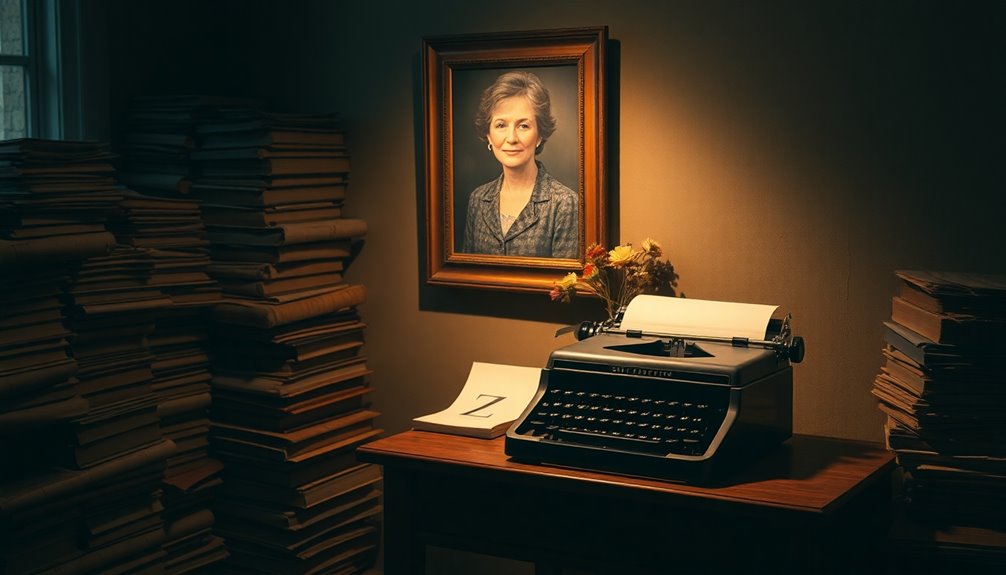
Sue Grafton’s legacy lives on through her beloved alphabet series, which introduced readers to the tenacious private investigator Kinsey Millhone. Starting with “A Is for Alibi” in 1982, Grafton crafted 25 novels that revolutionized the crime fiction genre.
Her strong female protagonist and compelling narratives tackled societal issues, engaging a dedicated fanbase. Tragically, Grafton passed away in December 2017 before completing “Z Is for Zero,” which she’d envisioned for decades.
Her family honored her wishes by confirming the series would conclude with “Y Is for Yesterday,” rejecting any ghostwriting attempts. This decision preserves Sue Grafton’s literary legacy, ensuring that her impactful work remains a cherished part of mystery literature, continuing to inspire readers long after her passing. Grafton’s commitment to authentic portrayal of experiences parallels Richard Wright’s efforts in challenging stereotypes through his literary contributions.
The Impact of Grafton’s Death on Readers and the Literary Community

When Sue Grafton passed away, you felt the weight of an unfinished journey, leaving her readers in mourning for the last chapter of Kinsey Millhone’s story. The absence of “Z Is for Zero” not only stirs curiosity about what could have been but also sparks conversations about her lasting influence on mystery fiction. As you reflect on her unique storytelling, it’s clear that her legacy will continue to intrigue and inspire both readers and writers alike. Grafton’s work, much like Richard Wright’s *Native Son*, highlights the profound impact of societal issues on individual lives, emphasizing the importance of systemic oppression in shaping narratives.
Mourning Literary Loss
Though Grafton’s death in December 2017 marked a profound loss for readers and the literary community, it also sparked a wave of reflection on her remarkable contributions to the mystery genre.
You may have felt the absence of her beloved alphabet series, especially with “Z Is for Zero” left unwritten. Grafton’s family honored her wishes by concluding the series with “Y Is for Yesterday,” ensuring no ghostwriting would occur.
Readers like you mourned not just the end of Kinsey Millhone’s adventures but also the unique voice that defined Grafton’s storytelling.
As tributes poured in, you recognized the significant void in crime fiction and the comfort her work provided over the years, solidifying her lasting impact on the literary world.
Unfinished Legacy’s Intrigue
Grafton’s untimely passing in December 2017 left readers grappling with an unfinished legacy that continues to resonate within the literary community.
When Grafton died, she left behind the anticipation of her final novel, “Z Is for Zero,” which many viewed as an essential piece to Kinsey Millhone’s story. The unfinished nature of this book sparked curiosity and speculation among fans, who often discuss how her protagonist might’ve concluded her journey.
This void not only saddened devoted readers but also prompted discussions about Grafton’s significant impact on the mystery genre. Tributes highlighted her pioneering role as a female author in a male-dominated field, ensuring that her influence endures even as her series officially concludes with “Y Is for Yesterday.”
Exploring the Character of Kinsey Millhone: Grafton’s Alter Ego
Kinsey Millhone stands as a remarkable embodiment of Sue Grafton’s own personality and experiences, serving as a private investigator who’s both relatable and compelling. Born in 1950, Kinsey’s independence and practicality resonate deeply with readers seeking a strong female lead.
As Grafton’s alter ego, Kinsey reflects a shared soul, allowing for a profound connection between author and character. You witness her growth as she navigates complex mysteries featuring her sharp problem-solving skills.
Grafton’s commitment to character-driven storytelling shines through Kinsey’s journey, where each case reveals layers of her personality. By aging Kinsey gradually, Grafton crafts a realistic portrayal that mirrors her own life experiences, making Kinsey Millhone an unforgettable figure in crime fiction. Additionally, Grafton’s work is often compared to Agatha Christie’s intricate plots, highlighting the mastery of mystery writing that she achieved throughout her career.
The Unwritten “Z Is for Zero”: Speculations and Fan Theories?
As fans enthusiastically await the final chapter in Sue Grafton’s series, the mystery surrounding the unwritten “Z Is for Zero” continues to spark lively discussions and speculations.
Many fans have speculated on what Kinsey Millhone’s last adventure might entail, with theories ranging from unexpected plot twists to profound character developments. Grafton had known her title for 30 years but left the ending unresolved, adding to the intrigue.
Her family confirmed she didn’t want anyone else to write the final book, ensuring “Z Is for Zero” remains a part of her legacy. This decision reflects a commitment to authorial integrity that resonates deeply with the literary world.
Grafton’s family affirmed her wish for “Z Is for Zero” to be solely her legacy, untouched by another’s hand.
Readers engage in vibrant discussions, reflecting on recurring themes from previous installments, pondering how they’d tie into the concluding chapter of Kinsey’s journey.
How Grafton’s Writing Process Shaped the Series
While many authors meticulously plan their stories, Sue Grafton embraced an organic writing process that allowed her characters to take the lead. This spontaneous approach gave life to Kinsey Millhone, making her relatable and dynamic throughout the series.
Rather than sticking to a strict outline, Grafton preferred to be surprised by Kinsey’s journeys, which added depth and authenticity to the character. Grafton’s playful method contributed to Kinsey’s growth, as readers witnessed her evolve naturally across the books.
Even after 30 years of knowing the title “Z Is for Zero,” Grafton hesitated on the ending, reflecting her desire to keep the creative process fluid. This unique method left readers intrigued and engaged with Kinsey’s story, even without a conclusion.
Reader Engagement and Nostalgia: Revisiting Grafton’s Works
Revisiting Sue Grafton’s alphabet series often brings a wave of nostalgia for readers who’ve followed Kinsey Millhone’s journey from the start.
As you dive back into her world, you can experience:
- The thrill of unraveling mysteries alongside Kinsey.
- Deeper insights into her character development and personal growth.
- The anticipation of what “Z Is for Zero” might’ve revealed.
- Engaging discussions with fellow fans in online communities.
These elements foster strong reader engagement, allowing you to reflect on the societal themes within Grafton’s works. The exploration of racial injustice in literature parallels the complexities found in Grafton’s narratives, enriching your reading experience.
This fosters deep reader engagement, encouraging reflection on the societal themes woven throughout Grafton’s compelling narratives.
Each re-read not only rekindles your connection to Kinsey but also highlights the lasting impact of Grafton’s exploration of crime and mystery, making her series a cherished part of literary history.
The Enduring Influence of Grafton on Modern Mystery Fiction
Sue Grafton’s impact on modern mystery fiction is undeniable, particularly through her creation of Kinsey Millhone, a groundbreaking female detective who defied traditional gender roles.
Her alphabet mystery series, starting with “A Is for Alibi,” set a new standard for detective novels, blending humor with serious themes. Grafton’s bestselling alphabet books dominated *The New York Times* Best Seller list for nearly 400 weeks, showcasing her influence on crime fiction’s popularity.
Additionally, her commitment to artistic integrity—refusing adaptations or ghostwriting—encouraged authors to prioritize creative control. The ongoing intrigue surrounding the unwritten “Z Is for Zero” continues to captivate new readers, solidifying Grafton’s legacy and inspiring contemporary writers to explore strong, independent characters like Kinsey Millhone. Grafton’s work also resonates with the legacy of hope that emerged from historical resistance movements, emphasizing the importance of standing up for justice and equality.
Conclusion
As you reflect on Sue Grafton’s legacy, it’s hard not to feel a twinge of nostalgia for that missing “Z.” Coincidentally, just like Kinsey Millhone, you might find yourself piecing together your own mysteries in life. Grafton’s stories linger, reminding you that while some chapters remain unwritten, the impact of her words continues to resonate. So, the next time you crack open a book, remember: the thrill of the unknown is what makes the journey worthwhile.