
Villains often challenge your ideas of right and wrong, making morality feel murky. These characters usually embody moral complexity, driven by trauma or societal pressures rather than pure evil. Their motivations can resonate with your struggles, blurring the lines between justice and revenge. You might find that their journeys reflect real-world issues and contradictions, offering valuable life lessons. As you explore further, you’ll uncover the deeper layers of these compelling figures and their impact on morality.
The Nature of Villainy: Understanding Moral Complexity
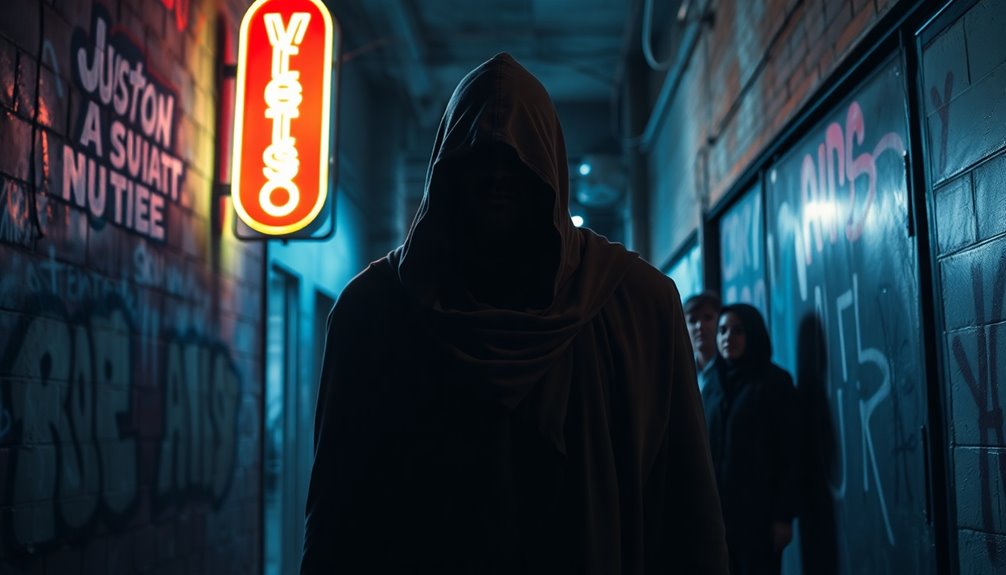
While many villains are painted as purely evil, the truth is that their motivations often reveal a deeper moral complexity. You might find that their journeys reflect moral evolution, where ethical dilemmas shape their choices.
This perspective invites you to explore the narrative depth, highlighting villain redemption as a potential outcome. By examining societal critique within their stories, you can uncover character relatability that resonates with real-life struggles.
Explore the narrative depth of villains, revealing their potential for redemption and the societal critiques that mirror our own struggles.
The philosophical implications of their actions challenge your understanding of justice reform and ethical relativism. Additionally, psychological realism adds layers to their personas, making you question what drives them.
Ultimately, these complexities illuminate the nature of villainy, urging you to rethink your definitions of good and evil. Moreover, the exploration of systemic racism in literature, like in Richard Wright’s *Native Son*, underscores how societal structures can shape character motivations and reveal deeper truths.
Why Do We Love Villains Who Were Right?
When you think about villains who were right, it’s often their moral ambiguity that draws you in.
You can relate to their motivations and goals, even if their methods are questionable. This complexity makes their stories compelling, sparking a fascination with the gray areas of right and wrong. In *A Lesson Before Dying*, the struggle against systemic racism highlights how characters like Grant Wiggins navigate their moral dilemmas in a biased world.
Moral Ambiguity In Fiction
- Ethical dilemmas that force characters to choose between loyalty and justice
- Societal critiques that illuminate the flaws in cultural norms
- Psychological motivations that reveal the depths of character flaws
- The possibility of villainous redemption, complicating your moral stance
These elements create a rich tapestry of narrative complexity, inviting you to grapple with moral relativism.
As you explore philosophical implications and conflict resolution, you find yourself questioning not just the characters’ decisions but your own beliefs.
It’s this intricate dance of morality that fascinates and draws you deeper into the story.
Relatable Motivations And Goals
Many stories captivate us by presenting villains whose motivations resonate with our own struggles. You might find yourself identifying with their sympathetic motives, as they often face relatable struggles and ethical dilemmas that mirror your own.
These characters, marked by complex backgrounds and personal stakes, navigate societal pressures that force them into conflicting goals. Their relatable failures make their journeys feel authentic and human. You can’t help but appreciate their justifiable actions, even if they tread into dark territory.
Flawed heroes can sometimes feel distant, while these villains pull you in closer, challenging your perceptions of right and wrong. Ultimately, their motivations remind you that morality isn’t always black and white, making their stories compelling and relatable.
Iconic Villains Who Challenge Our Moral Compass
Although they often wear the label of “villain,” some iconic characters challenge our moral compass in ways that make us question who the real heroes are.
These figures embody:
- Heroic failures that reflect our own shortcomings
- Ethical dilemmas that force us to reconsider right and wrong
- Redemption arcs that showcase the possibility of change
- Societal critique that highlights flawed heroes
With their narrative justice and villainous charm, they reveal deeper philosophical implications about morality.
Their stories resonate emotionally, pushing us to confront our cultural perceptions and the emotional resonance of their journeys.
In these complexities, we find that moral clarity isn’t always as clear-cut as it seems, much like the systemic oppression that shapes the lives of characters like Bigger Thomas in “Native Son.”
The Psychological Depth of Misunderstood Antagonists
Characters labeled as villains often reveal profound psychological complexity that invites empathy rather than disdain. You might find their misunderstood motivations rooted in psychological trauma and moral conflict.
These antagonists grapple with societal rejection, creating empathy gaps that make their choices seem more relatable. Through a nuanced narrative perspective, you can witness their character evolution, where dual identities emerge, revealing the struggle between good and evil.
Ethical dilemmas challenge their actions, often leading to redemption arcs that blur the lines of right and wrong. As you explore their stories, you’ll uncover how these misunderstood figures reflect the complexities of human nature, urging you to reconsider what it means to be a villain in a world rife with moral ambiguity.
In many ways, they mirror the struggles depicted in works like *Native Son*, where characters face systemic oppression that shapes their identities and actions.
Justice or Revenge? The Thin Line in Villainous Motives
You might wonder if their motives stem from a genuine desire for fairness or from a personal vendetta. Exploring these moral ambiguities reveals the often-unseen consequences of their choices. In literature, such complexities often reflect real-life systemic discrimination faced by marginalized communities, prompting readers to question the true nature of justice.
Justice Versus Personal Vendetta
While the line between justice and personal vendetta can blur, many villains believe their actions serve a greater purpose. They weave their motives into compelling justice narratives, often fueled by vendetta motivations that challenge societal justice.
Consider the intricate dance of revenge psychology as they grapple with:
- The constraints of flawed justice systems
- Ethical dilemmas that pit personal ethics against societal norms
- Moral paradoxes where right and wrong intertwine
- The intoxicating allure of vengeance cloaked in righteousness
In their minds, they’re not just avengers; they’re crusaders for justice.
Yet, this belief complicates their actions, raising questions about whether they’re pursuing true justice or simply indulging in revenge. It’s a fine line that’s all too easy to cross.
Moral Ambiguity Explored
Moral ambiguity often blurs the line between justice and revenge, compelling you to question the true motives behind a villain’s actions.
As you explore their ethical dilemmas, you encounter conflicting ideals and moral paradoxes that challenge your perceptions. Are their choices driven by virtue ethics or utilitarian choices?
You find yourself grappling with redemption arcs that transform flawed heroes into complex figures. Each character motivation reveals deeper societal critiques, forcing you to confront existential questions about right and wrong.
In this intricate web of morality, you realize that sometimes, revenge masquerades as justice, and understanding this thin line allows you to appreciate the nuances of villainy.
Ultimately, it’s a reflection of your own moral compass.
Consequences of Revenge Actions
Although revenge often feels justified, its consequences can blur the distinction between justice and retribution. You might find yourself facing:
- Moral repercussions that challenge your ethical beliefs
- Emotional fallout that haunts your psyche long after the act
- Cyclical violence that perpetuates a cycle of pain, impacting those around you
- Personal sacrifice that may lead to isolation rather than closure
In your quest for justice served, you might overlook the broader societal impact of your actions. The healing process can be stunted, leaving you wrestling with ethical dilemmas and questioning your path.
Ultimately, many seek redemption arcs, realizing that true justice often lies in forgiveness, not revenge.
Sacrifice and the Greater Good: When Villains Make Tough Choices
When faced with impossible choices, many villains justify their actions by claiming they’re working for the greater good. This often leads to moral conflicts, where sacrifice ethics come into play.
You might see them tangled in heroic dilemmas, weighing the needs of the many against the few. Their consequential choices can reveal a twisted form of villainous altruism, where they believe their dark path is the only way to achieve redemption arcs for others.
Such ethical paradoxes force you to question the nature of morality itself. Are their actions justified if they lead to a better outcome? The struggle for dignity amid injustice often complicates these moral landscapes.
In these moments, the line between hero and villain blurs, challenging your understanding of what it truly means to do the right thing.
Case Study: The Antihero as a Modern Villain
The complexities of villainy take on new dimensions with the rise of the antihero, a character who often embodies traits traditionally associated with villains while still eliciting sympathy.
These flawed heroes navigate ethical dilemmas, reflecting cultural tensions and societal critiques. You might picture:
- A reluctant vigilante, torn between justice and vengeance
- A charismatic rogue, charming yet morally ambiguous
- A fallen hero, grappling with personal demons and redemption arcs
- A cunning strategist, using manipulation to achieve noble ends
Through their character evolution, antihero archetypes challenge our moral reflections, creating narrative complexity that resonates with audience empathy.
They remind us that good and evil often intertwine, blurring the lines of morality in a world fraught with ambiguity. Much like Agatha Christie’s iconic twist ending, these characters compel us to question our own judgments and perceptions of right and wrong.
The Role of Society in Shaping Villainous Perspectives
Society plays a huge role in how villains form their perspectives.
You see, societal norms, upbringing, and economic disparities can push individuals toward choices that paint them as the antagonist.
Understanding these influences helps you see the complexity behind their motives. For instance, the impact of systemic racism can deeply shape individuals’ experiences and decisions, leading them to adopt villainous roles in society.
Societal Norms and Values
Although many villains are cast as the antagonists in stories, their perspectives often reveal how societal norms and values shape their motivations. You might find yourself questioning the very fabric of morality as you explore their actions.
Consider how:
- Cultural relativism influences their choices, reflecting the community standards they navigate.
- Ethical dilemmas arise from their pursuit of social justice, often in the face of systemic injustice.
- Moral relativism complicates their narratives, revealing value conflicts that challenge your assumptions.
- Historical context shapes their responses to collective guilt, driving them toward societal change.
As you investigate further, you’ll see that these villains, often misunderstood, are products of a world that’s far from perfect.
Influences of Upbringing
While upbringing often shapes a villain’s worldview, it’s essential to recognize how their formative experiences mold their actions. The impact of childhood trauma can skew their moral compass, leading them to grapple with ethical dilemmas.
Parental influence plays a vital role; nurturing values or neglect can set the stage for future choices. Societal expectations and cultural context further complicate these dynamics, as they impose norms that dictate acceptable behavior.
Environment factors, like community support or lack thereof, can encourage villainous perspectives. Ultimately, a moral upbringing—or the absence of it—determines how one navigates a complex world.
This makes it important to understand that even villains often emerge from a backdrop of pain and struggle, not just malice.
Economic Disparities Impacting Choices
Economic disparities often dictate the choices available to individuals, shaping their perspectives and actions in profound ways.
You see how economic inequality skews moral choices, forcing some into ethical dilemmas. When faced with systemic oppression and wealth disparity, survival ethics often take precedence.
Consider these scenarios:
- A parent steals food for a starving child.
- An activist turns to radical measures against social injustice.
- A business owner exploits workers to stay afloat.
- A student resorts to cheating to escape poverty’s grip.
These decisions reflect a class struggle, where the impact of poverty influences decision-making.
In such contexts, what might seem villainous can often appear as desperate attempts at survival, challenging our understanding of morality.
How Do Villains Reflect Our Own Moral Dilemmas?
Villains often embody the moral dilemmas we face in our own lives, making their stories resonate on a deeper level. They highlight our moral conflicts and ethical dilemmas, forcing us to examine character motivations that might mirror our own.
Through their psychological complexity, we confront existential questions about right and wrong. Narrative techniques, like redemption arcs, allow us to empathize with these characters, revealing societal reflections that challenge our beliefs.
As you explore their journeys, you might find shades of gray that complicate your understanding of morality. This interplay not only enriches the story but also sparks philosophical implications, inviting you to question your values and the choices you make in a world filled with ambiguity. Similarly, the success of Fifty Shades of Grey illustrates how narratives can reshape cultural norms and reflect deeper societal issues.
The Impact of Storytelling on Our Views of Good and Evil
Storytelling shapes our perceptions of good and evil, often blurring the lines between the two. Through compelling narratives, you encounter:
- Unconventional heroes who challenge norms
- Redemption stories that reveal the complexity of morality
- Villainous charm that captivates and complicates your feelings
- Ethical dilemmas that force you to reconsider your beliefs
These elements highlight the narrative influence on audience perception, showcasing how character arcs evolve within their cultural context.
You see moral relativity in action as characters grapple with their choices, making you reflect on your own values.
The storytelling impact is profound, inviting you to explore the gray areas where good and evil intertwine, ultimately reshaping your understanding of both concepts. Additionally, the power of storytelling in narratives like *The Book Thief* illustrates how words can serve as acts of resistance against evil, further complicating our views on morality.
Reimagining the Villain: Lessons From Complex Characters
In the domain of storytelling, complex characters often challenge your understanding of morality, pushing you to reconsider who truly deserves the label of “villain.” These figures aren’t just obstacles for heroes; they embody nuanced motivations and circumstances that reveal the struggles of their humanity.
As morality shifts in these narratives, you see character evolution that prompts empathy exploration. Villainous redemption arcs showcase ethical dilemmas that force you to grapple with psychological motivations and societal impacts.
Through diverse narrative perspectives, justice is redefined, reflecting cultural reflections on the gray areas of human behavior. By reimagining these villains, you learn that sometimes their actions stem from a place of pain, urging you to question your own beliefs about right and wrong.
The Future of Villainy: Trends in Moral Ambiguity
As narratives evolve, audiences increasingly crave complexity in character motivations, blurring the lines between hero and villain. You’re drawn into stories that challenge conventional morality, where:
- Moral relativism reigns, allowing multiple truths.
- Ethical dilemmas force characters to make tough choices.
- Villainous redemption offers a chance for growth and change.
- Societal critique reflects real-world issues through archetypal challenges.
This trend fosters character evolution, inviting empathy exploration and prompting you to question your own beliefs.
The implications are profound, leading to narrative subversion that keeps you engaged. As you navigate these complex tales, the philosophical implications expand, revealing a richer tapestry of human experience.
You’re not just a spectator; you’re part of the conversation about morality and its many shades.
Conclusion: What We Learn From Villains Who Were Right
While it’s easy to label villains as purely evil, the truth is that stories of villains who were right often reveal deeper insights about human nature and ethics.
These complex narratives challenge you to confront ethical dilemmas and reflect on societal critique. You see how forced choices can lead to heroic failures, and how redemption arcs highlight character evolution.
Complex narratives invite reflection on ethical dilemmas, revealing how forced choices shape character evolution and the nature of heroism.
By exploring these themes, you gain moral lessons that foster empathy building, allowing you to understand motivations behind their actions.
Ultimately, these tales of narrative justice remind you that morality isn’t black and white. You learn that sometimes, the line between hero and villain is blurred, revealing the intricacies of human existence and the choices we all face.
Conclusion
In the grand tapestry of storytelling, villains who were right weave threads of complexity that challenge our black-and-white notions of good and evil. They’re the storm clouds that reveal the sun, urging us to question our morals and empathy. As you journey through their tales, you’ll find that understanding their motives can illuminate the shadows of our own beliefs. Embracing these nuanced characters helps you navigate life’s gray areas, turning every villain into a mirror reflecting your humanity.