
Mustache characters in literature, like Hercule Poirot and Jay Gatsby, reveal much about identity and societal norms. Poirot’s meticulously groomed mustache reflects his fastidious nature and meticulousness, while Gatsby’s adds layers to his enigmatic persona. These facial features shape how characters are perceived, enhancing their narrative complexity. Mustaches can symbolize everything from sophistication to rebellion, influencing both character development and reader engagement. There’s more to explore about these fascinating symbols and their impact.
The Iconic Mustache: A Symbol of Character
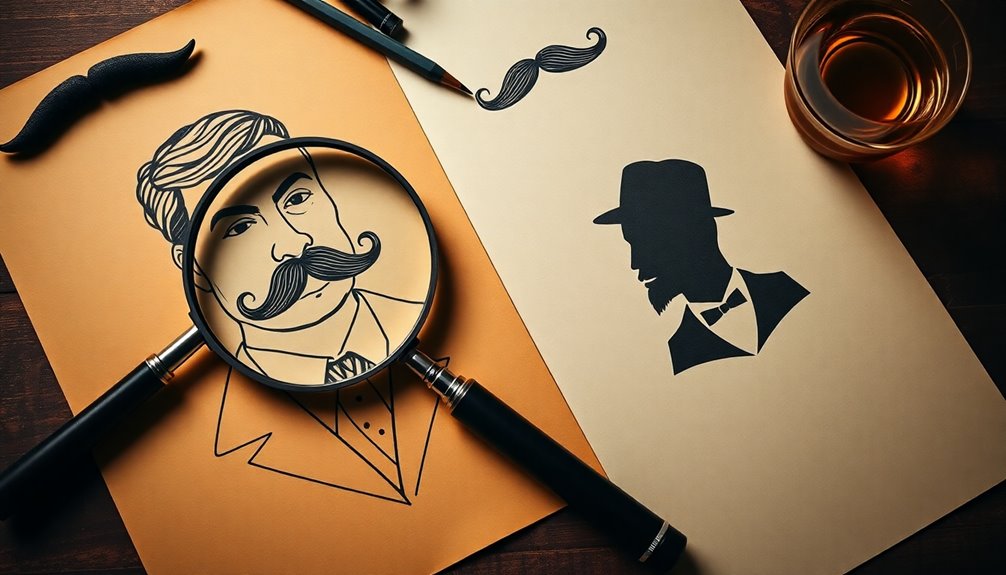
When you think of mustaches in literature, they often serve as powerful symbols of identity and personality. A well-groomed mustache can convey confidence, sophistication, or even eccentricity, shaping how you perceive a character.
For instance, when an author chooses to highlight mustache symbolism, it often reflects deeper traits—like a character’s social status or hidden motivations. Consider Gatsby’s meticulously styled mustache; it embodies his desire for acceptance and wealth, while also hinting at his complexity.
Conversely, a scruffy mustache might signify rebellion or a carefree spirit. By examining these nuances, you can better understand how mustaches contribute to character identity, enriching the narrative and making literary figures memorable.
Each mustache tells a story, adding layers to the characters you encounter. Additionally, the iconic mustache of Hercule Poirot showcases how a character’s distinct grooming can reflect their meticulous nature and sharp intellect.
Hercule Poirot: The Fastidious Detective
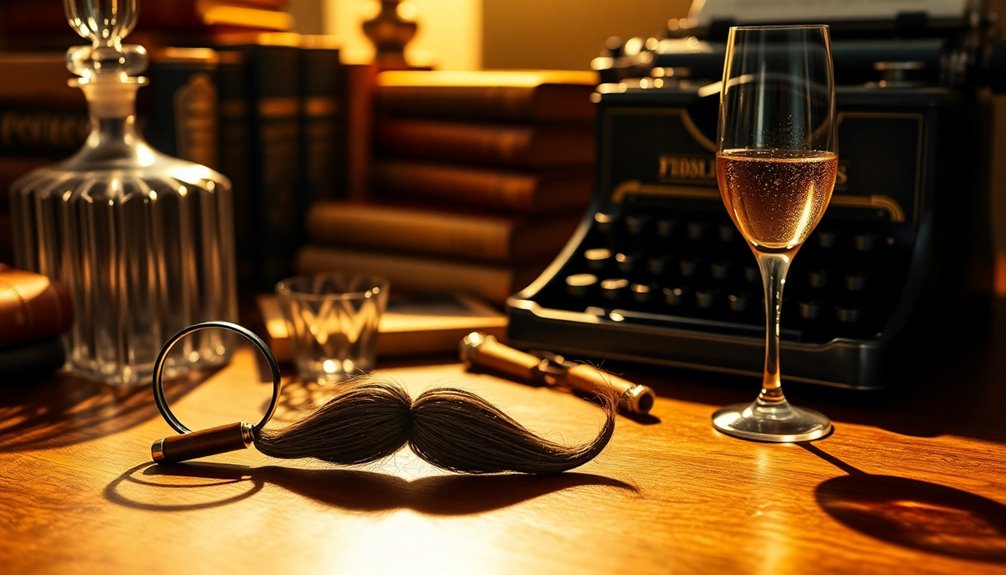
Hercule Poirot’s iconic mustache isn’t just a quirky feature; it symbolizes his meticulous nature and sharp attention to detail. You’ll quickly see how his fastidious habits reveal much about his character and detective skills. Together, these traits make him one of literature’s most unforgettable sleuths. Poirot’s intricate plots reflect Agatha Christie’s masterful storytelling, showcasing his ability to navigate the complexities of human nature in pursuit of justice.
Iconic Mustache Symbolism
Although many detectives blend into the background, Poirot stands out, not just for his sharp intellect but also for his meticulously groomed mustache.
This iconic facial hair serves as a powerful piece of mustache symbolism, representing his obsession with order and precision. In a world filled with chaos, his mustache becomes a visual cue for viewers, embodying the archetype of the fastidious detective.
It’s not just a fashion statement; it’s a reflection of his character. You can see how Poirot’s attention to detail extends beyond grooming, influencing his investigative methods.
As you explore deeper into his stories, that mustache becomes a symbol of his unique approach to crime-solving, setting him apart from typical character archetypes in detective fiction.
Fastidious Nature Revealed
Poirot’s fastidious nature is evident in every aspect of his life, from his wardrobe to his investigative techniques. His fastidious grooming reflects his obsessive cleanliness, creating an aura of precision.
You notice his meticulous habits, like arranging his surroundings and scrutinizing every detail, which reveal his personality quirks—his need for order contrasts sharply with the chaos of crime.
Agatha Christie uses narrative techniques to highlight these traits, deepening Poirot’s psychological depth. Social perceptions often label him as eccentric, yet these cultural implications enrich his character, making him relatable amid his quirks.
Ultimately, Poirot’s fastidiousness not only shapes his identity but also serves as a lens through which you explore the mysteries he unravels.
Detective Skills Unmatched
Unraveling the most perplexing mysteries, Poirot showcases detective skills that are nothing short of exceptional. His sharp detective intuition allows him to see connections others miss, piecing together clues like an intricate puzzle.
You can’t help but admire how his meticulously groomed mustache symbolizes his attention to detail and precision. Each case becomes a canvas, where his fastidious nature shines as he dissects human behavior and motives.
As he sifts through lies and deceit, you realize that his mustache isn’t just a quirky feature; it embodies his methodical approach to solving crimes. In a world filled with chaos, Poirot’s unmatched skills remind you that sometimes, the smallest details can lead to the biggest revelations.
Jay Gatsby: Mystery and Sophistication
When you think of Jay Gatsby, his mysterious aura and sophistication immediately come to mind. His mustache isn’t just a style choice; it symbolizes the layers of his persona and the secrets he hides. Let’s explore how Gatsby’s enigmatic character and his mustache intertwine in the narrative. Gatsby’s pursuit of wealth and status reflects the ongoing discussion around social mobility and the authenticity of personal connections.
Gatsby’s Enigmatic Persona
Mystery envelops Jay Gatsby, a character whose sophistication and allure enchant those around him. You can’t help but be drawn into his world, where every detail adds to his enigmatic persona.
Gatsby’s allure lies in his ability to blend charm with an air of secrecy, making him a figure of fascination.
Here are three elements that contribute to his mustache mystique:
- Lavish Parties: His extravagant gatherings attract the elite, yet few truly know him.
- Rumors: Whispers about his past create intrigue, leaving you questioning his true identity.
- Unwavering Love: His obsession with Daisy Buchanan reveals vulnerability beneath his polished exterior.
In Gatsby, mystery and sophistication intertwine, enchanting everyone who crosses his path.
Symbolism of the Mustache
The mustache serves as a powerful symbol in Jay Gatsby’s portrayal, representing both allure and deception. In the world of Gatsby, mustache symbolism emphasizes his enigmatic nature and the façade he presents to society.
It embodies the sophistication that draws people to him while hiding the underlying complexities of his character. This aligns with literary archetypes where facial hair often signifies authority or mystery.
Gatsby’s carefully curated image, accentuated by his mustache, invites intrigue and skepticism. You can’t help but wonder what lies beneath his polished exterior.
Ultimately, the mustache is more than a mere aesthetic choice; it reflects the duality of Gatsby’s identity, merging charm with the shadows of his past.
Mustaches in Classic Literature: A Historical Overview
Although mustaches have long been a symbol of masculinity and character in various cultures, their presence in classic literature often serves deeper narrative purposes. You’ll find that mustaches reflect the societal norms and literary trends of their time.
- Victorian gentlemen often sported facial hair, emphasizing their social status and masculinity.
- Mustaches symbolize character archetypes, from the villainous mustachio-twirler to the suave hero, revealing layers of personality.
- In poetry, mustaches carry cultural significance, often representing gender representation and historical fashion.
These elements highlight mustaches not just as a style choice but as a tool for social commentary, enriching the narratives and characters in classic literary works. Notably, characters like Sherlock Holmes(The Hound of the Baskervilles) demonstrate how mustaches can enhance a character’s iconic status and contribute to their narrative complexity.
The Role of Facial Hair in Character Development
Facial hair often serves as a powerful tool in character development, shaping perceptions and influencing reader engagement. It can signify various character traits, from wisdom and authority to villainy or absurdity.
In different cultural contexts, facial hair carries significant literary symbolism; a mustache might evoke humor elements or project masculinity. Historical context also plays a role—certain styles align with specific character archetypes, like the dapper detective or the rugged antihero.
This visual imagery enhances the narrative device by making characters memorable. As you explore the story, you’ll notice how facial hair impacts reader perception, enriching your understanding of the characters and their motivations.
Ultimately, it’s a distinctive feature that adds depth to literary figures, much like how unchecked ambition shapes the destinies of characters in literature.
Mustachioed Villains: Cunning and Deception
When you think of mustachioed villains, you probably picture characters who embody charm wrapped in cunning deception.
These archetypes often use their facial hair to enhance their intrigue, drawing you in while hiding their true motives. In Agatha Christie’s classic mystery, the character of Hercule Poirot exemplifies this duality as he uncovers a web of suspects linked to the infamous Daisy Armstrong case. Let’s explore how these dastardly figures captivate and manipulate those around them.
Deceptive Mustache Archetypes
Mustachioed villains often embody cunning and deception, making them some of literature’s most memorable antagonists. These characters leverage deceptive appearances and mustache stereotypes to create literary misdirection that keeps you guessing.
Here are three archetypal traits you might notice:
- Visual Cues: A well-groomed mustache often signals sophistication, hiding darker intentions beneath the surface.
- Character Contrasts: These villains frequently juxtapose charm with malice, revealing identity twists that challenge your perceptions.
- Social Commentary: Their mustaches can represent societal norms, critiquing how appearances shape identity and trust.
Through these elements, mustachioed villains highlight the complexities of deception, making you reconsider who to trust in the narrative.
Villainous Charm and Intrigue
Though they often appear charming and sophisticated, mustachioed villains wield their allure as a weapon. Their villainous charm captivates you, drawing you into a web of charming deception and mysterious elegance.
These characters, with their iconic representation, blend sophistication with a dash of humorous mischief, making them unforgettable.
You can’t help but feel the cultural intrigue surrounding them, as they navigate their dark plots with an air of playful satire. Their sophisticated allure masks cunning intentions, keeping you guessing about their next move.
As you explore their stories, you realize that behind the mustache lies a complex figure, embodying both danger and charisma. In literature, these villains remind us that charm can often be a façade for deception.
Comedic Mustache Characters: Humor and Satire
While humor often thrives on exaggeration, comedic mustache characters elevate this notion to an art form. Their exaggerated traits and quirky personalities lead to humorous misadventures that keep readers engaged.
Here are three ways these characters shine:
- Comedic Timing: Their playful interactions create lighthearted conflicts, turning mundane moments into laugh-out-loud scenarios.
- Absurd Situations: You’ll find them in the most ridiculous predicaments, where their satirical critique of society unfolds.
- Exaggerated Traits: From flamboyant styles to over-the-top antics, these characters embody everything that’s wonderfully absurd about humor.
In the hands of skilled writers, comedic mustache characters become unforgettable, bringing joy and laughter through their delightful escapades, much like how Yvonne’s affair in “Apple Tree Yard” spirals into chaos, revealing the complexities of human desire.
Mustaches as Cultural Signifiers in Literature
Mustaches often serve as powerful cultural signifiers in literature, conveying deeper meanings that go beyond mere facial hair. They often reflect societal norms and can challenge or reinforce mustache stereotypes.
For instance, a character’s mustache might signify masculinity or artistic expression, shaping your perception of their identity. Through visual imagery, authors can use mustaches to highlight literary trends or historical context, enriching the narrative.
You might notice how gender representation shifts with mustaches, as they often symbolize authority or rebellion. These elements engage you as a reader, inviting you to explore character depth and cultural significance. Moreover, like the hidden histories of marginalized individuals, mustaches can reveal cultural significance that enhances the understanding of character motivations and societal roles.
Ultimately, mustaches in literature aren’t just adornments; they’re intricate symbols that enhance storytelling and provoke thought.
The Evolution of Mustache Characters Over Time
As you explore literature, you’ll notice how mustache characters have evolved dramatically over time, reflecting changing societal values and norms.
These characters serve as fascinating literary archetypes, embodying various traits that resonate with readers. Here are three ways mustache characters have transformed:
- From Villain to Hero: Early mustache-twirling villains have shifted to include more complex, heroic figures.
- Cultural Evolution: Mustaches once symbolized masculinity and status, but now they often challenge traditional gender roles.
- Diversity in Representation: Today’s mustache characters come from various backgrounds, reflecting a broader range of experiences and identities.
This evolution showcases how mustache characters adapt to societal shifts, enriching the literary landscape while inviting readers to rethink their perceptions. Notably, the portrayal of characters like Bigger Thomas illustrates how literary figures often embody the complexities of their societal contexts, drawing parallels to the evolution of mustache characters.
Memorable Mustache Quotes From Literary Works
When you explore literary works, you’ll often encounter quotes that highlight the charm and intrigue of mustache characters. These quotes often serve as powerful mustache metaphors, adding depth to their personalities.
For instance, when Sherlock Holmes quips about his “trusty mustache,” it reflects not just his style but a certain intellectual flair. Similarly, Gatsby’s mustached visage symbolizes the allure and mystery of the American Dream.
These memorable lines reveal the literary significance of facial hair, transforming a simple grooming choice into a symbol of character traits and societal roles. As you investigate these quotes, you’ll find they enhance your understanding of the characters, making their mustaches more than just an aesthetic choice—they become essential to their narratives. The courage displayed by these characters often mirrors the unwavering hope found in resistance movements, serving as an inspiration for overcoming adversity.
How Do Mustaches Influence Reader Perception?
Facial hair often shapes how readers perceive characters, especially mustaches that carry unique connotations. Mustaches can evoke specific reader biases and cultural perceptions, influencing emotional responses.
Here are three ways they affect perception:
- Character Stereotypes: Mustaches often align with societal norms, suggesting traits like wisdom, villainy, or flamboyance.
- Visual Associations: Readers may associate mustaches with particular archetypes, such as the suave detective or the eccentric genius, enhancing narrative significance.
- Aesthetic Appeal: A well-crafted mustache can elevate a character’s appeal, making them memorable and engaging.
In literature, these elements combine to create complex characters, allowing mustaches to play a significant role in shaping the reader’s experience and interpretation.
Conclusion: The Lasting Impact of Mustache Characters
While mustaches may seem like mere stylistic choices, they leave a lasting impact on how characters resonate with readers. Think about iconic figures like Hercule Poirot or Jay Gatsby; their mustaches add layers of mustache symbolism that enhance character complexity.
These facial features often signal authority, mystery, or sophistication, influencing your feelings toward them. You recognize that a mustache can transform a simple character into a memorable one, providing insight into their personalities and motivations.
Ultimately, these characters reflect societal norms and expectations, making them relatable or intriguing. So, the next time you encounter a mustachioed character, consider how that small detail shapes your understanding and emotional connection, further solidifying their place in literary history.
Conclusion
In literature, mustache characters linger like a fine perfume, leaving a distinct mark on our imaginations. From Poirot’s meticulous charm to Gatsby’s enigmatic allure, these iconic figures reveal how facial hair shapes our perception of personality and depth. As you turn the pages of your favorite novels, remember that a simple mustache can embody complexity, intrigue, and sophistication, reminding us that even the smallest details can have a profound impact on storytelling.