
In *Alice in Wonderland*, the enchanting tale connects closely to real-life origins and folklore. The transformative Amanita muscaria mushroom plays an essential role, symbolizing change and fluidity in Alice’s journey. While some link Carroll’s work to psychedelic experiences, interpretations remain open-ended and whimsical, reflecting childhood imagination more than drug culture. Uncover the fascinating interplay between folklore and this timeless story, revealing deeper insights into the mushrooms that shaped Alice’s adventures.
The Origins of Alice in Wonderland and Its Connection to Folklore
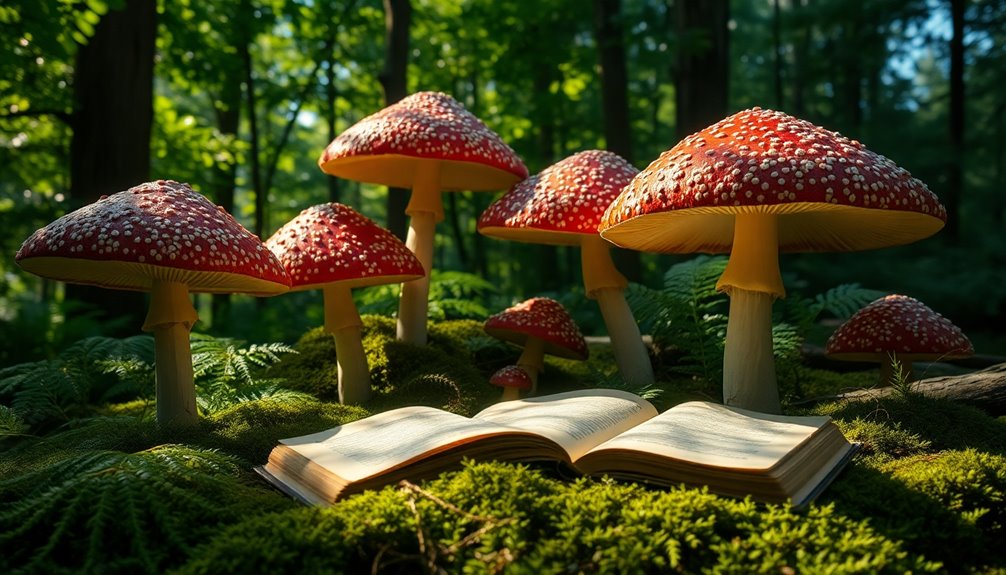
When you plunge into the origins of *Alice’s Adventures in Wonderland*, you’ll discover that it sprang from a real-life boating trip with Alice Liddell and her sisters, where Charles Dodgson, better known as Lewis Carroll, wove the tale.
The narrative, published in 1865, reflects 19th-century literary traditions that explore childhood innocence and imagination, much like folklore.
Alice, with her insatiable curiosity, embodies the spirit of folk heroines who venture into magical domains. Carroll’s whimsical characters and surreal scenarios mirror the transformation and adventure motifs found in English folklore.
Alice’s insatiable curiosity and whimsical adventures echo the timeless spirit of folk heroines exploring magical realms.
As you read, you can almost sense the influence of magic mushrooms, enhancing the dreamlike quality of Alice’s journey and the enchanting landscapes she encounters along the way. This journey echoes the themes of emotional expression that are often central to folklore, where characters confront their inner struggles in fantastical realms.
Exploring the Amanita Muscaria: The Mushroom in Alice’s Adventures
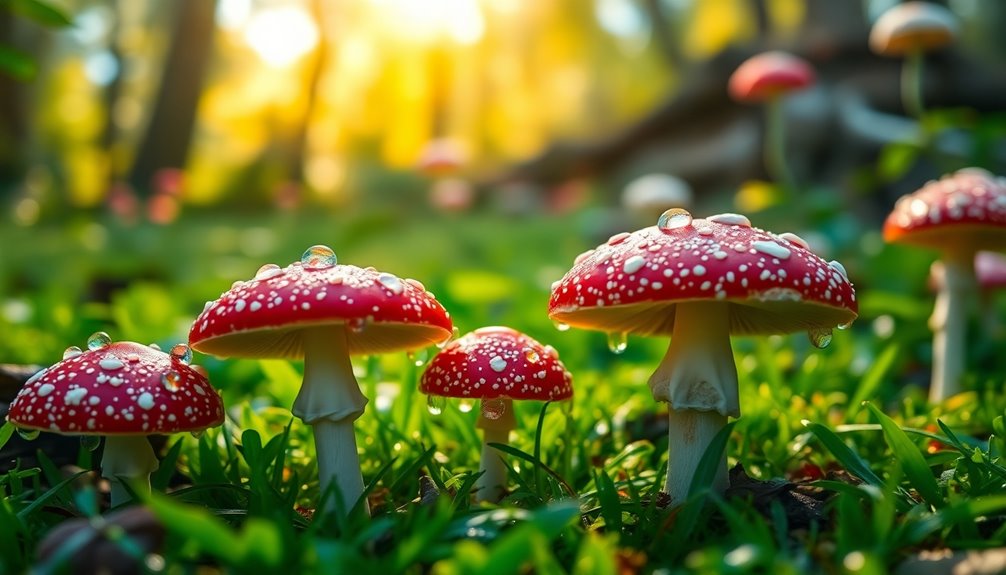
As you explore *Alice’s Adventures in Wonderland*, you’ll quickly encounter the striking Amanita muscaria, a mushroom that plays a pivotal role in Alice’s transformation.
With its iconic bright red cap and white spots, this fascinating fungus contains psychoactive compounds like ibotenic acid and muscimol, which can alter consciousness.
As Alice interacts with the caterpillar, she learns about the mushroom’s effects, reflecting her own shifting identity throughout the tale.
The Amanita muscaria symbolizes change and fluidity, paralleling Alice’s growth and shrinking as she consumes its parts.
This connection reveals a deeper layer to her journey, intertwining the themes of perception and reality with the rich folklore surrounding the mushroom, cementing its place in both literature and psychedelic culture. Additionally, the exploration of diverse voices in literature highlights how such elements can resonate with contemporary themes, enriching the narrative experience.
Historical Perspectives on Hallucinogenic Mushrooms in Literature
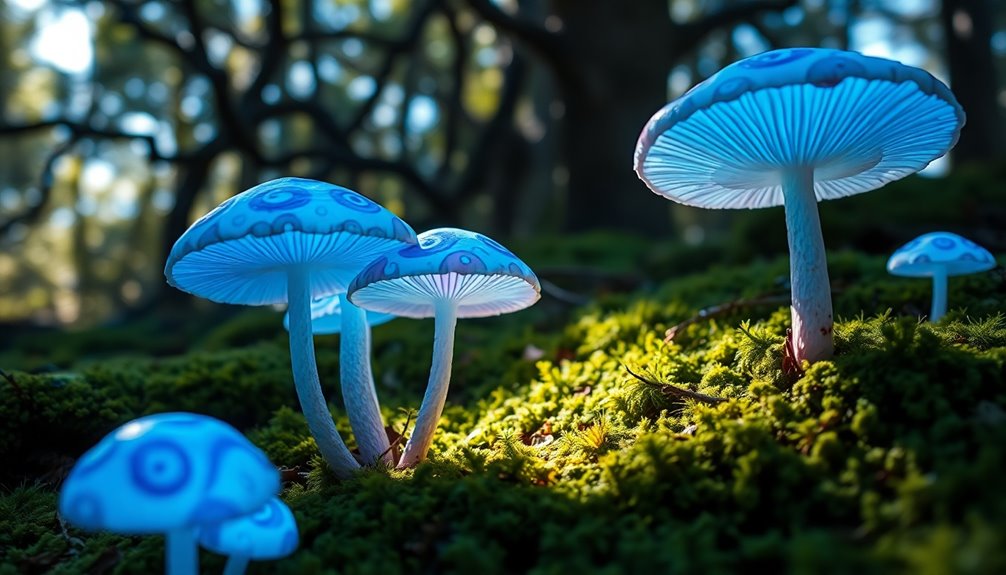
When you read literature, you might notice the recurring theme of mushrooms, particularly the hallucinogenic Amanita muscaria.
These fungi often symbolize transformation and altered perception, especially in texts like *Alice’s Adventures in Wonderland*.
Exploring these literary allusions can reveal how psychedelics influence characters and narratives throughout history. Notably, the intricate plots of mystery novels, such as *And Then There Were None*, showcase how elements of surprise and psychological suspense intertwine with themes of perception and reality.
Literary Allusions to Mushrooms
Although hallucinogenic mushrooms have inspired awe and curiosity for centuries, their literary allusions often probe into themes of transformation and exploration.
In *Alice’s Adventures in Wonderland*, the mushroom Alice encounters symbolizes altered states of consciousness, reflecting her journey of growth and perception. This theme resonates beyond Carroll, as many writers depict mushrooms as catalysts for characters commencing unknown adventures.
Historical texts, like those of Albertus Magnus, document the cultural significance of psychoactive mushrooms, suggesting their longstanding role in folklore and mythology.
The psychedelic theories surrounding Carroll’s work gained traction in the 1960s, linking Alice’s experiences to drug culture. Such connections deepen our understanding of how mushrooms shape narratives of identity and exploration in literature.
Psychedelic Symbolism in Texts
Why do hallucinogenic mushrooms capture the imagination of so many writers throughout history? The allure of psychedelic symbolism, particularly with the fly agaric, invites exploration into altered states of consciousness.
Take a look at these notable points:
- Transformation: In *Alice’s Adventures in Wonderland*, the mushroom embodies change, paralleling the transformative journeys of characters.
- Cultural Impact: The 1960s revival, fueled by songs like “White Rabbit,” highlights the connection between Alice’s adventures and the counterculture’s embrace of hallucinogens.
- Artistic Interpretation: Modern adaptations such as *Curious Alice* and *Malice in Wonderland* reflect ongoing discussions about the psychedelic themes interwoven in Carroll’s narrative.
Despite debates over Carroll’s personal use of substances, the fascination with his work’s hallucinogenic undertones persists, fueling the dialogue around literature and psychedelia.
The Drug Allegory Debate: Did Carroll Intend for Drug Interpretations?
As you explore the drug allegory debate surrounding *Alice in Wonderland*, consider Carroll’s personal intentions and the symbolism woven throughout Alice’s journey.
Are the surreal experiences she encounters a reflection of societal views on drugs, or do they stem from Carroll’s own creativity? This discussion invites you to examine how cultural context might shape interpretations of his work, much like how the themes of betrayal, empowerment, and hidden truths resonate in contemporary storytelling.
Carroll’s Personal Intentions
- Carroll’s diaries mention wine and possibly laudanum, but there’s no direct evidence linking him to psychedelics like ibotenic acid.
- Critics argue that the whimsical nature of the story aligns more closely with childhood dreams than drug use.
- The surreal elements may reflect a broader cultural context rather than Carroll’s intent, leaving interpretations open-ended.
Ultimately, while the allure of drug interpretations captivates many, the lack of concrete evidence complicates the narrative surrounding Carroll’s true intentions.
Symbolism in Alice’s Journey
While many readers enjoy exploring the psychedelic interpretations of *Alice in Wonderland*, the debate over whether Lewis Carroll intended for these drug-related themes to permeate his narrative remains contentious.
The caterpillar, often depicted smoking a hookah, symbolizes altered states of consciousness and has become a focal point for those linking Alice’s journey to drug culture.
Some argue that Carroll’s choices, like the kind of mushroom that causes Alice to grow or shrink, could reflect deeper themes about maturation rather than drug experiences.
Critics note the lack of evidence in Carroll’s diaries regarding drug use, suggesting that his portrayal of Alice’s transformations may more accurately represent the complexities of growing up.
Consequently, interpretations continue to vary widely.
Cultural Context Influence
- The caterpillar smokes, discussing the transformative effects of the mushroom, echoing themes of altered perception.
- Alice drinks various potions, leading to bizarre transformations that mirror psychedelic experiences.
- Cultural references, like Jefferson Airplane’s “White Rabbit,” further intertwine Alice’s journey with drug exploration.
Despite the lack of evidence linking Carroll to drug use, the narrative resonates with those seeking deeper meanings.
Regardless of intent, the story has become a cultural icon, inspiring discussions about consciousness and reality.
Psychedelic Interpretations of Alice’s Journey Through Wonderland
As you explore the whimsical world of *Alice in Wonderland*, you’ll likely encounter interpretations that link Alice’s surreal transformations to psychedelic experiences.
Since the 1960s, many have drawn parallels between her journey and the effects of hallucinogenic substances, particularly through the mushroom that alters her size. Jefferson Airplane’s song “White Rabbit” highlights this connection, suggesting a venture into altered states of consciousness.
The caterpillar, smoking a hookah, whimsically embodies drug use, further cementing the notion that Alice’s adventures seem disjointed from reality.
Adaptations like *Curious Alice* and *Malice in Wonderland* investigate these psychedelic themes, igniting diverse societal reactions.
However, experts caution against assuming Lewis Carroll’s personal experiences with drugs shaped this fantastical narrative, emphasizing the need for concrete evidence. Additionally, the exploration of diverse perspectives in contemporary horror reveals how different cultural lenses can influence interpretations of surreal narratives like Alice’s journey.
The Role of the Caterpillar: A Symbol of Transformation and Change
- Dialogue on Size: The Caterpillar introduces the magical mushroom that alters Alice’s size, representing the fluidity of identity.
- Introspection: Its hookah smoking invites both Alice and readers to contemplate self-discovery and the nature of change.
- Metamorphosis: The Caterpillar’s transformation into a butterfly underscores the idea that growth and change are essential parts of life. This mirrors the courage of resistance movements, which inspire individuals to embrace their own transformations.
Ultimately, the Caterpillar embodies the struggle between childhood innocence and adult complexity, mirroring the confusion that accompanies personal growth.
Cultural Impact of Alice: From Literature to Psychedelic Art
While many see “Alice in Wonderland” as a whimsical children’s tale, its cultural impact has transcended literature, influencing the psychedelic art movement since the 1960s.
Songs like Jefferson Airplane’s “White Rabbit” draw direct parallels between Alice’s journey and drug experiences, highlighting her role as a symbol of curiosity and exploration.
Jefferson Airplane’s “White Rabbit” intricately links Alice’s adventures to drug experiences, celebrating her as a beacon of curiosity and exploration.
Artistic interpretations, such as Jonathan Miller’s 1966 BBC adaptation, embraced psychedelic themes, solidifying Alice’s connection to counterculture.
The animated film “Curious Alice” (1971) aimed to educate kids about drug dangers while capturing the psychedelic aesthetic, creating a cult following.
Renowned artists like John Wesley and Salvador Dali have also drawn inspiration from Alice in Wonderland, showcasing her lasting impact on psychedelic art and culture.
Moreover, the themes of courageous rebel fighters and personal transformation in Alice’s adventures resonate with the journeys of strong female protagonists in literature.
Alice in Acidland: The Intersection of Film and Drug Culture
- Visual Style: The vibrant colors and surreal imagery reflect the era’s exploration of altered states.
- Narrative Themes: It portrays drug experimentation, blurring the lines between fantasy and reality, much like Alice’s adventures.
- Cultural Commentary: While it features explicit content, critiques question whether it effectively communicates an anti-drug message or simply glorifies the experience. The allure of forbidden knowledge in both *Alice in Acidland* and *The Secret History* emphasizes the consequences of curiosity and moral ambiguity.
Ultimately, *Alice in Acidland* contributes to Alice’s legacy as a symbol of curiosity and exploration within the countercultural movement, resonating with audiences seeking adventure.
Educational Films Featuring Alice: Curious Alice’s Anti-Drug Message
In *Curious Alice*, you’ll see how the film combines education and entertainment to tackle the serious issue of drug use among children.
Its unique blend of animation and interactive elements aimed to engage young viewers while conveying a strong anti-drug message.
However, despite its good intentions, the film sparked debate over its effectiveness in teaching kids about the dangers of drug experimentation. Critics argue that early drug exposure can lead to long-term negative health effects, which highlights the importance of effective anti-drug education.
Curious Alice Overview
*Curious Alice*, an educational film released in 1971, aimed to tackle the pressing issue of drug use among children. This film, with its whimsical nod to Wonderland, combines entertainment with essential messaging.
Here are three key features of *Curious Alice*:
- Interactive Elements: The film included crosswords and multiple-choice questions to engage kids actively.
- Companion Materials: It was distributed alongside a coloring book and comprehension tests, enhancing understanding of drug-related issues.
- Cultural Context: Reflecting the 1970s, it responded to growing concerns about drug use among youth.
Despite its intentions, *Curious Alice* faced criticism for potentially being counterproductive.
Yet its animated sequences sparked a cult following, emphasizing the delicate balance between education and entertainment.
Educational Approach and Impact
While many educational films have tackled serious issues, *Curious Alice* stands out for its unique blend of whimsy and important anti-drug messaging aimed at children. Released in 1971, this film used an engaging educational approach by incorporating interactive elements like coloring books and quizzes to reinforce its anti-drug message.
These activities aimed to make children more aware of the dangers of drug use while keeping them entertained. However, the film faced criticism from the National Coordinating Council on Drug Education, which argued that its methods might be counterproductive.
Despite the controversy, *Curious Alice* captured children’s attention through its animated sequences, gaining a cult following and sparking discussions about effective ways to educate young audiences on such critical issues.
Myths and Misconceptions Surrounding Amanita Muscaria
Although many people are captivated by the vibrant red cap and white spots of Amanita muscaria, it’s important to grasp the myths and misconceptions that surround this iconic mushroom.
Here are three key points to reflect on:
- Poisonous Nature: Despite its magical image, Amanita muscaria is toxic, causing unpredictable effects like nausea and hallucinations.
- Historical Use: The name “fly agaric” reflects its past use as an insecticide, misleading many into thinking it’s safe for consumption.
- Cultural Misinterpretations: While some cultures use it in rituals, its psychoactive compounds are distinct from those found in regulated magic mushrooms, adding to the misconceptions about its safety.
Additionally, the systemic injustices faced by those who consume such substances can lead to further misunderstandings about their effects and legal status.
Approach Amanita muscaria with caution, as its allure can mask significant risks.
The Legacy of Alice: Influence on Modern Psychedelic Culture
How has *Alice in Wonderland* shaped modern psychedelic culture?
The connection surged in the 1960s, especially with Jefferson Airplane’s “White Rabbit,” which draws clear parallels between Alice’s Adventures in Wonderland and drug experiences.
Adaptations like Jonathan Miller’s 1966 BBC version and John Lennon’s “Lucy in the Sky with Diamonds” further solidified Alice as a symbol of exploration. Her character embodies curiosity and identity, resonating with the counterculture’s embrace of altered states of consciousness.
Films like *Curious Alice* (1971) and *Alice in Acidland* (1969) showcase diverse interpretations of her story in relation to drugs.
Today, Alice’s legacy inspires psychedelic art and literature, continuing to explore themes of perception, reality, and consciousness.
Philosophical Questions Raised by Alice’s Altered States of Consciousness?
Alice’s surreal journey through Wonderland not only reflects the psychedelic experiences of the 1960s but also raises profound philosophical questions about reality and perception.
Alice’s whimsical adventure in Wonderland mirrors the psychedelic 1960s, provoking deep reflections on reality and our perceptions of it.
As you explore her altered states, consider these key inquiries:
- What is reality? Alice’s shifts in size challenge your understanding of what’s real versus imagined, prompting you to question your own perceptions.
- How does perception shape identity? The transformative power of the mushroom symbolizes how altered states can redefine who you’re and how you see yourself.
- Are dreams and fantasies valid experiences? Alice’s encounters with whimsical characters encourage you to examine the boundaries between fantasy and reality, highlighting the fluidity of consciousness.
Through these questions, you can better understand the complex relationship between perception, identity, and existence.
Conclusion
In diving into the whimsical world of Alice and her mushroom adventures, you’ve opened a treasure chest of connections between folklore and the psychedelic dimension. Imagine Alice’s journey as a rollercoaster ride through the mind, where every twist and turn challenges reality itself! The legacy of these enchanting mushrooms continues to ripple through modern culture, inviting you to question everything from creativity to consciousness. So, are you ready to take a bite and explore this fantastical, mind-bending landscape?