

In Gabriel García Márquez’s “The Handsomest Drowned Man in the World,” Esteban’s arrival transforms a humble village. His extraordinary beauty ignites creativity and self-reflection, prompting villagers to aspire for a richer existence. The communal response to his loss fosters unity and emotional bonds, showcasing themes of beauty and change. As the villagers prepare for Esteban’s burial, they reimagine their lives and environment. Discover how this enchanting tale of magical realism unfolds further in your exploration.
The Enigmatic Arrival of Esteban

How does the arrival of a drowned man alter the course of a small fishing village’s life? When children discover Esteban, the Handsome Drowned Man, curiosity sweeps through the community like a tide. His extraordinary beauty captivates the villagers, sparking a collective imagination that brings magical realism to life.
As they lovingly prepare Esteban for burial, you witness their transformation; they infuse him with admiration and love, creating a bond that transcends death. This enigmatic arrival inspires self-reflection, prompting you and your neighbors to envision a brighter future. Fueled by Esteban’s presence, aspirations bloom, and the village begins to dream of improving homes and the environment—all in honor of the man who, though lifeless, ignites a profound change among you. The story mirrors the themes of healing through nature, illustrating how an extraordinary event can inspire collective growth and renewal.
The Impact of Esteban on Village Identity
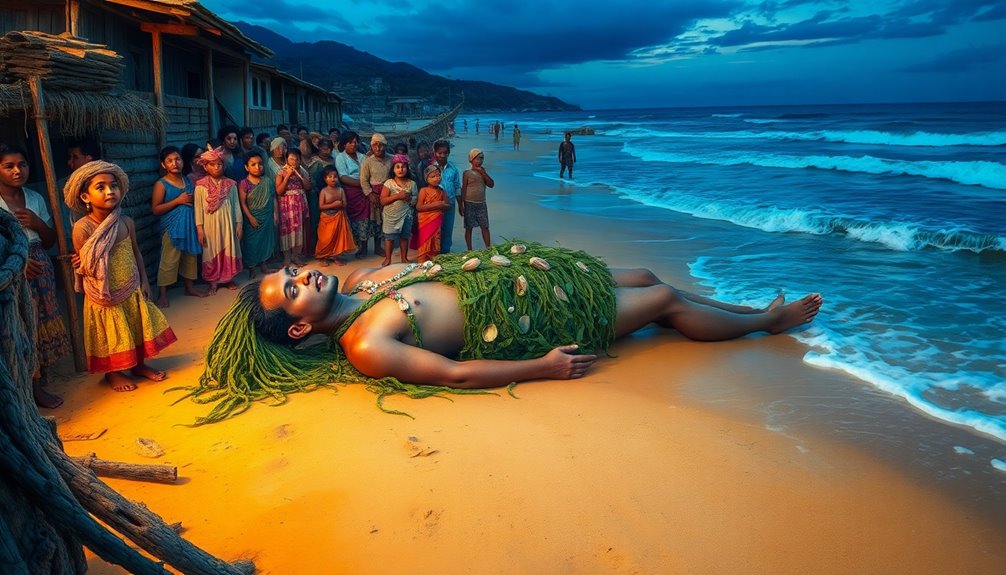
Transformation ripples through the village as Esteban’s presence reshapes their identity. His arrival inspires you and the villagers to aspire for beauty and improvement, igniting a collective desire to enhance your community.
The women’s creation of clothes for Esteban symbolizes a deep emotional attachment, solidifying your shared identity. His funeral becomes a significant communal event, uniting everyone in a poignant moment of belonging and remembrance.
This collective experience reveals a need for larger doors and better infrastructure, reflecting your commitment to honor Esteban’s memory. As a catalyst for change, Esteban prompts a collective awakening, encouraging you to envision a brighter future and transform the landscape of your village, forever marked by his influence. This transformation mirrors the theme of cultural identity and tradition, as the villagers collectively redefine their sense of self through Esteban’s legacy.
Themes of Transformation and Beauty

As the villagers encounter Esteban’s striking beauty, their perceptions of life begin to shift dramatically. His larger-than-life presence inspires a profound transformation within them.
Captivated by his allure, the villagers feel a deep emotional connection, leading them to create clothes that symbolize their longing for beauty, despite the garments being too small for him.
Esteban’s funeral at sea becomes a catalyst for collective change, prompting the villagers to beautify their homes and landscape in his memory. This aspiration reflects their desire for a more meaningful existence.
Ultimately, Esteban embodies an idealized vision of beauty that challenges the villagers to confront their own realities, sparking a metamorphosis in their identities and fostering a renewed sense of community and hope. This transformation mirrors how the power of words can shape identities and inspire resilience in the face of adversity.
Magical Realism: Blending Fantasy and Reality
While the villagers initially see Esteban as just a drowned man, Gabriel García Márquez masterfully weaves magical realism into the narrative, inviting readers to explore a world where the extraordinary coexists with the mundane.
In “The Handsomest Drowned Man in the World,” his extraordinary beauty and the villagers’ imaginative interpretations blur the lines between reality and fantasy. This blend of magical realism evokes deep emotional responses, as you witness how the villagers transform through their connection to Esteban.
The story highlights the power of collective imagination, allowing them to envision a richer, more meaningful existence. Through rich imagery and emotional depth, Márquez illustrates how magical realism serves as a metaphor for the complexities and aspirations inherent in human life, much like how magical realism in “Like Water for Chocolate” intertwines emotions and the supernatural in everyday life.
The Community’s Collective Response to Loss
When confronted with the loss of Esteban, the villagers’ initial practical approach soon gives way to a profound emotional attachment that reshapes their understanding of beauty and loss.
As they prepare Esteban’s body for burial, the women create clothing and jewelry, deepening their emotional connection. The men search neighboring villages for his relatives but find he belongs to no one, transforming him into a shared symbol of aspiration.
Esteban’s funeral becomes a grand event, reflecting the community’s collective response and respect for him.
Afterward, they commit to improving their homes and environment, a tribute that signifies their desire for transformation and a renewed sense of identity, forever changed by the presence of the handsomest drowned man. This mirrors the struggle between loyalty depicted in *Home Fire*, where characters navigate complex relationships amidst cultural conflicts.
Symbolism of Esteban: A Catalyst for Change
Esteban, the drowned man, emerges not just as a figure of beauty but as a transformative force within the village. His idealized presence serves as a catalyst for change, inspiring the villagers to re-evaluate their own identities and aspirations.
As they create clothes and adornments for him, you see their longing for connection and deeper meaning. Esteban’s beauty prompts the community to enhance their homes and landscape, reflecting a collective desire for improvement.
The magnificent funeral they give him signifies their emotional investment, marking a turning point in their communal spirit. Through Esteban, the villagers begin to dream beyond their mundane reality, fostering hope for a brighter future and a renewed sense of purpose in their lives. This transformation echoes the power of language as a means to reclaim identity and inspire connection within the community.
Narrative Style: Márquez’s Lyrical Prose
The villagers’ transformation inspired by Esteban is beautifully captured through Gabriel García Márquez’s lyrical prose in “The Handsomest Drowned Man in the World.”
His writing elevates the ordinary to poetic heights, immersing you in the emotional landscape of the community. Márquez’s use of vivid imagery creates a striking visualization of Esteban, making you feel the weight of his impact.
The flowing, rhythmic sentence structure mirrors the ebb and flow of the sea, reinforcing themes of transformation and connection to nature. With a seamless blend of magical realism and realistic details, he crafts a narrative that resonates deeply.
His concise, evocative language guides you through the villagers’ emotional journey, transforming their mundane lives into something rich with depth and meaning. This transformation echoes the importance of hidden histories in understanding how individuals can shape their communities and perceptions.
Lasting Legacy: How Esteban Changed the Village Forever
Although he was just a drowned man, Esteban’s impact on the village was profound and transformative. His presence inspired you and your neighbors to envision a better life.
After his burial at sea, the villagers rallied together, driven by a collective aspiration to improve their homes and landscape. You watched as the women created beautiful clothes and jewelry, reflecting a deep emotional connection and a newfound perception of beauty.
Esteban’s legacy also sparked a realization of the need for larger doors and better infrastructure, illustrating how one individual can reshape a community’s identity. This transformation echoes themes of female empowerment found in narratives like Tita’s journey in “Like Water for Chocolate,” where personal growth inspires collective change.
The magnificent funeral and the subsequent changes symbolize a renewed hope and unity, showcasing how imagination and collective belief can lead to meaningful transformation.
Conclusion
In the end, Esteban, the drowned man, doesn’t just wash ashore; he washes away the villagers’ mundane lives, leaving them forever changed. Ironically, a lifeless body inspires more life than they ever knew. As they mourn a stranger, they awaken to their own beauty and potential, realizing that sometimes it takes an outsider to show you what you’ve been missing. Who knew a drowned man could breathe so much life into a village?