
In “The Secret History,” Donna Tartt crafts a compelling exploration of Dark Academia, blending obsession, moral ambiguity, and elitism against a gothic academic setting. You’ll encounter complex characters like Richard Papen and Henry Winter, whose intellectual pursuits lead to tragic consequences. The narrative reflects on class disparities and the seductive allure of knowledge. This novel’s influence on the Dark Academia aesthetic is profound, hinting at deeper themes waiting to be uncovered.
The Allure of Dark Academia in “The Secret History”
The allure of Dark Academia in “The Secret History” lies in its intoxicating blend of intellectualism and moral ambiguity. You’re drawn into the world of Richard Papen, who embodies the quintessential student archetype celebrated by the Dark Academia aesthetic.
The novel romanticizes the pursuit of knowledge, presenting it as a seductive, full-time endeavor filled with beauty and peril. As Richard navigates the exclusive, gothic atmosphere of Hampden College, you can’t help but feel the weight of elitism and the barriers faced by outsiders.
This enchanting setting enhances the emotional depth and existential crises that resonate throughout the narrative. Ultimately, the book critiques privilege while luring you deeper into a world where intellect and beauty intertwine dangerously. The influence of dark academia on literature has created a devoted following, reflecting the profound impact of Tartt’s work.
Characters and Their Complexities
While delving into the intricacies of the characters in “The Secret History,” you quickly realize that each figure embodies a unique blend of flaws and strengths, reflecting the complexity of human nature.
Richard Papen, the unreliable narrator, navigates his insecurities while obsessing over the elitist world of Classics. In contrast, Henry Winter, a dominating sociopath, manipulates those around him, embodying ambition’s darker side.
Richard Papen’s insecurities clash with Henry Winter’s ruthless ambition, illustrating the intricate dance of power and obsession in “The Secret History.”
Francis Abernathy stands out as the compassionate voice, revealing the complexities of identity amid tragedy. Charles Macauley transforms from support to abuse, illustrating privilege’s destructive effects.
Finally, Bunny Corcoran’s shift from a friendly face to a morally ambiguous antagonist exposes themes of betrayal and repressed desires, tying the characters together in their shared complexities. These dynamics reflect the resilience of women in historical contexts, highlighting how characters navigate their circumstances with strength and determination.
The Role of Obsession and Morality
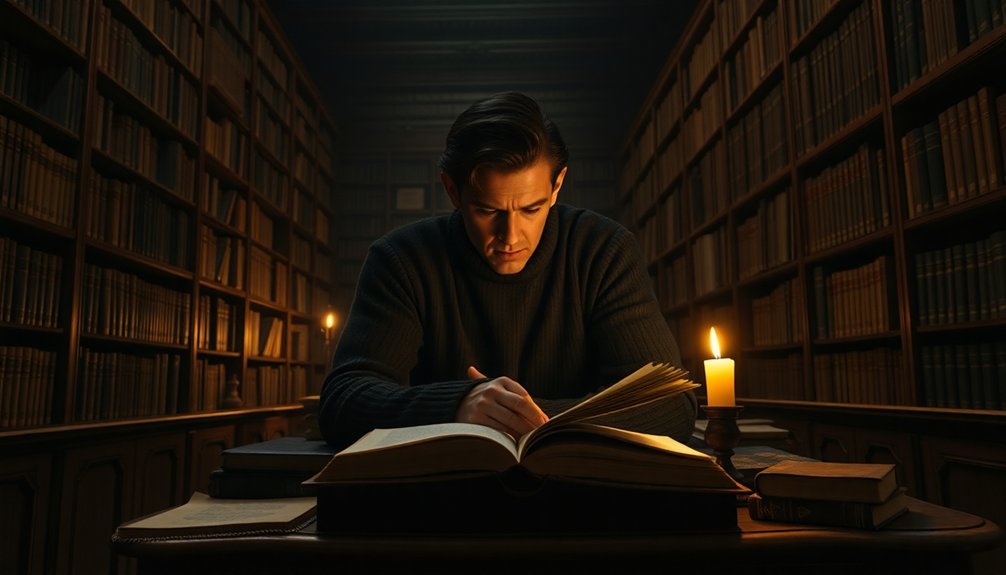
Obsession weaves through the lives of characters in “The Secret History,” acting as both a driving force and a destructive influence.
Take Henry Winter, for example; his relentless pursuit of intellectual superiority spurs moral transgressions that lead to tragedy.
Then there’s Richard Papen, whose fixation on the elite group distorts his identity and blurs ethical boundaries, revealing how admiration can slide into moral compromise.
The characters justify their actions through a belief in their intellectual elite status, showcasing the dangers of hubris.
Tartt’s narrative structure echoes Greek tragedy, emphasizing the inevitable consequences of obsessive quests for knowledge and belonging.
Ultimately, the novel critiques academia’s seductive nature, highlighting how obsession catalyzes both intellectual achievement and moral decay. This mirrors the resilience found in perseverance against societal pressures seen in Dickens’ works, underscoring how ambition can drive individuals to both greatness and ruin.
Aestheticism and Intellectualism
Aestheticism permeates “The Secret History,” intertwining seamlessly with intellectualism to create an enthralling exploration of beauty and knowledge. You’ll find that this connection deepens the narrative, emphasizing the allure and danger of the academic pursuit.
Consider these key aspects:
- The gothic setting of Hampden College enhances the aesthetic appeal, creating an idealized scholarly life.
- Tartt’s rich language captures the beauty of literature, intertwining it with complex character dynamics.
- Characters’ obsession with classics reveals the darker sides of intellectual ambition, exposing elitist attitudes.
- The flawed yet fascinating personalities make the aesthetic experience enticing, illustrating the perilous nature of their intellectual pursuits.
Through these elements, Tartt masterfully showcases the intricate dance between aestheticism and intellectualism. Additionally, the book encourages readers to confront uncomfortable truths about systemic racism and the impact of privilege, prompting a deeper reflection on societal issues.
Gender Dynamics and Representation
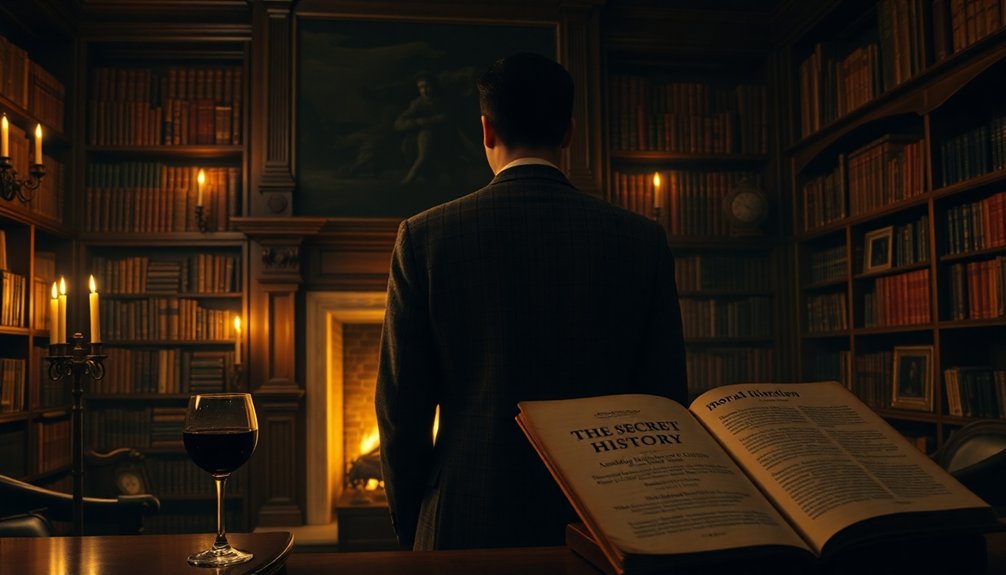
Although “The Secret History” captivates readers with its exploration of beauty and intellect, it ultimately reveals troubling gender dynamics and representation.
Female characters like Camilla and Judy Poovey often fall into stereotypes, lacking the complexity and agency seen in their male counterparts. The narrative primarily showcases queerness and sexuality through affluent, cisgender males, leaving little room for positive LGBTQIA+ representation.
Traditional gender roles dominate the characters, reinforcing patriarchal structures while overshadowing women’s experiences. This romanticized view of academia perpetuates exclusivity, marginalizing women, people of color, and LGBTQIA+ individuals.
Ultimately, the novel’s portrayal of gender dynamics highlights the need for more nuanced and diverse representation within the Dark Academia aesthetic, challenging readers to reconsider the narratives they engage with. Moreover, the depiction of resilience amidst adversity serves as a reminder of the complexities of character experiences, emphasizing the importance of diverse voices in literature.
Class Disparities in Academia
In “The Secret History,” you see how financial barriers shape access to academic pursuits, especially in Classics.
Characters like Henry Winter enjoy the privileges of wealth, allowing them greater freedom in their studies, while Richard Papen’s journey reveals the struggles faced by those without such resources.
This contrast highlights the stark class disparities that impact who gets to participate in the romanticized world of academia. The themes of social class and ambition resonate strongly in contemporary society, prompting discussions on modern inequality and personal growth.
Financial Barriers to Access
While the allure of studying Classics captivates many, financial barriers often prevent equal access to this academic domain.
The stark contrast between students in state and independent schools highlights the inequities entrenched within Dark Academia’s aesthetic.
Here are some key points to reflect upon:
- Latin is taught in only 3% of state schools, compared to 49% in independent institutions.
- Students without prior Latin or Greek struggle to meet A-Level prerequisites for Classics degrees.
- Characters like Henry Winter reflect how financial independence enhances academic freedom.
- The romanticized academic lifestyle remains largely unattainable for those without family wealth.
These disparities reinforce societal inequalities, limiting who can fully engage with the Classics and participate in the Dark Academia experience.
Privilege and Academic Freedom
Academic freedom often feels like a privilege reserved for the few, with financial resources playing an essential role in determining who gets to explore the world of Classics.
In the UK, only 3% of state schools teach Latin, compared to 49% in independent schools, creating a significant barrier for students from lower socio-economic backgrounds.
Characters like Henry Winter in “The Secret History” highlight how financial independence facilitates access to elite education, while Richard Papen’s struggles reflect the harsh reality of class disparities.
The romanticized lifestyle of Dark Academia often remains unattainable for those without family wealth.
This stark contrast underscores how privilege influences academic freedom, limiting opportunities for marginalized groups enthusiastic to engage with classical studies and intellectualism.
Queerness and Identity Exploration
Queerness in “The Secret History” serves as a complex lens through which we explore identity and the often painful realities of societal expectations. The narrative mainly presents queerness through affluent, cisgender male characters while limiting positive depictions.
Here are key aspects to contemplate:
- Francis Abernathy represents a rare openly gay character yet is reduced to a supporting role.
- Richard Papen’s struggle with his feelings for Henry Winter showcases the pressure of maintaining a façade of heterosexuality.
- Relationships among characters reveal repressed sexuality, rooted in manipulation rather than genuine love.
- The elite academic setting reinforces an exclusivity that marginalizes diverse identities, making the unreliable narrator’s perspective even more poignant.
Additionally, the intricate plots of Victorian London mysteries serve to highlight the complexities of identity in a society that often demands conformity.
Ultimately, Tartt’s portrayal invites readers to confront these painful realities of identity exploration.
The Tragic Consequences of Ambition
Ambition drives the characters in “The Secret History” to pursue ideals that ultimately lead to their downfall. You see Richard Papen, whose longing for acceptance pushes him into morally questionable choices, sparking a series of tragic events.
As the group chases sublime experiences, their ambition isolates them, blinding them to the dire consequences of their actions.
Henry Winter exemplifies how unchecked ambition morphs individuals into sociopaths, sacrificing friendships for intellectual superiority. This tragic trajectory mirrors Greek tragedy, where doom looms over every decision.
The narrative reveals that intertwining the pursuit of knowledge and aesthetic beauty with ambition can yield destructive outcomes, leaving characters grappling with guilt and the haunting repercussions of their choices. Furthermore, the story echoes the themes of ambition and rivalry found in “The Story of Kane and Abel,” showcasing how the relentless chase for success can lead to ruin.
Narrative Style and Unreliable Perspectives
In “The Secret History,” Richard’s role as an unreliable narrator shapes your understanding of the story and its characters.
You’ll find that the complex perspectives and moral ambiguity invite you to engage more deeply with the text.
As you navigate Richard’s flawed viewpoint, you’ll uncover the intricate layers of truth and deception woven throughout the narrative. The exploration of moral ambiguity among characters adds depth to their motivations and choices, enhancing the overall suspense of the story.
Unreliable Narrator’s Impact
As you explore “The Secret History,” you’ll quickly realize that Richard Papen’s role as an unreliable narrator profoundly shapes your understanding of the story. His limited perspective and emotional detachment complicate the truth, leading you to question the authenticity of his recounting.
Here are four ways his unreliable narration impacts your reading experience:
- Ambiguity: Richard’s biases create uncertainty around the motivations of Henry and Bunny, inviting multiple interpretations.
- Identity and Belonging: His insecurities reflect the moral complexities of fitting into the elite group.
- Tension: Richard’s obsession elevates the stakes, highlighting the consequences of their actions.
- Critical Engagement: You’re prompted to analyze the nature of truth, examining the interplay of guilt and morality in storytelling.
Complex Character Perspectives
Richard’s unreliable narration not only complicates your understanding of events but also invites you to explore the intricate perspectives of other characters. His limited view forces you to question the authenticity of his perceptions, especially regarding figures like Henry Winter, whose sociopathic tendencies emerge subtly beneath Richard’s emotional detachment.
Tartt’s narrative style, rich with academic references and philosophical musings, enhances this complexity, requiring you to actively decipher the motivations driving each character. As you navigate the blurred lines between truth and deception, you realize how Richard’s storytelling reflects broader themes of obsession and moral ambiguity.
The novel’s structure, echoing Greek tragedy, further underscores the significance of perspective, contrasting naive pursuits with foreseen tragic outcomes.
Ambiguity and Reader Engagement
While steering through the intricate narrative of “The Secret History,” you quickly realize that ambiguity is woven into every layer of the story. This complexity not only enriches the text but also demands your active engagement as a reader.
Here are four ways Tartt employs ambiguity to enhance your experience:
- Unreliable Narration: Richard Papen’s distorted perspectives challenge you to question the truth behind events.
- Moral Ambiguity: Characters’ questionable decisions compel you to evaluate their motivations and consequences critically.
- Themes of Elitism: The portrayal of academia’s darker sides invites you to grapple with your own values.
- Mystery and Suspense: The intricate dynamics create emotional and intellectual investment in the unfolding tragedy.
This all elevates reader engagement, making each revelation feel earned and impactful.
Lasting Impact on the Dark Academia Aesthetic
“The Secret History” has left a profound mark on the Dark Academia aesthetic, shaping how you and many others perceive the allure of intellectualism. Since its 1992 release, it romanticizes knowledge and classical studies, intertwining moody, gothic elements with academic life.
The themes of elitism and moral ambiguity resonate deeply, showcasing the darker side of obsession and conformity within tightly-knit groups. This enchanting portrayal has sparked significant engagement on social media, with over 4.1 billion views under the Dark Academia hashtag on TikTok, highlighting its influence on contemporary youth culture.
The aesthetic inspired by Tartt’s novel now includes visual and musical elements that evoke nostalgia, reinforcing a romanticized vision of the academic lifestyle that continues to charm you. The exploration of duality and identity in literature, as seen in other works, enriches the Dark Academia narrative and deepens its allure.
Conclusion
In “The Secret History,” Tartt tantalizingly weaves a web of wit, wisdom, and woe, leaving you captivated by the complexities of her characters. You can’t help but feel the pulse of obsession and ambition, echoing through the halls of academia. As you reflect on the rich tapestry of themes, remember how the allure of dark academia draws you into its depths, reminding you that beauty often conceals a haunting darkness beneath the surface.