
Last updated: · By Thomas Reed
Apple Tree Yard is a 2013 psychological thriller by British novelist Louise Doughty. It follows Yvonne Carmichael, a geneticist whose secret affair leads to a murder trial, and it is worth reading if you want a tense story about desire, deception, and the cost of a single bad decision. The novel is narrated in the first person, so you see Yvonne’s choices and rationalizations from the inside. This review covers the plot, the main themes, the courtroom structure, and the BBC adaptation, and it notes where the book’s limits lie.
Key Takeaways
- Louise Doughty published Apple Tree Yard in 2013, and it centers on geneticist Yvonne Carmichael after a secret affair becomes a murder trial.
- The novel is narrated in the first person, which keeps Yvonne’s inner reasoning at the center of the story.
- The BBC One adaptation ran as four episodes, and its first episode aired on 22 January 2017.
- According to Wikipedia’s entry on Louise Doughty, the BBC adaptation drew about 7 million viewers per episode.
- Amanda Coe wrote the BBC adaptation, with Emily Watson cast as Yvonne Carmichael and Ben Chaplin as Mark Costley.
What Is Apple Tree Yard About?
Apple Tree Yard tells the story of Yvonne Carmichael, a successful geneticist in her fifties who begins a secret affair with a man she knows only as X. The affair starts as an escape from a stable but unexciting married life with her husband, Guy. When the relationship turns dangerous, Yvonne finds herself on trial for murder, and the novel moves between her past choices and the courtroom present.
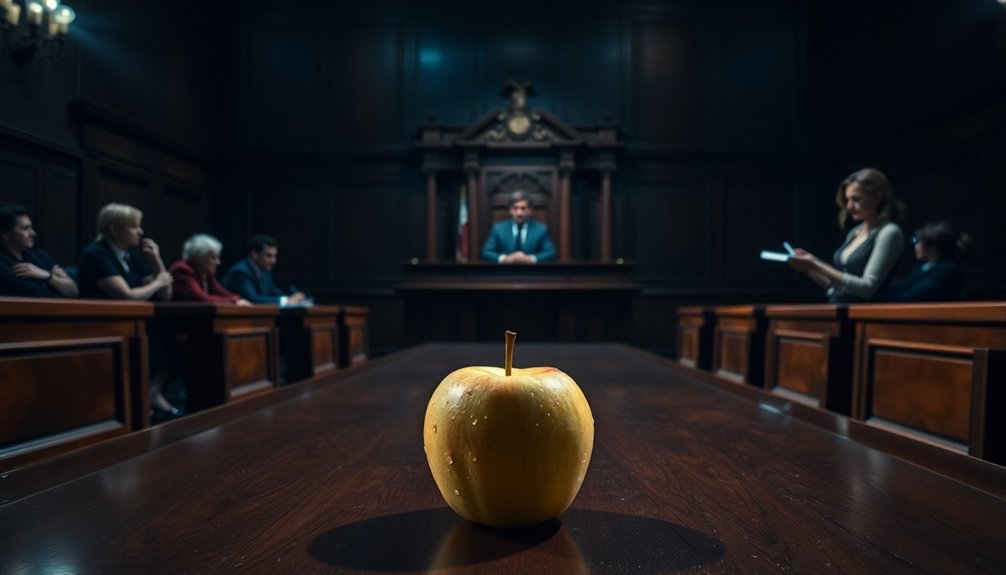
The book’s structure is what makes it work as a thriller. Doughty alternates between flashbacks that explain how Yvonne ended up in her situation and courtroom scenes that test how far her version of events can be trusted. Because Yvonne is the narrator, you are often close to her reasoning, which makes her self-justifications more unsettling than a conventional villain would be.
Key Facts About the Novel and Adaptation
The table below summarizes the core facts about the book and the BBC series, based on the sources cited in this review.
| Item | Detail |
|---|---|
| Novel | Apple Tree Yard by Louise Doughty, published in 2013 |
| Protagonist | Yvonne Carmichael, a geneticist and first-person narrator |
| BBC adaptation | Four-part psychological thriller on BBC One |
| First episode | 22 January 2017 |
| Adapted by | Amanda Coe |
| Lead cast | Emily Watson as Yvonne Carmichael; Ben Chaplin as Mark Costley |
| Production company | Kudos |
Who Is Yvonne Carmichael?
Yvonne Carmichael is a respected scientist who is used to being in control of her work and her reputation. She is ambitious and analytical, and she expects her intelligence to protect her from ordinary mistakes. The novel’s central irony is that her confidence in her own judgment is exactly what leaves her open to the choices that follow.
How Does Yvonne’s Dual Identity Shape the Story?
Yvonne lives between two roles: the disciplined professional and the woman who wants excitement and recognition beyond her routine. The affair gives her a sense of freedom, but it also exposes how much of her public image depends on keeping her private life hidden. Her struggle is less about one bad choice than about the gap between the person she presents to the world and the person she is becoming.
How Do Her Relationships with Guy and X Drive the Plot?
Her marriage to Guy is stable but emotionally distant, and her relationship with X is charged with passion and secrecy. Each relationship exposes a different kind of vulnerability, and the contrast between them shows how easily desire can override caution. The novel suggests that the warning signs were visible to Yvonne, but she chose not to read them clearly.
What Are the Main Themes of Apple Tree Yard?
The main themes are desire, betrayal, and the consequences of impulsive decisions. The novel also examines how a woman’s private conduct can be judged differently from a man’s, especially in a professional setting. These themes are developed through Yvonne’s story rather than stated as lessons.
How Does the Novel Explore Desire and Betrayal?
Desire in Apple Tree Yard is shown as both thrilling and corrosive. Yvonne’s affair promises a new version of herself, but it also rests on secrecy, lies, and a growing willingness to ignore danger. Betrayal in the book is not only about infidelity; it is about the way trust erodes when one person is hiding the truth from everyone else.
If you enjoy novels that dig into a single character’s moral blind spots, you may also like Daphne du Maurier’s psychological thriller The Scapegoat, which also turns on questions of identity and self-deception.
How Does the Novel Address Gender and Professional Life?
Yvonne’s professional success does not protect her from scrutiny, and the novel shows how her personal life becomes a public matter. Her affair threatens her career, her family, and her standing among colleagues. Doughty uses this pressure to question how much easier it can be for a man to recover from a similar scandal, although the novel leaves the judgment to the reader.
Her reputation is also tied to her credibility in court. Readers can see how her position as an educated professional shapes the way others read her choices, and how that reading can change as the evidence emerges.
How Does the Courtroom Drama Work?
The courtroom scenes are the novel’s most tense sections, because they force Yvonne to explain her past under public pressure. The trial gives the story a clear present-day frame, while the flashbacks reveal what led to it. This back-and-forth keeps the plot moving and makes every testimony feel like a possible turning point.

The opening sections set in the courtroom are often singled out for praise. A review by crime novelist Ruth Rendell, reprinted on the publisher’s US page for the novel, praises the taut, psychologically persuasive opening at the Old Bailey. That reception helps explain why the trial remains the book’s strongest hook.
How Does the Trial Shape How Readers Judge Yvonne?
Because Yvonne narrates her own story, the trial forces you to compare her version with the version presented in court. This gap is the source of much of the novel’s suspense. You are asked to decide what she is hiding, what she is admitting, and what she may not fully understand about herself.
Does the Genetics Background Add Meaning?
Yes, the genetics background gives the novel a useful lens for thinking about identity, inheritance, and self-definition. Yvonne’s expertise makes her comfortable with patterns and systems, which is also how she tries to manage her own life. Readers can treat the scientific setting as a metaphor, though the novel does not require a strict symbolic reading.
Who Is Louise Doughty?
Louise Doughty is a British novelist whose work includes crime and psychological fiction. Her biography on Wikipedia documents her career as a writer and broadcaster. Apple Tree Yard is her best-known novel for many readers, largely because of its strong reception and its adaptation for television.
How Does the BBC Adaptation Compare to the Novel?
The BBC series keeps the central story and its moral tension, but television naturally compresses the novel’s interior monologue into dialogue and visual cues. The adaptation was written by Amanda Coe and produced by Kudos, with Emily Watson in the lead role. According to Wikipedia’s entry on the novel, the BBC One drama ran as four episodes, beginning on 22 January 2017.
The series drew about 7 million viewers per episode, according to the Wikipedia article on Apple Tree Yard, and the trade press covered its casting when it was announced. For readers, the practical difference is that the book gives you Yvonne’s private reasoning, while the series shows more of her public life.
Should You Read the Book or Watch the Series First?
Read the book first if you want the full sense of Yvonne’s perspective and the slow build of her self-deception. Watch the series first if you prefer a visual thriller and want to see how the story has been adapted. Either order works, but the novel offers more insight into her inner life.
Is Apple Tree Yard Worth Reading?
Yes, if you enjoy character-driven psychological thrillers with a strong courtroom frame. The novel is most rewarding for readers who are comfortable with morally compromised narrators and who want to think about the ethics of their choices.
- You like psychological thrillers that focus on a narrator’s inner life.
- You want a story that combines an affair plot with a murder trial.
- You are interested in how gender and reputation affect a professional woman’s life.
- You want a book that pairs well with a discussion of trust, secrecy, and self-justification.
If you want more psychological suspense, this review of Magpie covers another tense thriller built around a single unreliable perspective.
Frequently Asked Questions
Is Apple Tree Yard based on a true story?
Apple Tree Yard is a work of fiction, and the sources used for this review present it as a novel rather than a true account. Its legal and emotional scenarios are invented, although they draw on familiar themes of betrayal and public judgment. Readers should treat it as a dramatized story rather than a factual case study.
Who narrates Apple Tree Yard?
Yvonne Carmichael narrates the novel in the first person. This means you experience the events through her thoughts, memories, and justifications. The narration is a major reason the book feels so tense, because her account is not always fully reliable.
When was Apple Tree Yard published?
Apple Tree Yard was published in 2013. The BBC One adaptation followed later, with its first episode airing on 22 January 2017. The series ran as four episodes.
Who plays Yvonne in the BBC series?
Emily Watson plays Yvonne Carmichael in the BBC One adaptation. Ben Chaplin is also in the cast as Mark Costley. Amanda Coe wrote the adaptation, which was produced by Kudos.
How long is Apple Tree Yard?
The novel is a standard-length adult thriller, and its pace is driven more by its structure than by its page count. Readers often finish it in a few sittings because of the alternating flashbacks and courtroom scenes. Check your edition for the exact page count.
Is Apple Tree Yard good for book clubs?
Yes, because the novel raises questions that groups can debate. Members can discuss whether Yvonne is a victim of her choices or responsible for them, and how gender shapes public judgment. The ending and the narrator’s reliability also invite strong differences of opinion.
Conclusion
Apple Tree Yard is a gripping psychological thriller that uses Yvonne Carmichael’s secret affair and murder trial to explore desire, betrayal, and self-deception. Its first-person narration and courtroom structure make it a strong choice for readers who like suspense with real moral complexity. If you pick it up, pay attention to how Yvonne explains herself, because that is where the novel’s tension lives.