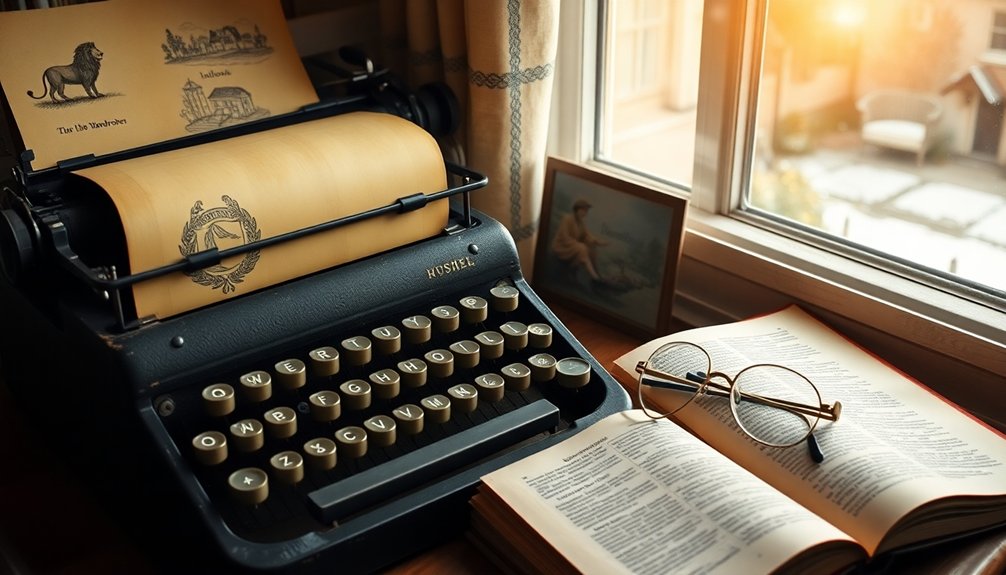
C.S. Lewis, a renowned British author, wrote *The Lion, the Witch and the Wardrobe*, the first book in the beloved *Chronicles of Narnia* series. He crafted this enchanting tale in the late 1940s, inspired by a vision of a faun in a snowy landscape. The story revolves around the Pevensie siblings and their battle against the White Witch in the magical land of Narnia. If you’re curious about its themes and characters, there’s much more to uncover.
Background and Conception of the Novel
Although C.S. Lewis initially envisioned *The Lion, the Witch and the Wardrobe* as a standalone story for his godchild, it blossomed into a magical world that captivated children worldwide.
Written in the aftermath of WWII, the narrative centers on four siblings who discover the wardrobe leading to Narnia. Lewis, inspired by a vision of a faun in a snowy landscape, began crafting the story around 1946.
As the plot unfolded, the character of Aslan emerged, representing themes of sacrifice and resurrection. Published in 1950, this tale combines elements of good versus evil and redemption, despite some revisions between its American and British editions. The story intricately weaves themes of sacrifice and magic that resonate with readers today.
The enchanting background and concept of Narnia continue to resonate with readers today.
Key Characters and Themes
As you explore Narnia, you’ll encounter a rich tapestry of characters and themes that drive the story forward.
The Pevensie siblings—Lucy, Edmund, Susan, and Peter—each play pivotal roles in this fantastical world. Aslan, the noble lion, embodies good and represents sacrifice and redemption, especially through his selfless act of dying for Edmund’s betrayal.
In stark contrast stands the White Witch, who symbolizes evil and tyranny, casting Narnia into eternal winter. The themes of sacrifice and redemption resonate throughout the narrative, illustrating the power of forgiveness and moral choice.
As the children rise to fulfill a prophecy, they engage in the epic battle between good and evil, showcasing the enduring struggle for Narnia’s liberation. Additionally, the novel’s exploration of power and corruption parallels the intricate dynamics found in historical mysteries like *The Daughters of Night*.
Writing Process and Publication History

C.S. Lewis crafted *The Lion, the Witch and the Wardrobe* in a focused writing process that spanned about 2.5 to 3 months. The initial concept, sparked by a faun with an umbrella in a snowy wood, drew inspiration from his childhood experiences and the backdrop of World War II, particularly the evacuation of children from London.
The book, released on October 16, 1950, marked the beginning of the *Chronicles of Narnia*, a series that would ultimately consist of seven novels.
The publication history includes variations, such as the American edition by Macmillan US, which altered some character names and reset the text. *The Lion, the Witch and the Wardrobe* remains the most recognized entry in this beloved series, reflecting themes of collective action that resonate with the spirit of resistance movements during World War II.
Reception and Cultural Impact
Since its publication, *The Lion, the Witch and the Wardrobe* has captivated readers of all ages, earning a prominent place in both children’s literature and popular culture.
Initially met with a muted response, this beloved book quickly became a favorite among young readers, often featured in classrooms for reading aloud.
Initially receiving a tepid reception, the book soon captivated young readers and became a staple in classrooms.
Ranking ninth in BBC’s The Big Read poll and recognized as one of the 100 best novels in English literature, it showcases its lasting appeal.
Additionally, its cultural impact is evidenced by translations into 47 languages and a strong position in the fantasy genre.
In 2012, *The Lion, the Witch and the Wardrobe* was ranked fifth among all-time children’s novels, solidifying its status as a popular classic.
The themes of hope and perseverance in the narrative resonate with readers, similar to the lessons found in Louis Zamperini’s survival story in *Unbroken*.
Adaptations and Illustrations

The enduring popularity of *The Lion, the Witch and the Wardrobe* has led to a variety of adaptations across different media. You can find a 10-part television serial from 1967, an animated miniseries released in 1979, and the spectacular live-action film adaptation by Walt Disney Pictures and Walden Media in 2005.
The story’s magic has also inspired stage adaptations, especially from the Royal Shakespeare Company in recent years.
C.S. Lewis chose Pauline Baynes as the original illustrator, valuing her detailed artwork that has captivated readers for generations. Her illustrations have remained a staple in many book editions, enriching your experience and engagement with this beloved tale.
Each adaptation and illustration keeps the enchanting world of Narnia alive for new audiences. Additionally, the story’s themes resonate with the rich history of literary exploration in various adaptations, showcasing its impact on literature and culture.
Conclusion
To sum up, C.S. Lewis’s “The Lion, the Witch and the Wardrobe” isn’t just a book; it’s a magical portal that transports you to a world brimming with adventure and wonder. With unforgettable characters and timeless themes, it captivates readers of all ages. The story’s impact echoes through generations, proving that the power of imagination can be as vast as the universe itself. So, plunge into Narnia and let your own adventure begin!