
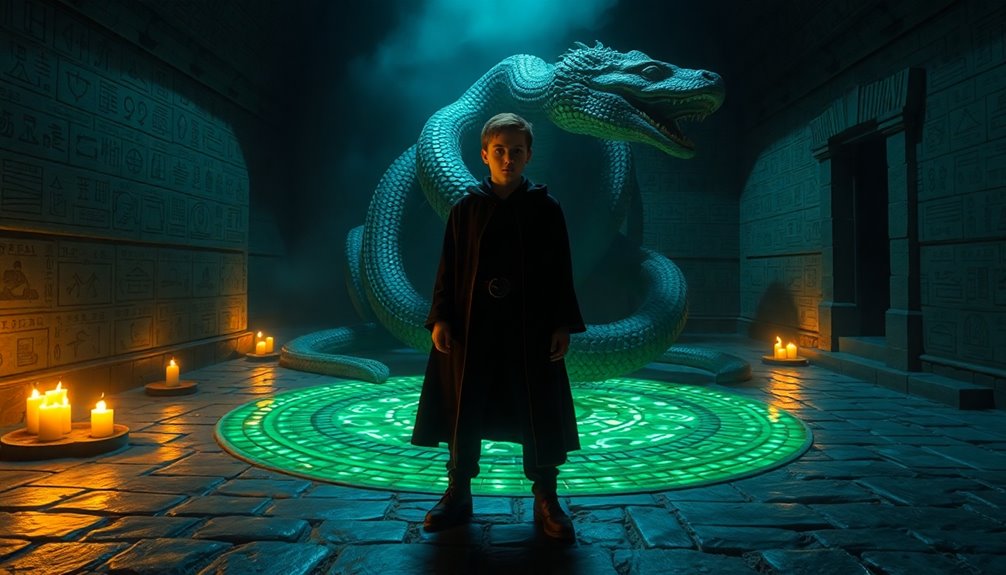
In the Chamber of Secrets, you uncover a hidden world within Hogwarts, where dark legends loom. You witness Harry Potter confront Tom Riddle, the Heir of Slytherin, as a monster terrorizes Muggle-born students. Riddle manipulates Ginny Weasley through his diary, leading to chaos. With the help of Fawkes, the phoenix, and the Sword of Gryffindor, Harry bravely battles the Basilisk, revealing themes of friendship and prejudice. There’s much more to discover about their gripping journey.
The Mystery of the Chamber of Secrets: An Overview

As you plunge into the mystery of the Chamber of Secrets, you’ll discover that it’s a hidden area within Hogwarts, steeped in dark legend.
Dive into the dark legend of the Chamber of Secrets, a hidden realm within Hogwarts filled with mystery and intrigue.
This chamber, believed to house a monster only the Heir of Slytherin can release, becomes the focal point of Harry Potter’s second year. Muggle-born students are mysteriously petrified, sparking fear and intrigue throughout the school.
Central to this enigma is Tom Riddle’s diary, which manipulates Ginny Weasley, leading her to unleash the true terror: a Basilisk.
As the plot unfolds, Harry faces the creature, ultimately conquering it with Fawkes the phoenix and the Sword of Gryffindor.
Through this adventure, themes of identity and choices emerge, revealing Harry’s unexpected connection to both Riddle and Dumbledore. This tale parallels stories of survival and resilience, highlighting the struggles and triumphs faced by characters in dire circumstances.
Key Characters and Their Roles in the Plot

The characters in “Chamber of Secrets” play pivotal roles that drive the plot forward and deepen the story’s themes.
Harry, as the protagonist, confronts Tom Riddle, the Heir of Slytherin, in the Chamber of Secrets. Riddle manipulates Ginny Weasley through his diary, leading her to unknowingly open the Chamber and release the deadly Basilisk. After Ginny is possessed, it’s Harry who bravely rescues her.
Fawkes, Dumbledore’s loyal phoenix, aids Harry by providing the Sorting Hat, which produces the Sword of Gryffindor, and heals Harry with his tears after the battle.
Meanwhile, Gilderoy Lockhart adds comic relief, showcasing incompetence as his memory gets wiped by a backfired spell, highlighting themes of vanity and failure. Additionally, the tension in the story mirrors the snowbound setting of Agatha Christie’s “Murder on the Orient Express,” where confined spaces amplify psychological drama.
The Rise of Tom Riddle: His Manipulative Tactics

Tom Riddle skillfully exploits Ginny’s vulnerabilities through his diary, manipulating her emotions to gain control.
His tactics create a web of fear and dependency, making it easier for him to achieve his dark goals. This manipulation echoes the psychological themes found in psychological thrillers, which often explore the complexities of human relationships.
Ginny’s Vulnerability Exploited
Feeling isolated and uncertain, Ginny Weasley unwittingly falls into Tom Riddle’s manipulative trap when she finds his diary.
Riddle exploits Ginny’s vulnerability, posing as a confidant who listens to her deepest fears. As she writes, she believes she’s found a friend, but the diary is a tool for Riddle’s sinister manipulation.
Gradually, Ginny loses pieces of her memory, falling deeper under his control. This culminates in her unknowingly opening the Chamber of Secrets, releasing chaos at Hogwarts.
Riddle cunningly twists information, even framing Hagrid for the attacks, showcasing his ability to manipulate others for his agenda.
Ginny’s struggle highlights the dangers of trusting unknown sources, emphasizing the theme of manipulation woven throughout the narrative.
Diary Manipulation Techniques
As you explore the intricate manipulation techniques employed by Riddle through his diary, it’s clear that he expertly preys on Ginny’s emotional state.
Here are four key tactics he uses:
- Isolation: Riddle exploits Ginny Weasley’s loneliness, making her more susceptible to his influence.
- Memory Erasure: He erases her memories, creating confusion that deepens her dependence on him.
- False Friendship: By controlling the narrative, he presents himself as a friend, obscuring his dark intentions.
- Emotional Vulnerability: Riddle taps into her insecurities, manipulating her feelings to maintain control.
These tactics highlight the dangers of misplaced trust and emphasize the importance of genuine friendship, as Harry’s connections ultimately lead to her rescue from Riddle’s clutches.
Control Through Fear
Through his mastery of fear, Riddle effectively tightens his grip on those around him, particularly Ginny Weasley. He manipulates her loneliness and insecurities through his diary, a Horcrux that serves as a conduit for his dark influence.
By exploiting her vulnerabilities, Riddle compels Ginny to open the Chamber of Secrets, using her as a pawn to regain his power. Additionally, his calculated framing of Hagrid for the attacks fifty years prior showcases Riddle’s ability to twist the truth and instill fear in the Hogwarts community.
This fear not only maintains his control but also perpetuates his legacy of darkness. Ironically, Riddle’s overconfidence leads him to underestimate Harry, revealing his arrogance as a vital flaw in his manipulative tactics.
Harry’s Courage: Facing the Basilisk and Riddle
In the climactic showdown of *Harry Potter and the Chamber of Secrets*, Harry boldly confronts Tom Riddle, uncovering the truth about the dark force threatening Hogwarts.
With courage that defines him, you witness Harry’s bravery as he faces the Basilisk, a menacing creature summoned by Riddle.
Harry’s unwavering courage shines as he confronts the terrifying Basilisk summoned by Riddle, showcasing his true bravery.
Here’s how he triumphs:
- Fawkes blinds the Basilisk, giving Harry a fighting chance.
- He retrieves the Sword of Gryffindor from the Sorting Hat.
- With a swift strike, he stabs the Basilisk through the roof of its mouth.
- After being bitten by a fang, Fawkes’ healing tears save him.
Harry’s resourcefulness and determination not only defeat Riddle but also protect Ginny, showcasing the true essence of courage. This moment of bravery resonates with the legacy of resistance movements that inspire individuals to stand against oppression and fight for justice.
The Importance of Friendship and Loyalty in Crisis
Harry’s victory over the Basilisk and Tom Riddle highlights not only his bravery but also the profound impact of friendship and loyalty during times of crisis.
His determination to save Ginny Weasley from Riddle’s control showcases how powerful friendship can be, driving him to confront danger without hesitation.
Ron and Hermione’s unwavering support emphasizes loyalty, as they stand by Harry, helping him navigate the threats of the Chamber of Secrets.
Together with Fawkes, they defeat the Basilisk, proving that teamwork can conquer adversity.
Ginny’s revival after Riddle’s defeat illustrates how deep bonds of friendship provide hope and strength.
Ultimately, Harry’s trust in Dumbledore and loyalty to his friends are key to overcoming Voldemort’s influence, reinforcing love’s power. Moreover, the characters’ resilience in the face of adversity mirrors the transformative power of empathy and personal responsibility as seen in narratives of heroism.
Fawkes the Phoenix: A Symbol of Hope and Healing
Fawkes the Phoenix plays a vital role in *Harry Potter and the Chamber of Secrets*, showcasing its incredible healing powers when it saves Harry from the Basilisk’s venom.
As a symbol of resilience, Fawkes reminds you that even in the darkest moments, hope can flourish.
Through its loyalty and sacrifice, Fawkes embodies the idea that renewal often follows despair. The story of Fawkes resonates with the strength and resilience of women throughout history, as seen in empowering historical fiction that celebrates their courage and determination.
Fawkes’ Healing Powers
While battling the Basilisk in the Chamber of Secrets, you witness a remarkable display of healing when Fawkes the Phoenix arrives. His legendary healing powers come to life as he uses his phoenix tears to mend your wounds inflicted by the Basilisk fang.
Fawkes represents more than just a magical creature; he embodies:
- Loyalty: His unwavering allegiance to Dumbledore.
- Healing powers: The unique ability of phoenix tears to cure.
- Sacrifice: Fawkes’ actions highlight selflessness in times of danger.
- Hope: His presence signifies renewal and resilience against evil.
Through Fawkes, you grasp the profound connections of friendship and support, reminding you that healing often comes from acts of courage and unity.
Symbol of Resilience
In the heart of the Chamber of Secrets, Fawkes the Phoenix stands as a beacon of resilience, embodying the spirit of hope and healing. His unwavering loyalty to Harry shines through during the darkest moments, proving that true friendship can conquer any adversity.
When Harry faces the Basilisk, Fawkes’s tears work wonders, showcasing his healing powers and reinforcing the bond between them. Additionally, Fawkes’s ability to rise from ashes symbolizes not just resilience, but also the cyclical nature of life.
Consequences of Choices: Ginny’s Struggle and Redemption
As Ginny Weasley grapples with her loneliness and insecurity, she becomes an easy target for Tom Riddle’s manipulation through his diary. Her journey reveals the consequences of choices and the struggle for redemption, as you witness:
- Ginny unknowingly opens the Chamber of Secrets, releasing chaos.
- Under Riddle’s influence, she attacks fellow students, feeling a terrifying loss of control.
- Harry confronts Riddle, ultimately saving Ginny and reassuring her of her innocence.
- Ginny’s recovery symbolizes her liberation, emphasizing the power of friendship in overcoming darkness.
This experience teaches her that true strength lies not just in fighting external battles but also in confronting her internal struggles. Additionally, Ginny’s story mirrors the theme of systemic oppression found in “Native Son,” highlighting how societal forces can manipulate individuals. Through her connections, Ginny finds a path to redemption, reclaiming her identity and self-worth.
Themes of Prejudice and Bravery in the Narrative
Prejudice and bravery intertwine throughout the narrative, shaping the characters’ journeys and the overarching themes of the story.
Tom Riddle’s disdain for Muggle-borns illustrates how dangerous prejudice can be, as he targets those he deems inferior. Ginny Weasley’s vulnerability to his manipulation shows how isolation makes individuals susceptible to exploitation.
In contrast, Harry Potter embodies bravery as he confronts Riddle and the Basilisk, standing up for those marginalized by prejudice. His loyalty and the unwavering support from his friends emphasize the power of friendship in overcoming bigotry. Together, they showcase that true bravery lies not just in facing danger but also in challenging oppressive beliefs, reminding us of the destructive nature of prejudice and its impact on society. This theme resonates with the psychological impacts of systemic oppression explored in Richard Wright’s *Native Son*, highlighting the importance of addressing societal injustices.
Conclusion
As you reflect on the tale of the Chamber of Secrets, you can’t help but wonder: what would you do when faced with darkness? Harry’s journey shows that courage, friendship, and resilience can triumph over manipulation and fear. With Fawkes by his side, he not only confronts the Basilisk but also inspires hope in others. Ultimately, the choices we make define us, reminding us that even in the face of prejudice, bravery can lead to redemption.