

In *Pan’s Labyrinth*, the Pale Man serves as a haunting symbol of tyranny and institutional evil. He embodies the seductive nature of oppressive systems, consuming innocence and autonomy. As you witness Ofelia’s brave resistance against such darkness, you’ll explore the emotional and moral complexities of her journey. The film’s intertwining of fantasy and historical reality deepens its impact on viewers. If you want to uncover more about this intricate relationship, there’s plenty more to explore.
The Historical Context of *Pan’s Labyrinth
*Pan’s Labyrinth* unfolds in the bleak aftermath of Spain’s Civil War, where the oppressive shadow of Francisco Franco’s fascist regime looms large.
Set in 1944, the film immerses you in a world marked by political repression and violence. As you navigate Ofelia’s journey, you see the stark contrast between her fantastical adventures and the brutal reality of life under Captain Vidal, who embodies the cruelty of this era.
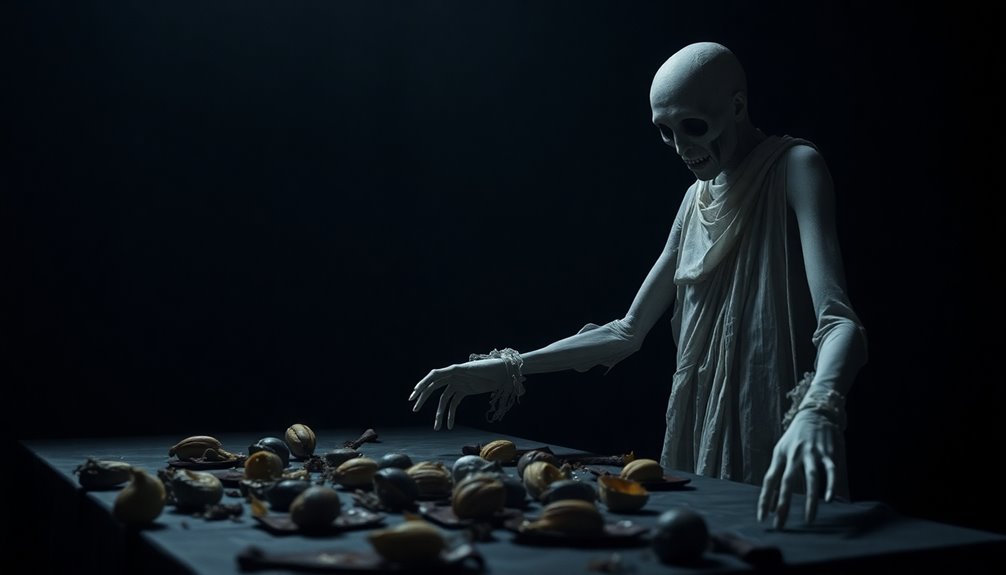
The Pale Man’s lair symbolizes the dangers of blind obedience and the loss of innocence. This haunting figure reflects the consequences of complicity in a totalitarian regime.
Through Ofelia’s struggle, the film critiques the impact of fear and control on individual freedoms, urging you to question authority and seek autonomy. The narrative echoes the themes of systemic racism and oppression found in literature like *Native Son*, illustrating the pervasive nature of societal injustice.
Understanding the Character of Ofelia
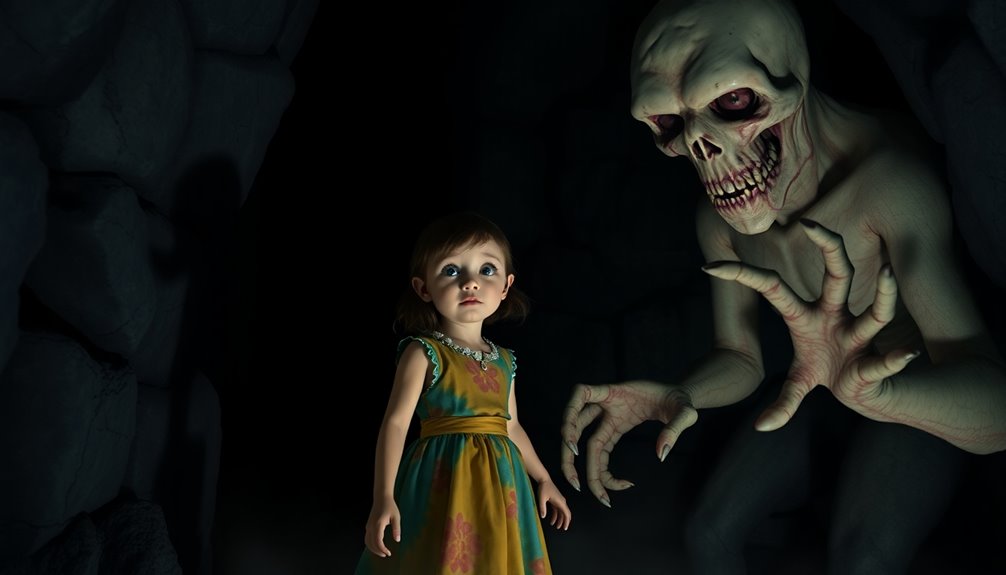
Ofelia, a symbol of innocence and resilience, navigates a harsh reality under the oppressive regime of her stepfather, Captain Vidal.
As an 11-year-old girl in post-Civil War Spain, you witness her struggle between the brutality of war and the enchanting domain she discovers in a labyrinth. This magical realm offers Ofelia a chance to reclaim her identity as the Princess of the Underworld through three challenging tasks.
Throughout her journey, Ofelia embodies the quest for self-discovery and autonomy, confronting both fantastical and real-world horrors. Her relationship with the faun catalyzes her transformation, highlighting how choices and moral decisions shape her destiny. Additionally, her experiences reflect the theme of emotional expression, illustrating how navigating trauma can lead to personal growth and resilience.
Ofelia’s journey intertwines self-discovery and moral choices, revealing her strength amidst the horrors of both fantasy and reality.
Ofelia’s strength and determination shine, making her a poignant figure amidst chaos.
The Role of the Pale Man in Ofelia’s Journey
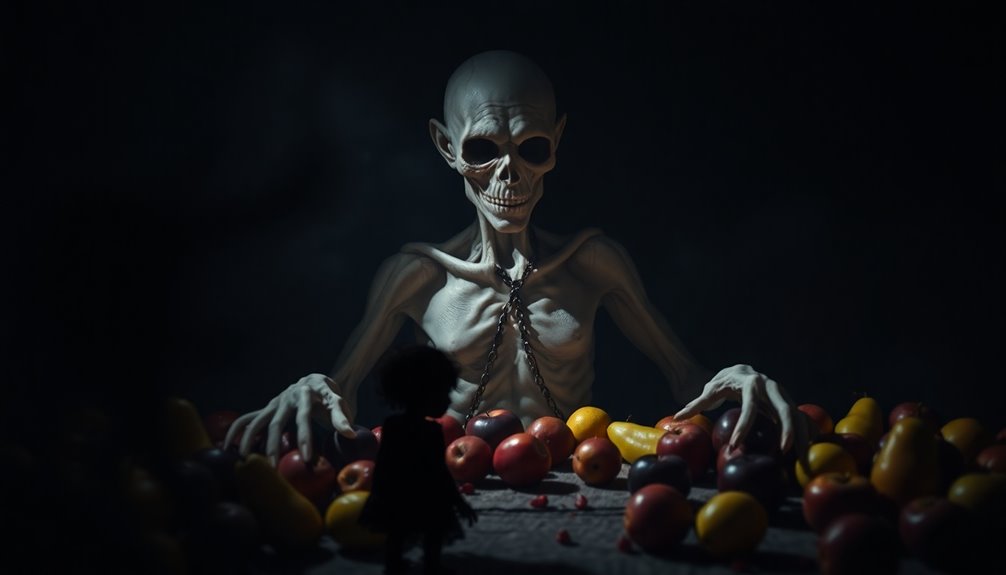
While traversing her treacherous journey, Ofelia encounters the Pale Man, a chilling embodiment of institutional evil that mirrors the oppressive nature of Captain Vidal. This terrifying figure emerges after she disobeys the Faun’s warning not to eat from his banquet, representing the harsh consequences of temptation in *Pan’s Labyrinth*.
The Pale Man’s lair, filled with grotesque artwork of child consumption, underscores the horror lurking within her fantasy world. When Ofelia eats the grapes, his awakening marks a pivotal loss of innocence, forcing her to confront the reality of her choices.
Her narrow escape, as the Pale Man devours her fairy guides, highlights her resilience and the struggle against monstrous forces in her quest for identity and freedom. This struggle resonates with themes of love and loss found in *The Book Thief*, emphasizing the importance of connection amidst adversity.
Analyzing the Symbolism of the Pale Man
The Pale Man serves as a potent symbol of institutional evil, representing how authority can prey on the vulnerable. His grotesque appearance, with pale skin and eyes in his hands, evokes fear and signifies a violation of natural order.
The Pale Man’s lair, adorned with gruesome paintings of child consumption, highlights his gluttony and past atrocities, underscoring the horror of unchecked power. When Ofelia is tempted to eat from his banquet, it leads to dire consequences, illustrating the dangers of disobedience in an oppressive world.
This character parallels Captain Vidal, showcasing different forms of monstrosity and reinforcing the film’s critique of authoritarian regimes. Through the Pale Man, you grasp the chilling reality of exploitation and its devastating impacts. The symbolism of the Pale Man resonates with the theme of systemic oppression found in literature, reflecting the pervasive nature of authority that exploits the weak.
The Visual Design of the Pale Man: A Masterclass in Horror
In Guillermo del Toro’s “Pan’s Labyrinth,” the Pale Man emerges as a striking manifestation of horror, expertly designed to evoke both fear and repulsion. His unsettling visual characteristics highlight key themes that resonate deeply:
- Pale Skin and Loose Flesh: These features suggest decay and gluttony, embodying monstrous predation.
- Eyes in the Palms: This horrifying detail symbolizes the act of consuming innocence, as he watches with insatiable hunger.
- Gruesome Artwork: His lair’s decor, inspired by Goya, emphasizes his role as a child predator.
- Awkward Movements: The Pale Man’s slow, deliberate actions create a chilling tension, making every encounter with Ofelia terrifying.
Through this masterful design, the Pale Man becomes a potent symbol of fear and temptation. Additionally, the character reflects the concept of morality found in classic literature, where the predatory nature often represents deeper ethical dilemmas.
Themes of Power and Oppression in *Pan’s Labyrinth
In *Pan’s Labyrinth*, you see how fascism devastates innocence through Ofelia’s journey amidst the brutality of Captain Vidal’s regime. The film starkly contrasts her vulnerability with the oppressive power structures that seek to control her. It challenges you to think about the necessity of resistance against tyranny to reclaim individual autonomy and moral integrity. Ultimately, the narrative emphasizes the need for personal responsibility in confronting systemic oppression and highlights the transformative power of empathy in the face of adversity.
Fascism’s Impact on Innocence
While Ofelia navigates the dark realities of fascist Spain in *Pan’s Labyrinth*, her innocence starkly contrasts the oppressive regime surrounding her.
The film highlights how fascism devastates childhood and imagination through several key elements:
- Captain Vidal embodies the brutality of authoritarian power, crushing innocence underfoot.
- The Pale Man symbolizes the voracious appetite of fascism for the vulnerable, representing violence and oppression.
- Ofelia’s journey through the labyrinth reflects her struggle for autonomy against tyranny.
- The doctor’s betrayal of Vidal showcases that even in dark times, acts of rebellion can emerge from the innocent.
These elements collectively illustrate the profound impact of fascism on innocence, emphasizing the need for resistance amidst oppression.
Symbolism of Institutional Power
As you explore *Pan’s Labyrinth*, you’ll notice that the Pale Man serves as a chilling representation of institutional power and oppression. His pale skin and the eerie eyes in his hands symbolize the grotesque nature of authoritarian regimes, particularly Franco’s Spain.
The Pale Man’s lair, adorned with disturbing paintings of child consumption, visually underscores the violence and exploitation enforced by those in power. His indulgent banquet starkly contrasts with his horrific actions, illustrating the seductive allure of oppressive systems that entice victims while wielding brutal control.
Through this imagery, the Pale Man embodies the relentless hunger of tyranny, consuming innocence and autonomy, leaving a haunting reminder of the dangers inherent in unchecked authority.
Resistance Against Tyranny
- Ofelia’s Disobedience: Each act of rebellion represents a refusal to submit.
- The Pale Man: A metaphor for totalitarian power, preying on the innocent.
- Challenging Tasks: Ofelia’s trials in the labyrinth reflect her courage against monstrous forces.
- Complicity of Institutions: The narrative critiques how religion and government support authoritarianism, urging individual resistance.
Through these elements, *Pan’s Labyrinth* illustrates the crucial importance of standing against oppression and fighting for freedom.
The Significance of the Feast Scene: Temptation and Consequence
The feast scene in *Pan’s Labyrinth* serves as an essential turning point, illustrating the seductive nature of temptation and its dire consequences. Here, Ofelia, despite the Faun’s warnings, succumbs to the allure of the lavish banquet. The grapes she eats awaken the Pale Man, capturing her fairy guides and marking a pivotal moment of loss.
This scene vividly symbolizes excess, enticing innocent children with its opulence while masking the grotesque reality of the Pale Man’s cannibalistic nature. Drawing inspiration from Goya’s “Saturn Devouring His Son,” it reinforces themes of consumption and the violation of innocence. The narrative emphasizes the importance of informed consent in understanding the consequences of one’s choices, akin to the ethical questions surrounding the use of Henrietta Lacks’ cells in medical research.
Your tension and fear mirror Ofelia’s plight, as the juxtaposition of the feast and the lurking horror encapsulates the film’s haunting blend of fantasy and terror.
The Connection Between the Pale Man and Captain Vidal
While both the Pale Man and Captain Vidal may appear distinct at first glance, their shared embodiment of monstrosity reveals a deeper connection rooted in the themes of power and oppression.
Consider these parallels:
The parallels between the Pale Man and Captain Vidal reveal a profound critique of tyranny and oppression.
- Tactics: Captain Vidal employs torture and murder, akin to the Pale Man’s cannibalistic nature.
- Aesthetics: Vidal’s machismo mirrors the grotesque design of the Pale Man, both representing institutional evil.
- Pursuit: The Pale Man’s chase of Ofelia reflects Vidal’s relentless quest for control.
- Feasting: The banquet scene intertwines their predatory natures, showcasing how both thrive on the suffering of the weak.
These connections highlight the film’s critique of tyranny, revealing that both the Pale Man and Captain Vidal are terrifying manifestations of oppression. Additionally, their actions resonate with the realities of systemic racism that pervade society, emphasizing the dehumanization inherent in oppressive systems.
Exploring the Monsters of *Pan’s Labyrinth* and Their Meanings
Monsters in *Pan’s Labyrinth* serve as powerful symbols, embodying the film’s exploration of innocence lost and the harsh realities of a world plagued by tyranny.
The Pale Man, with his ghastly design and eyes in his palms, epitomizes the predatory nature of institutional evil. His lair, filled with grotesque paintings of child consumption, starkly reminds you of historical atrocities, reflecting the violation of innocence.
As he embodies gluttony, his banquet tempts Ofelia, illustrating the dangers of temptation and the dire consequences of disobedience. The Pale Man’s awakening symbolizes the loss of control in a chaotic world, capturing the monstrous essence of fascism and the brutal realities faced by the oppressed. This notion resonates with Richard Wright’s depiction of systemic racism, which similarly illustrates the pervasive and destructive nature of institutional forces.
In this way, these monsters resonate deeply, revealing unsettling truths about humanity.
The Emotional Impact of the Pale Man’s Awakening
When Ofelia succumbs to temptation and eats the grapes, the Pale Man’s awakening plunges you into a nightmarish chase that encapsulates the film’s emotional core.
This moment highlights critical themes:
- Loss of Innocence: Ofelia’s disobedience leads to dire consequences, emphasizing the harsh realities of her world.
- Visceral Fear: The Pale Man’s grotesque design and actions evoke deep emotional responses, stirring fear and sorrow.
- Fantasy vs. Horror: The tension created blurs the line between whimsical fantasy and horrifying reality, leaving you unsettled.
- Craftsmanship: Guillermo del Toro’s blend of horror with fantasy enhances the emotional impact, making the Pale Man’s awakening one of the film’s most haunting moments.
Additionally, the Pale Man’s character embodies Gothic horror elements that resonate with the themes of fear and isolation in storytelling.
Each element enriches your understanding of the narrative’s emotional depth.
The Philosophical Questions Raised by the Pale Man’s Existence?
How does the Pale Man’s existence challenge our understanding of power and morality? The Pale Man embodies institutional evil, showcasing how totalitarian regimes exploit the innocent, especially children.
His grotesque design, with eyeballs in his hands, raises questions about perception and complicity; those blind to suffering share in the oppression. You see his gluttony as a metaphor for unchecked desire and the moral decay lurking within authoritarianism.
How Does *Pan’s Labyrinth* Critique Totalitarianism?
Totalitarianism’s chilling grip is vividly portrayed in *Pan’s Labyrinth*, particularly through the character of Captain Vidal. He embodies the brutal authority that silences dissent and instills fear.
The film critiques this oppressive regime by highlighting:
- Ofelia’s innocent escapism, contrasting her fantasy with grim realities.
- The Pale Man as a metaphor for institutional evil, consuming the powerless.
- The significance of individual resistance, seen in Ofelia’s defiance against Vidal.
- The true monstrosity manifested not in mythical creatures but in human cruelty.
Through these elements, *Pan’s Labyrinth* illustrates the devastating effects of totalitarianism, urging viewers to recognize the dangers of oppressive power and the importance of standing against it.
The Importance of Disobedience in Ofelia’s Story
Disobedience plays a pivotal role in Ofelia’s story, showcasing her struggle against oppressive forces that seek to control her.
When she eats from the Pale Man’s banquet despite the Faun’s warnings, her act of disobedience marks a critical turning point. This choice symbolizes her rebellion against authoritarian control and her quest for autonomy.
While it leads to dire consequences, like awakening the Pale Man, it also reflects the harsh realities of her world. Ofelia’s resistance against figures like Captain Vidal emphasizes that disobedience is essential when confronting monstrous evil.
Her journey illustrates the importance of individual moral choices, revealing that bravery and recklessness intertwine in her pursuit of self-discovery and empowerment, ultimately highlighting the necessity of defying tyranny.
Viewer Reactions to the Pale Man: Fear and Fascination
Ofelia’s journey of defiance leads her into the chilling domain of the Pale Man, a character that evokes both terror and intrigue among viewers. This grotesque figure stirs intense reactions, as you’re likely to feel the tension rise during his haunting scenes.
Key elements that contribute to your fear and fascination include:
- The Pale Man’s unsettling design, with pale skin and eyes in his hands, symbolizes a violation of innocence.
- Audience gasps erupt when Ofelia disobeys the Faun, triggering a nightmarish chase.
- Gruesome artwork in his lair amplifies themes of loss and helplessness.
- Many interpret the Pale Man as a representation of institutional evil, echoing societal fears of exploitation.
These aspects make him a haunting figure in your cinematic experience.
The Legacy of *Pan’s Labyrinth* in Contemporary Cinema
As *Pan’s Labyrinth* weaves dark fantasy with historical narrative, it leaves an indelible mark on contemporary cinema. The film’s unique blend of morality and authoritarianism in a fantastical setting has inspired many filmmakers to explore complex themes.
Its stunning visual design, especially the Pale Man, has set new standards for creature effects, merging practical and digital techniques. Guillermo del Toro’s storytelling approach has sparked renewed interest in genre films that tackle emotional and social issues.
Winning three Academy Awards, *Pan’s Labyrinth* has become a cultural touchstone, encouraging discussions about the role of fairy tales in addressing real-world horrors. Today, it inspires a new generation to embrace magical realism and dark fantasy in mainstream cinema.
Conclusion
In *Pan’s Labyrinth*, the Pale Man serves as a chilling reminder of the consequences of fear and blind obedience. You’ve journeyed alongside Ofelia, witnessing her struggles against a terrifying reality and the allure of fantasy. As you reflect on her story, remember that sometimes you have to break a few eggs to make an omelet. Disobedience and courage can lead to liberation, making Ofelia’s tale not just a fantasy, but a powerful critique of oppressive regimes.