
Yes, cannibalism in *Lord of the Flies* symbolizes humanity’s descent into savagery and the breakdown of moral values. When the boys turn on Simon, it marks a loss of innocence and showcases their abandonment of societal norms. Fear fuels their violent actions, leading to brutal acts against one another. This transformation highlights how quickly they regress to barbarism under pressure. There’s much more to uncover about these themes and their implications in the novel.
What Does Cannibalism Symbolize in *Lord of the Flies*?
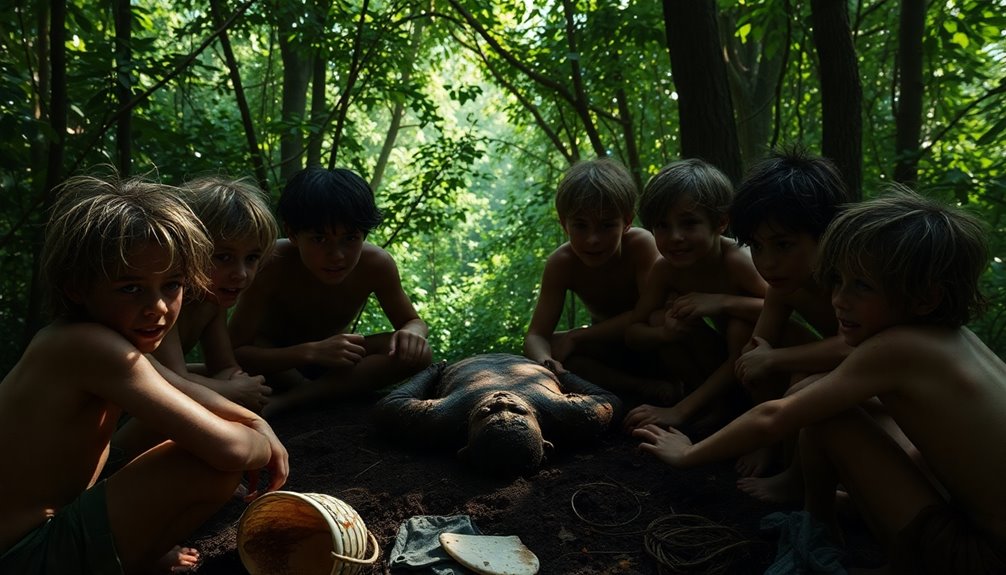
Tearing at Simon’s flesh embodies the loss of innocence and the boys’ surrender to primal instincts. Cannibalism acts as a metaphor for the abandonment of societal norms, revealing the darkness within human nature when civilization breaks down.
The fear of the “beast” drives them further into chaos, illustrating how extreme circumstances can erode moral values. Golding powerfully highlights that, without the constraints of society, humanity’s ethical boundaries dissolve, leading to unthinkable acts and a stark moral decline. This descent mirrors the theme of inherent evil within humanity, showcasing how quickly individuals can revert to savagery.
How Isolation Fuels Savagery Among the Boys
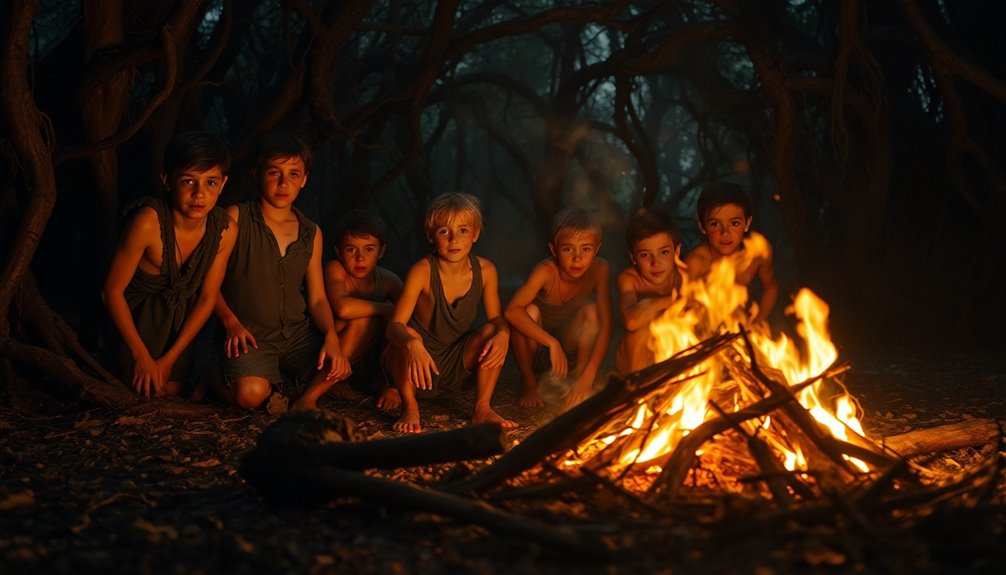
As the boys grapple with the aftermath of Simon’s death, their isolation on the deserted island amplifies their descent into savagery.
Cut off from societal norms, they slowly shed their moral codes, revealing primal instincts that drive them toward violence.
As hope for rescue fades, fear takes hold, leading to a breakdown of order. Jack and others exploit this fear, establishing dominance through manipulation and aggression.
Their early attempts at democracy collapse, showcasing how isolation intensifies tensions and rivalries.
The brutal act of violence against Simon symbolizes the complete erosion of civility, marking a pivotal shift from innocence to barbarism.
This transformation highlights how isolation fuels their innate savagery, pushing the boys further into darkness, emphasizing the fragility of human nature when societal norms are absent.
The Role of Fear in the Descent Into Barbarism
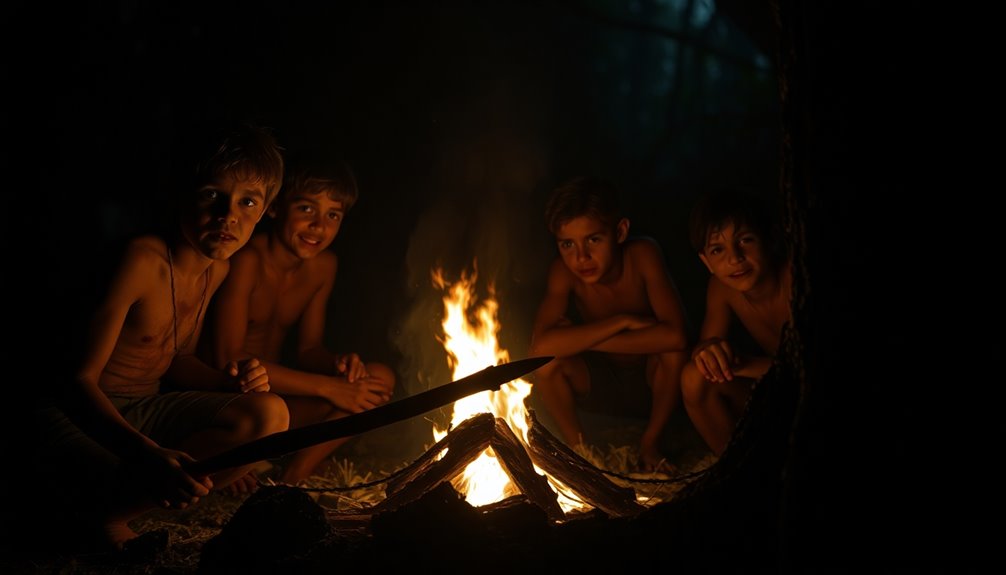
Fear looms large in “Lord of the Flies,” driving the boys deeper into barbarism as they confront the unknown. Their fear of the mythical “beast” shatters their moral codes, pushing them toward savagery and violence.
Jack exploits this fear, manipulating the group to gain power, which accelerates their descent into chaos. As fear intensifies, their primal instincts take over, leading to horrific acts like Simon’s murder.
This tragic event symbolizes the complete surrender to their darker natures, where the boys mistake Simon for the beast. Ultimately, the pervasive atmosphere of fear transforms innocent children into ruthless savages, illustrating the destructive potential of unchecked fear on human behavior and the thin veneer separating civilization from barbarism. This transformation mirrors the systemic racism that dehumanizes individuals in oppressive environments, as seen in Wright’s “Native Son.”
What Does Simon’s Death Reveal About Humanity?
The chaotic frenzy that leads to Simon’s death starkly reveals humanity’s darker tendencies. In this moment, we see how quickly civility can crumble.
- Loss of Innocence: Simon embodies rationality, and his brutal end signifies the boys’ descent into savagery.
- Collective Fear: The boys’ hysteria blinds them to truth, showcasing how easily primal instincts overpower moral boundaries.
- Inherent Darkness: Simon’s death highlights that the true beast lies within, reflecting humanity’s capacity for violence and betrayal.
Ultimately, Simon’s tragedy serves as a chilling commentary on the fragility of civilization. As the narrative suggests, the breakdown of societal norms can lead to a resurgence of inherent human evil that lies dormant within us. In the absence of societal structures, the ease with which savagery emerges is a haunting reminder of our inherent darkness.
How Does Cannibalism Reflect the Breakdown of Society?
As fear and desperation take hold, they abandon their moral boundaries, revealing the primal instincts lurking beneath their innocence.
Simon’s brutal murder marks a pivotal moment, showcasing how quickly savagery can replace civility. The violence of his death symbolizes the ritualistic consumption of innocence, highlighting a collective moral decay.
Simon’s brutal murder epitomizes the swift transition from civility to savagery, marking the ritualistic consumption of innocence and the decay of morality.
Without societal structures, the boys’ actions reflect the breakdown of civilization, emphasizing how easily norms erode under stress.
Ultimately, their descent into cannibalism serves as a chilling reminder of humanity’s potential for barbarism when driven by fear and the lust for power. This transformation parallels the themes of power and corruption found in historical narratives, such as those in *The Daughters of Night*.
Conclusion
In *Lord of the Flies*, cannibalism isn’t just about eating flesh; it’s a haunting symbol of humanity’s darkest instincts. As isolation wraps around the boys like a thick fog, they lose their grip on civility, revealing primal fears lurking beneath the surface. Simon’s tragic fate shines a stark light on our shared fragility. Ultimately, the descent into savagery captures the chilling breakdown of society, leaving you to ponder how close we all are to that edge.