
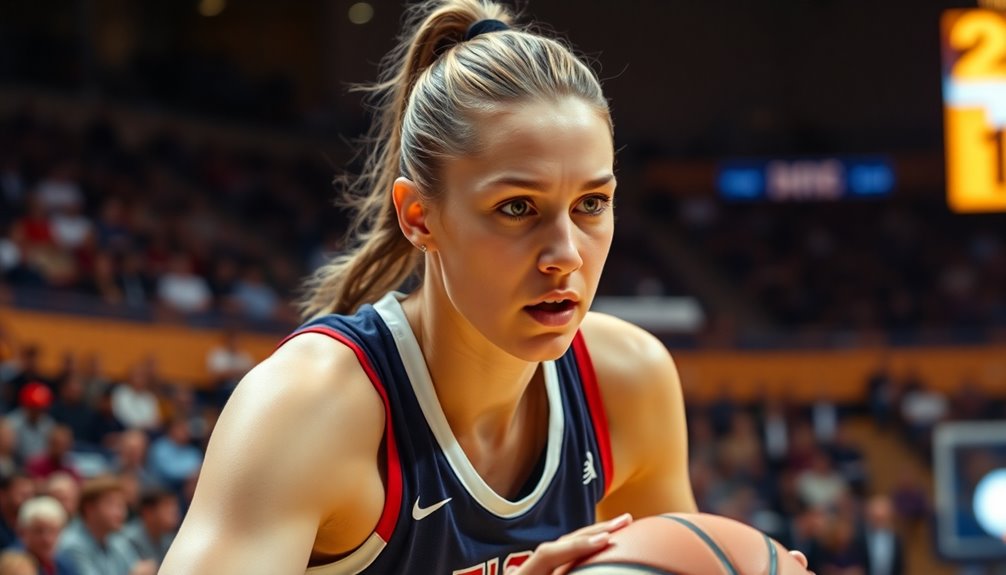
Caitlin Clark isn’t transgender; she’s a cisgender woman who publicly addressed swirling rumors about her identity. The speculation arose amid broader discussions on gender in sports, fueled by media coverage. Clark’s statement emphasizes the importance of understanding and respect in athletics, urging fans to focus on talent over gossip. With her impressive achievements and advocacy for women’s sports, there’s much more to explore about her impact and the ongoing conversations about inclusivity in the game.
Caitlin Clark’s Background: A Brief Overview
Caitlin Clark’s journey in basketball began in Des Moines, Iowa, where she was born on January 22, 2002. Growing up, she started playing basketball at just five years old, competing in boys’ recreational leagues. Her background in these early leagues laid a strong foundation for her skills.
At Dowling Catholic High School, she shone brightly, averaging an impressive 33.4 points per game during her senior year. Joining the All Iowa Attack AAU program in sixth grade helped Caitlin hone her competitive edge under the guidance of coach Dickson Jensen. This early experience mirrors the themes of resilience and ambition found in classic literature, such as *A Tree Grows in Brooklyn*.
The Rise of Caitlin Clark in Women’s Basketball
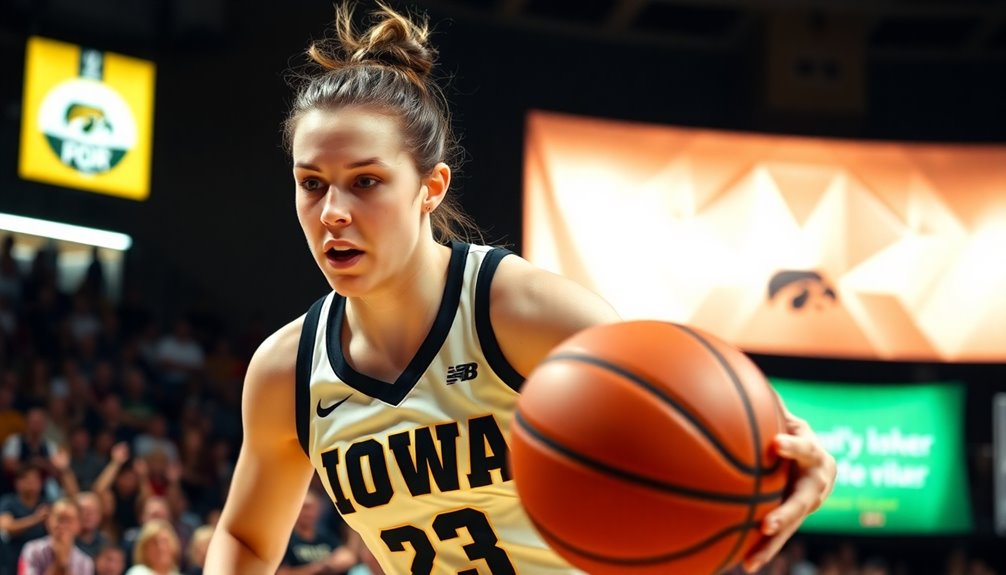
As her skills developed, Caitlin Clark quickly became a standout in women’s basketball, capturing attention both on and off the court. Born in Des Moines, Iowa, she dominated high school basketball, averaging an impressive 33.4 points per game.
At Iowa, she led NCAA Division I in scoring as a freshman and became the first woman to top both points and assists in a season during her sophomore year. By her collegiate finale, Caitlin had set Division I records for points and three-pointers.
Her exceptional talent earned her accolades like National Player of the Year, and she even led Iowa to its first national championship game. With her sights set on the professional arena, fans enthusiastically anticipate her impact in the WNBA, possibly with the Indiana Fever, and future World Cup opportunities. Her intricate plot in the game mirrors the suspense found in classic mysteries, captivating her audience.
Understanding the Rumors: What Sparked the Speculation?

While the sports community celebrated Caitlin Clark’s incredible achievements, her recent announcement about being a transgender athlete sent shockwaves through the arena. This revelation became the first of its kind for such a high-profile athlete, igniting a whirlwind of speculation.
- Mixed public reactions emerged, with disbelief and skepticism dominating discussions.
- Ongoing debates about transgender participation in sports fueled the chatter, making it a hot topic.
- Anticipated media coverage is set to shape public perception and influence future conversations around transgender athletes.
As the cultural landscape shifts regarding inclusion, Clark’s announcement reflects broader societal discussions on gender identity, leaving many wondering how it will impact women’s sports in the long run. This situation parallels the ongoing struggles against systemic oppression faced by marginalized groups, emphasizing the complexity of identity in competitive environments.
Examining Caitlin Clark’s Advocacy for Women’s Sports
The recent discussions around Caitlin Clark’s announcement have overshadowed her long-standing advocacy for women’s sports. As a prominent voice in athletics, she’s consistently highlighted the achievements and challenges female athletes face.
Her advocacy impact is evident as she emphasizes equal opportunities and recognition for women, setting records that showcase their talent. Through her media presence, Clark sparks significant conversations about sportsmanship and gender dynamics.
She actively participates in equality initiatives that promote inclusivity and fair competition, reinforcing her commitment to the integrity of women’s sports. By inspiring young female athletes to pursue their dreams, Clark champions athlete empowerment, proving that her influence extends far beyond the court and into the hearts of future generations.
The Role of Media in Shaping Public Perception
When you look at how the media covers Caitlin Clark’s announcement, you can see its powerful influence on public perception. Sensationalism often skews the narrative, creating biases that shape opinions on gender and inclusivity in sports. This highlights the responsibility of journalists to report accurately and thoughtfully, especially on sensitive topics. Furthermore, the impact of systemic racism in media representation underscores the need for ethical journalism that reflects diverse identities.
Media Bias Impact
Media coverage plays an essential role in shaping how the public perceives athletes, particularly in sensitive discussions around gender identity. The case of Caitlin Clark illustrates this influence, revealing key factors that impact public opinion:
- Media Framing Effects: Reports often amplify skepticism regarding transgender participation in women’s sports, influencing how fans and critics view athletes like Clark.
- Representation Challenges: The portrayal of Clark compared to others, such as Angel Reese, highlights ongoing biases in sports commentary and the need for equitable representation.
- Athlete Identity Narratives: As narratives evolve, they can notably affect Clark’s public image and sponsorship opportunities, shaping broader discourse on inclusivity in sports and complicating perceptions of athlete identity.
Sensationalism in Coverage
Coverage surrounding Caitlin Clark’s identity illustrates how sensationalism can overshadow nuanced discussions. When ESPN announced her as a transgender athlete, the media frenzy prioritized controversy over context, distorting the reality of her athlete identity.
This sensationalist approach often neglects the essential principles of media ethics, leading to misinformation that can skew public discourse. Social media further amplifies these narratives, creating echo chambers that either support or criticize Clark without fostering understanding.
Responsible journalism is vital in these sensitive conversations, as it can either bridge gaps or widen divides. By focusing on facts rather than sensationalism, the media can help cultivate a more informed public opinion, enabling meaningful dialogue about race, gender, and sportsmanship in today’s society.
Public Reactions: Mixed Feelings and Skepticism
You might’ve noticed the mixed reactions to Caitlin Clark’s announcement, with social media buzzing with both backlash and support.
Some fans express skepticism about her claims, while allies rally around her, emphasizing inclusivity in sports.
This divide highlights a broader conversation about the challenges transgender athletes face in today’s competitive landscape. The ongoing struggle for systemic racism and equality in various spheres, including sports, underscores the necessity for awareness and understanding.
Social Media Backlash
Social media exploded with mixed reactions following Caitlin Clark’s announcement of her transgender identity. The social media dynamics at play revealed a spectrum of opinions, affecting public trust in her narrative.
Users voiced their confusion and skepticism, highlighting:
- Concerns about the timing and implications for her career.
- Heated debates over gender identity’s role in athletics.
- Perceived double standards in reactions compared to other athletes.
These discussions reflect broader societal attitudes towards athlete representation, sparking significant conversations across platforms.
While some supporters rallied behind Clark, others questioned the authenticity of her announcement, illustrating the complexity of public sentiment in the world of sports.
The backlash underscores the ongoing struggle for acceptance and understanding in the domain of gender and athletics.
Support From Allies
As discussions around Caitlin Clark’s announcement continue to unfold, support from allies plays a significant role in shaping public perception. Many advocate for understanding and acceptance through effective advocacy strategies, emphasizing the importance of ally support networks.
These supporters highlight inclusive initiatives that promote education about transgender issues, aiming to bridge gaps in understanding within the sports community. However, skepticism persists, with some questioning the implications of Clark’s announcement on women’s sports.
This mixed response illustrates the complex dynamics surrounding transgender inclusion in athletics. Prominent figures in sports and activism have added to the conversation, amplifying both support and criticism.
Ultimately, the dialogue around Clark’s announcement reflects broader societal debates and the need for continued awareness and education.
The Importance of Responsible Journalism in Sensitive Topics
While covering sensitive topics like Caitlin Clark’s announcement, responsible journalism remains essential because it shapes public perception and can profoundly affect an individual’s career and mental health.
Upholding journalistic integrity is vital in preventing misinformation and harm. Here are three key principles to take into account:
- Rumor Verification: Always confirm facts before sharing, particularly regarding personal identities.
- Ethical Standards: Avoid sensationalism; focus on the implications of announcements to foster respectful dialogue.
- Balanced Coverage: Present diverse perspectives, especially when discussing marginalized groups like transgender athletes.
Moreover, understanding systemic racism can provide context for the societal challenges faced by individuals in the spotlight.
Historical Context: Transgender Athletes in Sports
Transgender athletes have become more visible in sports over the past decade, prompting you to think about inclusion and fairness.
Notable cases, like swimmer Lia Thomas, show just how complex these discussions can be. As debates continue in various leagues, including the NCAA, you might find yourself considering the impact on women’s sports and the ongoing call for policy changes. The conversation around systemic racism in sports parallels discussions about gender identity, highlighting the need for a more equitable approach to all athletes.
Evolving Visibility in Sports
In recent years, the visibility of transgender athletes in sports has surged, sparking essential discussions about inclusion and fairness. As societal perceptions shift, these evolving narratives highlight the complexities of athlete experiences.
- Increased visibility has led to notable cases, like Lia Thomas in swimming, igniting debates on competitive integrity.
- Organizations are reevaluating their policies to balance inclusivity with fairness, reflecting a growing advocacy for transgender rights in sports.
- Conversations around these athletes continue to evolve, emphasizing the importance of education on gender diversity within competitive environments.
This ongoing dialogue not only shapes the future of sports but also influences how we perceive and support all athletes, regardless of their gender identity.
Notable Historical Announcements
As visibility for transgender athletes grows, the historical context of their announcements becomes more significant. Notable historical milestones, like Lia Thomas’s participation in NCAA swimming, spotlight the complexities of inclusion and competitive fairness.
These high-profile cases have sparked athlete advocacy, pushing for more inclusive policies while highlighting the need for balance in women’s sports. The evolution of policies regarding transgender participation reflects changing societal attitudes, but the debates remain heated.
Public opinion often leans against transgender women competing in women’s categories, indicating a divide in perspectives. As you explore these announcements, consider how they’ve shaped the ongoing conversation about rights, representation, and the future landscape of sports for transgender athletes.
Ongoing Participation Debates
While debates about ongoing participation in sports continue to intensify, the spotlight on transgender athletes reveals deep divides in public opinion. As visibility grows, you’ll find that:
- Transgender athlete policies vary widely, with some sports embracing inclusion while others impose strict restrictions.
- Competitive equity debates challenge the fairness of allowing transgender women in women’s categories, raising questions about advantages and integrity.
- Inclusivity challenges remain central, as advocates and critics engage in discussions that highlight the need for awareness and education on transgender issues.
This contentious topic, fueled by figures like Caitlyn Jenner and activists like Riely Gaines, underscores the complexities surrounding the participation of transgender athletes in contemporary sports culture.
Community Reactions to Caitlin Clark’s Announcement
Reactions from the community to Caitlin Clark’s announcement about being a transgender athlete have been anything but uniform.
Social media buzzes with mixed opinions, highlighting the complexity of transgender representation in sports. While many fans rally in support, emphasizing the need for acceptance and sports inclusivity, others express skepticism about the implications for fairness in competition.
This announcement has ignited ongoing debates surrounding athlete narratives, reflecting broader societal tensions regarding gender identity. You might notice that discussions range from passionate support to serious concerns, underlining the urgent need for awareness and education on these issues. Furthermore, the conversation parallels gender equality efforts in various sectors, emphasizing the importance of inclusivity in all areas of society.
Ultimately, Clark’s announcement serves as a catalyst for deeper conversations about equality and sportsmanship in today’s landscape.
The Impact of Rumors on Athletes’ Careers
Caitlin Clark’s announcement hasn’t only sparked community discussions but also opened the door to a whirlwind of rumors that can greatly impact her career.
The consequences of misinformation can be severe, affecting public perception and fan support. Here are three ways rumors can influence an athlete’s journey:
- Sponsorship Opportunities: Mixed reactions to Clark’s announcement may deter potential endorsements, impacting her financial stability.
- Mental Health: Maneuvering public scrutiny can strain athlete mental health, affecting performance and well-being.
- Image Resilience: Effective rumor management strategies are essential for maintaining a positive public image and counteracting negative narratives.
In this climate, it’s critical to educate fans and create supportive policies that protect athletes from the damaging effects of rumors. Additionally, the narrative surrounding Clark can reflect broader themes of systemic discrimination that athletes face in their careers.
How Does Social Media Influence the Narrative?
How does social media shape the conversation around Caitlin Clark’s announcement? The Social Media Dynamics at play amplify both support and criticism, creating a polarized discourse on transgender athletes.
Rapid information and misinformation spread on platforms like Twitter and Instagram fuels skepticism about Clark’s identity. Hashtags and viral posts foster communities for supporters while also giving rise to anti-trans sentiments, illustrating the complexities of online activism.
Influencers like Riely Gaines mobilize opposition, rallying high-profile female athletes against transgender inclusion in women’s sports.
Ultimately, the narrative surrounding Clark’s identity intertwines with discussions on race, gender, and sportsmanship, reflecting broader societal implications and ongoing debates that social media both ignites and perpetuates. This discourse mirrors the societal expectations and guilt faced by individuals navigating their identities, much like the struggles depicted in Baldwin’s *Giovanni’s Room*.
Caitlin Clark’s Response: Setting the Record Straight
Caitlin Clark recently made a statement to clear up misconceptions about her identity.
She addressed the media speculation head-on, emphasizing her identity as a cisgender woman.
Caitlin Clark’s Official Statement
Amid swirling rumors about her gender identity, Caitlin Clark took a firm stand by releasing an official statement through ESPN. In her message, she emphasized her identity as a cisgender woman, aiming to dispel doubts and reaffirm her status as an elite athlete.
Her response highlighted essential themes in sports today:
- Identity Representation: Clark’s statement reinforces the importance of being true to oneself in the public eye.
- Gender Inclusivity: She addressed the broader conversation about inclusion in athletics, acknowledging its complexity.
- Athlete Empowerment: By focusing on her achievements, Clark encourages others to prioritize talent over speculation.
This powerful clarification not only asserts her identity but also fosters an environment of respect and understanding in sports.
Clarifying Identity Misconceptions
Following her official statement, Clark faced a wave of misconceptions about her identity that needed clarification. Many fans struggled to accept her announcement as a transgender athlete, often fueled by skepticism and disbelief.
In her response, she emphasized the importance of authenticity, asserting that her athlete identity is valid and deserves respect. This moment sparked significant discussions on social media about transgender representation and the challenges athletes face in the spotlight.
Clark’s situation highlights the urgent need for media ethics; responsible reporting can shape public understanding and acceptance. As she navigates these misconceptions, Clark remains committed to raising awareness and fostering education on transgender issues within the sports community.
Addressing Media Speculation
While the media buzzed with speculation about her announcement, Clark took a firm stand to clarify her identity and intentions. She emphasized the importance of focusing on her athletic achievements rather than her personal life, advocating for:
- Media Ethics: Clark called for responsible journalism, urging reporters to handle sensitive topics with care and respect.
- Athlete Privacy: She highlighted the need to protect the privacy of athletes, reminding everyone that personal identities shouldn’t overshadow their sports performance.
- Gender Representation: Clark stressed the significance of respectful dialogue surrounding gender identity, fostering inclusivity in sports.
Her response not only addressed the speculation but also sparked broader conversations about the evolving policies regarding transgender athletes and the necessity for empathy in discussions about their identities.
The Future of Inclusivity in Women’s Sports
As discussions about inclusivity in women’s sports continue to gain momentum, the impact of policies regarding transgender athletes becomes increasingly significant.
You’ll likely notice inclusivity challenges arising as athletes voice their perspectives on fairness and competition. Figures like Riely Gaines advocate for maintaining the integrity of women’s sports, igniting essential conversations about policy implications.
Recent surveys show that many Americans oppose transgender women competing in women’s events, reflecting shifting cultural attitudes that can’t be ignored.
Caitlin Clark’s recent announcement as a transgender athlete might influence team dynamics and sponsorship opportunities, prompting a reevaluation of inclusivity policies.
As these conversations evolve, raising awareness and educating others on transgender issues remains crucial for fostering a truly inclusive environment in athletics.
Insights From Experts on Transgender Participation
Understanding the complex landscape of transgender participation in sports requires insights from experts who navigate these contentious waters. They emphasize the need for policies that support transgender inclusion while addressing concerns about competitive fairness.
Here are three key insights:
- Physical Disadvantages: Research shows transgender women may face physical disadvantages in female sports, complicating the debate on inclusion criteria.
- Diverse Opinions: Athletes hold varied views; many believe participation should align with gender identity, while others worry about competitive fairness.
- Evolving Guidelines: Organizations like the NCAA and WNBA are developing guidelines to foster athlete representation and inclusivity.
These discussions highlight the importance of education and awareness, aiming to enhance understanding and acceptance in the sports community.
What Lies Ahead for Caitlin Clark: Career Implications?
Caitlin Clark’s recent announcement about her transgender identity has sparked significant conversation, especially in light of ongoing debates about inclusion in women’s sports.
As she navigates her professional career, expect mixed reactions that could shape public perception and affect her sponsorship challenges. Brands may reassess their endorsements based on how well they align with Clark’s identity and the evolving landscape of women’s sports.
Mixed reactions to Clark’s identity may reshape public perception and influence her sponsorship opportunities in women’s sports.
Additionally, her situation might influence team dynamics, prompting discussions on inclusivity and acceptance within the WNBA.
With increased scrutiny on transgender athletes, Clark’s performance may come under the spotlight.
Ultimately, her journey could ignite broader discussions about transgender policy, paving the way for athlete advocacy and a more inclusive future in sports.
Conclusion
In the whirlwind of rumors, Caitlin Clark remains a beacon of talent and determination in women’s basketball. As she continues to advocate for inclusivity and equity in sports, it’s clear her focus is on breaking barriers, not conforming to labels. The conversation around transgender participation is essential, but let’s not lose sight of her achievements. As she dribbles toward the future, you can bet she’ll keep making waves both on and off the court.