

In Mary Lawson’s “Crow Lake,” you’ll encounter the Morrison siblings, left orphaned after their parents’ tragic death. As they face emotional estrangement and guilt, you’ll see how their responsibilities and sacrifices reshape their relationships. Memory plays a crucial role in their healing journey, while a supportive community feels distant amid their grief. Through the beauty and harshness of their rural landscape, their struggle for reconnection unfolds, revealing deeper complexities that might surprise you.
Overview of the Morrison Family Tragedy
The Morrison family’s tragedy unfolds with the sudden death of their parents in a car crash, leaving the four siblings—Kate, Matt, Luke, and Bo—grappling with the harsh reality of orphanhood.
In the wake of this loss, you witness profound emotional estrangement among them, each sibling coping in their own way. Luke, the oldest, sacrifices his dreams to care for the younger ones, creating tension with Matt, who feels overwhelmed by the responsibility.
Meanwhile, Kate’s silence and disbelief about their parents’ death further alienate her from the others, complicating their already fractured relationships.
The tragedy doesn’t just take their parents; it triggers a cycle of dysfunction, leaving each sibling struggling with isolation and unfulfilled expectations in their new reality. The theme of generational trauma mirrors the struggles faced by immigrant families, showcasing how loss can disrupt familial bonds.
The Role of Memory in Healing
Memory serves as a powerful catalyst for healing in “Crow Lake,” guiding Kate Morrison on her journey toward emotional recovery. When she receives her nephew’s birthday invitation, it triggers a flood of childhood memories that force her to confront her family’s tragic past.
These recollections shape her understanding of her relationships with her siblings, revealing the complexities of guilt and sacrifice. As Kate navigates her memories, she realizes how differing emotional responses to their parents’ death have led to estrangement.
This journey emphasizes that revisiting and reframing past experiences can foster healing and empathy within the family. Ultimately, Kate’s reflections show that acknowledging these memories is essential for reconnecting with her siblings and healing their fractured bonds. Furthermore, the act of embracing hidden potential can facilitate personal growth and resilience, allowing individuals to move forward from their past.
Emotional Understatement and Family Dynamics

While growing up in the Morrison household, emotional understatement becomes a defining feature of family dynamics, influencing how each sibling copes with loss. The family’s staunch Presbyterian beliefs discourage open emotional expression, leading Kate to rely on disbelief as her primary coping strategy.
This emotional distance strains her relationships with her brothers, Matt and Luke, who navigate their grief differently. Luke wrestles with guilt, ultimately making sacrifices for the family, while Matt grapples with his educational aspirations.
The contrasting bonds reveal varied coping strategies: Kate and Matt’s introspective approach starkly contrasts with the carefree connection between Bo and Luke. These dynamics shape their healing journey, underscoring how emotional understatement complicates their relationships and recovery from tragedy. Furthermore, much like the complexities of marital dynamics, the Morrison siblings’ interactions highlight how emotional barriers can hinder connection and understanding.
Sibling Sacrifices and Responsibilities
As Luke takes on the role of caretaker for his younger siblings after their parents’ death, he sacrifices his dreams of a college education, leading to a heavy burden that shapes their family dynamics. This sacrifice creates a rift, as Matt gets the chance to pursue his education, igniting feelings of guilt and resentment between them.
- Luke feels trapped in his caretaker role, experiencing emotional strain daily.
- The weight of responsibility distorts their sibling bond, causing distance and misunderstanding.
- Kate recognizes the impact of Luke’s sacrifices on their relationships, deepening her own emotional struggles.
- Each sibling’s approach to responsibility creates a complex dynamic that hinders their ability to reconnect and heal.
- This situation reflects the enduring power of family relationships amidst love and loss, highlighting the challenges they face in maintaining their bond.
The Complexities of Guilt and Forgiveness
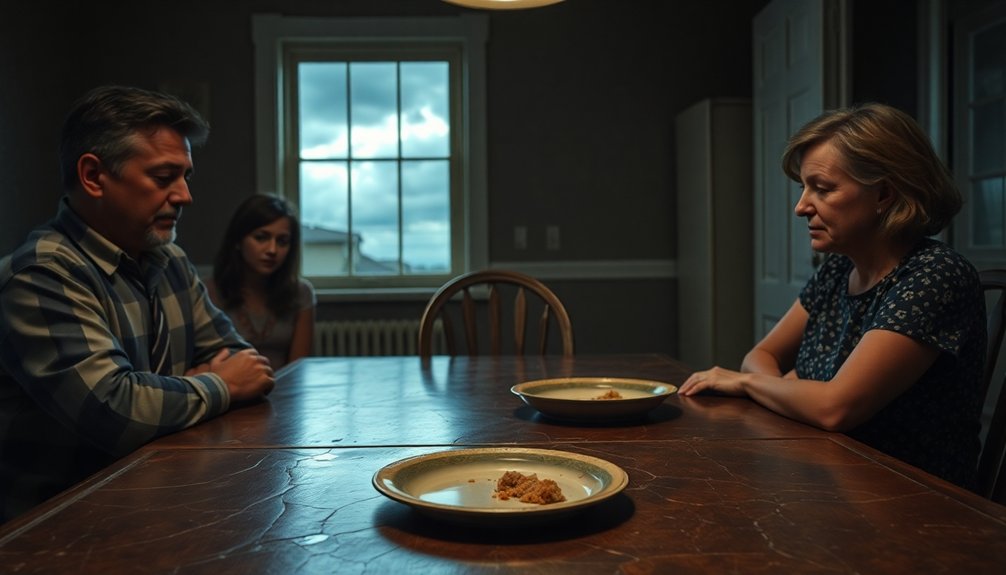
Guilt weaves through the fabric of the Morrison siblings’ lives, creating a complex tapestry of emotions that complicates their relationships. Each sibling grapples with their own sense of responsibility, particularly Matt, who sacrifices his education, and Luke, who forgoes college to care for the family.
This shared burden breeds tension, as they each wrestle with their guilt. Kate’s emotional estrangement, rooted in her unresolved feelings about their parents’ death, furthers the divide, complicating her ability to forgive herself and connect with her brothers.
As the narrative unfolds, the journey toward forgiveness becomes essential. The siblings must confront their guilt, aiming for understanding and empathy, ultimately realizing that reconciliation is key to healing their fractured relationships. This exploration of complex emotions like regret illustrates the deep impact of their past actions on their present lives.
Community Support and Isolation
The Morrison siblings’ journey toward forgiveness unfolds against a backdrop of community support that starkly contrasts with their feelings of isolation.
While the local community rallies around them, their emotional isolation deepens as they navigate their grief and responsibilities.
Miss Vernon’s stories remind them of shared history, yet they struggle to connect with that collective grief, revealing the complexities of family dynamics.
- Community members offer help, yet it feels insufficient.
- Laurie Pye’s disappearance highlights varying empathy levels.
- The ponds symbolize both beauty and their estrangement.
- Despite support, they remain trapped in their personal struggles.
This juxtaposition of community support and emotional isolation illustrates how, even amidst caring neighbors, true healing often requires confronting internal battles alone. The Morrison siblings’ experience reflects the importance of collective action in overcoming adversity, similar to the way resistance movements united individuals against oppression.
Character Development Through Interpersonal Relationships
Character development in “Crow Lake” hinges on the intricate web of interpersonal relationships among the Morrison siblings.
After their parents’ death, you see Kate, Matt, and Luke maneuvering emotional estrangement shaped by their unique dynamics.
Kate struggles to express her feelings, which affects her bond with Matt, who juggles family loyalty and his academic aspirations.
Kate’s emotional struggles create tension with Matt, who balances family loyalty against his academic ambitions.
Luke’s sacrifice of his dreams complicates their relationship, creating tension with Matt.
As you read, you’ll notice how their interactions reveal the weight of guilt and expectation that stifles their growth.
Ultimately, the evolving bond between Kate and Matt highlights the importance of communication and empathy in mending familial wounds, illustrating how these relationships shape their paths toward personal development. Additionally, the novel echoes themes of women’s resilience against adversity, showcasing how female characters navigate their emotional landscapes.
Nature as a Reflection of Internal Struggles
As the Morrison family grapples with their profound loss, the remote landscape of Crow Lake becomes a poignant reflection of their emotional isolation. The starkness of the environment mirrors the siblings’ internal struggles, where beauty and danger coexist, much like their complex relationships.
Seasonal changes in nature symbolize their growth and healing, reminding you how deeply intertwined they’re with their surroundings.
- Ponds represent the duality of life’s beauty and risks.
- The harsh landscape echoes their emotional turmoil.
- Seasonal shifts reflect their potential for change.
- The presence of the Pye family complicates their dynamics.
In Crow Lake, nature becomes a powerful lens through which you understand the Morrison family’s journey, emphasizing the role of nature as a source of healing and renewal.
The Journey Towards Reconnection and Understanding
In “Crow Lake,” you witness how vulnerability can serve as a bridge to healing and reconnection among the Morrison siblings.
As they confront their emotional estrangement, you realize that open communication is essential to overcoming the scars left by their shared loss.
This journey reveals the profound impact of understanding and forgiveness in rebuilding their fractured relationships. Additionally, it emphasizes the transformative power of trauma recovery, highlighting how personal stories can inspire hope and resilience in others.
Healing Through Vulnerability
Healing through vulnerability is essential for reconnecting with loved ones, especially in the wake of tragedy. In “Crow Lake,” you see how the Morrison siblings navigate their emotional estrangement. Kate’s silence illustrates the need for vulnerability in healing relationships.
As you follow her journey, you realize that understanding her past and her siblings’ sacrifices is critical.
- Vulnerability opens the door to empathy and connection.
- Different coping strategies can either hinder or facilitate reconnection.
- External support, like Daniel’s encouragement, is important for personal growth.
- Metaphors, such as ponds, symbolize the depth of emotions and the need for openness.
Embracing vulnerability fosters healing, ultimately transforming fractured bonds into stronger ties.
Overcoming Emotional Estrangement
Though traversing emotional estrangement can feel intimidating, the journey toward reconnection and understanding is both possible and transformative.
In “Crow Lake,” Kate grapples with her relationship with her brother, Matt, as they navigate the aftermath of their parents’ tragic death. While Matt sacrifices his education to support the family, Kate’s emotional withdrawal fosters distance, leaving unresolved feelings in their wake.
By confronting her grief, particularly through her interactions with Daniel, Kate begins to break down the barriers that hinder their bond. As she learns to communicate openly, she gradually reconnects with Matt and Luke.
This emphasizes that vulnerability and honest dialogue are essential for healing familial wounds, highlighting the potential for reconciliation even after profound loss.
Conclusion
In “Crow Lake,” Mary Lawson paints a vivid picture of a family like a fractured mirror, each shard reflecting the pain and beauty of their shared past. As you navigate their struggles with guilt, sacrifice, and the healing power of memory, you realize that reconnection is possible. The journey isn’t easy, but through understanding and community support, the Morrisons slowly piece themselves back together, reminding you that even the most broken families can find a way to shine.