Titanic changed filmmaking forever by blending groundbreaking technology with emotional storytelling. You see its extensive CGI and innovative set designs, along with real historical details that enhance authenticity and audience engagement. The film’s tightly woven narrative captures personal journeys amid tragedy, connecting you to the characters deeply. Plus, it set new standards for production techniques. If you’re curious about the lasting impact Titanic made on modern cinema, there’s much more to explore.
The Groundbreaking Technology Behind Titanic’s Success

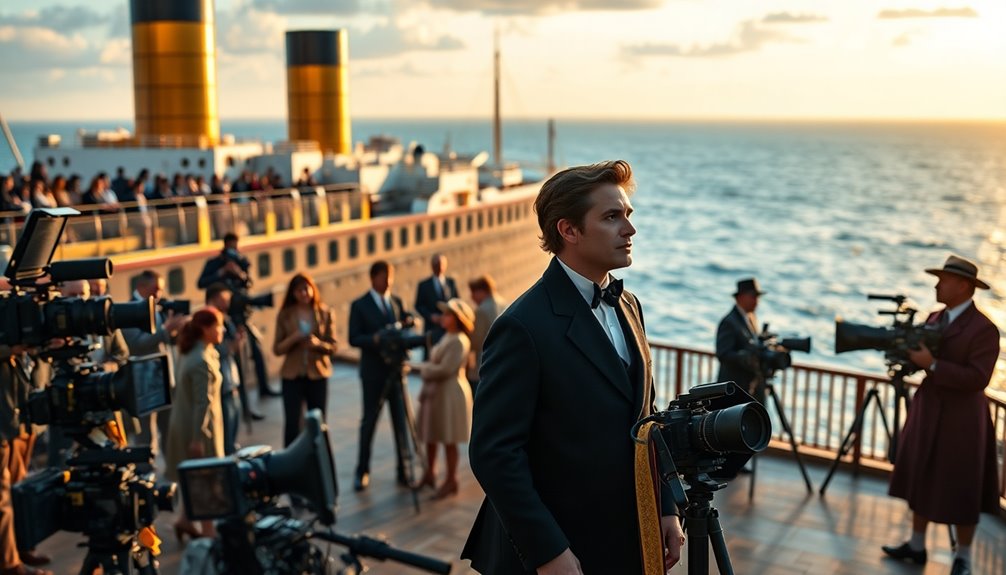
When you think about the impact of *Titanic*, it’s hard to ignore the groundbreaking technology that made it a cinematic marvel. The film utilized extensive CGI to recreate the ship and its tragic sinking, setting new standards for visual effects.
You might be amazed to learn that over 100,000 gallons of water were used, along with a nearly full-scale replica of the Titanic, showcasing innovative set design techniques. James Cameron pushed boundaries with advanced underwater filming technology, capturing realistic depictions of the sunken ship like never before.
With a budget of $200 million, the film enabled the use of cutting-edge equipment that enhanced quality. Even today, *Titanic*’s remastering in 4K with Dolby Vision HDR highlights its lasting influence on film technology. Additionally, the film’s use of advanced CGI techniques significantly influenced future blockbuster productions.
How Titanic Redefined Narrative Structure in Filmmaking
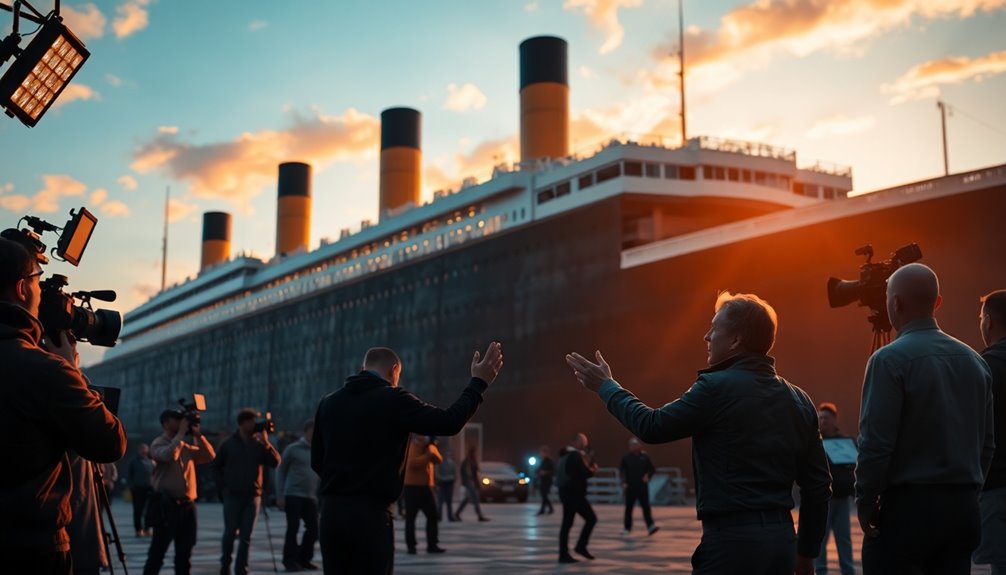
James Cameron crafted a tightly woven narrative that kept you emotionally engaged, balancing personal stories with the looming disaster. The framing device revealed the ship’s fate while maintaining suspense about the characters, creating psychological tension throughout.
By focusing on individual journeys, Cameron elevated emotional stakes, making you invest in the characters’ fates rather than just the tragedy itself.
Focusing on individual journeys, Cameron deepens emotional stakes, drawing us into the characters’ fates beyond the looming tragedy.
The film also exemplified Chekhov’s Gun principle, introducing significant objects like the Heart of the Ocean early on, ensuring their importance was felt in key moments.
Even with its predictable ending, *Titanic* allowed for impactful storytelling that kept you connected to the characters’ journeys. Additionally, the film’s portrayal of collective action and unity resonates with the spirit of World War II resistance movements, highlighting the power of collaboration in overcoming adversity.
The Impact of Historical Detail on Audience Engagement
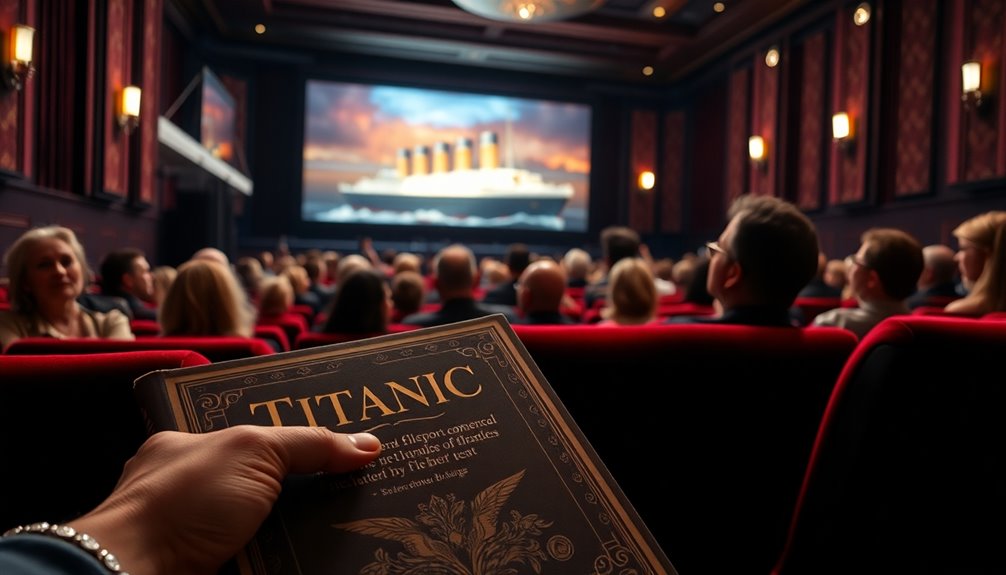
While many films incorporate historical elements, few achieve the immersive authenticity seen in *Titanic*.
James Cameron’s meticulous attention to historical detail not only increased the film’s budget but also deepened audience engagement. By showcasing real artifacts and accurately representing the ship’s design, you’re drawn into the historical context, enhancing your emotional investment.
Visual elements, like the Heart of the Ocean necklace, effectively connect plotlines, making character interactions resonate more.
The narrative intertwines fictional characters with actual events, allowing you to forge personal connections to the tragedy of the sinking. By humanizing historical events through individual stories, *Titanic* illustrates how rich historical detail can profoundly impact audience empathy and engagement, making the experience both memorable and moving.
Additionally, the film mirrors the concept of the power of words as it uses dialogue and character development to evoke emotional responses tied to historical realities.
What Filmmakers Learned From Titanic’s Production Challenges?
They learned to blend cutting-edge CGI with traditional effects, creating immersive experiences that captivated audiences. James Cameron’s groundbreaking use of lighting and extensive cabling set new standards for technical execution, proving that attention to detail enhances visual storytelling.
Additionally, reducing the number of sets for the sinking scenes highlighted the value of creative problem-solving when faced with logistical hurdles. Ultimately, *Titanic* taught filmmakers to embrace challenges as opportunities, ensuring that they could craft compelling narratives through innovation and adaptability. This aligns with the idea of recognizing green lights as growth opportunities in creative endeavors.
Emotional Storytelling: Connecting With Audiences Through Character Development
In “Titanic,” Jack and Rose’s character arcs draw you in, making their growth and struggles resonate on a personal level.
The emotional stakes heighten your connection, turning their love story into a powerful experience amid tragedy.
This blend of character development and tension sets a new benchmark for how films can engage audiences. Additionally, the film’s ability to showcase the complexity of love mirrors the intricate emotional dynamics found in narratives like “Like Water for Chocolate.”
Character Arcs and Growth
As you plunge into *Titanic*, you’ll quickly realize how Jack and Rose’s character arcs transform the narrative from a mere historical account into a deeply emotional experience.
Their journey is compelling due to:
- Contrast in Backgrounds: Jack embodies freedom and adventure, while Rose represents confinement and societal expectations.
- Mutual Influence: Their relationship fosters growth, as they push each other toward self-discovery and bravery.
- Foreshadowing Sacrifice: Early interactions hint at the profound choices they’ll face, intensifying audience investment.
Emotional Stakes and Tension
Emotional stakes and tension create a gripping experience that captivates viewers throughout *Titanic*. By intertwining the fictional love story of Jack and Rose with the historical tragedy of the ship’s sinking, you’re drawn into their world, feeling their hopes and fears.
The film’s well-defined character arcs deepen your empathy, transforming passive observation into active emotional investment. James Cameron’s use of foreshadowing heightens psychological tension, keeping you on edge as the story unfolds.
Coupled with a memorable soundtrack that underscores pivotal moments, the emotional stakes of love, loss, and survival resonate universally. This blend of compelling storytelling and character development not only engages you but also set new standards for emotional storytelling in cinema, influencing countless films that followed.
The Lasting Legacy of Titanic in Modern Cinema
2. High Production Value: The film demonstrated that substantial budgets could translate into immense box office success.
3. Character-Driven Narratives: It elevated audience expectations for emotional depth and historical accuracy in storytelling. Additionally, the film’s intricate psychological depth in character arcs resonated with viewers, influencing future narratives in epic filmmaking.
These elements not only revolutionized the industry but also paved the way for future epics.
Conclusion
In the end, “Titanic” didn’t just sink; it reshaped the entire film industry. With a staggering $2.2 billion in box office revenue, it proved that emotional storytelling and groundbreaking technology could captivate audiences worldwide. You can see its influence in countless films today, where character depth and historical detail take center stage. As you watch modern cinema, remember how “Titanic” set a new standard, reminding us that storytelling can truly transcend time and space.