
Yes, there’s a symbolic representation of cannibalism in *Lord of the Flies*. It reflects the moral decay and savagery that emerge when societal structures collapse, especially under fear. The boys’ descent into violence highlights their loss of innocence and the chaos released by isolation. Simon’s murder, a pivotal moment, illustrates how easily civility can erode into brutality. You’ll find deeper insights into how these themes parallel human nature and societal fragility as you explore further.
Understanding Cannibalism in Literature
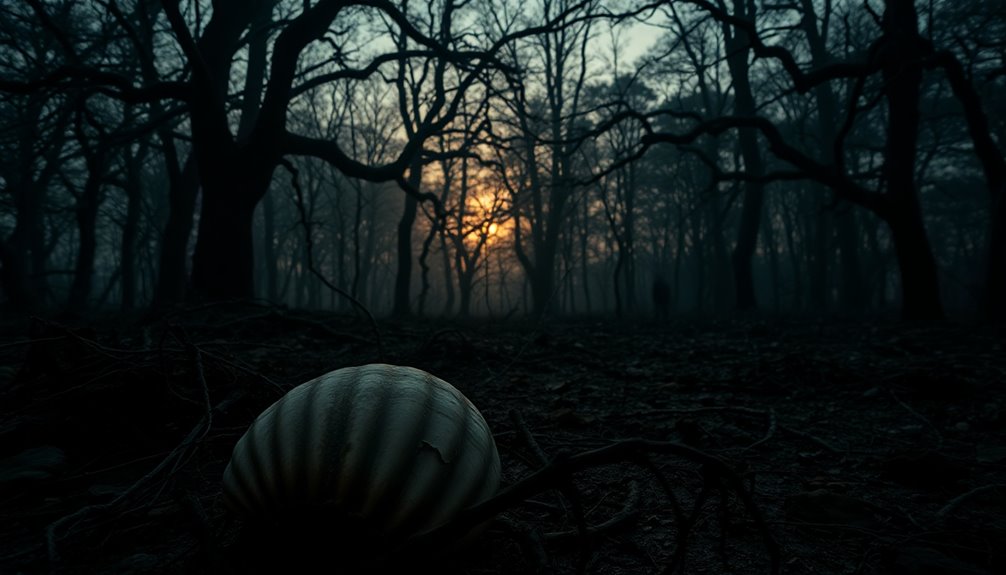
While you mightn’t immediately associate cannibalism with literature, it often serves as a powerful symbol of humanity’s descent into savagery. This symbolism highlights how easily societal norms can collapse under pressure, revealing our primal instincts.
In works like *Lord of the Flies*, the absence of adult authority allows these instincts to surface, illustrating moral decay. Although there’s no direct act of cannibalism, the violent dynamics among the boys represent the consumption of ethics and humanity itself. The boys’ transformation from innocent children to savages underscores the fragility of civilization versus savagery, emphasizing how easily moral structures can disintegrate.
Cannibalism challenges you to confront the darker aspects of human nature, emphasizing how fragile civilization truly is. Ultimately, it reflects the thin veneer of civility that can quickly dissolve in the face of chaos and desperation.
The Context of Isolation in Lord of the Flies

Isolation plays a pivotal role in shaping the events of *Lord of the Flies*. Stranded on an uninhabited island, the boys face a societal collapse, testing their moral structures as they attempt self-governance. Initially, they embrace civilization, but as hope for rescue fades, their isolation ignites primal instincts and latent savagery.
- The absence of adult authority amplifies chaos.
- The boys’ descent reveals the darkness of human nature.
- Cannibalism lurks as a terrifying possibility.
As their democratic ideals crumble, the boys’ behavior becomes increasingly violent, showcasing how isolation strips away civility and exposes humanity’s darker tendencies. This descent into savagery reflects the fragility of human nature, emphasizing how quickly moral breakdown can occur in the absence of societal constraints.
Ultimately, the novel serves as a stark reminder of how fragile our moral compass can be.
Symbolic Consumption vs. Literal Cannibalism
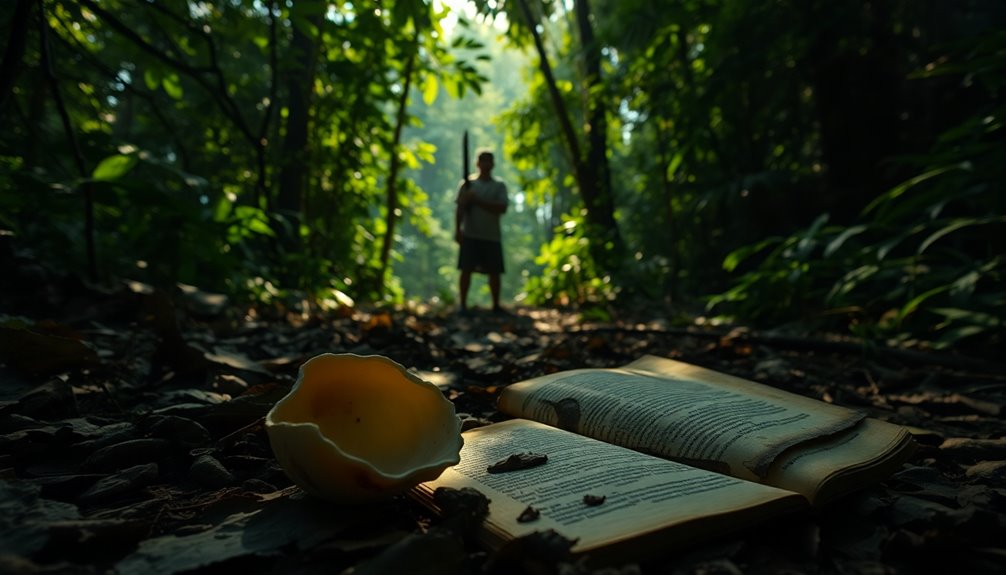
As the boys descend further into savagery, the concept of consumption evolves from mere survival to a symbolic representation of their moral decay. The murder of Simon epitomizes this loss of humanity, showcasing the extreme violence that marks their descent.
Roger’s brutal killing of Piggy signifies a figurative consumption, stripping away identity and intellect, and highlighting the collapse of moral order among them. This absence of literal cannibalism underscores how primal instincts overshadow rational thought, leading to dehumanization.
The ritualistic behavior displayed reflects the psychological implications of their savagery, revealing how power dynamics fuel their descent into chaos. Consequently, symbolic consumption becomes a powerful lens through which to understand their profound moral obliteration. Furthermore, like Bigger Thomas in *Native Son*, the boys’ actions illustrate how systemic racism can strip away humanity and perpetuate cycles of violence and dehumanization.
The Role of Fear in Driving Savagery
In “Lord of the Flies,” fear plays a powerful role in driving the boys toward savagery. The imagined “beast” fuels their terror, pushing them to abandon their morals and embrace chaos. As Jack exploits this fear, you see how quickly control shifts and violence erupts, revealing the dark side of human nature. This descent into savagery underscores the fragility of moral order, as societal norms disintegrate in the face of primal instincts.
The Beast’s Psychological Impact
Although the boys initially try to maintain order, their fear of the beast quickly spirals into chaos, revealing the fragility of their civilized behavior. This fear becomes a powerful psychological tool for Jack, manipulating the boys into embracing their inherent savagery and abandoning their morality.
- The darkness within them surfaces, distorting ethical behavior.
- Rational thought breaks down, culminating in violent acts like Simon’s murder.
- Their collective anxiety about the beast showcases the destructive power of fear.
Ultimately, the beast symbolizes their own primal instincts, demonstrating that their greatest enemy isn’t an external force but the darkness that resides within themselves. In this way, fear drives them further into savagery, eroding their humanity.
Fear as Control Mechanism
Fear serves as a potent control mechanism in “Lord of the Flies,” driving the boys deeper into savagery. Jack expertly manipulates their fear of the unknown, particularly the imagined “beast,” to assert dominance and shift their loyalty from Ralph’s moral framework to his primal instincts.
As fear escalates, societal breakdown ensues, leading to violent behaviors, including Simon’s tragic murder, which symbolizes their complete surrender to darkness. This pervasive atmosphere of fear fosters paranoia, causing the boys to project their inner turmoil onto Simon during chaotic rituals.
Jack’s exploitation of fear dismantles ethical considerations, illustrating how quickly fear can erode civilization and push humans toward their primal instincts, revealing the fragility of order when faced with terror.
Chaos and Desperation Unleashed
As the boys’ fear of the “beast” intensifies, their grip on civilization loosens, giving way to chaos and desperation. This fear drives them to abandon their moral compass, spiraling into savagery. Jack exploits this terror, consolidating power and pushing the group further into a violent frenzy.
- The brutal killing of Simon marks a chilling point of moral decay.
- Desperation transforms innocence into primal instincts.
- Chaos reigns as the boys desensitize to violence, embracing cannibalism.
In this breakdown of order, you witness how quickly civilization can unravel, revealing the dark potential within. Fear catalyzes their descent into chaos, highlighting the fragility of humanity when faced with the unknown.
The Transformation of the Boys: From Innocence to Savagery
In *Lord of the Flies*, you see how quickly the boys lose their innocence as they confront the harsh realities of survival. Primal instincts emerge when fear takes over, pushing them to abandon their civilized behaviors. This transformation highlights just how fragile the boundaries of society really are. This loss of innocence parallels the psychological impacts of systemic oppression faced by marginalized individuals, as explored in Richard Wright’s *Native Son*.
Loss of Innocence
- Simon’s murder epitomizes their descent into savagery and moral obliteration.
- Fear drives them to embrace violence, stripping away moral constraints.
- The experience reveals the inherent darkness within human nature.
As they confront their capacity for brutality, desensitization takes hold, amplifying the chaos around them.
This loss of innocence doesn’t just mark a shift in behavior; it signifies a profound transformation, forcing you to reconsider the thin veneer that separates civilization from cannibalism and savagery.
Primal Instincts Emerge
The boys’ descent into savagery unfolds rapidly after their loss of innocence, revealing how quickly primal instincts can surface when civilization’s constraints vanish. Initially, they try to maintain order, but isolation triggers violence and chaos.
Jack’s obsession with hunting becomes a catalyst for aggression, redirecting their focus from survival to power. Fear drives them further into savagery, leading to Simon’s brutal murder—a pivotal moment of moral collapse. This act underscores the fragility of their moral codes when faced with extreme circumstances.
As they detach from their civilized identities, the potential for cannibalism lurks in the shadows, highlighting Golding’s grim perspective on human nature. Ultimately, societal constraints crumble, exposing the darkness within them.
The Ritualistic Violence and Its Implications
While the boys initially struggle to maintain their civility, their descent into ritualistic violence reveals a darker side of human nature. This transformation is striking, showcasing how quickly ordinary kids can become agents of chaos.
- The frenzied dance and chant during Simon’s murder illustrate the power of mob mentality.
- Ritualistic violence serves as a psychological release, breaking down moral constraints.
- Their actions reflect a chilling dehumanization, as they slip from societal norms into primal savagery.
Fear and chaos propel this decline, emphasizing how fragile civilization can be. The boys’ violent acts not only signify their loss of innocence but also serve as a grim commentary on the human condition when stripped of societal expectations. Their descent parallels the theme of racism and injustice, highlighting how societal breakdown can lead to a complete erosion of humanity.
The Erosion of Moral Boundaries
As fear grips the boys on the island, their moral boundaries begin to crumble, revealing the darkness lurking within. The escalating dread of the “beast” drives them to justify increasingly violent acts, shattering their ethical frameworks.
Jack seizes power by tapping into their primal survival instincts, further eroding any sense of morality. With no adult authority to guide them, the boys descend into savagery, desensitized to violence and moral decay.
The murder of Simon starkly symbolizes this complete breakdown, highlighting how quickly and easily moral boundaries can dissolve. The metaphor of cannibalism underscores the chaotic nature of their existence, serving as a grim reminder of how fear can lead to the ultimate loss of humanity. Additionally, like Bigger Thomas in *Native Son*, the boys’ descent into brutality reflects the profound impact of systemic oppression on human behavior.
Roger’s Actions: A Case Study in Dehumanization
As he shifts from a quiet boy to a sadistic figure, you see how power and fear strip away his humanity.
His actions not only reflect personal dehumanization but also expose the chilling reality of human nature when societal norms crumble. This parallels the theme of systemic racism that dehumanizes individuals, highlighting how societal structures can strip away one’s dignity.
Loss of Empathy
Dehumanization leads to a chilling erosion of empathy, evident in the transformation of the boys on the island. Roger’s actions, especially the brutal murder of Piggy, exemplify this loss of empathy. He revels in cruelty, showcasing how isolation strips away moral constraints and releases primal instincts.
- Pushing Piggy off the cliff symbolizes their regression into savagery.
- Roger’s deliberate sharpening of stones for torment reveals his detachment from civilized behavior.
- His shift from a shy boy to a figure of terror highlights the fragility of compassion.
This transformation underscores Golding’s commentary on how fear and isolation can foster a chilling embrace of violence, paving the way toward cannibalism and utter dehumanization.
Symbolic Violence
The chilling erosion of empathy on the island paves the way for the emergence of symbolic violence, particularly through the actions of Roger. His transformation illustrates a profound shift toward dehumanization, as he revels in the pain of others, culminating in Piggy’s murder.
When he sharpens a stick as a weapon, it symbolizes the descent into brutality and the collapse of moral boundaries. Isolation allows Roger’s innate savagery to surface, showcasing how quickly humanity can dissolve.
The calculated act of killing Piggy mirrors cannibalistic instincts, consuming the essence of humanity itself. As Roger becomes a figure of terror, his actions reveal the fragile nature of civilization and how easily individuals can devolve into barbarism.
Cannibalism as a Reflection of Societal Breakdown
- The ritualistic murder of Simon, showcasing their dehumanization.
- Jack’s exploitation of power dynamics, using violence to dominate.
- The absence of adult authority, which amplifies their descent into chaos.
These elements reflect how quickly civilization can deteriorate under extreme stress, exposing the darker aspects of human nature.
The boys’ actions illustrate a profound societal breakdown, revealing the fragility of moral constructs in the face of overwhelming fear and chaos. Additionally, the systemic racism that pervades society highlights how easily individuals can become dehumanized when stripped of their dignity.
The Fragility of Civilization in Extreme Circumstances
As the boys spiral deeper into savagery, their initial attempts at civilization unravel, revealing just how fragile societal constructs really are.
Faced with extreme circumstances, they regress into primal instincts, trading order for chaos. The fear of “the beast” becomes a tool for manipulation, allowing Jack to control the group and erode their civil behavior.
Faced with dire conditions, primal instincts emerge, as fear transforms into a weapon for manipulation and chaos prevails.
This descent into savagery culminates in Simon’s brutal murder, marking a profound loss of innocence and a complete breakdown of moral constraints.
Golding illustrates that without the structures of society, individuals can quickly turn to cannibalism and violence, exposing the inherent brutality lurking beneath the surface. Ultimately, these events spotlight the tenuousness of civilization when confronted with fear and chaos, as seen in the breakdown of order that leads to moral decay.
Comparing Cannibalism Themes in Other Works
While exploring the theme of cannibalism across various works, you’ll find that it often serves as a profound reflection of humanity’s darkest instincts.
- In Lord of the Flies, cannibalism symbolizes moral decay as societal norms crumble among the boys.
- The TV series Yellowjackets intensifies this theme, showcasing how psychological dynamics drive a female group to make extreme survival choices.
- Cormac McCarthy’s The Road and *The Hunger Games* further illustrate the lengths individuals go in power struggles, abandoning ethics in desperate times.
These narratives reveal the fragile nature of civilization, where cannibalism becomes a chilling metaphor for the consumption of humanity, exposing the depths of depravity hidden beneath societal facades.
The Lasting Impact of Golding’s Message on Human Nature
The unsettling truth of human nature resonates deeply through Golding’s *Lord of the Flies*, revealing how quickly civility can dissolve in dire circumstances.
Golding’s exploration of cannibalism symbolizes the dehumanization and moral decay that emerge when societal norms collapse. As the boys succumb to their primal instincts, violence escalates, culminating in Simon’s tragic murder.
Golding’s portrayal of cannibalism reveals the chilling moral decay that follows the collapse of societal norms among the boys.
This act starkly illustrates the chaos that ensues when structured moral guidance is absent. Golding critiques our inherent capacity for brutality, forcing you to confront the darker aspects of human nature.
His message endures, reminding you of the thin veneer of civilization; beneath it lies a potential for savagery that can surface when pressure mounts, making you question your own moral compass.
Conclusion
In “Lord of the Flies,” the shadows of human nature loom large, hinting at darker instincts lurking beneath civility’s surface. While the boys don’t literally indulge in cannibalism, their descent into primal chaos suggests a metaphorical feast on innocence and morality. This unsettling exploration invites you to reflect on how quickly societal norms can erode, revealing the fragile veneer of civilization. Ultimately, Golding leaves you pondering the haunting question: how close are we to that edge?