Listening to the *House of Leaves* audiobook can be a mind-bending experience, but it often misses the book’s rich, layered narrative. The unique structure and typographical elements add depth that audio can’t fully capture. You might find key themes, like existential dread, lose their resonance. The complex interplay of footnotes and visual cues is hard to grasp through sound alone. If you’re curious about enhancing your experience, there’s more to explore on how to immerse yourself fully.
The Unique Narrative Structure of *House of Leaves
When you immerse yourself in *House of Leaves*, you quickly realize that its unique narrative structure isn’t just a gimmick; it’s an integral part of the experience.
The book employs an ergodic narrative, challenging you with non-linear storytelling and unconventional formats. As you navigate the layers of *The Navidson Record* and Johnny Truant’s fragmented tale, you’ll find footnotes adding complexity to your reading.
The book’s ergodic narrative intricately weaves non-linear storytelling with footnotes, adding layers of complexity to your reading journey.
The typographical choices—text in various orientations—create a disorienting experience that echoes themes of madness and psychological exploration. This structure requires you to engage actively, manipulating the book physically to grasp the confusion and unease central to the story.
Understanding this narrative structure is vital for diving into the deeper themes of existential dread woven throughout the text. Additionally, the intricate plot and iconic twist endings found in classic mysteries like *And Then There Were None* can similarly evoke a sense of disorientation in readers.
How the Audiobook Captures the Book’s Atmosphere
- Visual Cues: The layout and footnotes enhance the psychological thriller aspect, which audio can’t convey.
- Physical Interaction: Flipping pages and interpreting text adds depth to the narrative.
- Layered Narratives: The chaos of the text engages you in a horror experience that audio might dilute.
- Auditory Phenomena: Sounds described in the book rely on your visual engagement to truly resonate.
In short, the book’s physicality is essential for fully immersing yourself in its mind-bending world, as it mirrors the systemic oppression that underpins the characters’ struggles, much like in *Native Son*.
Exploring Themes and Symbols Through Audio
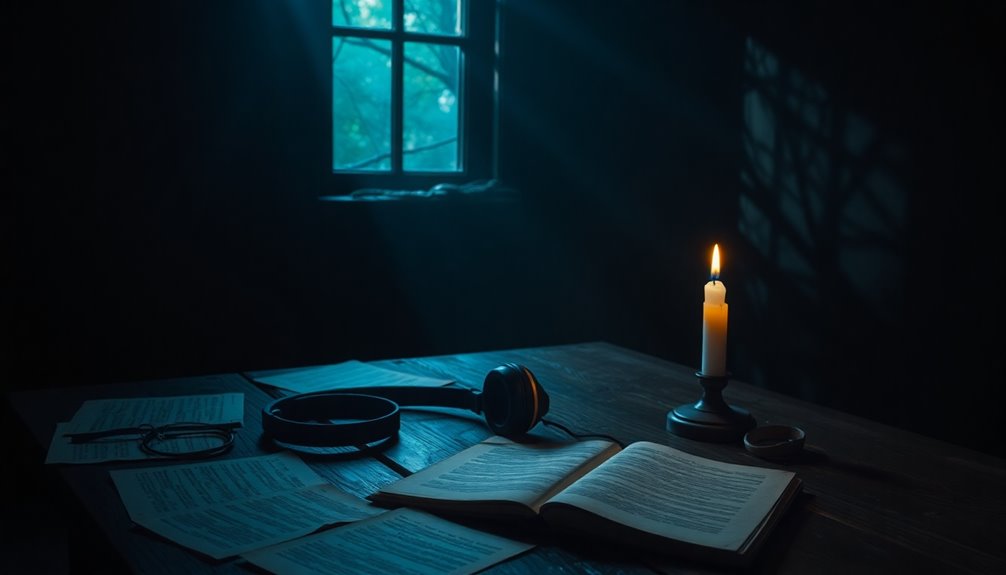
The unique structure challenges readers, as the disordered narratives lose visual impact when translated into sound. Key symbols, like the house itself, embody existential dread, yet without the text’s visual layout, their significance diminishes.
The paradox of infinity, explored through the house’s impossible dimensions, simplifies in audio, stripping away its layered meaning.
The interplay of footnotes—crucial for context—often gets overlooked, reducing the richness of the experience.
Listeners may miss the unsettling psychological effects from the book’s typographical play, which contributes to the story’s deep thematic exploration. Additionally, the themes of memory shapes perception and identity resonate throughout the narrative, further complicating the listener’s experience.
Reader Reactions: Audiobook vs. Physical Format?
- Complex Structure: The book’s unconventional formatting may not translate well to audio, altering the narrative impact.
- Tactile Engagement: Readers often prefer physical books for intricate narratives, needing to appreciate the formatting.
- Preserving Integrity: There’s a strong desire to maintain the text’s original integrity, emphasizing the author’s intent.
- Convenience vs. Depth: While audiobooks offer convenience, many believe that a complex man, read this book for immersive understanding. Additionally, the exploration of systemic racism in Wright’s narrative underscores the importance of engaging with the text’s original structure.
Ultimately, the physical format remains the favored choice for many.
Enhancing the Listening Experience: Tips for Engaging With the Audiobook
How can you fully engage with the audiobook experience of *House of Leaves*? While no confirmed audiobook exists, listening to summaries can still deepen your understanding of the complex narrative.
Focus on 10-minute summaries that capture the essence of the Navidson Record and Johnny Truant’s intertwining stories.
However, remember that the book’s unique structure and chaotic layout are essential to its themes. Whenever possible, complement your audio experience by reading the physical book.
This way, you can appreciate the intentional chaos and psychological depth that enhance the atmosphere. By balancing listening with reading, you’ll immerse yourself more fully in the haunting world that Danielewski has crafted, gaining insights that pure audio alone can’t provide. Additionally, consider how the themes of social mobility in both narratives can enrich your understanding of character motivations.
Conclusion
In diving into the *House of Leaves* audiobook, you’re not just listening; you’re experiencing a labyrinth of sound and narrative. Consider how a listener, like Sarah, found herself immersed in the chilling ambiance created by layered voice acting, enhancing her understanding of the text. This auditory journey invites you to explore themes and symbols in a new light, making it a unique companion to the physical book. Embrace the experience—your mind might just unravel in unexpected ways.