The 1980s gave us iconic films that continue to shape modern cinema, blending innovative storytelling with unforgettable characters. Movies like *E.T.*, *The Breakfast Club*, and *Die Hard* set new standards by exploring complex themes of identity and friendship. Groundbreaking special effects and memorable soundtracks also emerged, influencing future films. Characters like Indiana Jones and Ferris Bueller remain cultural touchstones. There’s so much more to discover about how these films impact today’s cinema.
Why the ’80s Were a Golden Era for Film
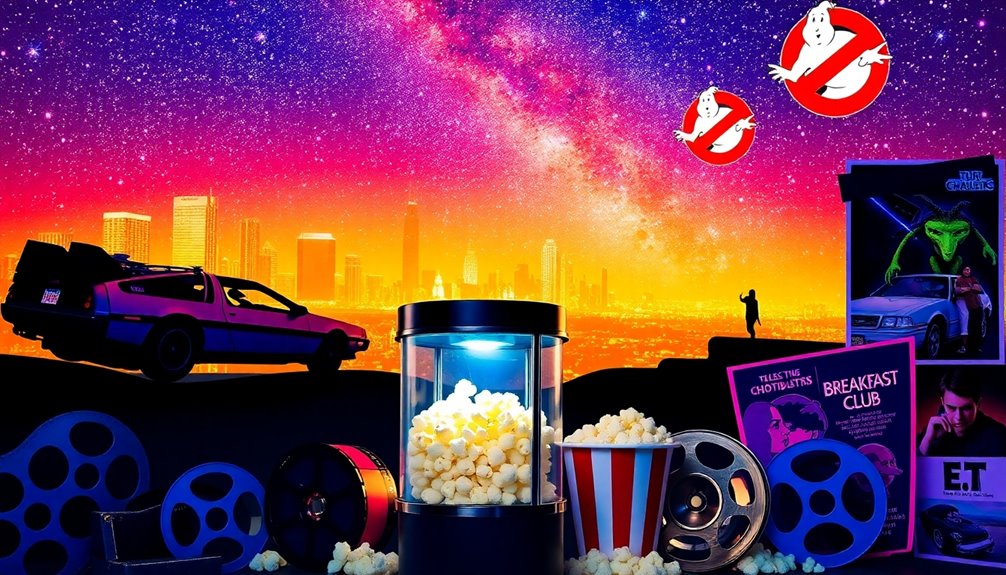
It also reshaped pop culture by blending genres, with groundbreaking films like *Die Hard* and *The Shining* raising audience expectations. Major filmmakers, such as Steven Spielberg and John Hughes, explored complex themes of identity and friendship, leaving a lasting mark on storytelling. The emergence of blockbuster franchises like *Star Wars* and *Indiana Jones* set new standards for box office success, ensuring that these films resonate with audiences today and continue to inspire revivals. Additionally, the decade’s films often featured iconic plot twists, much like Agatha Christie’s *And Then There Were None*, which captivated audiences with its unexpected endings.
Iconic Blockbusters That Shaped Popular Culture
The 1980s gave us blockbusters that not only entertained but also left a lasting mark on our culture. Films like *E.T.* and *The Breakfast Club* introduced memorable characters and moments that still resonate today. These movies shaped how we view friendship, adventure, and the teenage experience, making them essential to understanding popular culture. The spirit of collective action in these films reflects a broader cultural significance, emphasizing the importance of unity in overcoming challenges.
Cultural Impact and Legacy
While many films from the 1980s dazzled audiences, a select few truly shaped popular culture and left a lasting legacy.
These best movies not only entertained but also influenced future filmmakers and genres:
- E.T. the Extra-Terrestrial (1982): Set a standard for emotional storytelling in sci-fi, impacting countless blockbusters.
- The Breakfast Club (1985): Defined teenage identity and social dynamics, becoming a cultural touchstone for Generation X.
- Die Hard (1988): Revolutionized the action genre with its relatable hero and real-time narrative, creating a blueprint for modern action films.
These films exemplify the cultural impact of the 1980s, proving their significance in shaping the cinematic landscape that we recognize today.
Their legacies continue to resonate in contemporary cinema.
Memorable Characters and Moments
Memorable characters and iconic moments from the 1980s shaped how we view cinema today.
Think of Indiana Jones, the adventurous hero who defined a generation with his fedora and whip, inspiring countless films and characters that followed.
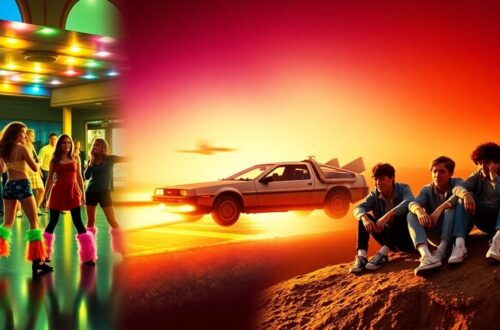
In *Back to the Future*, the time-traveling DeLorean became a symbol of 80s innovation, blending humor with adventure in ways that still resonate.
You can’t forget *E.T. the Extra-Terrestrial* either, with its heartwarming “E.T. phone home” line that emphasizes friendship and belonging.
Meanwhile, *The Breakfast Club* introduced unforgettable characters like the “brain” and the “athlete,” capturing the essence of high school life.
Each film contributed memorable moments that continue to influence popular culture today.
Cult Classics That Have Endured Through the Years
What makes a movie a cult classic? It’s a blend of unique storytelling, memorable characters, and a loyal fanbase that thrives on nostalgia.
Here are three iconic films that fit the bill:
- The Breakfast Club (1985): This film dives into the struggles of identity and teenage rebellion, making it a timeless exploration of youth.
- The Princess Bride (1987): A perfect mix of adventure, romance, and humor, its quotable lines and beloved characters keep fans coming back.
- Back to the Future (1985): With its innovative time-travel premise, this sci-fi comedy not only entertained but influenced countless films that followed.
These cult classics continue to resonate, proving that great stories never fade away. Additionally, the themes of trust and betrayal explored in these films reflect a complexity that keeps audiences engaged.
Groundbreaking Cinematic Techniques Introduced in the ’80s
The ’80s transformed filmmaking with innovative special effects and evolving narrative structures.
You’ll notice how movies like *An American Werewolf in London* pushed the boundaries of practical effects, while films like *Tron* introduced CGI that changed the game. These techniques not only enhanced visual storytelling but also reshaped how audiences experienced film. They laid the groundwork for the future of humanity in cinematic storytelling, much like how classic sci-fi novels explored the evolution of civilization.
Innovative Special Effects
As filmmakers pushed the boundaries of creativity in the 1980s, innovative special effects transformed the cinematic landscape.
These advancements not only entertained but also set new standards for future films.
Here are three key innovations:
- Motion Control Photography: Used in *Star Wars: Episode V*, this technique allowed for dynamic space battles, making them visually striking.
- Practical Effects and Stunts: *Raiders of the Lost Ark* blended real-life action with miniatures, influencing action-adventure films for years.
- Computer-Generated Imagery (CGI): Pioneered by *Tron* (1982), CGI created stunning environments, paving the way for future digital effects.
These innovative special effects laid the groundwork for the seamless integration of technology and storytelling in modern cinema.
Narrative Structure Evolution
While many films in the 1980s embraced traditional storytelling, a wave of innovation emerged that reshaped narrative structure. Nonlinear narratives began to gain traction, influencing future classics like *Pulp Fiction*, which drew inspiration from earlier films such as *Blade Runner*.
Groundbreaking visual effects in movies like *The Empire Strikes Back* and *Raiders of the Lost Ark* elevated action sequences, impacting storytelling techniques. The rise of the indie film movement, epitomized by *Blood Simple*, introduced raw narrative styles that resonated with audiences.
Additionally, films like *The Breakfast Club* and *Top Gun* showcased how integrating music into storytelling could enhance emotional engagement and character identity, making these narrative advancements pivotal for modern cinema.
The Rise of Independent Cinema and Its Lasting Impact
During the 1980s, independent cinema burst onto the scene, offering fresh narratives that challenged conventional storytelling. This rise brought attention to unique storytelling and diverse perspectives, shaping the future of film.
Key factors included:
Key factors included the emergence of influential filmmakers, prominent film festivals, and the viability of alternative voices.
- Emergence of Influential Filmmakers: Visionaries like the Coen brothers and Stephen Frears paved the way for indie films, inspiring future generations.
- Prominent Film Festivals: Events like Sundance became essential platforms for independent filmmakers, connecting them with audiences and industry insiders.
- Viability of Alternative Voices: The success of films such as *Blood Simple* and *My Beautiful Laundrette* proved that diverse and unconventional projects could thrive.
The cultural impact of ’80s indie films continues to resonate today, influencing modern cinema’s themes and storytelling techniques. Moreover, the perseverance of unsung heroines in various fields encourages future filmmakers to embrace innovative narratives and advocate for change.
How Did ’80s Films Address Social and Political Issues?
In the ’80s, films became a powerful lens for cultural reflections and political commentary. You’ll see how movies like *My Beautiful Laundrette* and *Reds* tackled issues of sexuality, xenophobia, and idealism, shaping the way audiences understood their world. This era also saw filmmakers addressing systemic racism and its impact on society, echoing the personal narratives that would later be explored in works like Ta-Nehisi Coates’ *Between the World and Me*.
Cultural Reflections in Film
The 1980s marked a pivotal era in cinema, as filmmakers tackled pressing social and political issues that resonated deeply with audiences.
These cultural reflections depicted the complexities of life during the Cold War, emphasizing themes of teenage identity and societal change.
Here are three key areas where ’80s films made an impact:
- Teenage Identity: Films like “The Breakfast Club” explored social cliques, capturing youth culture’s struggles.
- Political Ideologies: “Reds” and “My Beautiful Laundrette” examined the effects of ideology and social change.
- Nuclear Anxieties: “E.T. the Extra-Terrestrial” and “The Day After” tapped into fears surrounding nuclear war, resonating with a generation grappling with uncertainty.
These films not only entertained but also provoked thought, reflecting the zeitgeist of the decade.
Political Commentary Through Storytelling
While many films of the 1980s entertained audiences, they also served as powerful vehicles for political commentary, reflecting the era’s tumultuous landscape. Movies like *Reds* and *My Beautiful Laundrette* tackled political themes, revealing disillusionment with revolutionary ideals and the complexities of identity amid rising xenophobia.
*Blood Simple* and *To Live and Die in L.A.* explored moral ambiguities around crime and corruption, mirroring societal anxieties about law enforcement.
Meanwhile, *Akira* and *The Sacrifice* examined nuclear paranoia and existential dread, resonating with fears of the Cold War.
Even comedies like *Ishtar* critiqued American foreign policy, while *Salaam Bombay!* highlighted harsh social issues like childhood poverty, reminding you that films can be both entertaining and thought-provoking.
Memorable Soundtracks That Defined the Decade
Soundtracks from the 1980s defined the era, capturing the spirit of a generation in unforgettable ways. These iconic soundtracks not only enhanced the films but also became cultural phenomena.
Soundtracks of the 1980s captured a generation’s spirit, becoming cultural phenomena that transcended their films.
Here are three standout examples:
- Dirty Dancing (1987) – Featuring “(I’ve Had) The Time of My Life,” this soundtrack won the Academy Award for Best Original Song, becoming a timeless classic.
- Top Gun (1986) – With “Take My Breath Away” by Berlin, this anthem solidified its place in pop culture and also snagged an Academy Award.
- The Breakfast Club (1985) – “Don’t You (Forget About Me)” by Simple Minds became the ultimate anthem for teenage rebellion, perfectly encapsulating the decade’s vibe.
These soundtracks continue to resonate, influencing modern cinema and music alike.
The Influence of ’80s Horror on Modern Thrillers
Ultimately, these ’80s horror movies continue to shape the genre’s landscape, much like the psychological effects of trauma explored in Sebastian Faulks’ *Birdsong*.
Characters and Archetypes That Still Resonate Today
The lasting impact of 1980s films extends beyond just their influence on horror; they introduced iconic characters and archetypes that continue to resonate in today’s cinema.
Here are three standout examples:
- Ferris Bueller from *Ferris Bueller’s Day Off* embodies the charming, rebellious teenager, shaping modern youth portrayals.
- Jack Torrance from *The Shining* exemplifies the brooding anti-hero, reflecting the complexities of human psychology in contemporary horror.
- Indiana Jones, portrayed by Harrison Ford, established the charismatic hero archetype, blending adventure and humor that inspires today’s action films.
Each of these characters not only defined their genres but also laid the groundwork for the character dynamics and storytelling techniques we see in modern cinema, similar to how ambition and rivalry influenced the narratives of characters like Kane and Abel.
The Evolution of Special Effects From the ’80s to Now
While the ’80s focused on tangible methods, today’s filmmakers seamlessly integrate CGI with live-action, creating immersive experiences. The legacy of ’80s special effects still inspires current creators, who often use retro techniques to evoke nostalgia while harnessing modern technology to enhance their storytelling, proving that the past continues to influence the present. Notably, the storytelling techniques seen in *The Stand* reflect how moral complexities can elevate narrative depth in both film and literature.
Lessons in Storytelling From ’80s Cinema
While many remember the 1980s for its iconic visuals and unforgettable soundtracks, it’s the storytelling techniques that truly shaped modern cinema. Here are some key lessons you can take away:
- Character Development: Films like *Raging Bull* and *The Shining* introduced complex arcs that explore psychological depth, influencing how characters are crafted today.
- Emotional Connections: Movies such as *E.T.* and *Rain Man* emphasized relatability, ensuring audiences felt invested in the characters’ journeys.
- Innovative Storytelling: The era blended genres, as seen in *Raiders of the Lost Ark*, and experimented with non-linear narratives like in *Pulp Fiction*, encouraging filmmakers to push creative boundaries.
These elements not only defined ’80s cinema but laid the groundwork for compelling narratives we see in cinema today.
Why Do We Still Love Watching ’80s Movies Today?
Many ’80s films tackled social issues—like in *My Beautiful Laundrette*—keeping their cultural significance alive.
It’s this blend of nostalgia and relevance that makes revisiting these films so compelling today, much like how the immigrant experience shaped the narratives of earlier American literature.
Conclusion
The ’80s shaped cinema in ways that continue to resonate today. From unforgettable blockbusters to cult classics, these films defined genres and created timeless characters. The innovative techniques and storytelling lessons we cherish still inspire filmmakers. You can’t help but feel nostalgia for the vibrant soundtracks and iconic one-liners. So, whether you’re revisiting a favorite or discovering one for the first time, the magic of ’80s movies remains alive and enthralling, drawing you back time and again.