
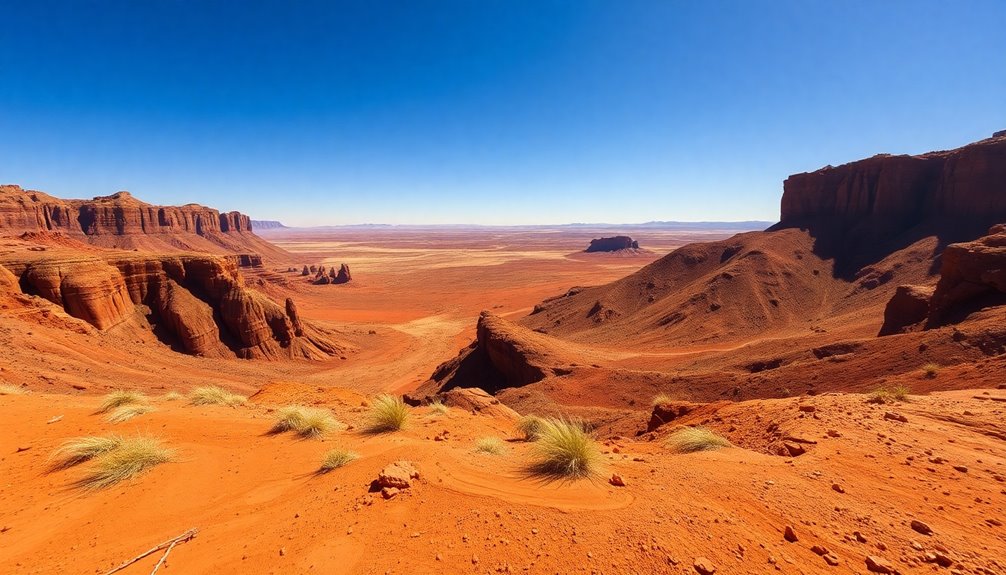
“Mad Max: Fury Road” was primarily filmed in Namibia, where its stunning landscapes perfectly captured the film’s post-apocalyptic vibe. The Namib Desert and Namib Naukluft National Park offered dramatic backdrops, featuring vast dunes and rugged terrains. These unique geographical features replaced the originally planned Australian locations, adding depth to the story’s narrative. You’ll discover fascinating insights about the filming process, challenges faced, and the cultural impact on local communities if you keep exploring further.
The Shift From Australia to Namibia: Why the Change?
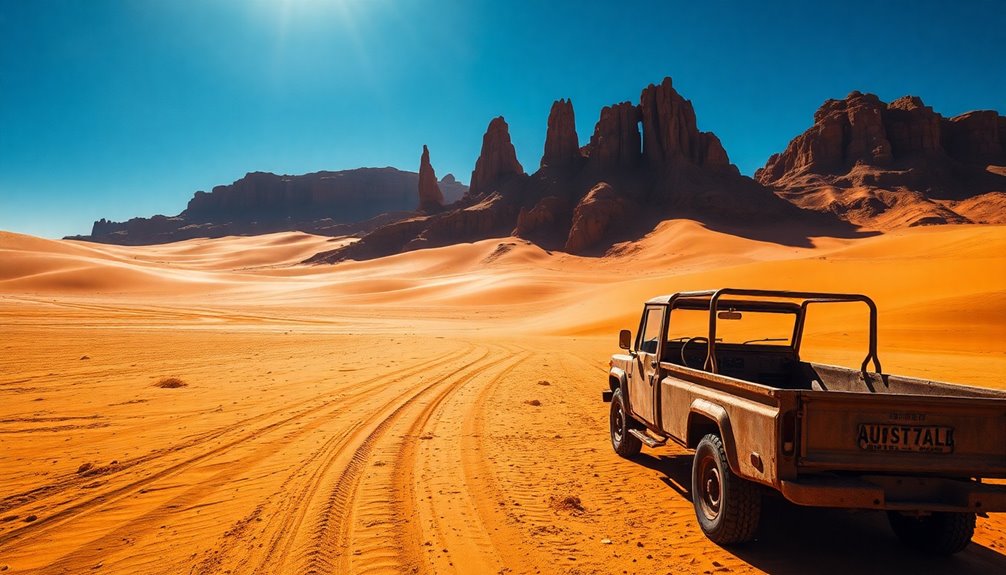
Originally set for Broken Hill, Australia, this relocation allowed the team to capture the stark, barren landscapes essential for the film’s post-apocalyptic aesthetic. Namibia’s Namib Naukluft National Park provided the dramatic scenery needed without extensive color grading, showcasing the harshness of a dystopian world.
The shift to Namibia’s Namib Naukluft National Park captured the stark landscapes vital for *Mad Max: Fury Road*’s dystopian vision.
The dry climate of Namibia proved more suitable for high-speed vehicle action, ensuring the filming conditions matched the film’s intense visual style. Additionally, the decision to move production aligns with the ethical, legal, and societal implications of filming in environmentally sensitive areas, highlighting the importance of responsible filmmaking practices.
Environmental considerations were also key, with strict operating hours and entry permits designed to protect the fragile ecosystem while the crew worked to bring their vision to life.
Exploring Namibia’s Dramatic Landscapes in Fury Road
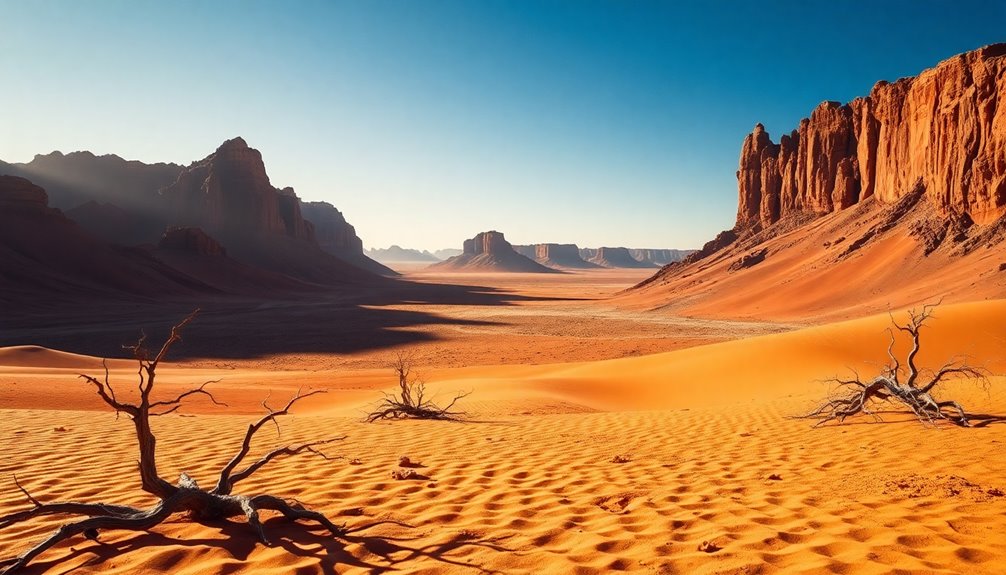
When you explore Namibia’s landscapes in *Fury Road*, you’ll notice its unique geographical features, like the vast dunes and rocky terrain.
The filming team faced significant challenges traversing these dramatic environments, which added depth to the movie’s visuals.
Understanding how these elements shaped the film can enhance your appreciation of its dynamic storytelling. Additionally, the resilience of the filmmakers in overcoming these obstacles mirrors the courage of resistance movements, highlighting the determination needed to create something impactful.
Unique Geographical Features
As you explore the breathtaking landscapes of *Mad Max: Fury Road*, you’ll discover that Namibia’s unique geographical features play an essential role in creating the film’s striking visual narrative. The film showcases an arid setting that mirrors the harsh realities of its post-apocalyptic world.
Here are three standout features:
- Namib Desert: Its vast, sweeping sand dunes create an otherworldly backdrop for intense action scenes.
- Unique Geological Formations: Locations like the Rossing Mountains and Blanky Flats offer rugged terrains that enhance the film’s desolate aesthetic.
- Swakop River Valley: This dramatic landscape serves as a thrilling canvas for the high-octane chase sequences.
Namibia’s stark beauty effectively replaces the Australian outback, immersing viewers in an enchanting experience.
Filming Challenges Encountered
Filming *Mad Max: Fury Road* in Namibia’s dramatic landscapes posed several challenges that tested the crew’s adaptability.
Initially, the production intended to film in Australia, but heavy rains transformed the desert into a lush environment, forcing a last-minute location change.
In Namibia, the production crew faced strict environmental regulations, requiring permits for national park entry. This meant they’d to carefully navigate conservation efforts while capturing the film’s striking visuals.
The arid conditions, with annual rainfall under 10mm, added authenticity to the post-apocalyptic aesthetic but also introduced logistical difficulties.
Despite these filming challenges, Namibia’s stunning vistas, like the war-rig’s journey through the Swak River Valley, ultimately provided a perfect backdrop for the film’s epic narrative.
Key Filming Locations: A Tour of the Namib Desert
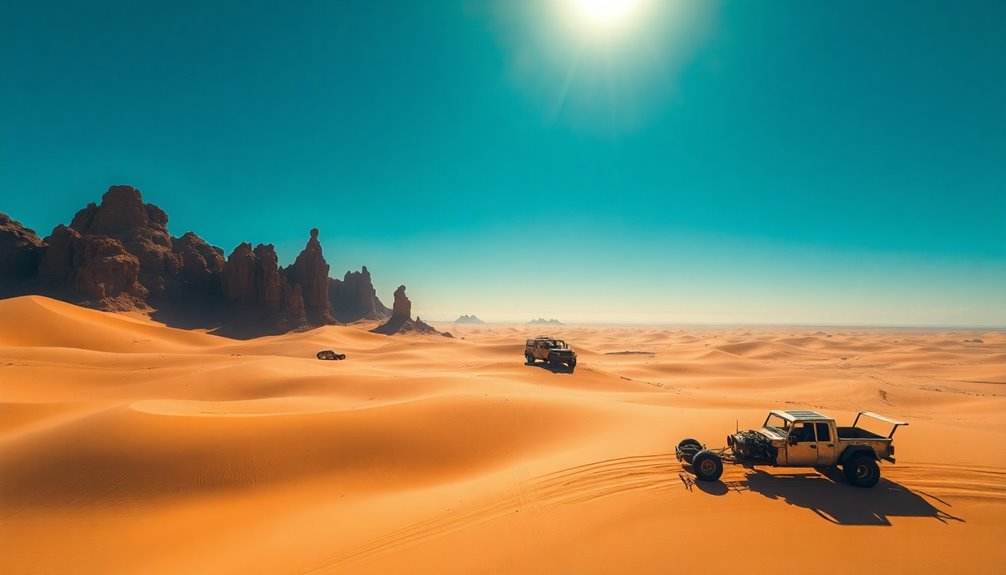
- Swakopmund: This coastal town served as a production base and features unique geological formations.
- Rossing Mountains: Experience the stark beauty of the desert terrain that provided dramatic visuals.
- Swakop River Valley: Witness the rugged topography where the war-rig’s rocky passage was filmed.
Each of these filming locations showcases the raw, unyielding charm of the Namib Desert, making them essential stops for *Fury Road* fans. Additionally, the film’s intricate plot and iconic twist ending have captivated audiences worldwide.
Environmental Considerations During Filming
While capturing the stunning visuals of *Mad Max: Fury Road*, the crew had to navigate the delicate balance between filmmaking and environmental preservation in Namibia’s fragile ecosystems.
With less than 10mm of annual rainfall, careful environmental management was essential to avoid damaging the landscape. They required entry permits for filming in national parks, underscoring the importance of compliance with local conservation laws.
The production adhered to strict operating hours to minimize disruptions to wildlife and the desert environment. Despite these efforts, accusations of environmental impact emerged, highlighting the ongoing tension between filmmaking and ecological preservation in the Namib Desert.
Namibia’s commitment to conservation, protecting about two-fifths of its land, greatly influenced their choice of filming locations and practices. The challenges faced during production echo the themes of systemic racism’s dehumanizing effects, illustrating how narratives can intersect with real-world issues.
Production Design: Crafting a Post-Apocalyptic World
- Real Sets and Practical Effects: They opted for tangible environments instead of heavy CGI.
- Innovative Vehicle Designs: Custom war vehicles, like the iconic War Rig, were crafted for high-speed action, with 150 built, of which 88 survived filming.
- Dramatic Desert Landscapes: Filming in Namibia’s Namib Naukluft National Park provided the stark backdrops, enhancing the film’s dystopian vibe.
Production designer Colin Gibson’s vision reflected resource scarcity, similar to how the transformative power of nature shapes characters in *The Secret Garden*. Using these elements to narrate a compelling tale of survival and despair.
Behind the Scenes: Filming Challenges and Solutions
The production team quickly relocated to Namibia, where the harsh environment posed additional filming challenges. They’d to secure entry permits and follow strict operating hours to protect the delicate ecosystem.
To capture the film’s gritty realism, the team emphasized practical effects, constructing over 150 custom war vehicles, though only 88 survived the rigorous filming process.
Principal photography stretched from July 2012 to December 2013, with further footage shot in November due to initial setbacks.
This extensive effort culminated in a dynamic film, showcasing the resilience of the crew against nature’s obstacles. Additionally, the filmmakers drew inspiration from natural science stories that highlight the beauty and harshness of unique environments.
Cultural References and Inspirations in Fury Road
In *Fury Road*, you’ll notice nods to Australian cinema, particularly with references to Peter Weir’s *The Cars That Ate Paris*. The film’s environmental storytelling techniques highlight the consequences of human actions on the landscape, making a powerful statement about colonial attitudes. This blend of local influences and pressing societal issues enriches the narrative, inviting you to reflect on our own world. Additionally, the film echoes themes of resilience of spirit, showcasing the enduring strength of characters amidst chaos and loss.
Australian Cinema Influences
While exploring the dystopian landscape of *Mad Max: Fury Road*, you can’t help but notice the film’s deep roots in Australian cinema. George Miller draws on rich cultural references, showcasing the complexities of the Australian environment.
Here are three influences worth noting:
- Peter Weir’s *The Cars That Ate Paris* – This film similarly investigates dystopian themes and the Australian landscape.
- Colonial Attitudes – The portrayal of the wasteland reflects a critical view of how Indigenous histories intertwine with the land’s significance, as noted by film scholar Ross Gibson.
- Filming in Namibia – The stark backdrop mirrors New South Wales’ outback, emphasizing the harshness that defines the Mad Max series while challenging stereotypes of Australian landscapes.
Environmental Storytelling Techniques
The stark, arid landscapes of *Mad Max: Fury Road* serve as more than just a backdrop; they actively shape the film’s narrative and themes. Filming in Namibia’s dramatic terrain visually emphasizes the post-apocalyptic world, reflecting environmental collapse and resource scarcity.
This environmental storytelling technique immerses you in a setting that becomes a character itself, enhancing the struggle for survival. The Citadel’s termite mound-style towers nod to unique geological formations, blending Australian influences and emphasizing the film’s cultural depth.
Relocating from Australia due to unexpected rainfall underscores the narrative’s commentary on environmental changes and industrial exploitation. Through these landscapes, *Mad Max* communicates its dystopian themes powerfully, making you feel the weight of its world.
Tourism Opportunities: Visiting the Film Locations
- Mad Max-themed Tours: Join a tour that takes you through the Namib Naukluft National Park and other epic desert spots from the film.
- Cape Cross Seal Reserve: Visit the nearby reserve to see a large colony of Cape Fur Seals in their natural habitat.
- Local Attractions: Check out the museum showcasing *Mad Max* vehicles, a hit among fans and tourists alike. Additionally, the film’s cultural significance can enhance your appreciation of the stunning landscapes featured in the movie.
With easy access from Walvis Bay Airport, your adventure awaits!
The Impact of Fury Road on Local Communities and Conservation
Additionally, the filming brought attention to conservation efforts, highlighting Namibia’s unique ecosystems and environmental challenges.
While the production faced scrutiny over its environmental impact, it sparked essential discussions about responsible filming practices in sensitive areas.
Community engagement around the film’s legacy has even led to proposals for a dedicated museum in Swakopmund, celebrating the movie’s vehicles and further boosting long-term tourism potential. This initiative reflects the cultural significance of film in promoting local heritage and attracting visitors.
Conclusion
As you wander through the vast dunes of Namibia, you can almost hear the roar of engines and see the flicker of flames from *Fury Road*. This film didn’t just capture breathtaking landscapes; it transformed them into a post-apocalyptic canvas that sparks your imagination. By visiting these locations, you’re not only stepping into a cinematic wonderland but also supporting local communities and conservation efforts, ensuring that the beauty of this desert continues to inspire for years to come.