Las Vegas is a stunning backdrop for films that capture its glamorous yet gritty essence. Movies like *Casino* expose the dark side of wealth and crime, while *Ocean’s Eleven* brings thrilling heist narratives to life. Comedies like *The Hangover* highlight the city’s wild, chaotic charm. From Elvis’s vibrant portrayal in *Viva Las Vegas* to modern tales of excess, each film uniquely shapes Vegas’s identity. Stick around to discover more about the evolution of these cinematic gems.
The Allure of Las Vegas in Film
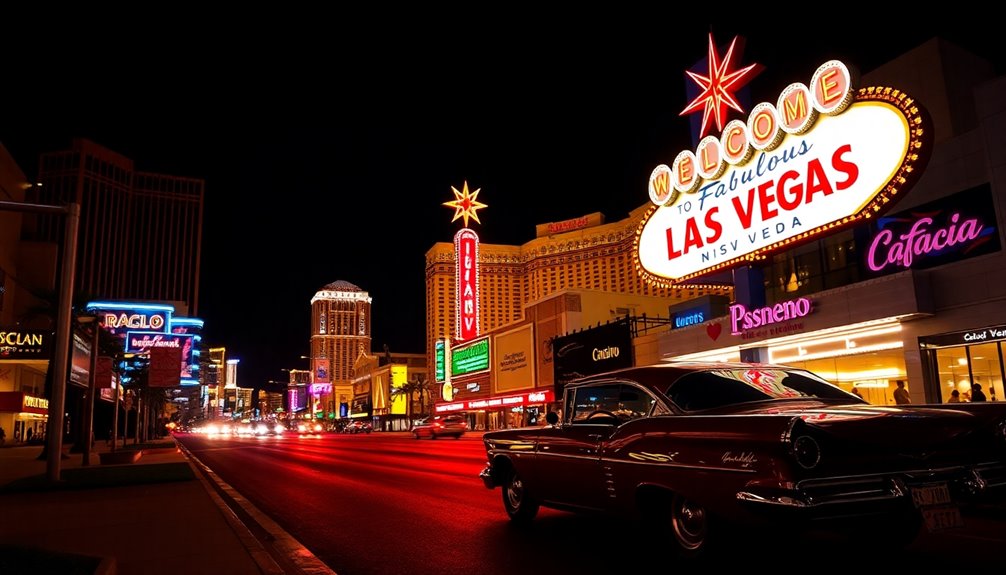
Las Vegas captivates filmmakers not just with its stunning neon skyline but also with the complex narratives it can inspire.
The city’s vibrant atmosphere, highlighted by its iconic casinos, serves as the perfect backdrop for storytelling. Films like “Casino” explore the dark allure of wealth and organized crime, while “Ocean’s 11” showcases the thrill of high-stakes heists amidst the glamour.
Las Vegas, with its iconic casinos, offers a dazzling backdrop for tales of wealth, crime, and high-stakes thrills.
You can also feel the romantic allure in “Viva Las Vegas,” where Elvis embodies youthful adventure. The live casino environments in movies create an authentic experience that pulls you in, making you feel like part of the action.
Las Vegas continues to symbolize excess and entertainment, drawing filmmakers keen to capture its unique energy. Its influence is akin to that of Agatha Christie’s intricate plots, which keep audiences guessing until the very end.
Iconic Movies That Define Las Vegas
Then there’s *The Hangover*, which humorously chronicles a wild night in Caesars Palace, emphasizing Las Vegas’s unpredictable nature.
Meanwhile, *Fear and Loathing in Las Vegas* presents a chaotic narrative that deconstructs the glamorous myth of the city, offering a darker perspective on the American Dream.
Each film uniquely defines Vegas’s allure, much like how *The Daughters of Night* explores themes of power and corruption within its Victorian London setting.
Exploring the Glamour in *Viva Las Vegas
Starring Elvis Presley as Lucky Jackson, this film captures the youthful allure of mid-century Vegas, with iconic locations like the Flamingo Hotel‘s pool, where Lucky serenades Rusty.
The Flamingo’s Art Deco style stands out, showcasing its architectural significance on the evolving Las Vegas Strip.
Filmed in Technicolor, *Viva Las Vegas* bursts with striking hues, reflecting the lively atmosphere of a transformative cultural era.
This cheerful portrayal of the city not only entertains but also solidifies Las Vegas as a symbol of fun and excitement, making it a timeless classic in cinematic history. The film’s vibrant energy parallels the societal transformations that marked the era, encapsulating a spirit of resilience and change.
The Dark Side of Sin City in *Casino
In *Casino*, the glitzy facade of Las Vegas masks a sinister underbelly, revealing the ruthless world of organized crime that thrived in the city during the 1970s and 80s.
You follow Sam “Ace” Rothstein, played by Robert De Niro, as he manages the Stardust Resort and Casino, where the allure of gambling intertwines with brutality.
Joe Pesci’s portrayal of Nicky Santoro, a mob enforcer, highlights the violent chaos that erupts when loyalty turns to betrayal.
The film intricately weaves Ace’s tumultuous relationship with Ginger McKenna, showcasing the emotional toll amidst the cutthroat gambling scene.
*Casino* brilliantly exposes the corruption lurking beneath the surface, painting a stark picture of Sin City’s dark realities, reflecting the corruption of power that permeates both the gambling and mafia worlds.
Heist Thrills: *Ocean’s Eleven* and Its Legacy
The movie’s cultural impact on Vegas transformed the city into a backdrop for thrilling heist narratives, making it a staple in cinema. This evolution mirrors the principles of personal growth found in works like *The Four Agreements*, emphasizing the importance of intention and integrity in all endeavors.
Iconic Heist Techniques
Though heists often seem like the stuff of fantasy, *Ocean’s Eleven* brings them to life with an exhilarating blend of strategy and style.
This heist film showcases intricate techniques that captivate viewers while robbing three major Las Vegas casinos: the Bellagio, Mirage, and MGM Grand. You’ll marvel at the high-tech gadgets and clever distractions, like the strategic power outage that keeps the crew under the radar.
The manipulation of security systems highlights how essential technology and insider knowledge are for a successful heist. Iconic scenes, especially the thrilling vault breach, emphasize the meticulous coordination and timing required among the crew.
*Ocean’s Eleven* leaves a lasting legacy, influencing future heist films with its charisma and intricate plotting.
Cultural Impact on Vegas
While *Ocean’s Eleven* dazzles with its stylish heist narrative, its cultural impact on Las Vegas runs even deeper.
By featuring iconic casinos like the Sands and Flamingo, the film solidified the city as a cinematic heist hotspot. Shot in Technicolor, it captured the vibrant aesthetics of Las Vegas, showcasing the lush pinks of the Flamingo Hotel.
The innovative filming practices, including late-night shoots, immersed audiences in authentic casino environments. This cinematic gem not only sparked a resurgence in heist films but also influenced the 2001 remake, reinforcing Las Vegas’s allure.
Today, the film’s portrayal of the city as a land of opportunity and thrill continues to attract filmmakers and tourists, embedding its legacy in popular culture.
Comedic Adventures: *The Hangover* and Beyond
Las Vegas isn’t just a destination for high-stakes gambling and lavish shows; it’s also the backdrop for some unforgettable comedic adventures, most importantly in *The Hangover*.
This 2009 film follows three friends as they retrace their wild night after a bachelor party gone wrong, set primarily in Caesars Palace. The chaos and unpredictability of Vegas perfectly illustrate the film’s absurd humor, showcasing the hedonistic side of the city.
With iconic locations along the Las Vegas Strip, *The Hangover* earned critical acclaim and redefined the comedic myth of Vegas in popular culture. Its success paved the way for sequels, *The Hangover Part II* and *The Hangover Part III*, exploring even more outrageous escapades in this vibrant city. The film’s strong emotional connections between characters add depth to the comedic chaos, making it a memorable experience for audiences.
Unique Filming Techniques in Las Vegas
Both films utilized Technicolor to enhance the visuals, showcasing Las Vegas‘ iconic locales. By integrating casino scenes into live environments, they achieved a level of authenticity rarely seen in typical studio settings.
The Flamingo Hotel, highlighted for its Art Deco style, served as a key location, blending history with cinematic flair. Additionally, the symbolism of food in these films parallels Tita’s emotional expression in *Like Water for Chocolate*, showcasing how cultural elements enhance storytelling.
Cultural Impact of Vegas on American Cinema
These movies highlight both the allure and the darker side of the casino culture, attracting filmmakers across genres. From the absurdity in *The Hangover* to the critique of the American Dream in *Fear and Loathing in Las Vegas*, the portrayal of Las Vegas has evolved considerably. This cinematic legacy not only influences storytelling but also drives tourism, as fans flock to experience the vibrant settings of their favorite films, reflecting the same themes of ambition and rivalry that characterize many compelling narratives.
The Evolution of Las Vegas Portrayals in Film
As you explore Las Vegas in film, you’ll notice how its portrayal has shifted dramatically over the decades.
From the glamorous allure of Viva Las Vegas to the gritty realism of Leaving Las Vegas, the city reflects changing cultural narratives and themes of crime and ambition.
Iconic locations like Caesars Palace serve not just as backdrops but as symbols of the complex identity Las Vegas has carved in cinema. This evolution mirrors the political turmoil that reshapes characters’ lives, much like the societal challenges depicted in Rohinton Mistry’s *A Fine Balance*.
Shifting Cultural Narratives
Although Las Vegas has long captivated audiences, its portrayal in film has shifted dramatically over the decades. In the 1960 classic *Ocean’s Eleven*, you see a glamorous city filled with hope and opportunity, where characters chase dreams amidst the bright lights.
Fast forward to *Casino* (1995), and the narrative takes a darker turn, diving into the gritty reality of organized crime and the casino industry. This evolution mirrors societal changes, highlighting the complexities of ambition and excess.
Iconic Locations and Symbols
When exploring iconic locations and symbols in films set in Las Vegas, you’ll find that the city itself acts as a character, shaping narratives and influencing plotlines.
In *Ocean’s Eleven*, the Flamingo Hotel stands out, symbolizing the shift from Old West-themed hotels to modern luxury resorts. With its vibrant Art Deco style, the Flamingo also shines in *Viva Las Vegas*, where romantic scenes enhance its cultural significance.
Iconic casinos like the Sands and Riviera in *Ocean’s Eleven* showcase the Las Vegas Strip during a pivotal era. The use of Technicolor in both films captures the neon vibrancy and glamour, while filming during slow casino hours authentically integrates the bustling environment, reflecting Las Vegas’s unique culture.
Crime and Glamour Themes
Las Vegas has long captivated filmmakers, blending crime and glamour in a way that mirrors the city’s own contradictions. In *Casino*, you immerse yourself in the rise and fall of mob influence during the 70s and 80s, where characters like Sam Ace Rothstein embody the seductive yet dangerous allure of the city.
Conversely, *Ocean’s Eleven* showcases a more corporate luxury, featuring iconic spots like the Flamingo Hotel, emphasizing glamour while hinting at the underlying crime.
Yet, films like *Fear and Loathing in Las Vegas* peel back the façade, revealing chaos beneath the surface. This evolution reflects cultural shifts, shifting from romantic escapades in the 60s to gritty tales of excess and crime in the 90s and 2000s.
Must-See Films for Every Vegas Enthusiast
If you’re a Vegas enthusiast, there are five must-see films that capture the city’s vibrant spirit and diverse narratives.
Here are three that truly stand out:
- Casino (1995) – Directed by Martin Scorsese, this film reveals the gritty rise and fall of mob influence in Las Vegas during the 70s and 80s, set against iconic locations like the Riviera Hotel.
- Ocean’s Eleven (2001) – A stylish heist film that showcases modern Vegas glamour, focusing on a complex plan to rob the Bellagio, Mirage, and MGM Grand.
- The Hangover (2009) – This hilarious take on a chaotic bachelor party at Caesars Palace highlights the wild unpredictability of Vegas nightlife.
These films offer an enthralling glimpse into what makes Las Vegas unforgettable, much like the enduring legacy of The Phantom of the Opera, which continues to captivate audiences across various adaptations!
Conclusion
So, whether you’re dreaming of Elvis in *Viva Las Vegas* or scheming like Danny Ocean, Las Vegas has you covered. It’s the place where you can roll the dice on a film and your life choices simultaneously! From glitzy glamour to shady backroom deals, Sin City’s got it all. So grab your popcorn and a poker chip—because who needs a moral compass when you’ve got neon lights and cinematic dreams, right?