

Daily train rides can transform into writing sanctuaries that ignite your creativity. As you navigate the bustle of commuters, you might find inspiration in unique encounters and the meditative atmosphere around you. This distraction-free space lets you produce meaningful word counts and rich character ideas amidst the daily grind. Embracing these unexpected writing opportunities can rival the structured environment of an MFA. Want to discover more about harnessing these spaces for your writing journey?
The Magic of Commuting as a Writing Space
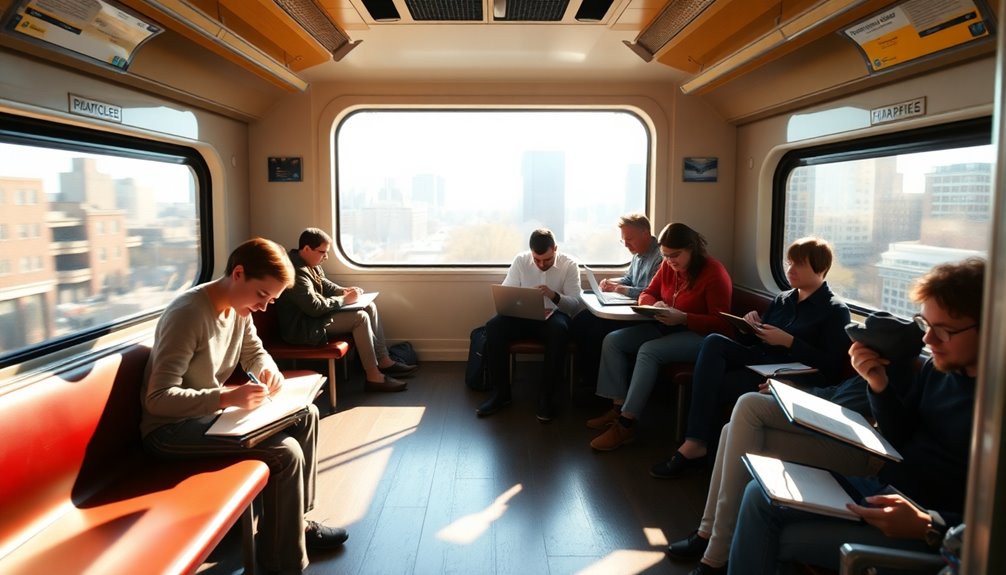
As you settle into your seat on the Metro North, the world outside blurs by, creating an ideal backdrop for your writing. This 35 to 42-minute commute transforms into a focused writing space, allowing you to produce 250 to 350 words per ride.
Unlike weekend sessions filled with distractions, the train offers a distraction-free environment that fosters creativity. Daily encounters with unique passengers spark spontaneous ideas and character development, enriching your writing experience. This environment echoes the allure of dark academia, where the pursuit of knowledge thrives amidst everyday life.
Embracing this routine not only helps you maintain daily responsibilities but also turns your commute into a productive venue. Over time, these sessions can accumulate, leading to a collection of stories or even a novel—your own MFA journey on wheels.
How Daily Train Rides Boosted My Creativity
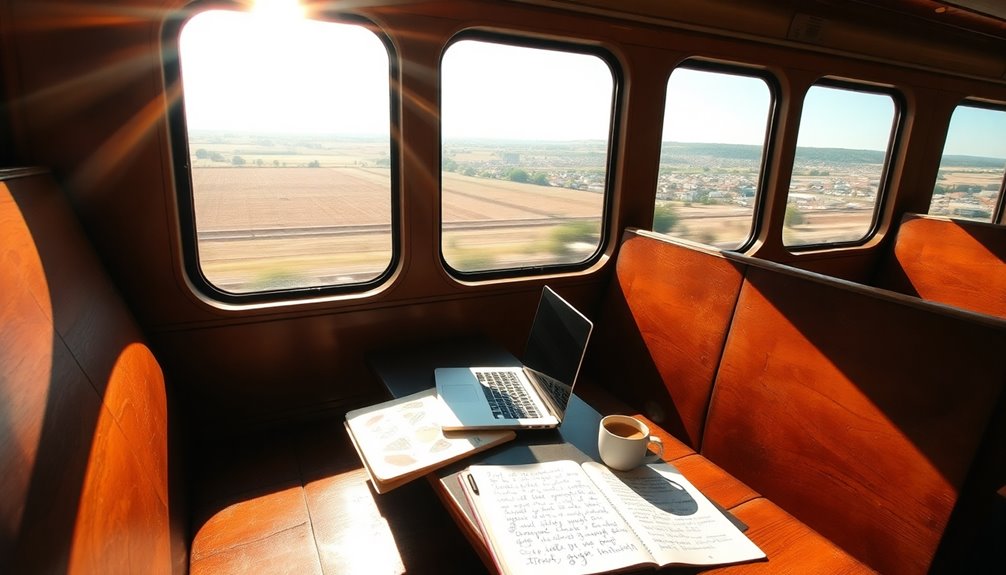
While you mightn’t expect a daily train ride to spark creativity, those 35 to 42 minutes can be transformative. This focused environment lets you churn out 250 to 350 words each commute, making it a practical alternative to traditional writing spaces.
Unlike weekends filled with distractions, the train fosters immersion and reflection, enhancing your writing process.
- Unique characters inspire spontaneous ideas
- A meditative atmosphere encourages deep contemplation
- Writing becomes manageable alongside daily responsibilities
- Consistency leads to significant writing accumulation
Incorporating these moments into your routine can even rival MFA programs, fueling your creativity and helping you maintain a disciplined writing schedule.
Embracing the train as your writing sanctuary could be the key to releasing your potential. Additionally, the unpredictability of daily life can evoke the same intricate plot elements found in classic mystery novels, inspiring your narrative style.
Unique Characters and Stories From the Train

On your daily train ride, you encounter a cast of characters that spark your imagination, like the bearded man sipping two contrasting beverages.
Each passenger offers a glimpse into a story waiting to unfold, turning ordinary moments into rich material for your writing.
As you observe these unique individuals, you can’t help but feel inspired to capture their essence in your own narratives. Embracing imperfect drafts allows you to explore these characters more deeply and authentically in your writing.
Observations of Fellow Passengers
The train car buzzes with the energy of diverse lives intersecting for just a moment. Your observations of fellow passengers become spontaneous sparks for short stories. Each person, from the bearded man sipping mismatched beverages to the quiet woman engrossed in a novel, embodies a tale waiting to unfold.
- Their interactions reveal unique dynamics and emotions.
- Individual quirks and habits serve as rich character development.
- The confined space fosters focused attention on fleeting moments.
- Daily encounters ignite inspiration for new narratives.
In this vibrant environment, the train isn’t just a commute; it’s a canvas for capturing the essence of human experiences, allowing you to weave together the threads of their stories into your own.
Inspiration From Daily Encounters
As you settle into your seat, the train car transforms into a vibrant gallery of unique characters, each one a potential muse for your next story. You spot a bearded man, cradling two contrasting beverages, sparking a flurry of ideas.
These daily commutes, often around 35 to 42 minutes, become a crucible for creativity, where character development flourishes. The immersive environment fosters focus, free from distractions, allowing your thoughts to flow.
Writers from community college often share how these fleeting encounters yield 250 to 350 words per ride. Each train ride invites contemplation, mirroring themes in literature and cinema, while fueling your imagination.
Embrace these moments; they’re your wellspring of inspiration waiting to be tapped.
Balancing MFA Rigor With Real-World Writing Experiences
While MFA programs offer structured environments for honing writing skills, many graduates find that real-world experiences often bring a deeper sense of fulfillment. Engaging with the theater community allows you to explore your voice authentically and collaborate with others, enriching your craft in unexpected ways.
- Real-world feedback can enhance your writing beyond classroom critiques.
- Collaboration fosters organic growth, bringing fresh perspectives to your work.
- Diverse narratives emerge from genuine experiences, reflecting broader societal shifts.
- Practical engagement reinforces the skills gained during your MFA, bridging theory and practice.
- Balancing rigor with these real-world experiences not only validates your creative journey but also equips you to contribute meaningfully to the evolving landscape of theater, much like Tita’s emotional expression through cooking in “Like Water for Chocolate.”
Finding Inspiration Beyond the Classroom
Engaging with real-world experiences not only enriches your writing but also opens up unexpected sources of inspiration. Daily train commutes can become focused writing spaces, where you might produce 250 to 350 words in just 35 to 42 minutes.
Observing unique characters and interactions can spark ideas, transforming everyday encounters into compelling stories. The meditative rhythm of the train, combined with changing scenery, fosters deep contemplation, enhancing your writing and character development.
While MFA programs offer structured environments that boost productivity, inspiration often hides in unconventional places like public transportation. By engaging with diverse voices and experiences, you’ll discover that inspiration frequently lies beyond the traditional classroom, waiting for you to capture it. Acts of defiance against oppressive ideologies can serve as powerful catalysts for your storytelling.
The Limitations of Traditional MFA Environments
In traditional MFA environments, you might find yourself constrained by conventional classroom norms that prioritize specific genres and techniques. This structure can stifle your creativity and limit your exploration of diverse storytelling methods. As a result, you could miss out on discovering your unique voice in a space that often favors the familiar over the innovative. Additionally, the narrative’s emphasis on systemic racism highlights the need for diverse perspectives in artistic expression, challenging traditional boundaries and encouraging deeper engagement with social issues.
Conventional Classroom Constraints
Though traditional MFA programs offer valuable skills, they often confine creativity within rigid structures that can stifle individual expression. You might find that the conventional environments limit your growth, creating challenges that impact your writing journey.
- An echo chamber of dominant progressive beliefs can alienate diverse viewpoints.
- Rigid workshop formats may suppress innovative storytelling approaches.
- Demanding residency schedules can disrupt your work-life balance, leaving little room for leisure.
- Limited options outside the MFA framework hinder your exploration of independent writing opportunities.
These constraints can make you feel boxed in, discouraging the creative exploration that makes your voice unique. Embracing alternative spaces might reveal the potential you’ve been searching for.
Limited Genre Exploration
While traditional MFA programs provide a structured approach to writing, they often limit your genre exploration, confining you primarily to literary fiction.
This focus can restrict your exposure to diverse styles like speculative fiction or experimental writing, which might enrich your creative range.
Workshops frequently prioritize conventional storytelling techniques, sidelining innovative structures that challenge norms.
You might feel pressure to conform to instructor preferences, which can alienate you if your interests lie outside dominant narratives.
The echo chamber nature of these environments fosters homogeneity in the types of stories produced, ultimately hindering the unique voices seeking to emerge.
If you crave broader genre exploration, consider seeking alternative writing spaces that encourage diverse storytelling and engagement with various literary journals.
How Real-Life Experiences Shape Authentic Narratives
Real-life experiences often serve as the backbone of authentic narratives, transforming mundane moments into rich storytelling opportunities. Your daily commute can spark character development and narrative ideas, especially when you encounter diverse personalities on public transport.
These interactions not only enrich your stories but also add layers of authenticity. By tapping into your personal journeys, you infuse your writing with genuine emotion and perspective.
Tapping into personal journeys enriches your narratives with authentic emotion and perspective, making your stories truly resonate.
- Real-world learning often trumps traditional education.
- Challenges and triumphs shape compelling storytelling.
- Everyday moments reveal complexities of human life.
- Authentic narratives foster connection with audiences.
- Resilience amidst adversity is a theme that resonates deeply in the stories we tell.
Embrace these experiences to craft narratives that resonate. Remember, the stories that come from your own life can be the most powerful and relatable.
Exploring Collaborative Writing in Non-Traditional Settings
As you engage in collaborative writing in non-traditional settings, you’ll find that creativity thrives in environments where diverse voices come together.
Playwrights like Carlos Murillo and Sam Hamashima prioritize real-world experiences, showing how collaboration can lead to authentic storytelling.
In this space, you can embrace Jaclyn Backhaus’s organic play development and Diana Burbano’s focus on actor feedback, which enhances the authenticity of roles.
The communal aspect of theatre fosters emotional connections, transforming both creators and audiences.
As you explore current trends, you’ll see a growing demand for diverse narratives, encouraging you to represent underrepresented groups.
This blend of collaboration and authenticity not only enriches your work but also makes meaningful contributions to the theatrical landscape. Human rights violations during historical contexts can also serve as critical backdrops for storytelling, enriching the narratives being crafted.
The Role of Community in Developing Unique Voices
Community plays an essential role in shaping unique voices among playwrights, as it cultivates an environment where creativity can flourish. When you engage with fellow writers, you tap into a wealth of experiences and perspectives that enhance your work.
- Collaborations provide valuable feedback, refining your characters and stories.
- Real-world connections often offer insights that formal education can’t match.
- Diverse narratives emerge from a communal desire for representation, allowing you to explore your cultural identity.
- Honesty in writing resonates with underrepresented groups, fostering authenticity.
- Engaging with themes of isolation can deepen your understanding of character dynamics and emotional depth in storytelling.
Why Do Diverse Narratives Matter in Contemporary Literature?
Diverse narratives matter in contemporary literature because they open doors to the rich tapestry of human experience. They offer essential representation for marginalized voices, creating a more inclusive understanding of cultures and perspectives.
When you engage with diverse literature, you not only enhance your empathy but also broaden your cultural awareness, connecting with experiences outside your own. The demand for these stories is rising, fueled by movements like #WeNeedDiverseBooks, which advocate for greater visibility of underrepresented authors.
Publishers recognize the commercial viability of diverse narratives, leading to an influx of innovative titles that reflect societal complexities. This shift not only attracts a wider readership but also enriches the literary landscape, making it critical for contemporary storytelling. As seen in works like *Native Son*, these narratives challenge readers to confront systemic racism and its pervasive effects on society.
Strategies for Making the Most of Non-Traditional Spaces
When you’re in non-traditional spaces, like a train or café, embrace the time constraints to spark your creativity.
Take a moment to observe your surroundings; the people and events around you can inspire fresh ideas.
Finding your rhythm in these environments can turn brief writing sessions into powerful storytelling opportunities.
Embrace Time Constraints
While you navigate your daily train commute, you can transform those fleeting minutes into a powerful writing session. Embrace time constraints, and you’ll find that the limited environment fosters immersion, free from distractions.
In just 35 to 42 minutes, you could produce 250 to 350 words, making each ride a productive opportunity. Here’s how to maximize your time:
- Set specific writing goals for each commute.
- Jot down ideas or plot points inspired by fellow passengers.
- Create a dedicated writing playlist to enhance focus.
- Maintain a consistent routine to build momentum.
When you make me feel the urgency of time, you’ll unleash creativity and integrate writing seamlessly into your life. Embrace these moments, and watch your productivity soar.
Observe Your Surroundings
Every train ride offers a unique opportunity to observe the world around you, transforming mundane moments into rich writing inspiration. In the confined space of a train, you can focus deeply, often producing 250 to 350 words during your commute.
Pay attention to the unique characters and interactions that unfold around you; these daily encounters can spark fresh ideas for character development or plot twists. Embrace the meditative experience of movement and scenery, allowing your mind to wander and generate spontaneous thoughts.
The structured environment of a train ride encourages a consistent writing routine, similar to an MFA program. Respect the unpredictability of these non-traditional spaces, as they can lead to innovative narratives and perspectives in your writing.
Find Your Rhythm
Finding your rhythm in non-traditional writing spaces can transform your creative process. Your daily commute, like train rides, offers a unique opportunity to immerse yourself in focused writing without distractions.
You can find inspiration in the characters you meet and the scenery you pass, enriching your narratives. Here are some strategies to maximize your time:
- Set specific writing goals for each commute to boost productivity.
- Embrace the meditative quality of travel; let it inspire contemplation.
- Capture spontaneous ideas that arise from interactions around you.
- Use the routine of commuting as a built-in motivation for consistent writing.
Lessons Learned From Unexpected Writing Opportunities
Unexpected writing opportunities can arise in the most mundane of settings, like during your daily Metro North train ride. You might find that this focused environment boosts your productivity to 250-350 words per session, far surpassing weekend efforts.
The time constraints of your commute challenge you to immerse yourself in your craft without distractions, enhancing creativity. Observing unique characters and moments around you can spark spontaneous ideas, enriching your storytelling.
Writing on the train offers a practical alternative to traditional MFA spaces, allowing you to juggle daily responsibilities while nurturing your craft. Engaging with the artistic tradition of trains as contemplative spaces can blend real-life experiences with creative exploration, turning each ride into a valuable writing opportunity.
Embracing the Journey: Writing Beyond Formal Education
While formal education can provide valuable tools, many writers discover that authentic growth occurs outside the classroom. Real-world experiences, like engaging in theater, can enrich your writing journey.
Playwrights such as Carlos Murillo and Sam Hamashima exemplify this path, prioritizing hands-on involvement over traditional MFA programs.
Consider these points:
- Collaborate with peers to gain diverse perspectives.
- Seek internships and workshops for practical learning.
- Embrace feedback from actors to refine your voice.
- Create narratives that reflect inclusivity and authenticity.
Conclusion
Embracing unexpected writing spaces, like the rhythm of a train rolling down the tracks, can ignite your creativity in ways you never imagined. Each commute or unique setting offers a chance to explore new characters and narratives, enriching your craft beyond classroom walls. So, whether you’re jotting down ideas on your morning ride or finding inspiration in everyday moments, remember: the journey itself is as essential as the destination. Keep writing, and let those experiences shape your voice.