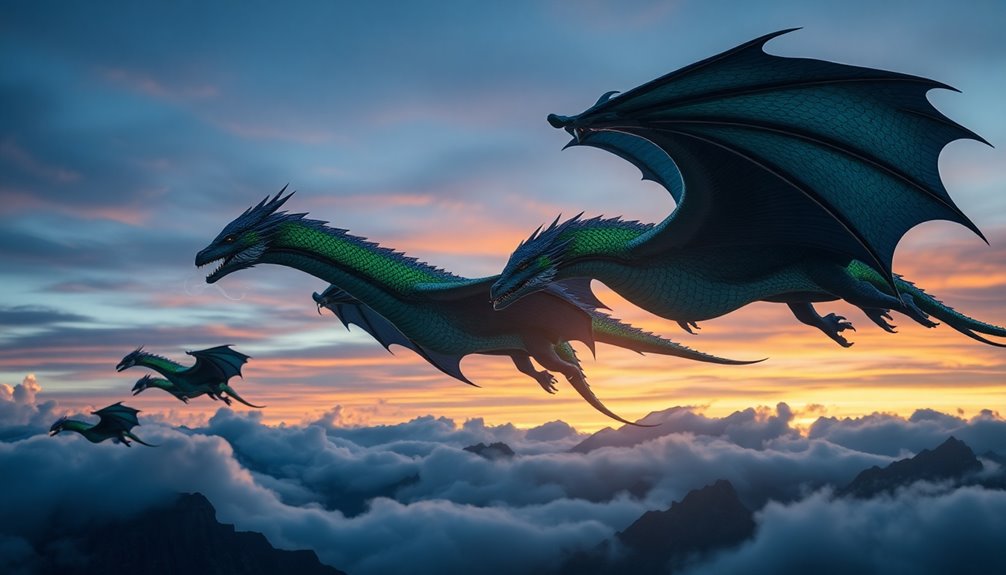
A group of dragons can be called a “flight,” “horde,” or “murder,” each term reflecting different traits of these majestic creatures. “Flight” captures their grace as they soar, while “horde” suggests a fierce protective nature. On the other hand, “murder” emphasizes their cunning and loyalty. These collective nouns not only enrich the lore surrounding dragons but also hint at their roles in various fantasy narratives. There’s so much more to discover about these enchanting beings!
What Are the Common Terms for a Group of Dragons?
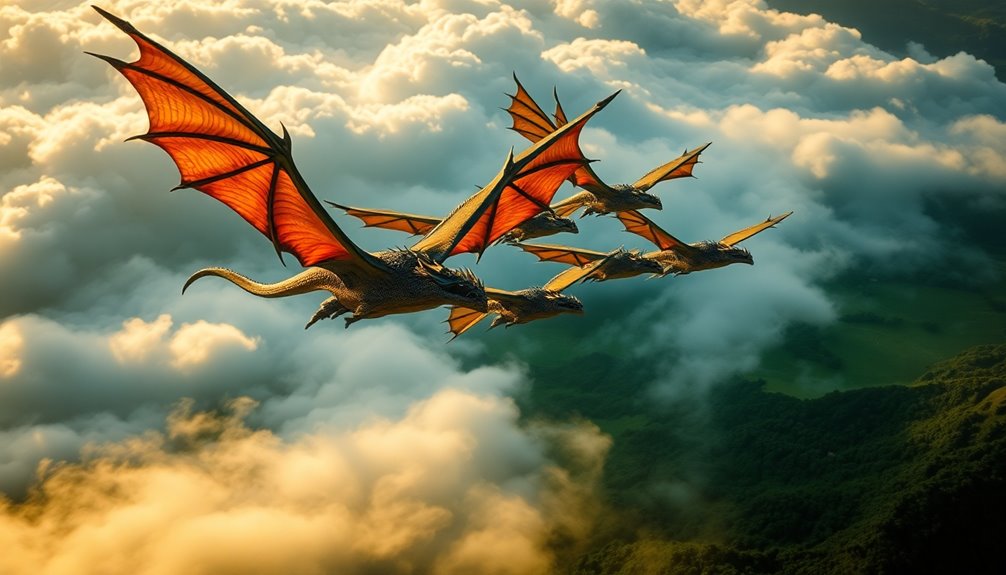
When you think of dragons soaring through the skies, you might wonder what to call a group of them. In the domain of dragon terminology, the terms can be as colorful as the creatures themselves.
A “flight” of dragons evokes images of them gliding gracefully, while a “parliament” suggests a gathering of wise, ancient beings. You might also encounter “brood,” referring to a family of dragons, emphasizing their nurturing side.
These collective nouns often spring from mythical language, enriching the lore surrounding these magnificent beasts. Each term adds depth to your imagination, transporting you to a world where dragons aren’t just solitary creatures but part of a grand, interconnected narrative. In fantasy literature, female protagonists often embody the spirit of adventure and courage, much like the dragons they interact with.
How Does Fantasy Literature Influence Dragon Collective Nouns?
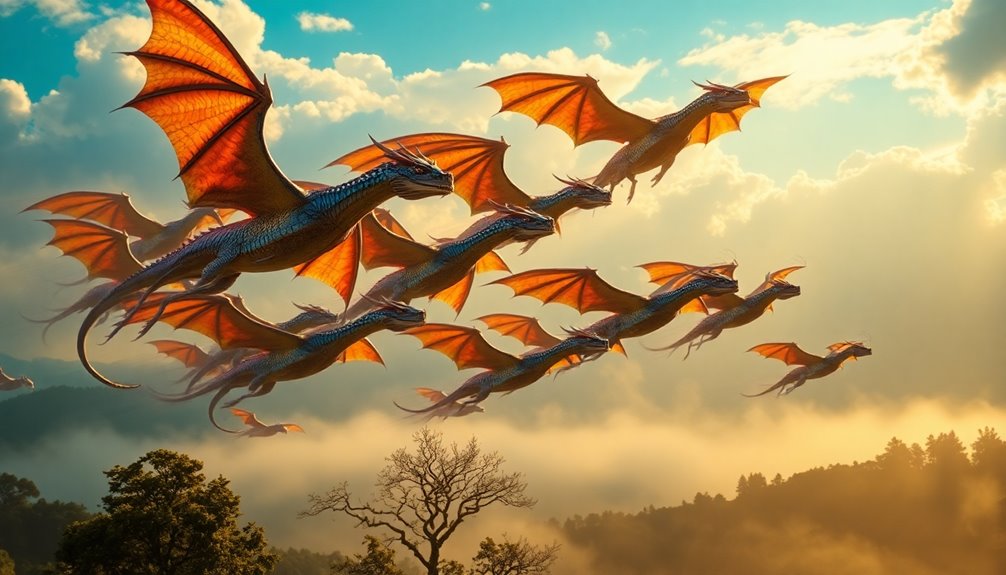
Fantasy literature shapes the collective nouns we use for dragons by weaving rich narratives that reflect their characteristics and roles within stories. As you explore these tales, you’ll notice how dragon symbolism evolves, influencing the terms we adopt.
For instance, a “flight” of dragons might emphasize their grace and majesty, while a “horde” suggests ferocity and danger. This literary evolution connects to how authors portray dragons—guardians, destroyers, or wise beings—shaping our perception.
Each collective noun captures the essence of these mythical creatures, demonstrating how literature not only entertains but also enriches our language. The way we describe a group of dragons reveals deeper meanings, reflecting the stories that continue to captivate our imaginations. Additionally, the use of unreliable narrators in narratives can enhance the complexity of how we perceive these creatures and their interactions within fantasy worlds.
Exploring Collective Nouns for Other Mythical Creatures
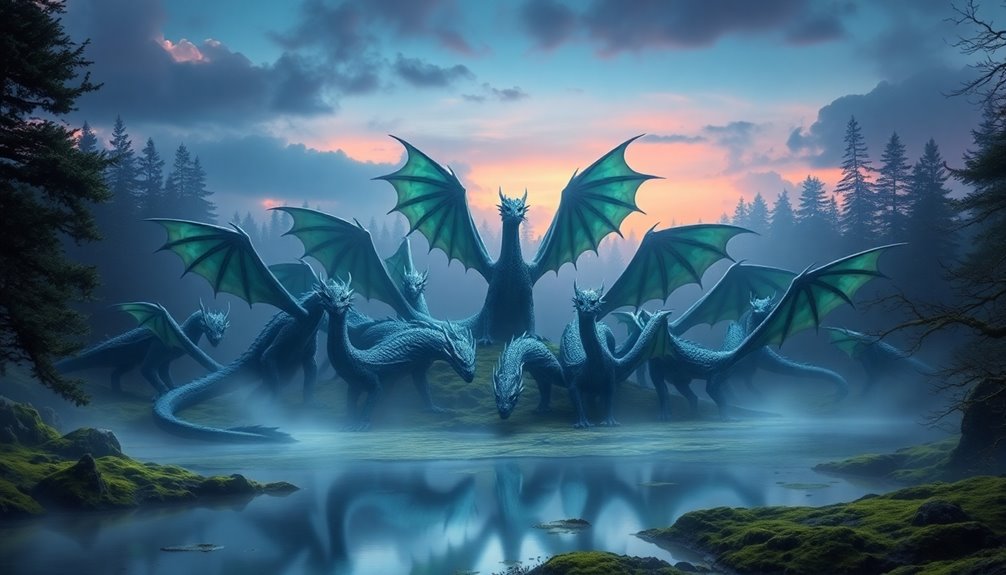
Here are a few intriguing examples:
- A “clutch” of griffins, symbolizing their protective nature.
- A “murmuration” of fairies, reflecting their whimsical and elusive qualities.
- An “assembly” of unicorns, showcasing their grace and rarity.
Each term paints a vivid picture, capturing the essence of these enchanted assemblies. Just like in the world of literature, where intricate plots keep readers engaged, these collective nouns add depth to the lore, inviting you to explore the rich tapestry of fantasy worlds.
Each enchanting term evokes a vivid scene, revealing the magical essence of these mythical gatherings.
You might find yourself imagining these gatherings, where mythical creatures unite in harmony. Just as with dragons, these collective nouns add depth to the lore, inviting you to explore the rich tapestry of fantasy worlds.
The Cultural Significance of Dragon Gatherings in Folklore
Throughout various cultures, dragon gatherings symbolize more than just the convergence of these majestic beings; they often embody deep-rooted traditions and beliefs. You’ll find that these events are rich in dragon symbolism, representing power, wisdom, and protection. In many societies, such gatherings serve as cultural gatherings, where stories are exchanged and heritage is celebrated.
For instance, in Eastern folklore, dragons are seen as guardians, and their assemblies often coincide with festivals that honor the earth and its elements. These events remind communities of their shared history and aspirations. Furthermore, much like Dickens’s exploration of social injustices, these gatherings reflect the ongoing dialogue about collective responsibility and empathy within societies.
When you explore these gatherings, you uncover a tapestry of meaning that highlights the importance of unity, reverence, and the natural world, woven through the legends of dragons.
Fun Facts About Dragons and Their Collective Nouns
While you might think of dragons as solitary creatures soaring through the skies, they actually have some fascinating collective nouns that showcase their unique characteristics.
These terms often reflect dragon behavior and draw from ancient myths, adding depth to their lore.
- A “flight” of dragons emphasizes their majestic ability to soar together.
- A “murder” of dragons highlights their fierce and protective nature when guarding their territory.
- A “hoard” of dragons represents their love for treasure and riches, a staple in many ancient tales.
These collective nouns not only enrich the storytelling around dragons but also remind us of their complex roles in mythology and culture. Additionally, dragons often symbolize courage and loyalty in epic quests, reflecting the values that resonate throughout fantasy literature.
Conclusion
In the enchanting world of dragons, collective nouns add a sprinkle of magic to their lore. Just like a shimmering treasure trove, these terms enrich our understanding of these legendary creatures. Whether you call a group a “flight” or a “skein,” each name weaves a deeper connection to their stories. So next time you encounter a dragon, remember the unique way they gather—each term capturing the essence of their power and mystique in our imaginations.