

Vintage book covers are true works of art, blending creativity with storytelling. They reflect cultural influences and artistic movements, showcasing intricate designs and unique typography that draw you in. These covers enhance your appreciation of literature, serving as visual archives of historical trends and themes. As you explore the world of vintage covers, you’ll find tips for collecting and preserving these treasures, revealing their lasting relevance in today’s digital age.
The Evolution of Book Cover Design
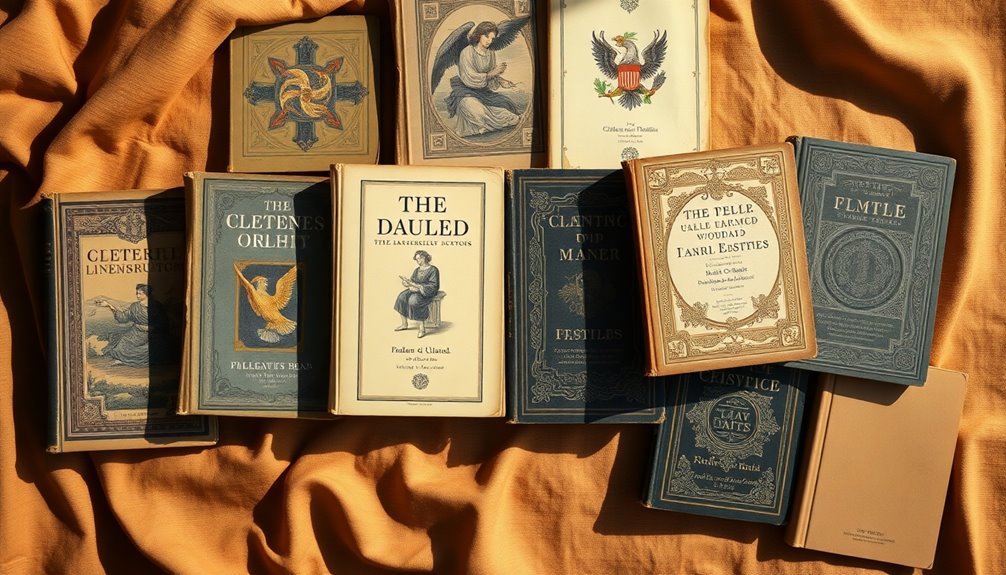
As book publishing took off in the 19th century, you can see how cover designs began to evolve, reflecting societal changes and artistic movements.
These design shifts embraced aesthetic changes that mirrored cultural reflections of the time. Visual storytelling became essential, capturing the essence of the narratives within.
Design shifts mirrored cultural reflections, with visual storytelling capturing the essence of narratives and enhancing the reading experience.
You’d notice how market trends influenced cover art, catering to collector preferences while tapping into the nostalgia factor.
Each era faced preservation challenges, as materials and techniques changed, impacting longevity.
Contemporary influences now draw on vintage styles, blending the old with the new, creating a unique visual identity. The importance of young adult fiction also showcases how cover designs adapt to engage evolving readerships.
Understanding this evolution not only enriches your appreciation for book covers but also highlights the dynamic relationship between art and literature through the ages.
Iconic Vintage Book Covers You Should Know
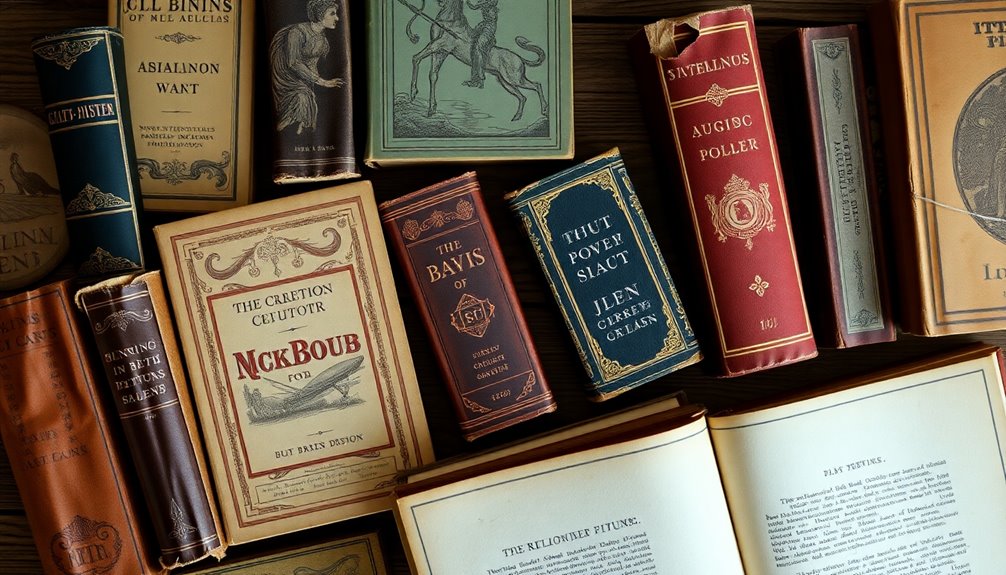
When you think of iconic vintage book covers, certain timeless classics come to mind that still resonate today.
You’ll notice how artistic styles and techniques shaped these designs, infusing them with unique character.
Plus, the symbolism in cover art often adds layers of meaning, inviting you to look closer. These designs reflect the collective action of artists and designers who sought to inspire a sense of unity and purpose through their work.
Timeless Classics That Endure
Vintage book covers possess a unique charm that captures the essence of timeless literature.
These iconic designs reflect enduring narratives and timeless themes, inviting you to investigate classic literature through their artistic heritage. The nostalgic appeal of these covers evokes memories of literary history, reminding you of the cultural significance they hold.
Each design showcases a blend of vintage aesthetics and aesthetic value, marking the evolution of book cover art. As you explore these timeless classics, you’ll appreciate how they connect with readers across generations.
Their ability to resonate with modern audiences proves that great storytelling never fades, and these covers stand as beautiful reminders of the enduring power of literature.
Artistic Styles and Techniques
Iconic vintage book covers showcase a variety of artistic styles and techniques that have defined literary aesthetics over the decades. Each cover reflects the cultural context of its time, utilizing design principles that resonate with readers.
Here are four key elements you should notice:
- Artistic Movements: Influenced by movements like Art Deco or Modernism, these covers often embody distinct visual styles.
- Color Theory: Bold color palettes evoke emotions, enhancing the book’s themes and attracting attention.
- Visual Storytelling: Each design tells a story, inviting readers to explore deeper narratives within.
- Medium Exploration: Artists experiment with different materials, showcasing their artistic expression and creativity.
These aspects create lasting aesthetic appeal, making vintage book covers true works of art.
Symbolism in Cover Art
Cover art often serves as a visual gateway to the themes and emotions within a book, rich with symbolism that invites deeper investigation.
You’ll notice how symbolic imagery conveys narrative elements, using visual metaphors to encapsulate the story’s essence. Each cover reflects artistic expression, where cultural symbolism adds layers of meaning.
Color significance plays an essential role, evoking emotional resonance that connects you to the text. Historical context can also influence thematic representation, making graphic storytelling more impactful.
When you explore these vintage covers, you uncover a world where every detail enhances your understanding, turning them into more than just art—they become a bridge to the stories waiting inside.
The Art Styles That Defined Vintage Covers
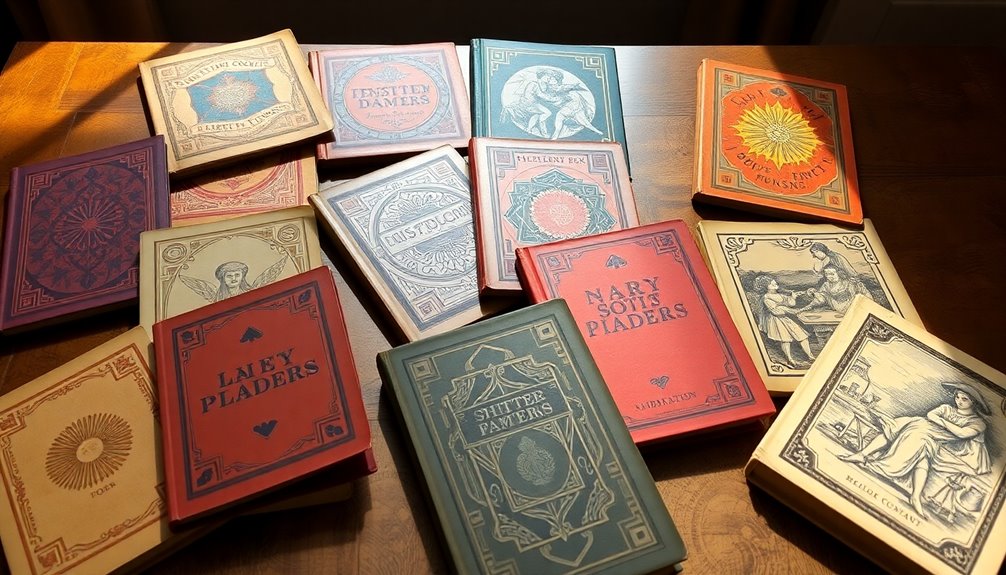
When you think about vintage book covers, the art styles really stand out. Typography and design trends shaped the way stories were presented, while unique illustrative techniques added character and charm. Let’s explore how these elements came together to create unforgettable visuals. One notable example is the iconic twist ending found in Agatha Christie’s works, which has influenced the design and marketing of mystery novels over the years.
Typography and Design Trends
Vintage book covers often showcase a blend of typography and design trends that reflect the artistic movements of their time.
These elements illustrate the evolution of graphic design and enhance visual storytelling. Here are four key aspects:
- Font Selection: Unique typefaces capture the essence of the era, conveying emotions and themes.
- Layout Techniques: Strategic arrangements draw the eye, guiding readers through the narrative.
- Cultural Symbolism: Covers often incorporate historical influences, embedding deeper meanings within the design.
- Artistic Expression: Each cover serves as a canvas, showcasing the creativity and innovation of its time.
Together, these typography trends and design elements not only represent the past but also inspire contemporary designers in their own artistic journeys.
Illustrative Techniques and Styles
Artistic styles on vintage book covers often reflect the cultural and social dynamics of their times, showcasing a range of illustrative techniques that captivate the viewer.
You’ll notice how different illustrative styles emerged, each with unique artistic techniques. Bold color palettes and intricate design elements often tell a story, influenced by the graphic movements of their era.
Visual storytelling becomes evident through careful imagery choices, allowing covers to evoke emotions and intrigue.
Print methods varied, from lithography to screen printing, adding texture variations that enhanced cover aesthetics.
These factors combine to create a stunning visual experience that not only attracts readers but also preserves the essence of the time period.
Exploring these elements reveals the artistry behind each vintage cover.
How Typography Shapes Book Cover Aesthetics
Typography serves as the backbone of book cover aesthetics, influencing first impressions and emotional connections. When you explore how typography shapes these covers, consider the following elements:
- Font Selection: The right font can evoke specific emotions and align with the book’s theme.
- Typographic Hierarchy: By organizing text effectively, you guide readers’ attention and emphasize important information.
- Visual Coherence: A harmonious combination of typography and imagery creates a unified look that resonates with cultural narratives.
- Historical Context: Understanding design principles from different eras enriches your appreciation of how typography reflects societal values, much like the way ambition and rivalry shape the narratives of characters in literature.
Cultural Influences in Vintage Book Cover Art
When you look at vintage book covers, you can see how cultural influences shape their design.
From the bold lines of Art Deco to regional artistic styles, each cover reflects its time and place.
You’ll also notice how literary movements are visually captured, giving you a deeper understanding of the stories within. The intricate designs often mirror the cultural complexities present in the narratives, such as those explored in Jean M. Auel’s *Earth’s Children* series.
Art Deco Aesthetics Influence
As the Roaring Twenties unfolded, the Art Deco movement emerged, infusing vintage book covers with a distinctive flair that reflected both modernity and luxury. This aesthetic revolutionized graphic design, making it an essential element of visual storytelling.
You can spot its influence through:
- Geometric Patterns: Bold shapes and lines that create dynamic compositions.
- Color Palettes: Rich, vibrant hues paired with metallics, evoking a sense of opulence.
- Decorative Elements: Ornate details that enhance the overall visual experience.
- Cultural Fusion: A blend of styles from various cultures, showcasing the era’s global influences.
These elements not only captured the zeitgeist but also served as social commentary, highlighting the design evolution of the time.
Iconic artists drove this movement, leaving a lasting impact on book cover art.
Regional Artistic Traditions
While exploring vintage book covers, you’ll notice how regional artistic traditions have shaped their visual narratives. These covers often showcase regional techniques and cultural motifs that reflect the artistic heritage of their creators.
For instance, local craftsmanship can bring folk art elements to life, enriching the design influences present in each piece. You’ll find that historical context plays a vital role in these designs, as they capture community expressions and regional storytelling.
The aesthetic diversity across covers highlights how different cultures interpret themes, using color and imagery unique to their surroundings. By appreciating these regional traditions, you gain deeper insight into the stories behind the artwork and the communities that inspired them.
Literary Movements Reflected Visually
Vintage book covers vividly reflect the essence of literary movements, capturing the cultural influences that shaped their time.
Through artistic collaboration and design evolution, these covers weave visual storytelling that resonates with readers.
Here are four ways they embody literary symbolism and genre representation:
- Romanticism: Emphasizes nature and emotion through lush, flowing designs.
- Modernism: Breaks tradition with abstract forms, challenging aesthetic movements.
- Surrealism: Blends dreamlike imagery, creating cultural narratives that provoke thought.
- Postmodernism: Incorporates irony and pastiche, reflecting the complexity of contemporary life.
Each cover serves as an artistic interpretation, showcasing how literature and visual art intertwine to express shared experiences and evolving cultural narratives.
The Role of Illustrators in Book Design History
Illustrators have played a pivotal role in shaping book design history, transforming text into visual narratives that resonate with readers. Their contributions have sparked design innovations, showcasing how images can enhance storytelling.
Through creative collaborations with authors and publishers, illustrators have brought stories to life, making them more engaging and accessible. The historical significance of their work lies in its ability to reflect cultural shifts and artistic evolution over time. This interplay between visual art and literature is reminiscent of the themes of dark academia found in works like *The Secret History*, where the allure of intellectualism shapes narrative depth.
Collecting Vintage Book Covers: Tips and Tricks
Collecting vintage book covers can be a rewarding pursuit, especially for those who appreciate the artistry and history behind them.
To enhance your experience, consider these tips:
- Join collector communities: Engage with fellow enthusiasts to share sourcing tips and market trends.
- Focus on vintage aesthetics: Look for covers that resonate with your personal taste and reflect unique design appreciation.
- Implement collecting strategies: Identify specific genres or artists that interest you, making your collection more cohesive.
- Prioritize cover preservation: Use proper storage methods to maintain the artistic value of your finds, ensuring they remain in excellent condition. Additionally, exploring places like The Abbey Bookshop can offer unique finds and a rich literary atmosphere to inspire your collection.
Preservation Techniques for Vintage Book Covers
While you might be enthusiastic to showcase your vintage book covers, preserving their condition is vital for maintaining their beauty and value.
Start with mold prevention by keeping your books in a dry, well-ventilated area. Use protective covers to shield against dust and physical damage.
Humidity control is essential, so aim for a stable environment around 40-50% humidity. Store your books in archival storage boxes made from conservation materials to prevent degradation.
When displaying, use UV protection to reduce fading from sunlight. Follow handling guidelines to minimize wear, and consider restoration techniques for any damage. Additionally, consider visiting The Abbey Bookshop in the Latin Quarter for expert advice on preserving vintage literature.
The Impact of Digital Media on Vintage Collectibles
As you preserve your vintage book covers, it’s worth considering how digital media has reshaped the landscape of vintage collectibles. Here are some key impacts to keep in mind:
- Digital Collectibles: Virtual formats have emerged, enhancing the nostalgia factor while challenging traditional preservation methods.
- Online Marketplaces: Platforms like eBay and Etsy provide access to a global audience, but also create authenticity concerns regarding items sold.
- Visual Storytelling: Digital tools allow for innovative ways to showcase your collection, but they can complicate the narrative of cultural shifts in design.
- Accessibility Issues: While digital formats democratize design, they can also overshadow the importance of preserving physical artifacts, presenting unique preservation challenges.
- Community Engagement: Engaging with local bookstores can enhance community ties, fostering a deeper appreciation for the cultural significance of vintage works.
Navigating these trends is essential for any vintage enthusiast.
Why Do Vintage Book Covers Remain Relevant Today?
Why do vintage book covers continue to captivate collectors and casual readers alike? Their nostalgic appeal evokes memories of simpler times, making you feel a deep emotional connection to the stories within.
These covers hold cultural significance, reflecting historical contexts that resonate today. Each design showcases an artistic legacy, offering a glimpse into the creativity of past eras. You might find design inspiration in their unique aesthetics, often more vibrant and imaginative than contemporary styles.
Additionally, vintage covers possess collectible value, attracting those enthusiastic to own a piece of literary history. Through visual storytelling, these artworks draw you in, reminding you that books aren’t just stories but also treasures that celebrate our shared heritage. Moreover, they serve as a reminder of economic exploitation and the resilience depicted in narratives like *The Grapes of Wrath*, emphasizing the ongoing fight for social justice.
Conclusion
In the world of literature, vintage book covers are like time capsules, capturing the essence of their era. Their unique artistry and design not only tell stories but also evoke nostalgia and admiration. As you explore these enchanting works, you’ll find that they remain relevant, bridging the past and present. So, whether you’re a collector or simply an admirer, remember that these covers are more than just protection for pages—they’re masterpieces worth celebrating.