Dragons have fascinated you across cultures, morphing from ancient symbols of chaos and power to key figures in modern fantasy. In Western lore, they’re often fierce adversaries, while Eastern dragons embody wisdom and benevolence. You can see them in iconic tales from “Beowulf” to “Game of Thrones,” reflecting humanity’s struggles and aspirations. Their symbolism spans power, destruction, and guardianship. There’s even more to discover about dragons’ roles in storytelling and their future in media.
The Origins of Dragon Myths Across Cultures

Throughout history, while you explore various cultures, you’ll find that dragon myths have emerged independently, each reflecting unique values and fears.
These mythical origins vary, showcasing how ancient civilizations interpreted serpent symbolism. In some cultures, dragons serve as guardians, embodying wisdom and protection, while in others, they represent chaos and destruction, often depicted as fire-breathing beasts.
Cultural variations reveal fascinating hero confrontations, where brave individuals face these formidable creatures to prove their worth. Many creation myths feature dragons, illustrating their integral role in shaping the world. In many epic tales, magical realms serve as the backdrop for these legendary encounters, emphasizing the significance of the dragon in the hero’s journey.
How Dragons Evolved in Ancient Lore
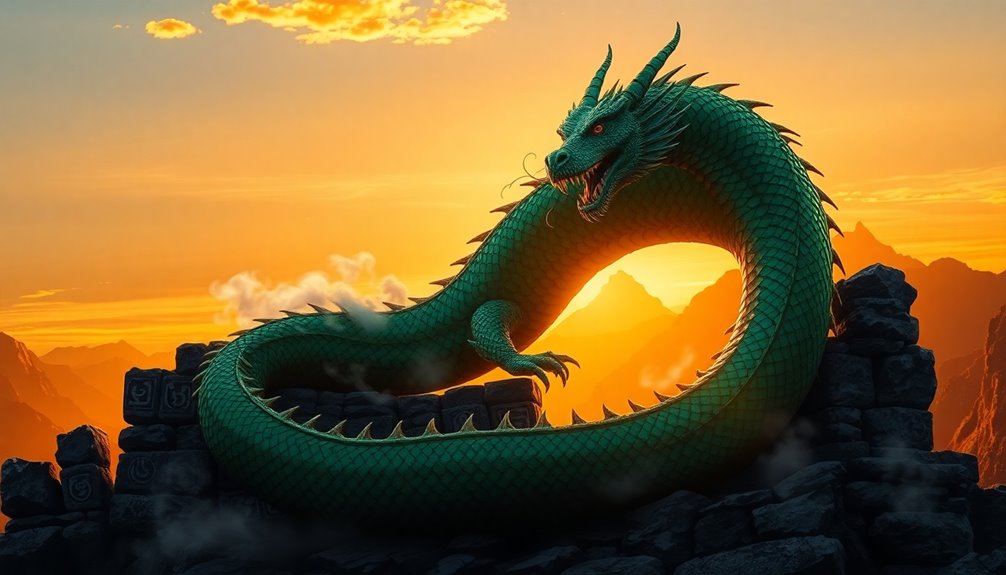
As societies developed, dragons transformed in their lore, adapting to the shifting fears and values of the people.
Dragon origins trace back to ancient symbolism, often linked to powerful serpents. These myth adaptations reflected cultural interpretations, where dragons became fire-breathing beasts, embodying chaos and destruction.
Dragon origins are rooted in ancient symbolism, evolving from powerful serpents into fire-breathing embodiments of chaos and destruction.
In other traditions, they emerged as guardian figures, protecting treasure hoards and sacred sites. Their flight abilities symbolized freedom and power, leading to legendary encounters that captivated imaginations.
As you explore these narratives, you’ll see how dragons evolved from mere threats to complex beings, embodying both the fears and aspirations of humanity. This evolution highlights their integral role in shaping cultural identities throughout history, paralleling how marginalized individuals’ contributions shaped historical narratives in various contexts.
Iconic Dragon Depictions in Medieval Literature
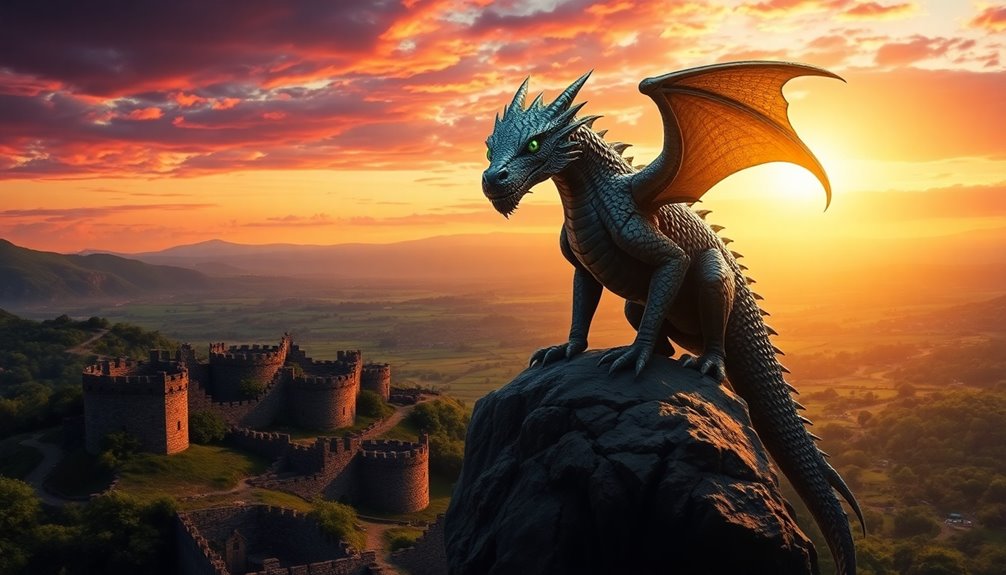
In medieval literature, dragons often symbolize more than just fearsome beasts; they represent the struggles of heroes.
In “Beowulf,” the dragon embodies the ultimate challenge, while in Arthurian legends, it reflects the moral complexities of the knightly journey. Additionally, the enduring popularity of dragons in mystery literature highlights their significance in storytelling across genres.
Let’s explore how these iconic depictions shape our understanding of dragons in this era.
Dragons in Beowulf
While many tales of the medieval era feature fearsome beasts, the dragon in *Beowulf* stands out as a symbol of both greed and mortality. This creature embodies classic dragon characteristics, such as immense size and fiery breath, but it also represents the darker side of human desire.
As you explore the epic, you’ll notice that the dragon hoards treasures, reflecting a relentless pursuit of wealth. The climactic dragon battles showcase Beowulf’s bravery and the inevitability of fate.
These confrontations illustrate not just physical conflict but also the internal struggles against greed and mortality. Ultimately, the dragon serves as a powerful reminder that even the mightiest can fall, echoing the transient nature of life and glory.
Symbolism in Arthurian Legends
Dragons in Arthurian legends often symbolize the duality of good and evil, embodying both chaos and nobility.
In your exploration of Arthurian battles, you’ll find that these creatures serve as chivalric symbols, representing the struggles knights face in their heroic journeys.
Dragon knights, sworn to protect their territories, often engage in enchanted quests to vanquish these legendary guardians. Through their encounters, they forge mythical alliances, highlighting the complexity of loyalty and valor.
Furthermore, mystical prophecies often intertwine dragons with the fate of kingdoms, suggesting that their presence is both a curse and a blessing.
As you investigate further, you’ll see how these iconic depictions enrich the tapestry of Arthurian lore, making dragons essential to its enduring legacy.
The Role of Dragons in Eastern vs. Western Traditions
When you compare Eastern and Western traditions, dragons take on vastly different roles and meanings.
In the East, they often symbolize wisdom and benevolence, while in the West, they’re frequently seen as malevolent beasts to be defeated. Understanding these differences reveals much about each culture’s values and storytelling. This contrast is echoed in literary works, such as The Daughters of Night, which explores themes of power and corruption within society.
Cultural Symbolism and Significance
Throughout history, the portrayal of dragons has varied substantially between Eastern and Western cultures, revealing deep-rooted beliefs and values.
In Eastern traditions, dragons symbolize power, wisdom, and benevolence, often seen as protectors with spiritual meanings tied to water and agriculture. Their cultural interpretations reflect positive dragon representations in art and folklore.
In contrast, Western dragons often embody chaos and destruction, serving as archetypal symbols of evil in heroic narratives. Their societal roles typically involve being adversaries to be vanquished, highlighting a conflict between good and evil.
These differing dragon representations illustrate how artistic expressions shape our understanding of mythical significance and the narrative functions these creatures hold in various cultures, enriching the tapestry of human imagination.
Physical Characteristics and Traits
In the domain of mythology, dragons exhibit strikingly different physical characteristics and traits depending on their cultural origins.
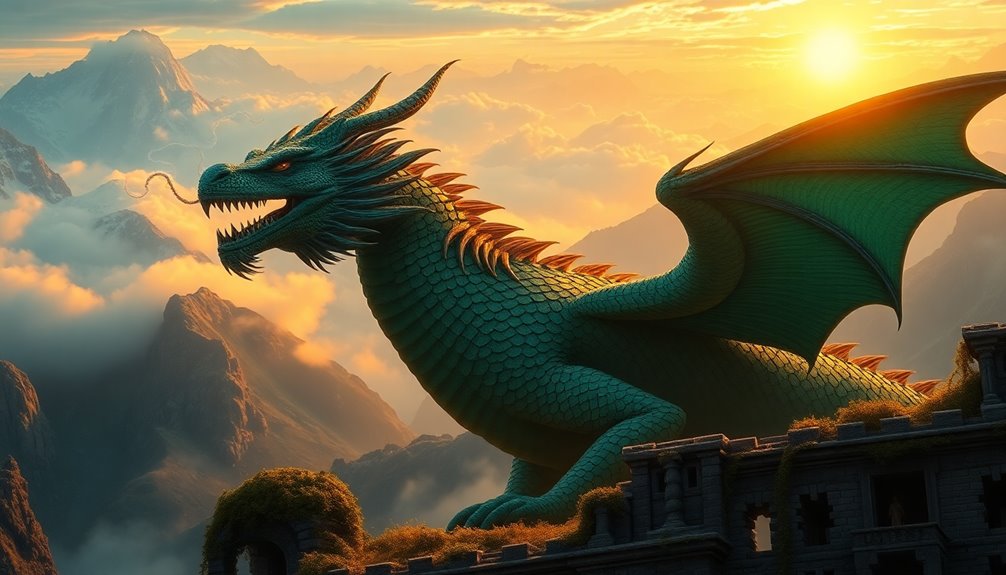
Western dragons often sport thick scales and armor, with impressive flight capabilities and a penchant for fire breathing. Their size variations can be immense, reflecting their fearsome reputation.
In contrast, Eastern dragons tend to be serpentine, showcasing vibrant colors that symbolize wisdom and power. Their intelligence levels are often portrayed as high, and they thrive in diverse habitats, from mountains to rivers.
While Western dragons might prefer livestock, Eastern ones often consume elemental energy.
Behavior patterns also differ; Western dragons are typically aggressive, whereas Eastern dragons embody benevolence.
Reproductive traits vary, with Eastern dragons often seen as guardians of life.
Roles in Folklore Narratives
Dragons play pivotal roles in folklore narratives, reflecting the values and beliefs of their respective cultures.
In Eastern traditions, you’ll often find dragons as benevolent dragon guardians and divine messengers, embodying wisdom and elemental powers. They symbolize transformation, guiding heroes on their quests.
Conversely, in Western traditions, dragons frequently serve as heroic adversaries, hoarding treasure hoards and representing chaos. These cultural interpretations shape how dragons are viewed: as protectors or threats.
While both traditions highlight their mythological roles, the underlying message remains clear—dragons symbolize both the treasures of knowledge and the perils of greed.
Whether as guardians or foes, dragons continue to captivate, reminding you of the duality of human nature and the journey of self-discovery.
Dragons in Modern Fantasy: Literature and Film
Whether soaring through the skies or lurking in hidden caves, dragons have become iconic figures in modern fantasy literature and film. These creatures embody various dragon archetypes, from wise mentors to fearsome antagonists, reflecting contemporary interpretations of age-old myths.
In character dynamics, they often influence hero encounters, driving conflict themes that reveal human nature. Visual aesthetics play a vital role, showcasing their grandeur in stunning cinematography and illustrations.
Dragons shape hero encounters and illuminate conflict themes, while their visual splendor captivates audiences through breathtaking artistry.
Cultural adaptations further enrich their portrayal, allowing for diverse gender representations that challenge traditional norms. By exploring fantasy tropes, dragons serve significant narrative functions, symbolizing inner struggles and external battles.
Their presence not only captivates audiences but also prompts deeper reflections on power, morality, and the complexities of life’s adventures, much like the societal expectations that shape character relationships in *Giovanni’s Room*.
The Influence of Dragons in Video Games and Pop Culture
As video games and pop culture continue to evolve, dragons remain a powerful symbol, enchanting players and audiences alike. Their stunning dragon aesthetics and intricate character design allow for immersive fantasy world building that captivates the imagination.
In iconic video games, dragons play pivotal narrative roles, driving plots and challenging players through innovative video game mechanics. You can see cultural reinterpretations of these mythical beasts, from fearsome foes to wise mentors, enhancing the richness of the gaming experience. The dragon fandom thrives with merchandise that celebrates these creatures, from figurines to apparel, creating a community of enthusiasts. Ultimately, dragons not only enrich interactive experiences but also symbolize the heart of adventure in our beloved games and stories. In many ways, they embody the themes of politics, society, and human nature that resonate through various storytelling mediums.
Symbolism of Dragons: Power, Wisdom, and Destruction
Throughout history, dragons have come to symbolize power, wisdom, and destruction, embodying complex themes that resonate across cultures.
You’ll find that dragons often represent power dynamics, acting as both rulers and challengers in various myths. Their ancient wisdom is revered, suggesting a deep understanding of the world that transcends time.
Yet, they also embody a destructive force, capable of wreaking havoc and testing heroes on their transformative journeys.
Cultural contrasts reveal how different societies view these mythical guardians, with some seeing them as protectors while others fear their might.
In every tale, dragons invite you to explore the duality of creation and annihilation, reminding you of the delicate balance between these powerful forces. This duality parallels the complexity of love found in human relationships, where passion can lead to both joy and sorrow.
The Future of Dragons in Storytelling and Media
While dragons have long fascinated our imaginations, their role in storytelling and media is evolving rapidly. You’ll see dragon technology blending with narrative evolution, showcasing these creatures in innovative ways.
As cultural adaptations emerge, dragons reflect diverse perspectives, becoming symbols of both destruction and guardianship. Digital representations enhance their allure, allowing for immersive experiences that challenge traditional character archetypes.
With environmental themes gaining traction, dragons may embody nature’s fury or serve as protectors of the Earth. Their moral complexities invite introspection, making them relatable figures in modern tales. Additionally, the rise of totalitarian regimes in fiction often mirrors the struggles faced by dragons, highlighting themes of power and resistance.
Furthermore, cross-genre influences enrich their narratives, from fantasy to sci-fi, ensuring dragons remain relevant and engaging in the ever-changing landscape of storytelling.
Embrace this evolution as you explore new dragon tales.
Conclusion
Dragons aren’t just creatures; they’re the fiery heartbeat of our imagination! From ancient legends to epic blockbusters, they’ve soared through our stories, igniting our passions and fears. Whether they’re wise mentors or fearsome foes, these mythical beasts shape our worlds like a cosmic force of nature. As you plunge into the future of storytelling, remember: dragons will always be the blazing stars of our creative universe, ready to whisk you away on adventures beyond your wildest dreams!