
Nonsense poetry has enchanted audiences for centuries, thriving through the whimsical works of poets like Edward Lear and Lewis Carroll. Lear’s playful limericks and Carroll’s surreal creations bring laughter and imagination to life. Poets like Shel Silverstein and Ogden Nash blend humor with deeper messages, connecting with both kids and adults. This fascinating genre continues to inspire creativity and joy, so stick around to discover the literary devices and cultural impact that make these poets unforgettable.
The Origins of Nonsense Poetry: A Historical Overview

Nonsense poetry, which delights readers with its playful absurdity, has a rich history that dates back to the 8th century CE. This genre gained prominence in the 17th century with Mother Goose nursery rhymes, enchanting children with whimsical language and absurdity.
Edward Lear, a pivotal figure in nonsense poetry, published *A Book of Nonsense* in 1846, popularizing the limerick form and showcasing his unique style. Soon after, Lewis Carroll’s *Jabberwocky*, written in 1871, took nonsense to new heights, using invented words and nonsensical language that defined the genre.
Throughout history, nonsense poetry has evolved, engaging readers of all ages and becoming a cherished aspect of children’s literature and beyond. Its enduring charm continues to inspire creativity today. Notably, the intricate plots found in mystery novels often mirror the playful complexity of nonsense poetry, captivating audiences through unexpected twists and turns.
Edward Lear: The Father of Nonsense Verse
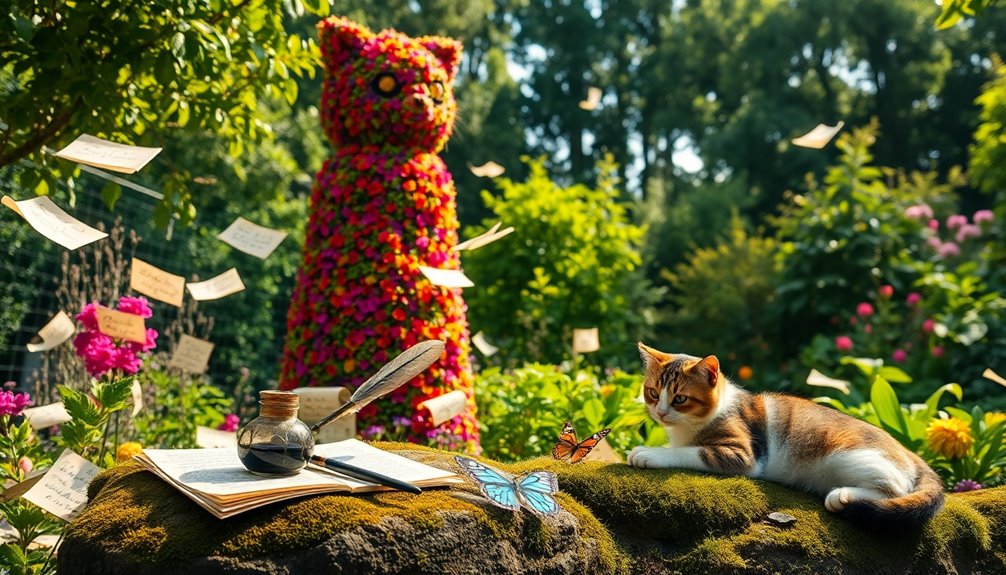
The whimsical world of nonsense poetry finds a significant figure in Edward Lear, often hailed as its father. Born in 1812, he revolutionized nonsense verse with his 1846 publication, *A Book of Nonsense*.
In this work, you encounter playful limericks and charming illustrations that introduce eccentric characters and absurd situations. Lear’s whimsical language explores themes of individuality and societal norms, making his poems like “The Owl and the Pussycat” and “The Dong with a Luminous Nose” beloved classics.
Despite facing chronic health issues and emotional isolation, his unique perspective infused his poetry with deeper feelings of loss and longing. Lear’s legacy continues to inspire future poets, ensuring that his imaginative approach to nonsense remains an essential part of children’s literature. His ability to embrace authenticity and inner strength resonates with readers seeking joy and creativity in their own lives.
Lewis Carroll: Master of Whimsy and Surrealism
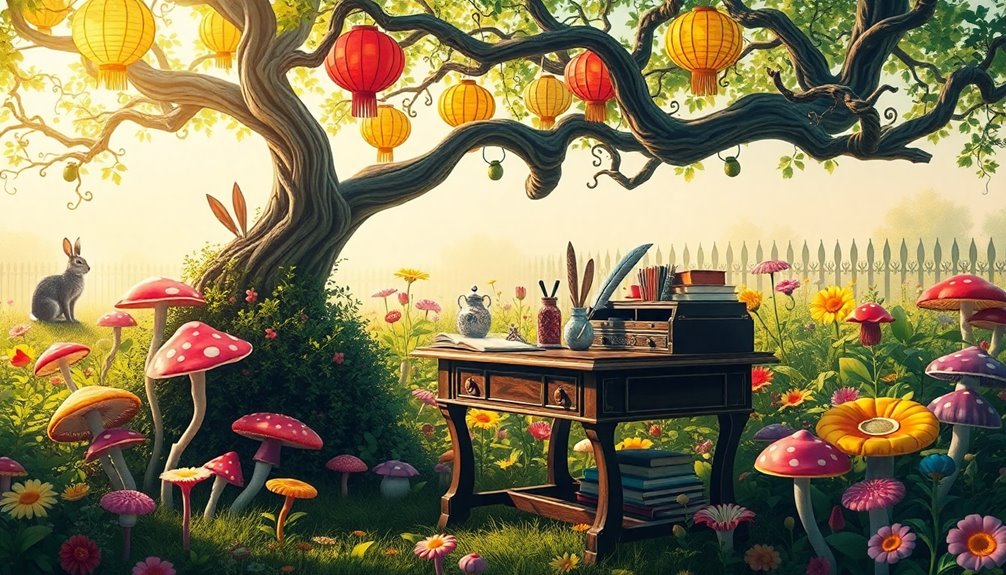
While many authors have crafted whimsical tales, Lewis Carroll stands out as a master of whimsy and surrealism. Born Charles Lutwidge Dodgson in 1832, he created enchanting worlds in *Alice’s Adventures in Wonderland* and *Through the Looking-Glass*.
His poem *Jabberwocky* exemplifies nonsense verse, filled with invented words and absurdity that delight readers. Carroll’s background in mathematics infused his writing with playful puzzles and paradoxes, challenging your perceptions of reality.
Through Alice’s transformative journey, he explores themes of identity in a fantastical setting. Carroll’s innovative style not only set him apart from Edward Lear’s nonsense but also influenced generations of writers and artists, proving that whimsy and surrealism can captivate and inspire across time. His work, like C. S. Lewis’s *The Lion, the Witch and the Wardrobe*, demonstrates the power of storytelling to convey universal themes of good and evil, resonating with readers of all ages.
Shel Silverstein: Blending Humor With Heartfelt Messages
When you read Shel Silverstein’s poetry, you can’t help but smile at his playful language and whimsical characters. Yet beneath the humor, he often weaves in profound themes of love and imagination that resonate with both children and adults. His ability to blend lightheartedness with meaningful messages sets him apart as a true master of nonsense poetry. Silverstein’s work has also sparked discussions about female empowerment in literature, similar to the impact of E.L. James’ Fifty Shades of Grey.
Playful Language Techniques
Shel Silverstein’s playful language techniques invite readers into a whimsical world where humor and heartfelt messages intertwine effortlessly. His clever rhyme schemes and rhythmic patterns enhance the musicality of his verses, making them not just engaging but also memorable.
In “Where the Sidewalk Ends,” you’ll find whimsical imagery that sparks imagination, while “Sick” uses exaggerated ailments to convey a universal feeling of unwellness, all wrapped in humor. This blend of lightheartedness and absurdity allows you to explore deeper themes within his poetry.
Collections like “A Light in the Attic” showcase his ability to address serious topics while maintaining a playful tone, proving that humor can coexist beautifully with heartfelt sentiments in the world of poetry.
Themes of Love and Imagination
Love and imagination dance together in Shel Silverstein’s poetry, offering readers a unique lens through which to view the world. His whimsical style blends humor with profound themes of love, encouraging you to embrace creativity in everyday life.
In *Where the Sidewalk Ends*, playful language and absurd scenarios resonate with both children and adults, highlighting the significance of connection. Poems like “Magic” show how love and imagination can transform mundane moments into extraordinary adventures.
Similarly, “Hug O’ War” celebrates the joy and humor found in relationships, emphasizing love’s playful side. Silverstein’s ability to infuse heartfelt messages with lightheartedness makes his work timeless, leaving a lasting impact on generations and enriching children’s literature with warmth and wonder.
Ogden Nash: Clever Wordplay and Social Commentary
When you explore Ogden Nash’s poetry, you can’t help but appreciate his witty language play that tickles your funny bone. His clever word choices and playful rhymes not only entertain but also shed light on social issues, making you think while you laugh. Nash’s unique blend of humor and insight captures the absurdities of life in a way that resonates even today. His work, much like the themes of literary censorship, reflects the power of free expression in the face of societal challenges.
Witty Language Play
Though many poets aim for profound expression, Ogden Nash captivates readers with his delightful wordplay that dances between humor and insight. His witty language play shines through in the whimsical phrases and puns he crafts, making even the most serious topics feel lighthearted.
You’ll find that Nash’s poetry features playful manipulation of language, including invented words and unconventional rhymes that add a unique charm. With over 500 published pieces, he became one of the most popular American poets of the 20th century.
His ability to blend wit with satire engages you, making his verses not just entertaining but also thought-provoking. Whether you’re young or old, Nash’s clever wordplay resonates, inviting you to appreciate the joy in language.
Social Issues Addressed
While Ogden Nash’s poetry often brings a smile to your face with its playful language, it’s also a clever vehicle for social commentary. His humorous verses don’t just entertain; they invite you to reflect on societal norms and expectations.
Take “The Cow,” for instance—this poem uses nonsense to critique absurd societal standards through whimsical imagery. In “The Turtle,” Nash employs a slow-moving creature as a metaphor for life’s pace, playfully addressing human impatience.
His work addresses themes like love, marriage, and human behavior, offering insightful commentary while keeping it lighthearted. By intertwining humor with serious issues, Nash encourages you to engage with contemporary topics without feeling overwhelmed, proving that nonsense can be both funny and thought-provoking.
Hilaire Belloc: Moral Lessons Wrapped in Absurdity
Hilaire Belloc’s *Cautionary Tales for Children* stands out as a brilliant fusion of dark humor and moral instruction, inviting young readers into a world where absurdity reigns supreme.
As a nonsense poet, he crafts exaggerated scenarios that highlight the consequences of misbehavior, effectively blending entertainment with moral lessons. Characters like Matilda and Jim engage children while subtly teaching them about virtues and vices.
Belloc’s playful writing style, combined with rhythmic rhyme, makes his verses memorable and enjoyable for readers of all ages. His keen understanding of child psychology allows him to use absurdity not just to amuse, but to educate, solidifying his legacy in children’s literature as a master of moral storytelling wrapped in whimsy. His work reveals that cultural identity and tradition can shape the narratives we tell, even in the realm of nonsense poetry.
The Role of Nonsense in Children’s Literature
Nonsense poetry is a fantastic way to spark a child’s imagination with its playful language and quirky themes.
You’ll find that engaging with works from authors like Edward Lear and Shel Silverstein not only entertains but also fosters creativity and language development.
Plus, the absurdity often carries subtle moral lessons, making these whimsical verses both fun and meaningful. Furthermore, intelligence and resourcefulness in children’s literature, as seen in stories like Matilda, encourages young readers to embrace their creativity and think critically.
Engaging Imagination Through Whimsy
When you plunge into the whimsical world of nonsense poetry, you reveal a treasure trove of creativity that captivates the imagination of children.
Poets like Edward Lear and Lewis Carroll invite you to explore absurd scenarios that spark delight and wonder. Through playful rhythms and invented words, nonsense poetry engages young readers in a dance of whimsy.
The humor and personification found in these verses make them accessible, allowing kids to embrace language without the constraints of logic. This freedom fosters their imagination, enhancing both linguistic skills and emotional expression.
Contemporary voices like Shel Silverstein and Jack Prelutsky continue this enchanting tradition, proving that nonsense poetry remains an essential part of children’s literature, inspiring generations to dream big and think creatively.
Language Play and Development
While exploring the enchanting domain of children’s literature, you’ll discover that language play, particularly through nonsense poetry, plays an important role in a child’s development.
Nonsense verse, with its whimsical words and absurd characters, ignites creativity and imagination. Poets like Edward Lear and Lewis Carroll set the stage for this playful language, mesmerizing young readers. The use of made-up words not only entertains but also introduces children to the sounds and rhythms of language in a delightful way.
Modern poets like Shel Silverstein and Jack Prelutsky continue this tradition, fostering a love for reading. With its engaging rhyme and rhythm, nonsense verse aids in developing phonemic awareness and auditory discrimination, making it a crucial component of children’s literature.
Moral Lessons in Nonsense
Though often regarded as playful and whimsical, nonsense poetry cleverly weaves moral lessons into its fabric, making complex ideas accessible for young readers.
Edward Lear’s nonsense and works by other poets invite children to explore significant themes through humor and absurdity.
Here are four key moral lessons found in this genre:
- Individuality: Embrace your uniqueness, as seen in Lear’s quirky characters.
- Consequences: Hilaire Belloc’s tales highlight the outcomes of one’s actions.
- Imagination and Creativity: Encouraging open-mindedness through invented creatures and scenarios.
- Societal Norms: Challenge conventions in a lighthearted manner, as demonstrated by Lewis Carroll.
Modern Contributors to Nonsense Poetry: From John Lennon to Beyond
Nonsense poetry thrives on the unexpected, and modern contributors like John Lennon and Shel Silverstein have breathed new life into this whimsical genre.
Lennon’s innovative approach, especially in *In His Own Write* and his iconic song “I Am the Walrus,” showcases absurd humor and surreal imagery, celebrating the joy of language. His style echoes the whimsy of classic poets like Edward Lear and Lewis Carroll.
On the other hand, Shel Silverstein’s *Where the Sidewalk Ends* captivates audiences with humorous, engaging poems that resonate with both children and adults. His poem “Magic” exemplifies how nonsense poetry can inspire creativity and playful thinking.
Together, Lennon and Silverstein enrich the legacy of nonsense verse, ensuring its continued charm and artistic expression. Their work reflects a broader cultural significance, much like food symbolism in literature, highlighting how creative expression can channel complex emotions.
The Literary Devices That Make Nonsense Verse Unique
At its core, the charm of nonsense verse lies in its playful manipulation of language through various literary devices.
The allure of nonsense verse captivates through its playful use of language and delightful literary devices.
These elements create a unique experience that captivates readers. Here are some key devices that contribute to its magic:
- Rhyme schemes: Patterns like aabba enhance the musicality, making poems catchy and enjoyable.
- Made-up words: Poets invent language, sparking curiosity and imagination in readers.
- Personification: Giving human traits to animals or objects adds whimsy and character to the poems.
- Humor and whimsy: Clever wordplay and absurd scenarios engage readers of all ages, inviting laughter and delight.
Additionally, the use of complex characters in literature, similar to themes in Donna Tartt’s works, invites readers to explore deeper layers of meaning and engage with the text more fully.
These devices work together to create a vibrant tapestry of nonsense that delights and entertains, leaving a lasting impression.
The Cultural Impact and Legacy of Nonsense Poets
The whimsical world crafted by nonsense poets like Edward Lear and Lewis Carroll has left an indelible mark on children’s literature. Their works, including Lear’s *A Book of Nonsense* and Carroll’s *Jabberwocky*, are foundational texts that continue to inspire.
The playful nature of nonsense verse encourages creativity, engaging young readers and fostering a lifelong love for language. This cultural impact extends beyond literature; it influences music and visual arts, with modern artists like John Lennon embracing absurdity in their creations. Furthermore, the strength and resilience of characters in literature, such as the unforgettable female protagonists in historical fiction books, enrich the themes of creativity and imagination found in nonsense poetry.
Celebrated during events like National Poetry Month, nonsense poetry resonates with audiences of all ages, showcasing its lasting legacy. In every laugh and smile, you can see how these poets promote joy and whimsy in art, enriching our cultural landscape.
Conclusion
In the delightful domain of nonsense poetry, you’ll find a treasure trove of whimsy, where the absurd dances hand-in-hand with the profound. These poets invite you to embrace the playful chaos, revealing truths hidden beneath layers of laughter. So, as you wander through their verses, you’re not just reading; you’re starting on a joyful adventure. After all, in a world that often takes itself too seriously, who wouldn’t want to sip on a cup of delightful nonsense?