The first silent films emerged around 1895, revolutionizing cinema by borrowing from literature. They used visual storytelling, gestures, and expressions to convey complex narratives. Just like literary techniques, silent films emphasized concise character arcs and emotional depth through body language. Intertitles advanced the plot, reflecting the narrative economy found in literature. This creative fusion laid the groundwork for cinematic language, influencing how stories are told today. You’ll discover even more about this fascinating evolution ahead.
The Birth of Silent Films: A New Art Form Emerges
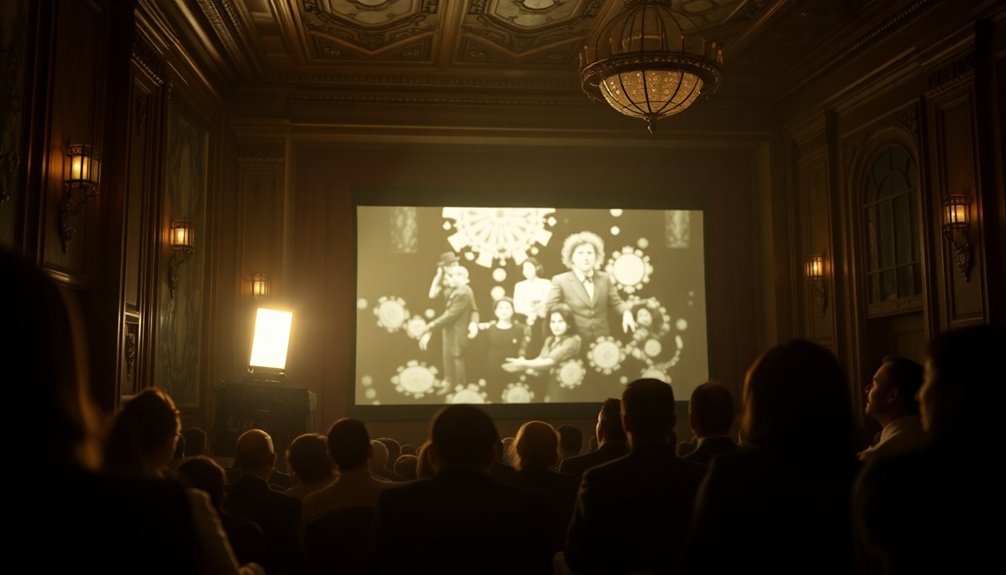
In the early 20th century, silent films burst onto the scene, marking a revolutionary shift in the world of entertainment. This new art form emerged around 1895, with pioneers like the Lumière brothers and Georges Méliès leading the charge.
Silent cinema primarily relied on visual storytelling, where gestures, expressions, and visual metaphors conveyed emotions and narratives without sound. Inter-titles became essential, bridging the gap between literature and film by delivering dialogue and exposition.
Silent cinema harnessed visual storytelling, using gestures and inter-titles to evoke emotions and convey narratives without sound.
Early filmmakers drew heavily from theatrical techniques and popular stories, establishing narrative structures that echoed literary forms. This transformation offered a universal visual language, allowing audiences from diverse backgrounds to connect through shared experiences, much like literature had done for centuries. Silent films truly redefined storytelling, showcasing the intricate plot developments that would later become a hallmark of mystery novels.
How Literature Shaped Early Film Narratives
When you explore early film narratives, you’ll notice how closely they mirror literary techniques. Filmmakers used narrative economy to convey complex stories efficiently, much like skilled authors crafting a novel. Visual storytelling methods also drew from literature, creating a rich tapestry of character and theme that engaged audiences deeply. The resilience of these narratives, much like the collective action seen in World War II resistance movements, highlights the enduring power of storytelling in challenging times.
Narrative Economy Techniques
Although silent films lacked dialogue, they thrived on narrative economy techniques borrowed from literature, transforming complex stories into engaging visual experiences.
You’ll notice how these techniques shaped early cinema:
- Concise storytelling: Filmmakers dramatized essential elements, simplifying plots for clarity.
- Inter-title cards: These mirrored literary cues, conveying crucial plot points and emotions without spoken words.
- Visual subtext: Gestures and body language expressed unsaid feelings, adding depth to characters.
- Fixed camera positions: Prolonged shots allowed emotional connections to develop, akin to literary pacing.
Visual Storytelling Methods
Visual storytelling methods in early cinema emerged as a powerful narrative tool, heavily influenced by literary techniques. Filmmakers adapted narrative structures from literature, using intertitles to convey dialogue and plot points, similar to written stories. This approach allowed them to create a seamless connection between text and image.
Visual metaphors and symbolism borrowed from literature enabled silent film creators to express complex emotions without words. They focused on character gestures and visual subtext, reflecting literary techniques that capture internal motivations.
Additionally, the silent film format demanded a prioritization of visual storytelling elements, much like authors crafting vivid imagery to engage readers’ imaginations. Together, these influences shaped a unique narrative style that defined early cinema.
Key Themes and Motifs Borrowed From Classic Literature
When you watch silent films, you might notice how they bring classic literary archetypes to life, making the characters feel familiar and relatable. These films often employ visual storytelling techniques that mirror the narrative devices found in literature, enhancing emotional connections. The use of emotional expression in silent films resonates with audiences, illustrating the depth of characters’ inner lives similar to how Tita’s culinary creations embody her emotions in “Like Water for Chocolate.”
Literary Archetypes in Film
Silent films effectively harnessed literary archetypes to create compelling narratives that resonated with audiences. By borrowing from classic literature, these films engaged viewers familiar with enduring tales.
Key literary archetypes that shone in silent films included:
- The Tragic Hero – Characters faced insurmountable odds, evoking empathy.
- The Damsel in Distress – This archetype highlighted vulnerability and heroism.
- Love and Betrayal – Complex relationships were portrayed through emotional visuals.
- Redemption – Journeys of self-discovery and moral transformation captivated audiences.
Films like “The Kid” and “The Phantom of the Opera” showcased these motifs, making silent film festivals a celebration of rich narratives steeped in literary tradition.
The use of intertitles further bridged literature and cinema, enhancing storytelling depth.
Visual Storytelling Techniques
Cinematic storytelling in silent films often mirrored the rich tapestry of classic literature, employing techniques like symbolism and metaphor to convey intricate narratives.
You’d notice that silent films utilized visual storytelling techniques akin to literary methods, allowing complex stories to unfold without dialogue. Inter-title cards functioned like chapter headings, enhancing the narrative flow and providing necessary context.
Themes such as love, conflict, and morality emerged through visual motifs, echoing the hero’s journey found in novels. Filmmakers captured emotions through facial expressions and body language, similar to character development in literature.
Additionally, the emphasis on narrative economy in silent films paralleled literary techniques that prioritize concise language and essential plot points, driving the story forward effectively.
The Role of Character Development in Silent Cinema
Here are four key aspects of character development in the silent era:
- Body Language: Actors used gestures and facial expressions to express complex emotions.
- Inter-title Cards: These cards provided context and advanced character motivations succinctly.
- Cinematic Techniques: Close-ups and dramatic lighting emphasized character traits and emotional depth.
- Narrative Economy: The brevity of silent films demanded concise character arcs, focusing on essential traits to keep audiences engaged.
Through these methods, silent films like “Pandora’s Box” showcased rich character development, proving their storytelling power. Additionally, the systemic oppression depicted in literature, much like in silent cinema, illustrates the profound impact of social dynamics on character motivations and actions.
Visual Storytelling Techniques: From Page to Screen
When you watch a silent film, you’ll notice how it captures complex narratives with remarkable efficiency, much like a well-crafted story.
The visuals convey emotions and motivations through subtext, engaging you on a deeper level without uttering a single word.
This blend of visual storytelling techniques not only draws you in but also creates a powerful emotional connection to the characters and their journeys. The use of magical realism in narrative forms, such as literature, enhances the emotional experience and deepens the audience’s understanding of character motivations.
Narrative Economy Techniques
Narrative economy in silent film is a masterclass in visual storytelling, where filmmakers skillfully convey essential plot points without relying heavily on dialogue. They use specific techniques to enhance the audience’s experience:
- Gestures and Expressions: Actors communicate emotions vividly, making you feel connected to their journey.
- Inter-title Cards: These concise text elements distill complex narratives, much like effective literary prose, guiding your understanding.
- Staging and Stillness: Scenes are carefully composed, creating an atmosphere that invites you to engage with characters and settings.
- Character Actions: Just as authors use subtext, filmmakers allow actions to reveal deeper emotions, enriching your interpretation.
Through these techniques, silent films exemplify narrative economy, enhancing visual storytelling in enchanting ways.
Subtext Through Visuals
Often, silent films convey rich subtext through visuals, allowing viewers to grasp complex emotions and themes without a single word spoken. These films relied heavily on visual storytelling techniques, using body language and facial expressions to express what characters felt.
Fixed camera positions created a stillness that deepened emotional connections, while symbolic imagery represented intricate ideas. Early filmmakers adapted literary techniques, mirroring character arcs and themes found in literature, which enriched the storytelling experience.
Inter-title cards played an essential role, distilling dialogue to keep the audience engaged while advancing the plot. Overall, silent films masterfully showcased how visual storytelling could communicate layers of meaning, making them timeless masterpieces that resonate with viewers long after the credits roll.
Engaging Audience Emotionally
Building on the rich visual subtext established in silent films, engaging the audience emotionally becomes a focal point of storytelling. Silent films excelled in visual storytelling, using techniques that resonate deeply with viewers.
Here are four ways they achieved this:
- Body Language: Gestures conveyed complex emotions without a single word, much like character-driven narratives in literature.
- Inter-titles: These cards provided essential context, akin to narrative exposition that guides readers through a story.
- Staging and Stillness: Prolonged emotional moments created a deeper connection, similar to static tension in literature.
- Montage: Weaving multiple storylines together enhanced emotional impact, reflecting literary structures that evoke empathy.
These elements not only captivated audiences but also mirrored the emotional resonance found in literature.
Influential Filmmakers Who Drew Inspiration From Literature
As filmmakers sought to create compelling stories on screen, many turned to literature for inspiration, blending the two art forms in innovative ways.
D.W. Griffith, a pivotal figure in American silent film history, embraced literary techniques in “The Birth of a Nation,” using intertitles that mirrored written dialogue.
Meanwhile, French director Louis Feuillade’s crime serials, like “Fantômas,” drew heavily from serialized literature, crafting episodic narratives with gripping cliffhangers.
Giovanni Pastrone’s “Cabiria” showcased elaborate character arcs inspired by historical novels.
In comedy, Max Linder tapped into literary humor and character archetypes from stage plays.
The silent era thrived on adapting classic literature, as seen in “Quo Vadis?” (1912), demonstrating the profound impact of literature on cinematic storytelling. This blending of literature and film also echoes Richard Wright’s innovative storytelling, which highlighted systemic oppression in his narratives.
The Impact of Intertitles on Narrative Structure
The artistry of silent film extended beyond visuals and performances; intertitles played a pivotal role in shaping narrative structure.
You could see how these textual elements enriched the storytelling by:
- Providing essential dialogue and context, guiding viewers through the plot.
- Conveying complex emotions succinctly, enhancing storytelling economy.
- Reflecting literary styles that engaged audiences, mimicking traditional narrative forms.
- Contributing to the pacing, allowing for dramatic pauses and emotional beats.
Intertitles bridged the gap between literature and cinema, establishing a foundation for future cinematic storytelling.
The Evolution of Cinematic Language Through Literary Devices
While early filmmakers faced the challenge of conveying complex narratives without sound, they cleverly turned to literary devices to develop a unique cinematic language.
They borrowed narrative techniques from literature, using inter-titles like chapters in a novel to structure storytelling. Visual subtext and gestures emerged as crucial tools, allowing you to feel emotions similar to how descriptive language evokes feelings in literature.
The concept of narrative economy in film focused on dramatizing essential plot points, mirroring concise styles in short stories. Cinematic techniques like staging and stillness drew from literary imagery, creating powerful emotional connections. This evolution reflects the transformative power of relationships in storytelling, enhancing both literary and cinematic experiences.
Iconic Silent Films That Captured Literary Essence
Silent films have a remarkable ability to convey rich narratives, often drawing directly from the world of literature.
Here are some iconic examples that capture this literary essence through visual storytelling:
- “Sherlock Jr.” – Buster Keaton’s masterpiece blends humor and mystery, embodying the detective genre’s literature roots.
- “Hugo” – A tribute to early cinema, it intertwines adventure with themes of loss and discovery, echoing classic literary quests.
- “Quo Vadis?” – This epic illustrates grand historical narratives, showcasing cinema’s capacity for literary adaptation.
- “Fantômas” – Louis Feuillade’s crime serial introduces literary tropes, engaging audiences with its suspenseful storytelling.
These silent films exemplify how visual storytelling can effectively translate complex literary themes into compelling cinematic experiences. Additionally, the exploration of systemic racism in Richard Wright’s “Native Son” reflects the profound impact literature can have on addressing social issues through film.
Audience Reception: How Literature Influenced Viewers’ Expectations
As filmmakers crafted their narratives, they often drew heavily from literature, shaping your expectations as a viewer. Early silent films borrowed narrative structures and character archetypes, resulting in a familiar storytelling format.
You expected coherent plots and character development, thanks to the integration of inter-title cards that echoed literary techniques. These cards provided essential context, enhancing your comprehension.
Additionally, the use of visual symbolism and thematic depth mirrored literary devices, deepening your emotional connection with the story. As cinema evolved, these literary influences heightened audience reception, pushing filmmakers to aim for greater artistic quality and complexity.
Your expectations for engaging narratives were greatly shaped by the literary conventions that had come before, creating a rich cinematic experience. This evolution in storytelling reflects the importance of hidden histories that challenge traditional perspectives and enrich our understanding of both film and literature.
The Legacy of Silent Film’s Literary Roots in Modern Cinema
Though many advances have transformed cinema, the foundational influence of silent films on modern storytelling remains undeniable. Silent films pioneered visual storytelling techniques that still resonate today.
Here’s how their literary roots continue to shape contemporary cinema:
- Narrative Economy: Silent films distilled complex plots into concise sequences, a technique filmmakers use today.
- Character Development: The emphasis on gesture and expression helps convey emotions without dialogue.
- Subtext: Artistic techniques from the silent era, like layering meaning, enrich modern narratives.
- Visual Communication: The reliance on visual cues over spoken words remains crucial in engaging audiences.
Films like “Sherlock Jr.” and “Hugo” showcase this legacy, proving that the influence of silent films endures in today’s cinematic landscape. Moreover, the themes of courage, loyalty, and resilience found in classic narratives continue to inspire filmmakers in crafting compelling stories.
Conclusion
In wrapping up this exploration, it’s clear that silent films didn’t just spring from thin air; they borrowed heavily from the rich tapestry of literature. By blending visual storytelling with literary themes, these early films laid the foundation for cinema as it is understood today. So, next time you watch a classic, remember that the roots run deep. After all, those who don’t learn from the past are destined to repeat it, and silent cinema is a prime example.