

E.H. Shepard’s original sketches of Winnie-the-Pooh reveal a fascinating evolution of a beloved character, transforming from the grumpy Edward Bear into an icon of friendship and curiosity. His expressive styles capture childhood adventures, making Pooh relatable and timeless. The shift from black-and-white to vibrant colors further enhanced Pooh’s appeal, solidifying his status in pop culture. Explore how these artistic changes reflect the charm of Milne’s stories and the deeper significance behind Shepard’s work.
The Origins of Winnie-the-Pooh: A Story Behind the Bear
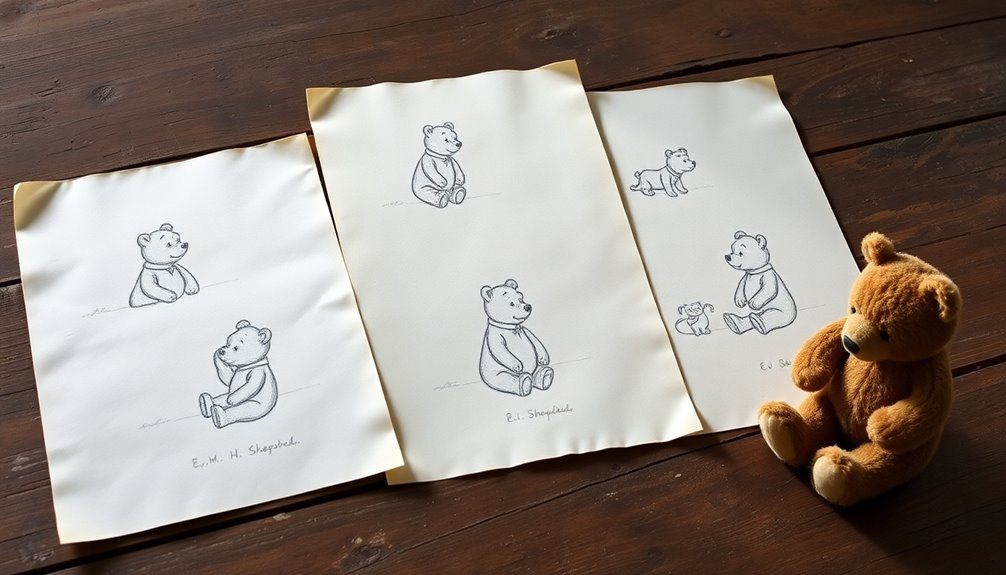
The charming origins of Winnie-the-Pooh trace back to 1925, when A. A. Milne drew inspiration from his son, Christopher Robin, and his teddy bear, initially named Edward Bear.
During visits to the London Zoo, Christopher met a bear named Winnie, which led to the character’s new name. Milne’s stories captured the essence of childhood adventures, with Winnie embodying innocence and curiosity. The playful spirit of Christopher inspired not only Winnie but also the beloved characters that populate the Hundred Acre Wood.
As you explore the original sketches, you’ll notice the evolution of Pooh.
Initially more angular and grumpy, Shepard’s reinterpretation transformed the bear into the round, lovable character we cherish today.
These sketches not only brought Winnie to life but also solidified his place in literary history, ensuring his adventures resonate with generations.
E.H. Shepard: The Illustrator Who Brought Pooh to Life
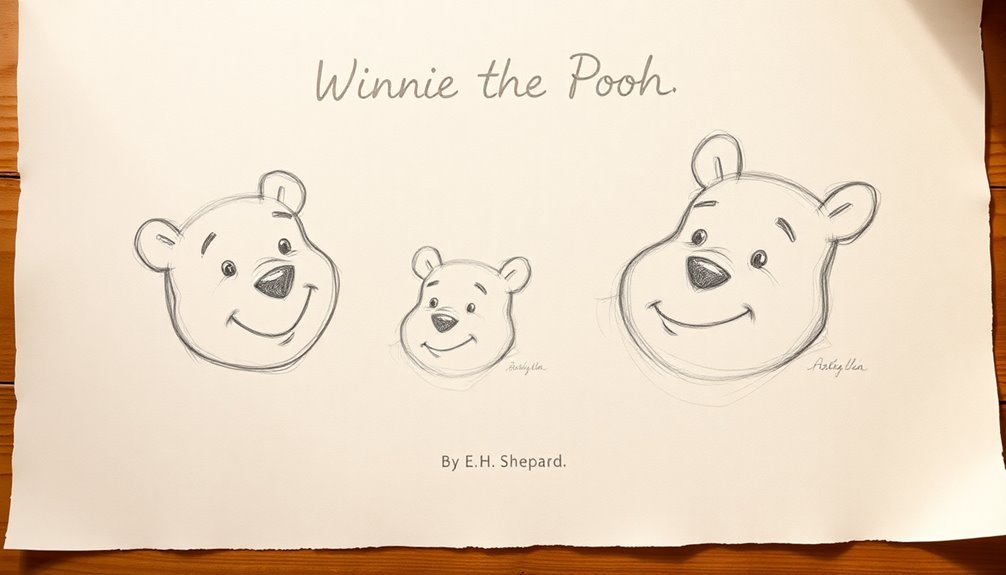
E.H. Shepard, born in London in 1879, transformed A.A. Milne‘s enchanting stories into mesmerizing visuals that brought Winnie the Pooh to life.
Initially inspired by Christopher Robin’s teddy bear, Shepard later used his son Graham’s bear, Growler, to refine his Pooh sketches.
Collaborating closely with Milne, he created original illustrations for four beloved children’s books, including *Winnie-the-Pooh* and *The House at Pooh Corner*.
His expressive style beautifully complemented the themes of friendship and adventure that resonate with readers even today.
As these illustrations evolved, particularly with color enhancements in 1970, Shepard’s charm and appeal remained constant.
His original drawings are now highly sought after, fetching remarkable prices at auctions, emphasizing their significance in children’s literature history. Additionally, Shepard’s work has become a part of cultural hubs that celebrate literary contributions worldwide, reflecting the importance of visual storytelling.
How Shepard’s Personal Life Influenced His Illustrations
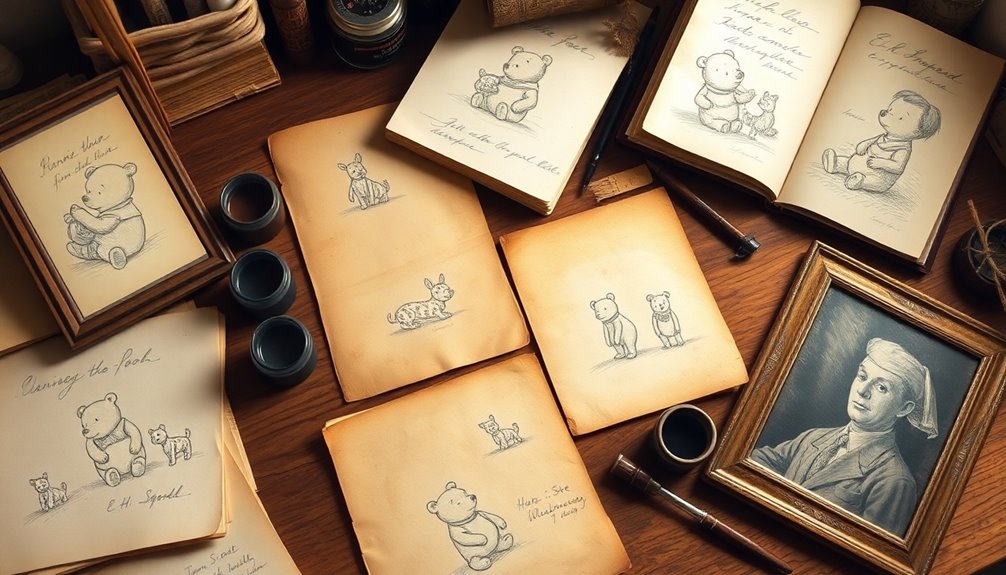
E.H. Shepard’s illustrations for Winnie-the-Pooh are deeply rooted in his personal experiences and family life. His son’s teddy bear, Growler, and the influence of A.A. Milne’s son brought a unique warmth and nostalgia to the characters. You can see how these emotional connections shaped the themes of friendship and adventure that resonate throughout the stories. Additionally, Shepard’s work reflects the resilience in the face of adversity that is often found in classic literature, enriching the emotional depth of his illustrations.
Family Influence on Creativity
While growing up, Shepard’s mother nurtured his artistic talents, creating a foundation that would greatly influence his illustrations. This family influence shaped his creative process, leading to original sketches that resonate with readers.
His son Graham’s teddy bear, Growler, served as the model for Winnie-the-Pooh, showcasing how deeply his family inspired his work. The character of Christopher Robin emerged from Shepard’s close bond with Graham, capturing the innocence of childhood.
The loss of Growler during World War II added emotional depth to Pooh, making him more relatable. Collaborating with A.A. Milne, both fathers shared experiences that enriched their stories, allowing them to create heartwarming tales that resonate with children and parents alike, demonstrating how family shapes creativity.
Personal Experiences Reflected
Personal experiences played a crucial role in shaping E.H. Shepard’s iconic illustrations. His personal connections to childhood toys, like his son’s teddy bear Growler, inspired the warmth in Shepard’s drawings.
Here are a few ways his life influenced his art:
- The playful interactions between Pooh and Christopher Robin reflect Shepard’s experiences as a father.
- The loss of Growler during World War II added emotional depth to the character of Pooh, often filled with nostalgia.
- Shepard’s artistic background and experiences from World War I contributed to the whimsical and expressive quality of his sketches.
Through these influences, Shepard captured the innocence and joy of childhood, making his illustrations resonate with readers on a deeper level.
Emotional Connections to Characters
Through his deep emotional connections to the characters, Shepard infused his illustrations with a warmth that resonates with readers. His inspiration from his son Graham’s teddy bear, Growler, gave Pooh a sense of familiarity and charm.
Shepard’s childhood experiences and his mother’s encouragement shaped his understanding of innocence, evident in his portrayal of Pooh and friends. The bond between Shepard and A.A. Milne allowed them to capture the joy of childhood adventures, reflecting their own experiences as fathers.
You’ll notice how Pooh’s expressions and interactions with Piglet reveal the emotional nuances of childhood friendships, making the characters relatable. Shepard’s sentimental touch captures the essence of imagination and companionship, ensuring that these beloved characters continue to resonate with audiences of all ages.
The Evolution of Pooh’s Design: From Edward Bear to Iconic Character
As Winnie-the-Pooh transformed from a simple teddy bear into an iconic figure, his design underwent significant changes that defined his character.
Originally based on A.A. Milne’s son’s teddy bear, Edward Bear, Shepard’s early Winnie The Pooh drawings depicted a more angular and grumpy character. Feedback led to a redesign using his son’s bear, Growler, resulting in the rounder, friendlier Pooh we cherish today.
- The collaboration between Milne’s storytelling and Shepard’s expressive illustrations was essential.
- Pooh’s color scheme evolved, remarkably shifting to yellow and red during the Disney era.
- Each Shepard drawing captured the warmth that made Pooh relatable and beloved.
These transformations solidified Pooh’s status as a timeless and endearing character. Furthermore, Shepard’s artistic renderings not only brought Pooh to life, but also highlighted the importance of informed consent in creative collaborations that resonate with audiences.
Iconic Illustrations: Exploring the Most Famous Sketches
Winnie-the-Pooh is brought to life through a collection of iconic illustrations that capture the essence of his character and adventures. E.H. Shepard’s expressive style shines in the sketch of Pooh climbing the stairs on page 159 of *Winnie-the-Pooh*, showcasing his playful nature.
The hunting illustration sequence on pages 34, 35, 37, and 38 brings excitement as Pooh and friends set out on Woozle hunts. One of the most beloved sketches depicts Pooh with a jar of honey on page 64, perfectly highlighting his charming innocence.
Additionally, Eeyore’s house suggestion to Piglet, illustrated on page 159 of *The House at Pooh Corner*, emphasizes friendship. These iconic illustrations have made the Pooh books timeless treasures for nearly a century. Just as Agatha Christie’s intricate plot in *And Then There Were None* keeps readers enthralled, Shepard’s illustrations continue to enchant audiences of all ages.
The Artistic Techniques Behind E.H. Shepard’s Drawings
E.H. Shepard’s artistic techniques bring a unique charm to his book illustrations. He relied on preliminary pencil drawings, laying a strong foundation for his final ink creations. His process involved:
- Pencil rubbings to transfer outlines, ensuring accuracy and detail.
- A strong pressing technique that added depth with heavy pencil markings.
- Post-creation cleaning to remove ink smudges, preserving the innocence of his characters.
Shepard’s early sketches didn’t feature the now-famous spelling of “Hunny,” showcasing the evolution of Pooh’s design. His mastery of pencil drawing techniques allowed him to capture the whimsical essence of his characters, allowing readers to connect deeply with the world of Winnie the Pooh.
Each stroke of his pencil drawing reflects a timeless magic that continues to delight audiences.
The Role of Color in Pooh’s Illustrative Journey
When you think about Winnie the Pooh, color plays an essential role in shaping his identity.
The change from Shepard’s black-and-white sketches to vibrant hues not only enhanced Pooh’s charm but also transformed how you perceive him as a character.
This shift in illustration style greatly impacted his popularity and connection with young readers around the world. The evolution of his visual representation reflects the importance of symbolism and themes in storytelling, enriching the narrative experience for audiences.
Transition to Color Illustrations
As the beloved stories of Pooh evolved, the introduction of color illustrations in 1970 considerably transformed the character’s visual identity. This shift to color illustrations brought new vibrancy, but it also obscured some of Shepard’s original intricate pen work.
You might notice several key changes during this evolution:
- Pooh’s color shifted from blue to the now-iconic yellow and red, aligning with the Disney era.
- The addition of color appealed to contemporary readers, enhancing the visual allure of these timeless tales.
- Despite this evolution, Shepard’s original black-and-white sketches remain treasured for their historical and artistic significance.
This colorful enhancement added a new dimension to Pooh’s world, making it even more enchanting for fans of all ages.
Impact on Character Perception
While the shift to vibrant colors in Pooh’s illustrations captivated audiences, it also significantly altered how the character was perceived. E.H. Shepard’s original pen-and-ink illustrations featured a subdued palette that grounded Pooh in whimsical reality.
However, as Disney introduced bright yellow and red, Pooh transformed into an instantly recognizable icon, appealing to new generations. This colorful evolution shifted character perception, making him seem more playful and approachable.
The change from blue to yellow and red didn’t just enhance aesthetics; it also shaped marketing strategies that solidified Pooh’s status. Ultimately, the use of vibrant colors reflects broader themes of joy and adventure, reinforcing Pooh’s connection to childhood innocence and imagination, inviting you to embrace the magic of his world.
How Original Sketches Became Treasured Collectibles
Original sketches of Winnie-the-Pooh have become more than just illustrations; they’ve transformed into coveted collectibles that evoke nostalgia and emotional connections.
As a collector, you might find yourself drawn to these iconic artworks for several reasons:
- The significant value increase at auctions, like a 1926 sketch that sold for $220,000.
- Record-breaking sales, including a 2014 drawing fetching £314,500 and a 2018 map that went for £430,000.
- The emotional connection these sketches create, reflecting beloved childhood memories.
These original sketches have established a strong market, where collectors prize authenticity and signed pieces. Additionally, the rise in popularity of historical fiction, such as The Daughters of Night, has contributed to a broader appreciation for art that captures the essence of storytelling.
Original sketches have created a thriving market, where collectors highly value authenticity and signatures.
With bidding wars often exceeding estimates, it’s clear that the emotional significance of Shepard’s work fuels this demand, making these sketches formidable assets in the art world.
The Impact of Nostalgia on Pooh’s Continued Popularity
Nostalgia plays a powerful role in the ongoing popularity of Winnie-the-Pooh, drawing adults back to the cherished stories of their childhood. This emotional connection to A.A. Milne‘s tales and E.H. Shepard’s original illustrations fuels a resurgence in interest and sales.
Collectors of all ages seek out these beloved artworks, with record-breaking auction sales underscoring their value. For instance, a 2014 drawing fetched £314,500, while a December 2022 sale reached $220,000.
These astonishing sums reflect a broader trend where childhood memories translate into financial demand. As adults reminisce about simpler times, the allure of Pooh and friends remains strong, ensuring that Shepard’s timeless sketches continue to captivate and inspire new generations. This phenomenon mirrors the way Richard Wright’s work, particularly *Native Son*, has prompted discussions about systemic oppression and continues to resonate in contemporary literature.
Major Exhibitions Celebrating E.H. Shepard’s Work
As you explore the enchanting world of Winnie-the-Pooh, you’ll discover major exhibitions that celebrate the remarkable artistry of E.H. Shepard.
One standout is at the Victoria and Albert Museum in London, titled “The Art of Winnie the Pooh: How E.H. Shepard Illustrated an Icon.” This exhibition showcases over 150 sketches, including 80 never before published, offering a rare glimpse into Shepard’s creative process.
You’ll find:
- Early representations of Winnie-the-Pooh and his friends
- A tea set gifted to Queen Elizabeth II as a child
- Insights into Shepard’s collaboration with A.A. Milne
This exhibition highlights how Shepard’s illustrations have shaped the beloved character’s enduring popularity, making it a must-see for fans and art lovers alike. Additionally, like Richard Wright’s exploration of systemic racism, Shepard’s art reflects the intricate dynamics of human relationships and emotions.
The Discovery of Unpublished Sketches and Their Significance
You’ll be fascinated to learn about the recent discovery of 150 original sketches by E.H. Shepard, with 80 of them unpublished until now.
This collection not only reveals the first-ever image of Winnie-the-Pooh but also showcases Shepard’s artistic journey over the years.
Understanding the historical context of these sketches enhances your appreciation for Pooh’s enduring legacy in children’s literature.
Unpublished Sketches Discovered
Recently, 150 sketches by E.H. Shepard were discovered, and among them, 80 are unpublished sketches that provide fresh insights into the creation of Winnie-the-Pooh.
This remarkable find, uncovered during research on Shepard’s World War I artwork, reveals an unexplored facet of his creative legacy.
- One sketch is believed to be the first image of Winnie-the-Pooh, showcasing his early artistic development.
- Shepard’s estate hadn’t examined these materials for 30 years, highlighting a significant gap in understanding his contributions to children’s literature.
- The discovery enriches the historical context of Pooh’s illustrations, emphasizing the evolution of Shepard’s artistic style and his collaboration with A.A. Milne.
These unpublished sketches truly deepen our appreciation for Shepard’s work.
Historical Context and Impact
The discovery of 150 original sketches by E.H. Shepard, including 80 unpublished works, offers profound insights into the creative process behind Winnie-the-Pooh.
Among these sketches is what’s believed to be the first image of Pooh, showcasing Shepard’s initial vision for this beloved character.
This significant find comes after Shepard’s estate hadn’t examined the material for 30 years, marking a pivotal moment in children’s literature history.
Uncovered during research into his World War I artwork, these sketches reveal the evolution of Pooh’s design and highlight the artistic collaboration between A.A. Milne and Shepard.
This discovery not only reinforces the legacy of the Winnie-the-Pooh stories but also enriches our understanding of their artistic origins.
What Makes E.H. Shepard’s Art Timeless and Relatable?
Although E.H. Shepard’s drawings capture a unique blend of innocence and nostalgia, they resonate deeply with you and many others. His illustrations evoke fond memories of childhood, making them timeless and relatable.
Here’s what makes his art special:
- Expressive Characters: Shepard masterfully conveys friendship and adventure, like the unforgettable Woozle hunt with Pooh and Piglet.
- Simple Yet Detailed: His careful attention to detail in simple line drawings enhances the storytelling, bringing A.A. Milne’s words to life.
- Emotional Connection: The warmth in his illustrations fosters a lasting bond with readers, evident in the continued popularity of Winnie-the-Pooh.
These elements guarantee that Shepard’s art remains cherished, appealing to both young readers and nostalgic adults alike.
Conclusion
E.H. Shepard’s illustrations are like a warm hug from childhood, reminding us of simpler times. Through his unique vision, Winnie-the-Pooh has transformed from a mere character into a cherished friend. As you look back on these iconic sketches, you can see how they continue to resonate with hearts young and old. Shepard’s art not only brings Pooh to life but also keeps his spirit alive, ensuring that this beloved bear remains timeless in our memories.