In “The Dinner,” you’re faced with the unsettling question of how far you’d go to shield your family from the consequences of their actions. The characters grapple with the tension between loyalty and justice, forcing you to reflect on your own ethical boundaries. Each person’s response reveals deep secrets and moral conflicts, pushing you to weigh the cost of complicity. As the story unfolds, you’ll uncover more about these dilemmas and what they mean for each character.
The Premise of the Dinner: a Deep Dive Into the Plot

As you plunge into “The Dinner,” you’ll find that the story revolves around two couples, Stan and his wife, and Paul and his wife, who gather at a high-end restaurant to address a troubling crime committed by their teenage sons.
Set against the backdrop of New York’s upscale dining scene, the plot unfolds in real-time, revealing the characters’ complex dynamics. Tensions rise as they shift from small talk to the serious implications of their sons’ actions.
Each couple grapples with their values and priorities, exposing deep-seated family secrets. The stark contrast between the luxurious setting and the dark subject matter emphasizes their struggle to maintain civility.
Ultimately, the evening forces them to confront ethical boundaries, with rights reserved for their families at stake. This tension mirrors the systemic inequalities faced by marginalized groups, a theme that resonates across various narratives, including “The Help.”
The Moral Quandaries: Protecting Family vs. Justice
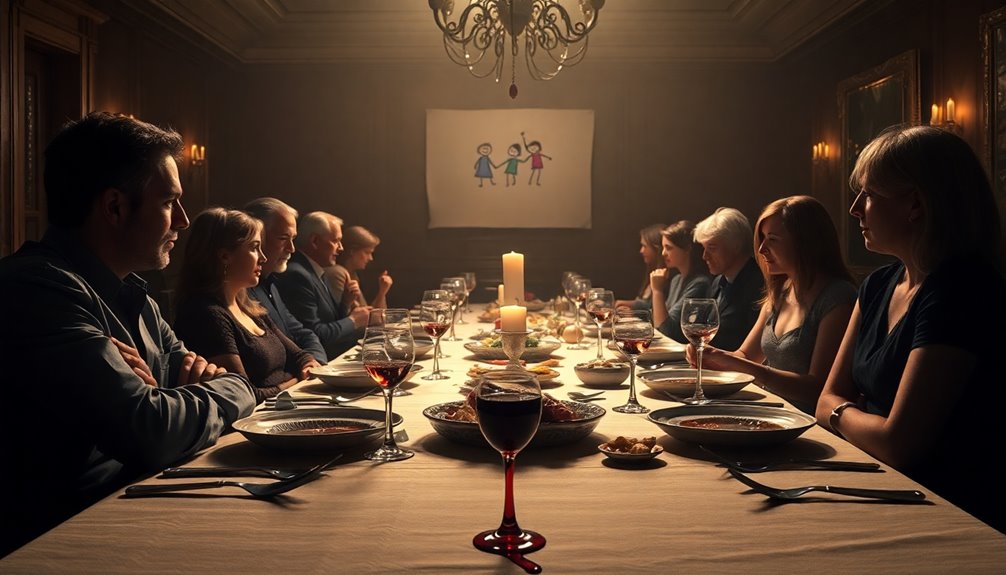
The tension in “The Dinner” escalates sharply as the couples grapple with a harrowing moral dilemma: should they protect their sons, who are implicated in a violent crime, or should they uphold justice by reporting their actions? You find yourself torn between family loyalty and ethical responsibility. Each character reveals how deeply personal values shape their decisions, testing the limits of their commitment to family versus the need for accountability. As the conversation unfolds, you see how the desire to shield loved ones can lead to complicity in wrongdoing. Ultimately, the narrative forces you to confront the justice balance—how far will you go to protect your family, and at what cost to your moral integrity? The discussion echoes the themes of systemic discrimination found in “A Lesson Before Dying,” where the characters must navigate complex moral landscapes in the face of injustice.
Character Analysis: How Each Family Member Responds
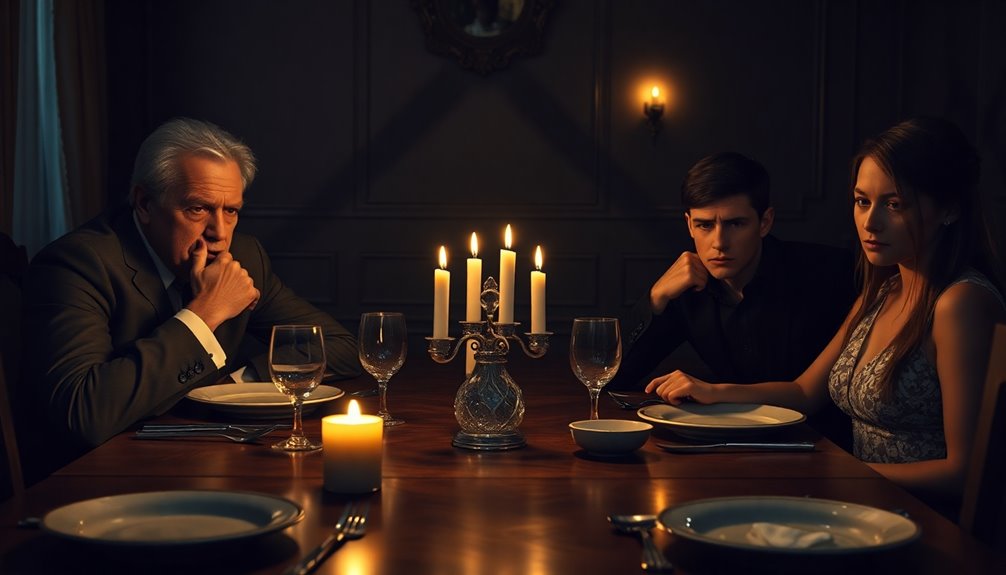
While grappling with the dire consequences of their son’s actions, each family member in “The Dinner” reveals distinct responses that highlight their values and priorities.
- Paul’s internal conflict drives him to protect his son, yet he wrestles with the ethical implications of their choices, questioning what it means to be a good father.
- Claire’s manipulative tendencies shine through as she prioritizes family loyalty and social status, willing to twist the truth to shield their reputation.
- Serge, embodying political rationalizations, struggles between his public persona and personal ethics, often justifying morally dubious decisions for his career.
In contrast, Babette’s passive approach seeks peace, while Michel’s violent actions force the family to confront their beliefs and the weight of their choices. This exploration of moral dilemmas resonates with the complexities of life during periods of social upheaval, much like the themes presented in “The Help.”
Consequences of Choices: What Happens When Lines Are Crossed?
When faced with the aftermath of their children’s violent actions, characters in “The Dinner” quickly realize that crossing moral lines leads to profound consequences.
They grapple with moral ambiguity, torn between family loyalty and ethical responsibility. As they debate whether to shield their children from accountability, the tension escalates, exposing the complexities of parental morality.
The dinner table becomes a battleground for societal norms, revealing how the desire to maintain family reputation can cloud judgment. Each choice made reverberates through their relationships, leading to irrevocable changes that challenge their bonds.
Ultimately, the story forces you to confront the repercussions of complicity in wrongdoing, illustrating that some lines, once crossed, can’t be uncrossed. The characters’ struggles reflect the transformative power of empathy as they confront their choices and the impact on their family dynamics.
Reflecting on Personal Ethics: What Would You Do?
How would you react if faced with a moral dilemma that pits your family’s well-being against your ethical beliefs? In such moments, you might grapple with your personal integrity while questioning your ethical boundaries.
Consider these factors:
- Protecting family loyalty: Would you prioritize your loved ones’ reputation over what’s right?
- Facing societal judgment: How would you handle the scrutiny of your actions if they contradicted your values?
- Evaluating consequences: Could inaction lead to as much harm as an unethical choice?
Ultimately, The Dinner challenges you to reflect deeply on what you deem justifiable. The narrative structure, akin to a multi-course meal, invites readers to engage with the evolving tensions and moral complexities throughout the story.
Balancing family loyalty against moral integrity isn’t easy, but it’s essential to confront these dilemmas and understand where you stand.
Conclusion
In the end, you’re left wrestling with weighty questions about right and wrong. The dinner table becomes a battleground of beliefs, where familial fidelity clashes with the call for justice. As you reflect on your own moral compass, consider: how far would you go to protect your loved ones? Choices made in the heat of the moment can lead to consequences that echo eternally. Ultimately, your ethics shape your identity—so choose wisely, for the stakes are high.