Mario Puzo wrote *The Godfather*, a landmark crime saga published in 1969. It tells the story of the Corleone family, highlighting themes of power, loyalty, and moral complexity. Puzo’s portrayal of organized crime humanizes its characters and intertwines their lives with family dynamics. The novel’s impact is immense, influencing popular culture and inspiring films like *The Sopranos* and *Goodfellas*. Explore more about how Puzo’s work reshaped perceptions of crime and family in literature and film.
Overview of Mario Puzo and The Godfather
When you think of iconic American literature, Mario Puzo’s *The Godfather* often comes to mind. Published on March 10, 1969, this critically acclaimed novel dives deep into the world of the fictional Corleone family, led by the formidable Don Vito Corleone.
Puzo explores themes of power, loyalty, and the intricate dynamics of family within organized crime. His portrayal of the Mafia reshaped American popular culture, influencing perceptions of crime and paving the way for a new genre of Mafia narratives.
Puzo masterfully delves into power, loyalty, and family dynamics, reshaping perceptions of the Mafia in American culture.
With over twenty-one million copies sold and a record-breaking run on the New York Times bestseller list, *The Godfather* became a phenomenon.
Francis Ford Coppola’s film adaptation further solidified Puzo’s legacy, winning three Academy Awards and enchanting audiences worldwide. Additionally, *The Godfather* reflects the importance of untold stories in understanding the complexities of crime and family ties in American society.
Key Themes and Characters
*The Godfather* presents a rich tapestry of themes and characters that explore the complexities of power and loyalty within the Mafia.
At its core, Vito Corleone symbolizes traditional values, while his son, Michael Corleone, embodies the moral ambiguities of rising to power in the crime family.
Mario Puzo intricately weaves the immigrant experience through these characters, showcasing their navigation of organized crime while holding onto cultural values.
Sonny Corleone’s impulsive nature contrasts with Tom Hagen’s rational loyalty, highlighting internal conflicts.
This American classic challenges conventional perceptions of the Mafia, making its characters relatable and complex.
Through these themes and characters, Puzo investigates deep into the intricate balance between power and loyalty in a violent world. Additionally, the narrative reflects the unsung contributions of those who navigate systemic challenges, paralleling the struggles of marginalized communities in society.
The Impact of The Godfather on Popular Culture
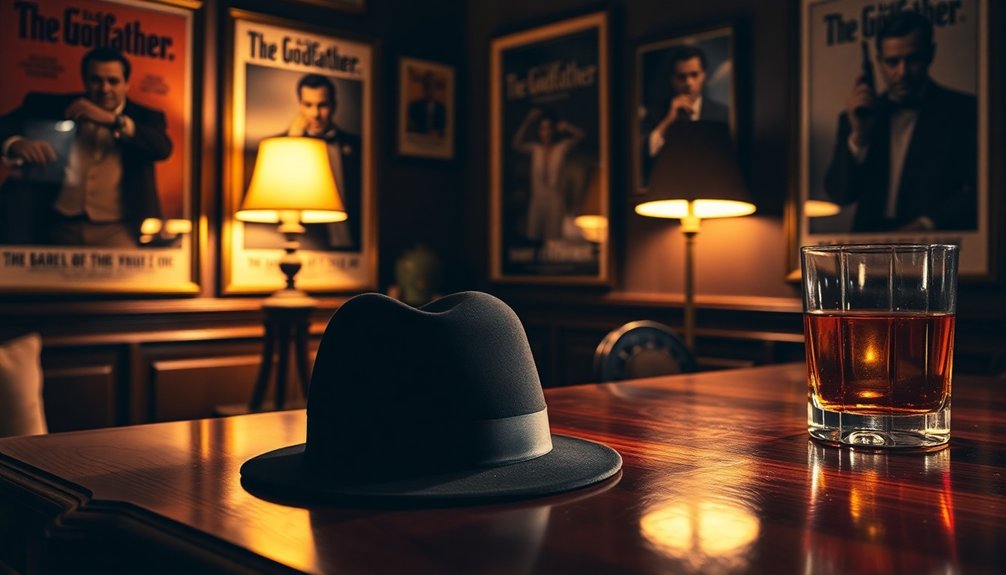
- It romanticized organized crime, blurring the lines between villainy and honor.
- The film became a cultural touchstone, winning three Academy Awards and grossing over $250 million.
- It set a new standard for gangster films, inspiring works like *The Sopranos* and *Goodfellas*.
- Its cultural impact sparked a public fascination with real-life gangsters, altering attitudes toward law and authority in crime.
- The narrative’s emphasis on class struggles and moral ambiguity continues to resonate with audiences today.
*The Godfather* remains a pivotal piece of American cinema.
The Evolution of Organized Crime Narratives
The portrayal of organized crime underwent a dramatic transformation with the release of *The Godfather*, which focused on the complexities of Mafia life rather than simply depicting mobsters as villains.
Mario Puzo’s narrative introduced themes of loyalty and family dynamics, showcasing how these elements intertwine with organized crime. The novel’s success, selling over twenty-one million copies, solidified its cultural impact, influencing perceptions of the Mafia.
Francis Ford Coppola’s film adaptation further entrenched these narratives in mainstream media, setting the stage for future crime fiction like *Goodfellas* and *The Sopranos*.
Puzo’s work humanized mobsters, shifting the focus from criminal acts to intricate family sagas and moral ambiguities, forever changing how audiences engage with organized crime stories. This evolution mirrors the collective action seen in historical resistance movements, emphasizing the importance of unity and shared values in storytelling.
Puzo’s Legacy and Influence in Literature and Film

- Cultural Influence: Puzo’s portrayal of the Mafia shaped public perception and inspired countless stories.
- Film Adaptation: Francis Ford Coppola’s adaptation won three Academy Awards, elevating *The Godfather* to cinematic greatness.
- Character Depth: Puzo’s complex characters added emotional weight to crime narratives.
- Template for Storytelling: His fusion of family and crime set a standard for future works like *Goodfellas* and *The Sopranos*, ensuring his influence endures.
- Exploration of Power Dynamics: Puzo’s narrative reflects the complexities of power dynamics similar to those explored in works like *Native Son*, emphasizing how systemic influences shape individual destinies.
Conclusion
In the grand tapestry of crime literature, Mario Puzo’s “The Godfather” weaves a tale that lingers like a haunting melody. Its characters dance through shadows, embodying the struggle between loyalty and betrayal. As you explore Puzo’s world, you realize he didn’t just write a story; he penned an enduring legacy that reshaped how we perceive organized crime. With each turn of the page, you’re reminded that power, love, and darkness are forever intertwined in the human experience.