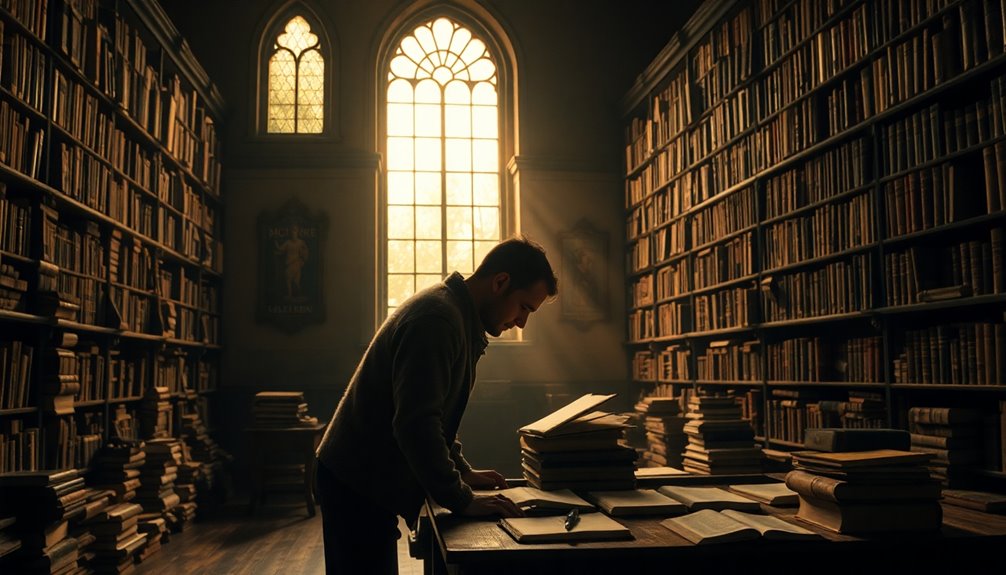
The Secret History is the ultimate dark academia read because it immerses you in a moody, gothic setting rich with intellectual obsession and moral decay. You’ll encounter complex characters who blur the lines between hero and villain, showcasing the seductive allure of elitism and the dangers of ambition. Tartt’s engaging prose captures the interplay of light and shadow, inviting you to reflect on the darker sides of academic life. Discover the layers that make this novel truly compelling.
The Allure of Dark Academia in The Secret History

What draws you into the world of dark academia as portrayed in *The Secret History*? The moody, gothic setting of a secluded liberal arts college captivates you, embodying the dark academia aesthetic perfectly.
As you explore the intertwining themes of obsession and betrayal, you can’t help but feel the magnetic pull of a romanticized academic life, even as it critiques its superficiality.
The characters, especially Richard Papen and his morally flawed peers, embody the allure of knowledge and beauty, but they’re also deeply flawed.
The book’s unreliable narrator invites you to question truth and self-preservation, intensifying the moral ambiguity that permeates their lives.
This rich narrative serves as a cautionary tale, celebrating and challenging the seductive nature of dark academia. Moreover, the narrative is infused with themes of guilt and obsession, which further deepens the exploration of its characters’ moral dilemmas.
Complex Characters: Heroes or Villains?
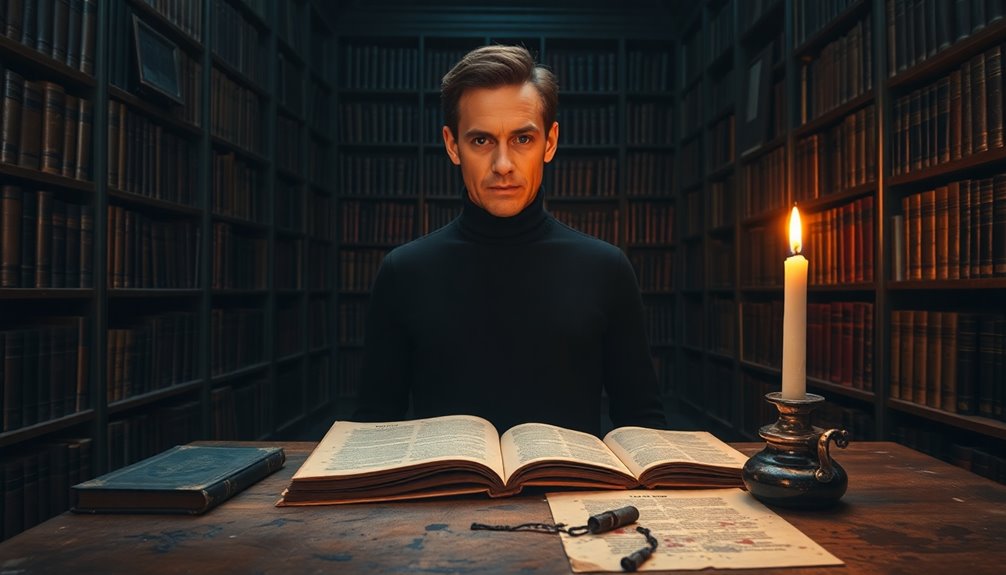
In *The Secret History*, you’re faced with characters who blur the lines between hero and villain, leaving you questioning their true nature.
Richard Papen’s role as an unreliable narrator complicates your perception, making it hard to label anyone definitively.
As you explore their moral ambiguity, you can’t help but wonder if they’re simply flawed individuals or something much darker. This complexity mirrors the themes of internalized homophobia found in Baldwin’s *Giovanni’s Room*, where characters grapple with their identities in a society that imposes rigid norms.
Moral Ambiguity of Characters
Although the characters in *The Secret History* are often seen as elite intellectuals, their moral ambiguity complicates the line between heroism and villainy.
You’ll find that Richard Papen, as the story’s lens, presents a morally neutral viewpoint that blurs those distinctions. His infatuation with the group leads him to rationalize their self-serving behaviors, making you question your own judgment of them.
Henry Winter’s brilliance juxtaposed with his cold detachment raises concerns about the ethical limits of knowledge.
Meanwhile, Bunny’s betrayal and subsequent murder illuminate the darker aspects of loyalty and friendship.
Ultimately, these characters’ descent into depravity serves as a cautionary tale, challenging traditional notions of heroism in favor of a more complex understanding of morality.
Unreliable Narrator’s Perspective
There’s something intriguing about how Richard Papen’s role as an unreliable narrator shapes your understanding of the characters in *The Secret History*. His perspective blurs the lines between heroism and villainy, forcing you to question his motives.
As he portrays the morally ambiguous members of the classics group, particularly Henry and Camilla, you find yourself captivated by their intellectual pursuits yet wary of their darker traits.
This narrative structure, which reveals Bunny’s murder upfront, invites you to explore Richard’s psyche, complicating your perception of good and evil. His insecurities color his interpretation of his peers’ actions, challenging you to reconsider the true nature of villainy within the context of their ambitious pursuits.
Aesthetic Beauty: The Visual Language of Academia

As you explore *The Secret History*, you’ll immediately notice how the moody, gothic settings draw you into an atmosphere rich with intellectual allure.
Tartt masterfully crafts an aesthetic beauty that romanticizes the world of academia. The interplay of light and shadow accentuates the tension between enlightenment and darkness, inviting you to embrace the complexities of knowledge.
You’ll be captivated by:
- Candlelit libraries that whisper secrets of the past
- Vintage clothing that reflects sophistication and exclusivity
- Classical texts that deepen your understanding of beauty and intellect
- Secluded campus spaces that inspire introspection and mystery
Each element contributes to an enchanting visual language that embodies the essence of intellectual pursuit, making you yearn for your own academic adventures. The themes of morality and guilt, explored in *The Secret History*, resonate with the darker aspects of human nature intertwined with the pursuit of knowledge.
Moral Ambiguity: The Dangers of Intellectual Elitism
In *The Secret History*, you see how the characters’ belief in their intellectual superiority leads to devastating consequences. Their elitist mindset blinds them to the moral implications of their actions, ultimately resulting in tragedy. This raises important questions about the dangers of prioritizing intellect over ethics in academia. Additionally, similar to the character of Bigger Thomas in *Native Son*, their entrapment in a cycle of systemic oppression reveals how a distorted sense of superiority can lead to destructive outcomes.
Intellectual Superiority Complex
While pursuing knowledge can be a noble endeavor, it often breeds an intellectual superiority complex that clouds moral judgment.
In *The Secret History*, you see how elitism warps the characters’ ethics, leading them to justify morally questionable actions. This moral ambiguity results in catastrophic consequences, reflecting the seductive danger of such arrogance.
- You might feel disconnected from reality.
- You risk isolating yourself from genuine relationships.
- Your values can be corrupted by the pursuit of knowledge.
- You may justify harmful behavior in the name of intellect.
Consequences of Elitist Mindset
Intellectual elitism often leads to a dangerous detachment from reality, as characters in *The Secret History* illustrate. Their elitist mindsets create a moral ambiguity, where they justify reckless actions under the guise of intellectual superiority.
You see how characters like Henry Winter become increasingly disconnected from the consequences of their choices, sacrificing friendship and loyalty for aesthetic pursuits. This obsession fosters a chilling environment where knowledge is wielded as a weapon, distorting genuine human connection and empathy.
Tartt critiques this allure of elitism, warning you about its seductive nature that can lead to tragic outcomes. When moral boundaries blur, the characters’ refined facades crumble, revealing the perilous depths of their compromised ethics.
Narrative Style: Engaging Readers Through Intrigue
As you explore *The Secret History*, you’ll notice how Donna Tartt’s narrative style grips you with its deliberate pacing, slowly peeling back layers of character complexity and motivation.
You’re drawn into a web of intrigue, questioning the reliability of Richard Papen as the narrator. The suspense builds as you ponder Bunny’s murder and the group dynamics at play.
- Characters reveal their hidden depths.
- Sophisticated language enriches the experience.
- Moral ambiguity keeps you guessing.
- The blend of drama and gossip captivates your imagination.
Tartt’s storytelling fosters a rich atmosphere, where every word contributes to the dark academia aesthetic you crave, compelling you to reflect on the consequences of elitism and obsession. This intricate narrative style echoes the unreliable narrators found in *The Sense of an Ending*, inviting readers to question their own perceptions of truth.
Themes of Obsession and Betrayal in Academia
In *The Secret History*, the themes of obsession and betrayal intertwine seamlessly, revealing how academic environments can warp personal relationships.
You witness Richard’s fixation on Camilla, illustrating how desire can blur moral lines within academia. As the story unfolds, betrayal becomes starkly evident when Bunny’s murder exposes the characters’ depths of deception, showcasing how ambition can lead to the abandonment of personal ties.
Richard’s unreliable narration complicates this further, making you question the authenticity of his perspective. The toxic cycle of competition and the pursuit of knowledge ultimately drive the group to prioritize their intellectual ambitions over their bonds. This interplay serves as a cautionary tale about the moral compromises that often accompany obsession and betrayal in academia, much like David’s struggle with his sexual identity in *Giovanni’s Room*.
The Impact of The Secret History on Modern Literature
- A surge in narratives featuring unreliable narrators.
- A focus on moral ambiguity and elitism in academic settings.
- Greater depth in character development and psychological exploration.
- Blending of literary elegance with thriller elements.
- Tartt’s exploration of moral ambiguity adds a layer of complexity to character motivations, influencing modern storytelling.
These influences continue to shape contemporary storytelling, making Tartt’s work a cornerstone of dark academia literature.
Why Should Every Dark Academia Enthusiast Read This Novel?
While delving into the world of dark academia, you’ll find that *The Secret History* stands out as an essential read. This novel captures the essence of intellectual elitism within a secluded liberal arts college, immersing you in a narrative that’s both enthralling and thought-provoking.
The characters are flawed yet fascinating figures, exemplifying the dark academia aesthetic while serving as cautionary tales about obsession and ambition. Tartt’s intricate prose engages you, blending entertainment with intellectual depth that resonates deeply.
You’ll appreciate the exploration of friendship, betrayal, and the darker side of academic life, prompting reflection on the genuine pursuit of knowledge. For any dark academia enthusiast, this novel is a must-read that challenges your perspective on the academic experience. Additionally, the themes of systemic oppression echo the complexities of identity and belonging, much like those explored in Coates’ letter to his son.
Conclusion
In the shadowy halls of academia, “The Secret History” beckons you like a hidden tome, rich with secrets and whispers. It pulls you into a world where beauty intertwines with betrayal, and every character dances on the edge of brilliance and madness. As you turn the final page, you’ll find yourself forever changed, haunted by the allure of knowledge and the darkness it can reveal. Don’t miss the chance to lose yourself in this enchanting labyrinth.