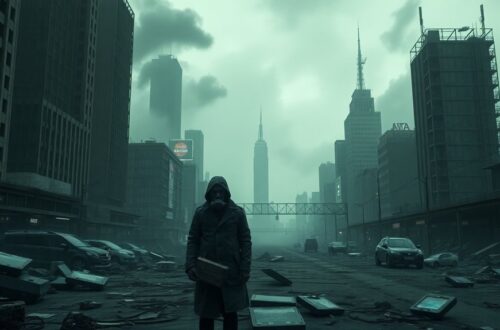

Dystopian novels are more relevant than ever because they echo your deepest societal fears, like surveillance, climate change, and the loss of personal freedoms. These stories challenge you to confront the realities of misinformation and authoritarianism that surround you. They illuminate the struggles of marginalized communities, reflecting urgent issues that demand attention. You may find yourself drawn to these narratives, as they resonate with your emotional journey and invite you to explore the connection between fiction and today’s world.
The Historical Roots of Dystopian Fiction
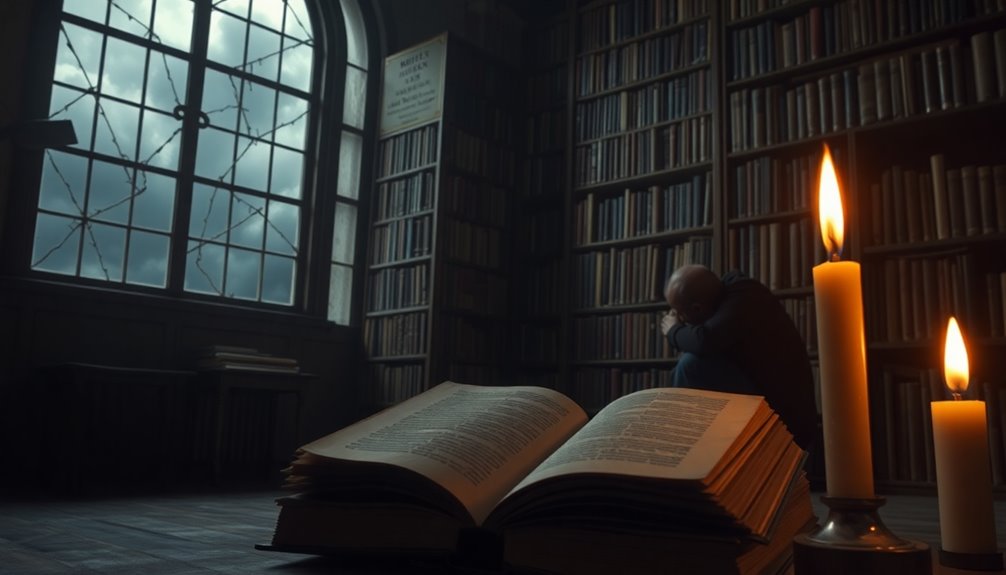
Dystopian fiction, which critiques societal norms, has deep historical roots that trace back to early literary works. You’ll find that classics like Yevgeny Zamyatin’s *We* and Aldous Huxley’s *Brave New World* highlight fears of totalitarianism and dehumanization.
These texts emerged amid the political upheavals of the 20th century, particularly post-World War II, as authors warned against oppressive regimes and the erosion of individual freedoms. George Orwell’s *1984* cemented itself as a pivotal work, reflecting anxieties about surveillance and state control during the Cold War.
As global concerns like environmental degradation and social inequality grow, modern dystopian narratives resonate deeply, presenting possible futures that challenge you to reflect on today’s societal issues and the paths we might take if we ignore them. This is particularly relevant as the erosion of privacy continues to shape our everyday lives, pushing us to consider the implications of constant surveillance.
How Dystopian Novels Reflect Current Societal Fears
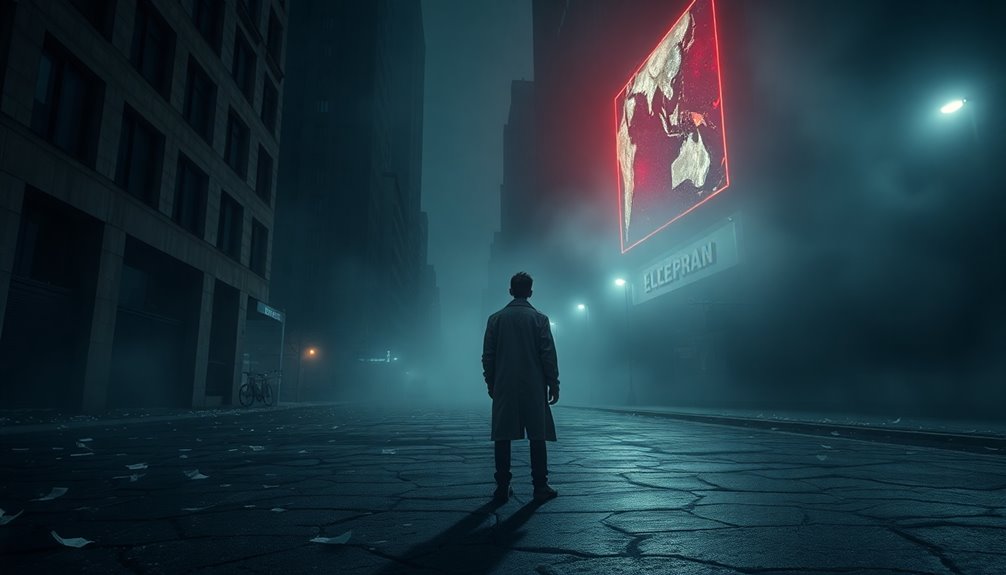
As societal anxieties evolve, contemporary dystopian novels capture the essence of our fears, reflecting issues that resonate deeply with readers today.
You’ll find that these narratives often highlight the looming threat of climate change, portraying environmental catastrophes that mirror real-world concerns. In works like *The Handmaid’s Tale*, you see how societal stability can unravel due to ecological disasters, urging you to reflect on your own role in preserving the planet.
Additionally, themes of economic disparity in stories like *The Hunger Games* resonate with the current wealth gap, prompting you to contemplate the implications of social stratification. Moreover, the ethical implications surrounding artificial intelligence in these narratives raise questions about autonomy and privacy that echo our contemporary debates.
These gripping tales not only entertain but also challenge you to confront pressing global issues, making them profoundly relevant in today’s world.
Surveillance and Privacy: A Modern Dystopian Concern
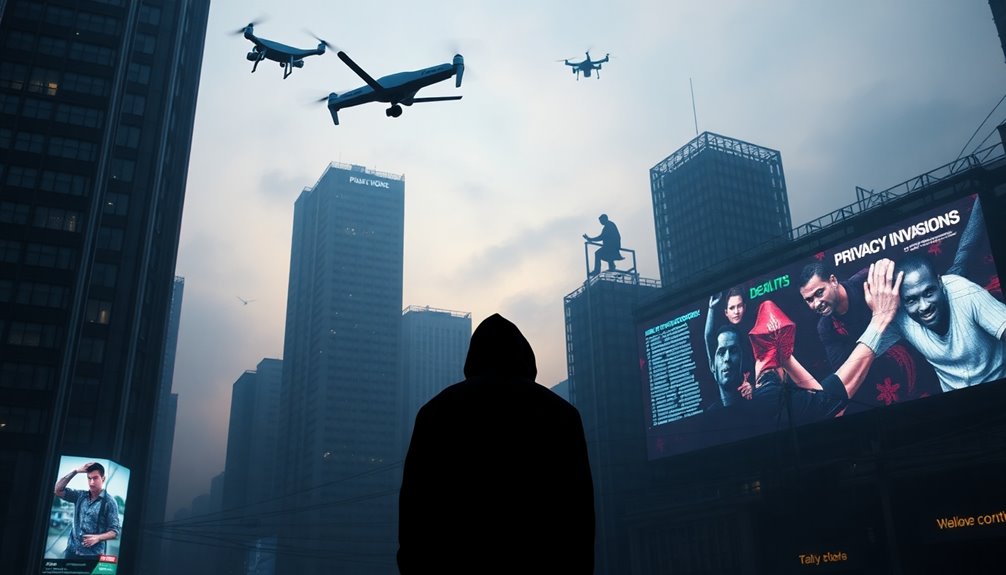
You might notice how personal freedoms are slipping away as surveillance technologies become more prevalent in your daily life.
With 70% of Americans worried about their privacy, it’s clear that the themes in dystopian novels like *1984* aren’t just fiction anymore.
As these digital monitoring tools grow, it’s crucial to reflect on what this means for our autonomy.
The increasing concern over systemic racism and its intersection with surveillance practices further emphasizes the need to protect our rights in an increasingly monitored society.
Erosion of Personal Freedoms
While many people embrace technology for the convenience it offers, the rise of digital surveillance has quietly eroded personal freedoms, leaving individuals feeling vulnerable and exposed.
This erosion manifests in several alarming ways:
- Increased Government Surveillance: Over 60% of Americans worry about how their personal data is collected and monitored, reminiscent of the oppressive regimes in dystopian literature.
- Loss of Autonomy: Studies reveal that 70% of individuals feel they’ve little control over their online privacy, echoing characters in Orwell’s *1984*.
- Normalization of Surveillance: With millions of cameras globally, our everyday lives increasingly resemble surveillance states, prompting essential discussions about the balance between security and privacy.
It’s important to recognize these trends and their implications for our freedoms.
Digital Surveillance Technologies Rise
Digital surveillance technologies are rapidly transforming how we interact with the world, raising urgent concerns about privacy and civil liberties. With tools like facial recognition and location tracking, you might feel constantly monitored, echoing themes found in dystopian novels like Orwell’s *1984*.
A 2021 study revealed that 79% of Americans worry about how their personal data is collected and used, highlighting a growing anxiety about digital surveillance. Governments, particularly in nations like China, increasingly rely on these technologies for social control.
As smartphones and social media generate an overwhelming 2.5 quintillion bytes of data daily, it’s essential to question the balance between security and individual freedoms. Understanding these issues can help you navigate our increasingly surveilled reality.
The Role of Misinformation in Dystopian Narratives
As readers explore dystopian narratives, they often encounter the chilling effects of misinformation, which serves as a powerful tool for authoritarian regimes. These stories reveal the manipulation of truth, reflecting real-world concerns about media control.
Consider how misinformation impacts society:
- Language Manipulation: In *1984*, “Newspeak” illustrates how language can distort thought, limiting dissent and promoting government narratives.
- Curated Ignorance: Dystopian societies often keep citizens ignorant through controlled information, paralleling today’s fake news debates.
- Erosion of Trust: The rise of authoritarianism, as seen in *The Handmaid’s Tale*, highlights the dangers of unchecked misinformation, undermining faith in traditional information sources. The power of storytelling in narratives like *The Book Thief* showcases how literature can serve as an act of resistance against such manipulation.
As you engage with these themes, reflect on your own consumption of news and the implications of disinformation in your life.
Climate Change as a Catalyst for Dystopian Futures
Climate change increasingly serves as a catalyst for dystopian futures, forcing readers to confront the stark realities of environmental degradation.
In numerous dystopian stories, like *The Hunger Games*, you see a world divided between resource-rich elites and impoverished masses, mirroring our growing socioeconomic divides. Rising global temperatures and extreme weather events, such as hurricanes and wildfires, reflect genuine anxieties about our future.
The Intergovernmental Panel on Climate Change warns that without urgent action, climate change could trigger mass migrations and conflicts over dwindling resources, themes vividly explored in *The Water Knife*. These eco-dystopias challenge you to imagine a future where environmental disasters deepen inequality, urging you to recognize the urgent need for action before it’s too late. Furthermore, the exploration of literary censorship in these narratives highlights the significance of freedom of expression in addressing these pressing issues.
Government Control and Authoritarianism in Today’s World
While many people hope for a future marked by freedom and democracy, the reality is that government control and authoritarianism are on the rise across the globe.
Despite aspirations for freedom and democracy, global trends reveal a troubling surge in government control and authoritarianism.
You mightn’t realize how this mirrors the oppressive themes in dystopian novels. Consider these alarming trends:
- Over 50 countries have enacted laws that undermine digital privacy, reflecting deep government control.
- The Freedom House report indicates a decline in global freedom for 15 consecutive years, showcasing increasing authoritarianism.
- Over 60% of the world’s population now lives under some form of authoritarian rule, making dystopian narratives eerily relevant.
These developments remind us that the fight for personal freedoms is ongoing, and the lessons from dystopian literature are more vital than ever. As Ta-Nehisi Coates emphasizes, the pursuit of the American Dream often marginalizes communities, underscoring the urgency to confront systemic oppression.
The Intersection of Technology and Dystopia
In today’s world, you can’t ignore how technology shapes our lives, often in ways reminiscent of dystopian novels.
Surveillance tools like facial recognition raise serious privacy concerns, echoing the chilling control depicted in *1984*.
As you explore these themes, consider how our reliance on technology not only connects us but also opens the door to manipulation and oppression. This mirrors the complex relationships and psychological themes found in Gone Girl, amplifying the sense of distrust in our digital interactions.
Surveillance and Privacy Concerns
As technology continues to advance, the specter of surveillance looms larger, echoing the chilling warnings found in dystopian novels.
You can see parallels between fiction and reality in the following ways:
- Mass Surveillance: Just like in Orwell’s *1984*, governments today can manipulate information, keeping a watchful eye on citizens.
- Invasive Data Practices: With the rise of digital technology, privacy concerns have spiked, as 79% of Americans worry about their online privacy.
- Cautionary Tales: In *The Hunger Games*, the Capitol’s tracking technology serves as a stark reminder of how surveillance can escalate societal control.
These themes reflect urgent discussions on privacy legislation and the need to address surveillance issues that threaten our freedoms in the digital age.
Technology’s Role in Control
Technology plays a pivotal role in shaping control in dystopian narratives, revealing how advancements can undermine personal freedoms.
In these stories, advanced surveillance technologies reflect real-world concerns about privacy erosion, showcasing how governments and corporations can manipulate data to exert control.
Artificial intelligence and algorithms further illustrate this by steering societal behavior, raising fears about your autonomy and free will.
Social media amplifies misinformation, shaping public perception and mirroring ongoing debates about media manipulation.
Meanwhile, climate-driven futures highlight technologies that worsen environmental crises, stressing the need for sustainable practices.
Ultimately, virtual and augmented reality serve as cautionary tales, warning you about the dangers of escapism and digital addiction, distracting from harsh realities.
Exploring Themes of Resistance and Resilience
Dystopian novels vividly illustrate how individuals can resist oppressive systems, often portraying characters who embody the relentless human spirit. These narratives empower you to reflect on essential themes of resistance and resilience.
Here are three key elements:
- Questioning Authority: Characters challenge unjust systems, prompting you to contemplate your own role in advocating for change.
- Adaptability: Survival under pressure demonstrates the necessity of being flexible and resourceful in the face of adversity.
- Collective Action: The stories inspire you to unite with others, emphasizing that together, you can confront and overcome systemic injustices.
Through these powerful themes, dystopian literature evokes empathy and urgency, reminding you that human resilience can lead to hope and triumph, even in the darkest times. Moreover, the exploration of systemic oppression in these narratives highlights the importance of recognizing and addressing real-world injustices.
The Human Experience: What Dystopian Fiction Teaches Us
When you plunge into dystopian fiction, you’re not just escaping into another world; you’re exploring the depths of what it means to be human. These stories challenge your understanding of human nature, emphasizing empathy and choice over dominance.
As characters grapple with moral dilemmas, you’re prompted to reflect on your own values and ethical decisions. The trauma and adversity depicted illustrate the resilience of the human spirit, showing how individuals can endure and adapt in the face of oppression. This exploration of systemic oppression resonates with themes in works like Richard Wright’s *Native Son*, highlighting the profound impacts of societal injustices on identity and morality.
Why Are Young Adults Drawn to Dystopian Stories?
You might find yourself captivated by dystopian stories because they reflect your own struggles with authority and identity. These narratives often tackle pressing societal issues that resonate with your experiences and concerns about the world. Additionally, they echo the ongoing fights for recognition and justice among marginalized communities, enriching the cultural tapestry of our understanding.
Relatable Character Struggles
As young adults navigate their own identities and societal pressures, they find a compelling reflection of their struggles in dystopian stories. These narratives often feature relatable characters facing external pressures that echo your experiences.
Here are three key reasons why these characters resonate so deeply:
- Isolation and Confusion: Characters grapple with feelings of loneliness, mirroring your own emotional journeys.
- Rebellion Against Authority: Their defiance against oppressive forces reflects your desire for autonomy and self-discovery.
- Moral Dilemmas: The tough choices they face prompt you to reflect on your values and the impact of your decisions on the world.
Through these relatable struggles, dystopian novels provide a space for young adults to explore their identities and envision a better future.
Reflection of Current Issues
Dystopian stories resonate with young adults because they mirror real-world struggles, particularly issues of authority, identity, and societal expectations.
These narratives reflect the anxieties you face, magnifying current issues like government oppression, economic disparity, and climate change. For instance, *The Hunger Games* starkly illustrates the divide between rich and poor, echoing your concerns about inequality.
The emotional depth in these tales encourages you to confront uncomfortable feelings about your future and societal roles. By engaging with dystopian fiction, you can explore critical issues in a fictional setting, prompting you to think about necessary changes for a better world.
This reflection not only validates your experiences but also inspires hope for a more equitable and just society.
The Emotional Impact of Dystopian Literature
While readers often seek escapism in literature, the emotional impact of dystopian novels can be profoundly unsettling yet transformative.
These narratives resonate deeply with your experiences, allowing you to confront complex themes of suffering and resilience. Engaging with bleak scenarios can lead to significant self-reflection, prompting you to contemplate your own responses to extraordinary circumstances.
Here are three key emotional impacts of dystopian literature:
- Catharsis: You experience a release of pent-up emotions through the characters’ struggles.
- Resilience: Dark humor often highlights the strength of the human spirit, reminding you of your own resilience.
- Reflection: These stories serve as mirrors, reflecting societal anxieties and your personal feelings in challenging times.
What Does the Future Hold for Dystopian Fiction?
Given the rapid changes in our world, the future of dystopian fiction seems poised to evolve alongside society’s most pressing concerns. As fears about authoritarian regimes, surveillance, and environmental collapse grow, writers will likely explore deeper into these topics, creating vivid dystopian worlds that resonate with readers.
You’ll see a shift towards alternative-world speculative fiction, moving beyond traditional narratives to keep the genre fresh. Expect themes of climate change and economic disparity to dominate, pushing you to reflect on ethical dilemmas we face today.
Community engagement among writers and readers will be essential for innovation, ensuring that dystopian fiction continues to challenge and provoke thought, making it an important lens through which to examine our future societal structures.
Conclusion
In a world where reality sometimes feels like a dystopian novel, these stories resonate more than ever. They hold up a mirror to our fears and challenges, urging us to confront them head-on. As you explore these narratives, you might find that they not only entertain but also inspire change. So, don’t just read between the lines—let these cautionary tales guide you in steering through today’s complexities. After all, the pen is mightier than the sword.