Victorian photography captures a haunting blend of emotion and mortality. You’ll find that pioneers like Julia Margaret Cameron created intimate portraits that evoke deep connections, often reflecting societal attitudes toward death. Techniques such as soft-focus and double exposure added layers of meaning, blurring the lines between life and the afterlife. The fascination with these portraits stems from their ability to create emotional ties and provoke thought. Discover how this era’s innovations continue to influence modern art.
The Evolution of Victorian Photography
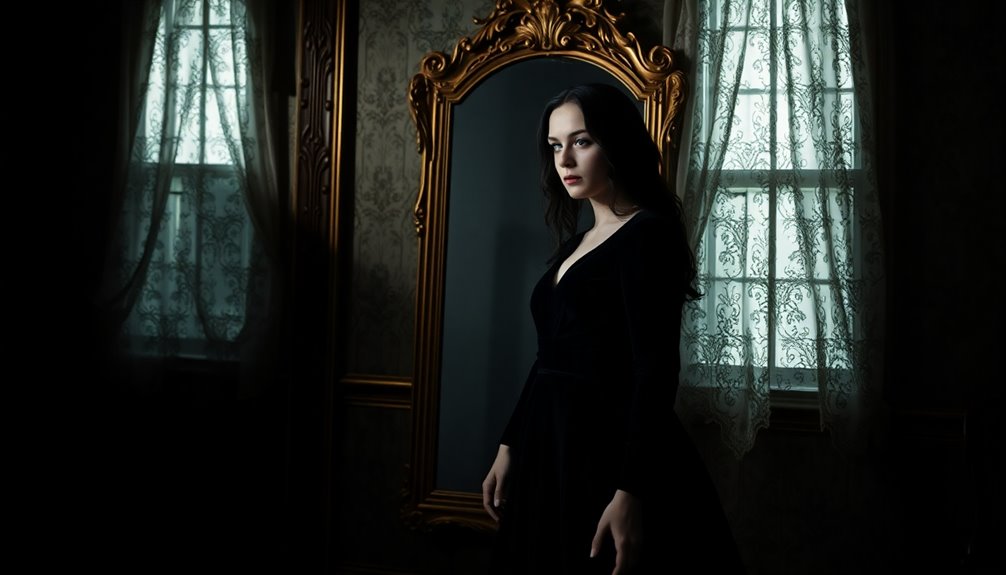
As Victorian photography emerged, it rapidly transformed with innovations like spirit photography, which captivated the public’s imagination. This intriguing phenomenon arose in the 19th century, reflecting society’s fascination with death and the afterlife.
You’d see techniques like double exposure and image manipulation creating ghostly figures alongside living sitters, offering comfort to the grieving. Pioneers like Julia Margaret Cameron shifted the focus from stiff poses to intimate, emotional portrayals, emphasizing the human experience.
The cultural impact of Victorian photography was profound, as these spirit photographs not only entertained but also sparked debates about authenticity and reality. This legacy continues to influence modern art, with themes of emotional expression and spirituality resonating in today’s visual culture. Moreover, the unity in diversity displayed in resistance movements serves as a parallel to the collective emotional experiences captured in Victorian photography.
Key Techniques in Portrait Photography
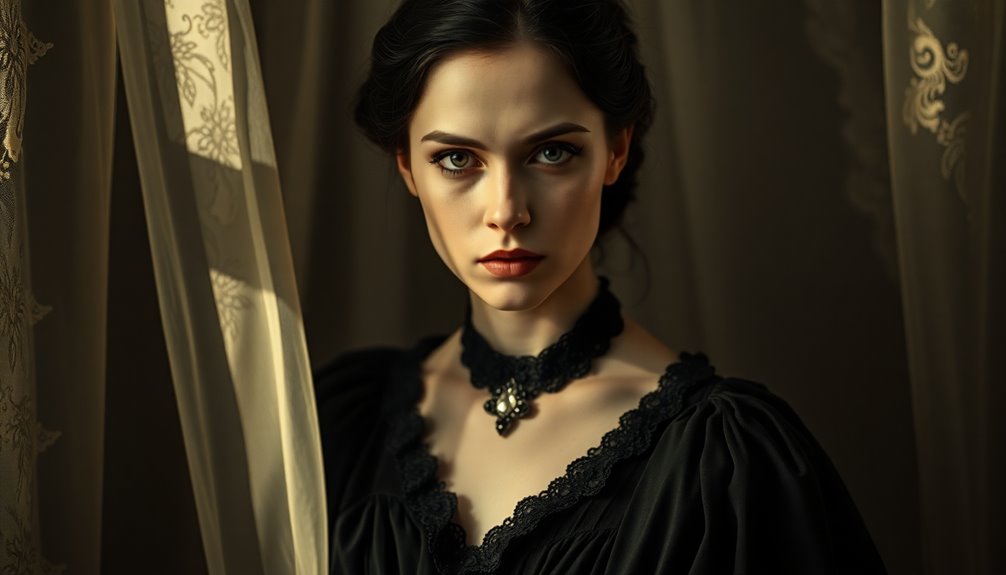
In Victorian portrait photography, you’ll notice the use of soft-focus techniques that create a dreamy quality, highlighting the emotional essence of the subjects.
Close-up portraits became popular as photographers aimed to capture intimate expressions, moving away from distant poses.
Additionally, the fascination with spirit photography led to innovative approaches, blending the supernatural with personal likenesses. This era’s influence on mystery literature can be seen in the way it evokes suspense and intrigue, much like the intricate plots of classic novels.
Soft-Focus Techniques Employed
Soft-focus techniques have transformed portrait photography, adding a unique depth and emotion to images. Julia Margaret Cameron popularized these techniques by using a slightly out-of-focus lens, creating a dreamy quality that emphasizes the emotions of her subjects.
This approach shifted your focus from rigid poses to capturing intimate expressions, fostering a personal connection with the viewer. Cameron’s innovative soft-focus techniques allowed for nuanced representations, often highlighting distinct features while creating a haunting effect.
Close-Up Portrait Innovations
While many photographers in the 19th century focused on distant and formal compositions, Julia Margaret Cameron’s innovative close-up portraits revolutionized the genre. By emphasizing emotional expressions, she created intimate connections between the viewer and her subjects.
Cameron’s techniques shifted the perception of portrait photography, showcasing the following key elements:
- Soft-focus effects that softened harsh lines, enhancing the subject’s emotional depth.
- Illuminated faces, like her iconic portrait of Julia Jackson, which drew attention to the nuances of expression.
- Personalized framing, allowing viewers to engage more deeply with the subject’s gaze.
Cameron’s close-up portraits not only defined her legacy but also set the stage for future innovations in portrait photography that resonate with contemporary artists today.
Spirit Photography Influence
Spirit photography emerged as a fascinating intersection of art and belief during the Victorian era, blending the domains of the living and the ethereal. This innovative genre utilized techniques like double exposure and image manipulation to create spirit photographs, capturing ghostly figures alongside their living counterparts.
Pioneers like Frederick Hudson introduced these techniques in London, offering comfort to the grieving through translucent spirits in portraits. Meanwhile, William Mumler gained notoriety for his controversial images, including the famous photograph of Abraham Lincoln’s ghost.
The spiritualist movement fueled this trend, as photographers aimed to encapsulate the essence of loved ones who’d passed. Ultimately, innovations from spirit photography, such as soft-focus techniques, laid the groundwork for modern portrait practices, forever changing emotional representation in images.
Julia Margaret Cameron: A Trailblazer in Portraiture
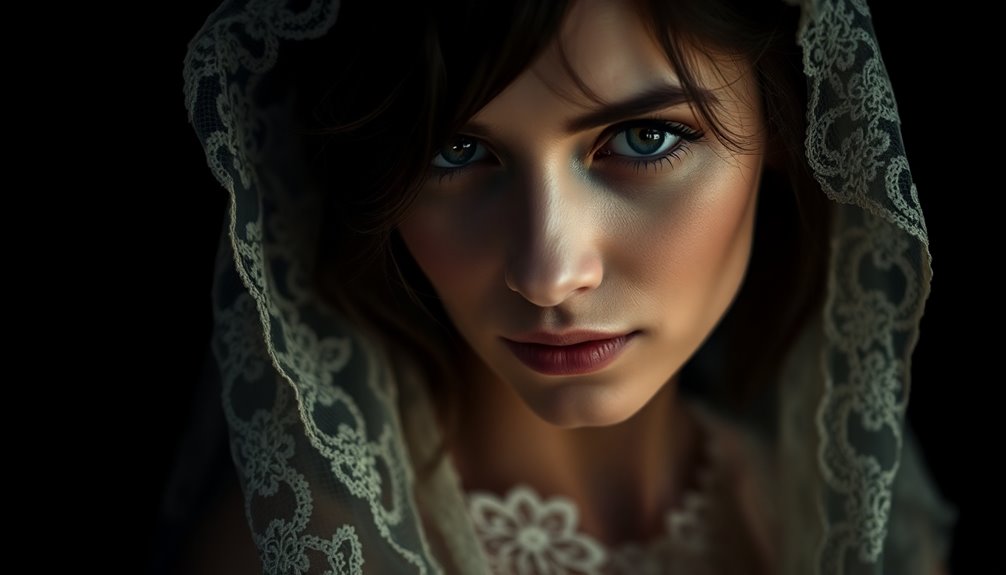
As you explore Julia Margaret Cameron‘s journey, consider how her early life shaped her unique perspective in photography. You’ll see how her pioneering techniques transformed portraiture and created a lasting artistic legacy that continues to influence photographers today. Cameron’s work not only captured the essence of her subjects but also challenged the norms of her time. Her commitment to the transformative power of understanding in her portraits reflects a deeper connection with her subjects, much like the themes of forgiveness and reconciliation found in classic literature.
Early Life Influences
Born in India in 1815, Julia Margaret Cameron‘s early life was shaped by the vibrant culture of Calcutta and her educational experiences in France.
These influences ignited her creativity and set the stage for her groundbreaking work in photography later in life. You can see how her background contributed to her unique vision:
- Exposure to diverse cultures fostered her appreciation for human emotion.
- Her education in France helped her develop an artistic sensibility.
- Living in India instilled a fascination with storytelling through visual art.
Though she received her first camera at 48, Julia Margaret Cameron’s early life laid the groundwork for her to become a trailblazer, forever changing the landscape of portrait photography.
Pioneering Photography Techniques
Julia Margaret Cameron revolutionized photography with her pioneering techniques that emphasized intimacy and emotion in portraiture. After receiving her first camera at 48, she quickly dedicated herself to mastering the art, producing hundreds of portraits over 15 years.
Cameron became the first to popularize soft-focus close-up portraits, moving away from distant, stiff poses. This innovative approach allowed her to capture the true essence of her subjects’ emotions, forging a deeper connection with viewers.
Her iconic portrait of her niece, Julia Jackson, taken in 1867, still resonates today with its haunting effect and direct gaze. Cameron’s groundbreaking contributions to photography established her as a trailblazer, influencing countless photographers who followed in her footsteps.
Lasting Artistic Legacy
Though she began her photography journey later in life, Julia Margaret Cameron’s impact on portraiture remains profound and enduring.
In the Victorian era, she revolutionized how we see and capture emotion in photography, paving the way for future artists.
- She popularized soft-focus close-ups, shifting from stiff poses to intimate portrayals.
- Her haunting portrait of Julia Jackson showcased her ability to evoke deep emotions.
- Cameron’s innovative techniques established her as a pioneer in close-up portrait photography.
Today, her contributions continue to inspire generations, and her work is celebrated for breaking barriers, particularly during Women’s History Month.
Cameron’s legacy is a tribute to the enduring power of art and the emotional depth it can convey.
The Role of Emotion in Victorian Portraits
As Victorian society placed a high value on emotional expression, portrait photography became a powerful medium for capturing the intricate feelings of its subjects.
Photographers like Julia Margaret Cameron mastered soft-focus techniques, creating intimate portraits that conveyed deep emotion. When you look at Cameron’s portrayal of Julia Jackson, notice how her direct gaze engages you, eliciting an emotional response.
Julia Margaret Cameron’s soft-focus portraits, like that of Julia Jackson, invite profound emotional engagement through their intimate gaze.
Many portraits emerged during periods of mourning, memorializing lost loved ones and expressing profound grief through captured emotion.
Additionally, the rise of spirit photography reflected the era’s fascination with emotional connections between the living and the deceased, often depicting ethereal figures alongside their living counterparts.
This profound focus on emotion not only defined Victorian portraits but also connected viewers to the humanity behind the images. Furthermore, the compositions often included symbolic elements that enhanced the emotional narrative, similar to how sci-fi literature employs intricate themes to engage readers.
Capturing the Spirit: The Intersection of Photography and Spiritualism
While the rise of photography in the 19th century transformed how we capture moments, it also intersected intriguingly with the Spiritualist movement, which sought to bridge the gap between the living and the deceased.
This fascinating blend led to a unique genre of spirit photography, where photographers like Frederick Hudson and William H. Mumler aimed to capture ethereal presences alongside their subjects.
- Many believed these images provided comfort by connecting them with lost loved ones.
- Controversial figures like Mumler sparked debates about authenticity, blurring lines between faith and skepticism.
- Iconic photographs, such as Mary Todd Lincoln with her husband’s spirit, reinforced the allure of capturing the unseen.
In this era, capturing the spirit became a compelling pursuit, intertwining hope and mystery. Additionally, the themes of systemic racism explored in Richard Wright’s *Native Son* reflect how societal issues can shape artistic expressions of grief and connection.
Notable Figures in Victorian Spirit Photography
Notable figures in Victorian spirit photography played essential roles in shaping the genre, blending art, science, and belief.
William Mumler stands out as a prominent spirit photographer infamous for his fraudulent practices. He created images that showcased spirits, including an enthralling photo of Mary Lincoln with her husband Abraham Lincoln’s ghost.
William Mumler, notorious for his deceit, captured captivating spirit photographs, including the haunting image of Mary Lincoln with Abraham Lincoln’s ghost.
Alfred Russel Wallace, a respected scientist, defended Mumler’s work after experiencing his own spirit photograph featuring his mother.
Meanwhile, Frederick Hudson introduced spirit photography to London in the early 1870s, popularizing ghostly figures in portraits.
The Spiritualist movement, especially during the American Civil War, fueled this fascination, drawing in both true believers and opportunists keen to profit from the era’s complex relationship with death and the afterlife. Notably, this period also saw the emergence of unique bookshops in London that provided spaces for discussions around these themes and the cultural implications of such practices.
The Cultural Significance of Mourning Portraits
In the Victorian era, mourning portraits served as a powerful way to remember loved ones and confront the reality of death. You’ll see how these images not only captured the deceased in their finest attire but also included symbols that resonate with deep emotional connections and grief. These portraits often reflect the systemic racism and societal pressures of the time, paralleling the struggles depicted in literature such as Richard Wright’s *Native Son*.
Historical Context of Mourning
As society grappled with the reality of death during the Victorian era, mourning portraits emerged as a poignant means of memorializing lost loved ones. These portraits weren’t just images; they captured deep emotions and reflected cultural practices surrounding grief.
- Mourning portraits often featured symbols like black attire and flowers, emphasizing the loss.
- Families commissioned these works to preserve the deceased’s memory, blending art with emotional expression.
- Specific mourning customs dictated how individuals dressed and behaved, influencing the portrayal in these portraits.
Through mourning portraits, you see a tangible link between the living and the dead, demonstrating society’s acceptance of death and its rituals. They served as both a comfort to the grieving and a celebration of life.
Emotional Connection and Grief
Mourning portraits played an essential role in shaping how Victorians processed their grief and maintained emotional connections with deceased loved ones. These portraits allowed families to visually memorialize those who’d passed, often depicting the deceased in lifelike poses alongside living relatives.
This poignant imagery created a bridge between the living and the dead, making the act of remembrance deeply personal. Emerging alongside the Spiritualist movement, mourning portraits also facilitated spiritual engagement, allowing individuals to feel connected to their lost loved ones.
The use of soft focus and dramatic lighting further enhanced the emotional depth, reflecting the sorrow and loss inherent in the Victorian experience. Ultimately, these portraits served as significant tools for coping with grief in a rapidly changing society.
Artistic Techniques and Symbolism
While you explore the Victorian era’s artistic landscape, you’ll find that mourning portraits stand out for their unique blend of emotional depth and symbolism.
These artworks not only memorialized the deceased but also comforted the bereaved, reflecting a cultural fascination with death and the afterlife.
Mourning portraits often featured:
- Black attire and veils to symbolize grief and loss.
- Props like flowers or open books representing memory and the passage of time.
- Soft focus and ethereal lighting to evoke tranquility and a connection to the spirit world.
How Did Spirit Photography Shape Public Perception of Death?
Spirit photography, which emerged during the Victorian era, profoundly influenced how people viewed death and the afterlife. This art form provided comfort by allowing you to feel a connection with deceased loved ones, resonating with the era’s Spiritualist beliefs.
Photographers used double exposure techniques to create ethereal images of spirits alongside living subjects, leading many to see these images as proof of an afterlife. Public figures like Mary Todd Lincoln endorsed spirit photography, helping to legitimize its practice.
This fascination with spirit photography reflected a societal struggle with grief, celebrating the memory of the deceased while igniting debates about authenticity. Ultimately, spirit photography shaped the moral and emotional landscape surrounding death, mourning, and the potential for continued connections with the departed. Additionally, the practice of capturing these hidden histories allowed for a more comprehensive view of societal attitudes towards mortality during that era.
The Impact of Technological Advances on Victorian Photography
As technological advances emerged during the Victorian era, they fundamentally transformed photography, making it more accessible and dynamic for both professionals and amateurs.
Key innovations included:
- The collodion process, which reduced exposure times and produced sharper images.
- Portable cameras and glass plate negatives, enabling greater mobility for photographers.
- The dry plate process, enhancing convenience and turning photography into a popular hobby.
These advancements allowed for creative techniques, such as double exposures and soft-focus, letting photographers express their artistic vision like never before. Additionally, innovations in printing, like the albumen print, made high-quality reproductions widely available.
The result was a thriving photographic culture that captured the essence of Victorian life, blending artistry with technological progress, and reflecting the romantic sagas in Victorian society that shaped the era.
Analyzing Iconic Victorian Portraits
The technological innovations of the Victorian era not only made photography more accessible but also redefined how portraits were created and perceived.
Iconic portraits often employed soft-focus techniques to establish an intimate connection between the subject and viewer, exemplified by Julia Margaret Cameron’s haunting images. Her portrait of Julia Jackson reveals the emotional depth that defined this era.
Additionally, the fascination with ghost photography emerged, blending traditional portraiture with Spiritualism. Photographers like William Mumler created ethereal images featuring the deceased alongside the living, reflecting contemporary sentiments about death and mourning.
These portraits provided comfort to grieving families, merging the physical and spiritual domains, and highlighting the cultural significance of remembrance in Victorian society. This era’s artistic innovation can be seen as a precursor to unique bookshop concepts, which also strive to create emotional and thematic connections through curated experiences.
The Legacy of Victorian Photography in Modern Art
While many might see Victorian photography as a relic of the past, its influence on modern art is undeniable. The emotional depth and intimacy pioneered by photographers like Julia Margaret Cameron continue to shape contemporary portraiture.
Victorian photography’s emotional depth and intimacy, exemplified by Julia Margaret Cameron, profoundly influence today’s portraiture.
Here are a few ways the Victorian spirit lives on today:
- Innovations in soft-focus techniques inspire current photographers to explore emotional expression.
- The haunting quality of spirit photography invites artists to investigate themes of memory and the afterlife.
- Modern digital art practices reflect the blending of reality and imagination, mirroring the perception plays of Victorian photography.
As exhibitions and discussions around this era grow, the legacy of Victorian photography remains essential in our understanding of visual culture and contemporary artistic expression.
Understanding the Mystique: Why Are We Fascinated by Victorian Portraits?
What draws you to the enigmatic allure of Victorian portraits? Perhaps it’s the intimate close-ups, creating an emotional connection that pulls you in. These portraits often evoke memories of loved ones, stirring feelings of nostalgia.
The era’s fascination with Spiritualism adds another layer, as many sought to capture the essence of deceased loved ones through photography. Spirit photography, popularized by William Mumler, deepened this mystique, blending the boundaries of life and death.
Pioneering photographers like Julia Margaret Cameron emphasized emotional depth, making her subjects resonate with viewers. The haunting quality of these portraits reflects a society grappling with mourning, memory, and the supernatural, inviting you to explore the enchanting stories behind each image.
Conclusion
To sum up, Victorian photography captures a unique blend of artistry and emotion, much like a delicate lace veil that reveals glimpses of hidden stories. The haunting portraits invite you to step into the past, where each image tells a tale of yearning and connection. As you explore this enchanting era, you’ll find that its legacy continues to influence modern art, sparking your curiosity about the lives and spirits behind those timeless faces.