

In Richard Wright’s “Native Son,” you’ll encounter powerful themes of racism, identity, and the struggle against societal oppression. The psychological effects of racism impact both the oppressed and the oppressor, distorting their realities. You’ll also see how systemic inequities in the justice system reinforce racial disparities. Additionally, the tension between capitalism and communism reflects Bigger’s search for meaning. Each theme intertwines, revealing the complex dynamics of race and humanity. There’s much more to uncover.
The Psychological Effects of Racism on the Oppressed
As you explore *Native Son*, you’ll quickly see how the psychological effects of racism profoundly shape Bigger Thomas’s life.
The deep-seated racial oppression he faces inflicts significant psychological damage, warping his sense of self and humanity. Societal pressures push him into a corner, leading him to perceive whiteness as a hostile force. This hostility breeds anger and fear, culminating in tragic events like the accidental killing of Mary Dalton.
Bigger Thomas’s experience of racial oppression distorts his identity, fueling anger and fear that lead to tragic consequences.
Here, Bigger’s desperate need for individuality clashes with the systemic barriers he can’t escape. Richard Wright illustrates that Bigger’s violent reactions stem directly from his experiences of poverty and limited opportunities. Understanding these psychological effects is essential for addressing the cycle of oppression that continues to affect marginalized individuals today. Additionally, the narrative serves as a critique of systemic racism that perpetuates the struggles faced by individuals like Bigger.
The Dehumanizing Impact of Racism on the Oppressor
In “Native Son,” you see how racism doesn’t just hurt the oppressed but also distorts the oppressor’s reality.
Characters like Mr. Dalton and Mrs. Dalton embody a racial superiority complex that blinds them to Black humanity, leading to tragic misunderstandings.
Their ignorance allows Bigger to manipulate their prejudices, showcasing how deeply racism dehumanizes both sides of the equation. This reflects Ta-Nehisi Coates’ assertion about the impact of systemic racism on marginalized communities, illustrating how it fosters a cycle of misunderstanding and oppression.
Racial Superiority Complex
Racial superiority complex manifests not only in the overt actions of individuals but also in the subtle ways it shapes perceptions and relationships.
Characters like Mr. Dalton embody this complex, believing his wealth and philanthropy exempt him from the systemic racism in society.
Mrs. Dalton’s blindness symbolizes the willful ignorance many white Americans harbor, reinforcing the dehumanization of Black individuals and their oppression.
Bigger Thomas’s experiences disclose how this oppressive nature distorts the oppressors’ understanding of humanity.
The Daltons’ progressive facade crumbles as their racial superiority complex prevents genuine connection with Bigger, showcasing a tragic disconnect.
Ultimately, the narrative reveals that racism dehumanizes not just the oppressed, but also those who fail to acknowledge their shared humanity.
Dehumanization of Black Humanity
The dehumanization of Black individuals in “Native Son” doesn’t just affect those who are oppressed; it also warps the moral perception of the oppressors.
Characters like Mr. and Mrs. Dalton exhibit a profound ignorance that blinds them to Bigger’s humanity, viewing him through a lens of racial superiority. Their misguided philanthropy reinforces systemic racism rather than dismantling it.
As Bigger navigates a world that denies him recognition, he manipulates racial dynamics to escape suspicion, revealing how deeply racism corrupts the oppressors’ moral compass.
The Daltons’ attempts at connection highlight their hypocrisy, showing that their superficial understanding of racial issues only deepens the dehumanization affecting both Bigger and themselves.
In this way, racism ultimately dehumanizes all involved.
Manipulation of Racial Prejudices
While traversing a world rife with prejudice, Bigger Thomas cleverly exploits the very biases that seek to dehumanize him. After accidentally killing Mary Dalton, he manipulates societal racism to redirect suspicion away from himself.
This act highlights the tragic irony of Mr. Dalton, who, despite claiming to be progressive, fails to see Bigger’s humanity, thereby perpetuating systemic oppression.
Bigger’s interactions with Mary and Jan reveal how their obliviousness to racial dynamics leads to catastrophic misunderstandings.
Wright emphasizes that this manipulation of racial stereotypes not only serves Bigger’s survival instinct but also shows that racism dehumanizes the oppressors. Their blindness to their own prejudices contributes to a vicious cycle of violence, illustrating the destructive impact of racism on all individuals involved.
The Inequities of the Justice System
In “Native Son,” you see how racial bias twists the justice system, leaving little room for fairness.
The media’s portrayal of Bigger Thomas shapes public perception, making it hard for him to receive an unbiased trial.
As you explore these themes, you’ll notice how systemic inequalities lead to stark disparities in sentencing outcomes. This narrative reflects the broader social issues Wright aimed to address through his powerful storytelling.
Racial Bias in Court
Racial bias in the court system considerably affects the outcomes of trials, particularly for marginalized groups. In *Native Son*, Bigger Thomas’s trial exemplifies how systemic racism distorts justice.
You can see this through:
- Prejudiced Perceptions: Bigger’s identity as a Black man shapes the jury’s views, making guilt a foregone conclusion.
- Manipulative Tactics: Prosecutor Buckley exploits racial biases, ensuring the focus remains on Bigger’s race rather than the facts of the case.
- Media Influence: The portrayal of Bigger as a “murderous animal” reinforces harmful stereotypes, further undermining his defense.
These elements highlight the inequities within the justice system, showing how racial bias can determine a trial’s outcome before it even begins.
Media Influence on Perception
The trial of Bigger Thomas starkly illustrates how media portrayal shapes public perception and influences judicial outcomes.
The media dehumanizes Bigger by depicting him as a “murderous animal,” reinforcing racial prejudice and overshadowing Bigger’s humanity. This sensationalized coverage mirrors real-life cases from the 1930s, revealing systemic inequities within the justice system.
As courtroom dynamics unfold, figures like Buckley exploit racial tensions, manipulating public opinion against Bigger and highlighting the corrupt nature of justice for Black individuals.
Although Bigger is guilty of Mary Dalton’s murder, the media’s narrative limits his chance for a fair trial, demonstrating that “equal justice under law” becomes meaningless when societal biases dictate the legal process.
Disparities in Sentencing Outcomes
While examining disparities in sentencing outcomes, it’s clear that the American justice system often fails to deliver equitable treatment, especially for Black individuals like Bigger Thomas. Racial prejudice plays a significant role in Bigger’s trial, where systemic bias overshadows the truth of his actions.
Consider these points:
- Media portrayal dehumanizes Bigger, branding him a “murderous animal” and influencing public perception.
- Historical cases, like that of Robert Nixon, reveal similar injustices faced by Black defendants.
- Prosecutors, such as Buckley, exploit societal fears to secure convictions, demonstrating that these inequities extend beyond individual cases.
Bigger’s experience highlights the harsh reality of how race and class intersect to shape legal outcomes in America.
Whiteness, Blackness, and Racial Dynamics
Understanding the complexities of whiteness and blackness in *Native Son* reveals how deeply entrenched racial dynamics shape individual lives.
Bigger Thomas, a Black man in 1930s Chicago, navigates a world dominated by whiteness, where societal constraints dehumanize him. The accidental killing of Mary Dalton becomes a turning point, showcasing Bigger’s desperate assertion of individuality against systemic oppression.
The Daltons, despite their progressive façade, remain blind to their own racial privilege, perpetuating harmful stereotypes. Their interactions with Bigger highlight profound racial misunderstandings; what they see as friendship is burdened by the weight of racial tension.
Wright urges readers to seek empathy and understanding, emphasizing that true progress in racial dynamics lies in recognizing individual humanity beyond racial identities. In the same way that Liesel Meminger’s love for books symbolizes hope during wartime struggles, Bigger’s journey reflects the quest for identity and freedom in a repressive society.
The Tension Between Capitalism and Communism
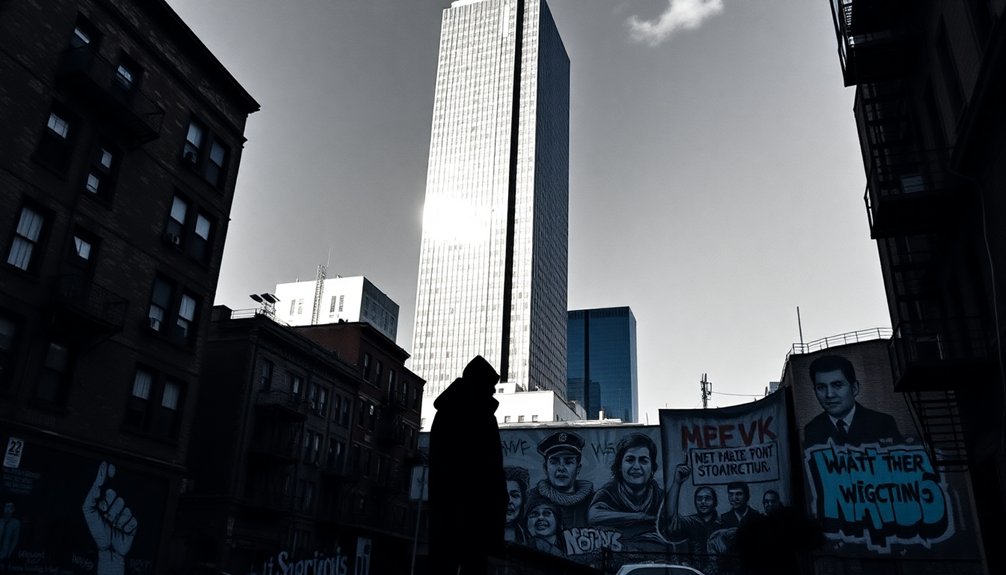
Maneuvering the oppressive economic landscape of 1930s Chicago, Bigger Thomas embodies the struggle between capitalism and communism, revealing how these conflicting ideologies impact his life.
- Capitalism’s Grip: You see how capitalism limits opportunities for Black individuals like Bigger, trapping him in poverty and despair.
- Communism’s Promise: Bigger grapples with the allure of communism, which offers a vision of equality and collective empowerment, yet feels unattainable.
- Internal Conflict: You witness Bigger’s turmoil as he navigates these two worlds, torn between the harsh realities of capitalist society and the idealistic visions presented by characters like Jan Erlone.
Wright critiques both systems, showing how capitalism perpetuates racial inequalities while communism remains an unfulfilled promise for those like Bigger facing systemic oppression. Furthermore, the historical context of Bigger’s struggles reflects the broader themes of the evolution of societal structures, much like how *Guns, Germs, and Steel* explores the factors that influence civilizations.
Crime, Justice, and Racial Disparities
How does the criminal justice system reflect the deep-seated racial disparities in society? In *Native Son*, Richard Wright reveals the inequities that plague justice, particularly through Bigger Thomas’s story.
When Bigger accidentally kills Mary Dalton, the white community erupts in outrage, yet Bessie Mears’s murder elicits little to no reaction. This stark contrast highlights the racial disparities in societal responses to crime.
Bigger’s trial mirrors real-life cases from the 1930s, showcasing how media portrayal dehumanizes Black individuals, skewing public perception and judicial outcomes.
Wright critiques this hypocrisy, illustrating how systemic racism shapes perceptions of justice. Bigger’s confessions and struggles get overshadowed, denying him a fair trial and emphasizing the psychological toll of racism on both the oppressed and the oppressor. The novel’s vivid character development echoes the resilience of the human spirit, enriching its critique of social injustices.
The Role of Anger and Charity in Society
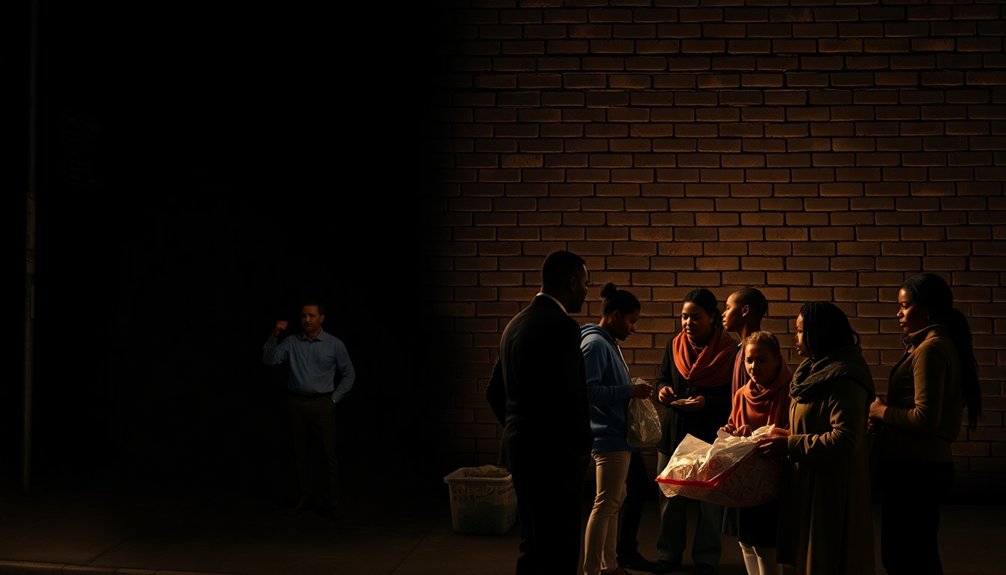
As Bigger Thomas grapples with his anger in a society that perpetuates racial division, the interplay between his rage and the charity extended by characters like Mary Dalton reveals the complexities of social dynamics.
- Anger as a Response: Bigger’s anger stems from exclusion and oppression, driving his violent actions and highlighting the impact of systemic racism.
- Charity’s Limitations: Characters like Mary and Boris represent well-meaning charity, yet their actions often ignore the deeper struggles of individuals like Bigger.
- Hypocrisy of Kindness: The Daltons’ philanthropic gestures inadvertently reinforce societal barriers, exacerbating Bigger’s feelings of inferiority and alienation.
Ultimately, the relationship between anger and charity in “Native Son” underscores the necessity for genuine empathy to address racism effectively. Additionally, the stories of resilience shared by individuals facing adversities like racism serve as a reminder of the importance of understanding systemic issues in fostering true compassion.
Themes of Death, Purpose, and the Human Experience
The struggle for purpose looms large in *Native Son*, as Bigger Thomas navigates a world that relentlessly dehumanizes him.
The themes of death permeate his existence, driving him to act impulsively in a desperate search for physical and emotional fulfillment.
The omnipresence of death compels Bigger to seek fleeting moments of fulfillment, revealing the depths of his despair.
As you explore Bigger’s humanity, you witness his existential crisis—a life defined by the constant deferral from death, revealing the psychological impact of systemic oppression.
Bigger’s journey forces him to confront the consequences of his actions, leading to a painful introspection about the value of life.
Through this exploration, Wright raises profound questions about the human experience, illustrating how societal forces shape identities and influence one’s understanding of life, purpose, and mortality. In the face of such adversity, themes of resilience and inner strength emerge, highlighting the capacity for individuals to navigate their struggles and seek a deeper understanding of themselves.
Conclusion
In “Native Son,” Richard Wright powerfully illustrates the devastating effects of racism on both individuals and society. By examining Bigger Thomas’s journey, you see how systemic oppression breeds despair and violence. Consider a modern case, like the protests following George Floyd’s death, which echo Wright’s themes of injustice and anger. These stories remind us that understanding our past and present can help us endeavor for a more equitable future, where every person’s humanity is recognized and valued.