
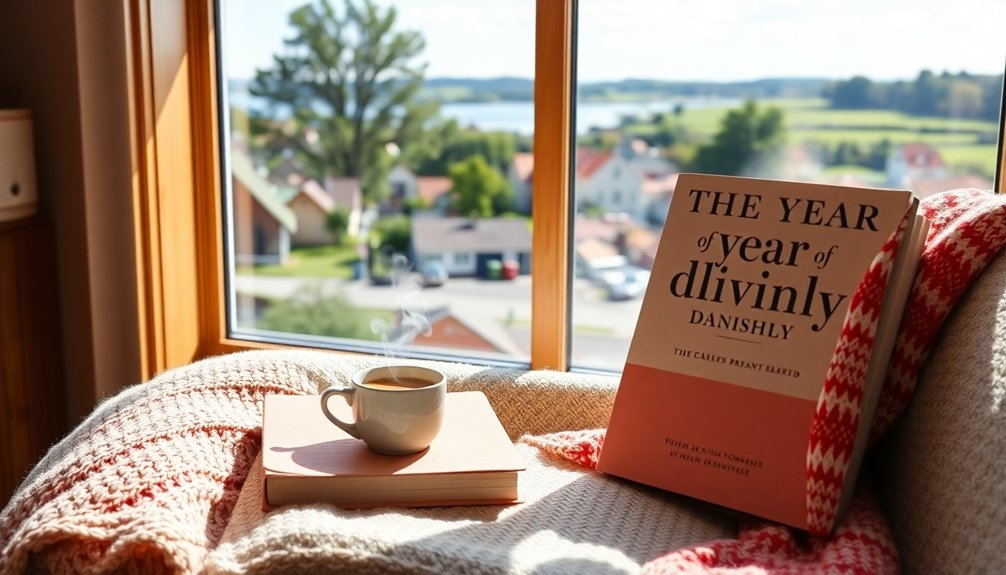
In “The Year of Living Danishly,” Helen Russell takes you on a humorous journey through her year in Billund, Denmark, revealing the secrets behind the country’s happiness. You’ll discover quirky Danish customs and how the emphasis on work-life balance transforms daily life. Russell shares personal anecdotes while critiquing social issues like gender equality. This engaging blend of insights and humor offers valuable lessons on happiness. Keep exploring to uncover more about Danish culture and its impact on well-being.
Overview of the Book
In “The Year of Living Danishly,” Helen Russell invites you into her year-long adventure in Billund, Denmark, after her husband lands a job with Lego.
Through thirteen engaging chapters, you’ll explore various facets of Danish culture, happiness, and lifestyle. Each month reveals personal anecdotes paired with thematic discussions on topics like Danish cuisine, work-life balance, and societal norms.
Explore the richness of Danish culture through personal anecdotes and thematic insights on happiness, cuisine, and work-life balance.
Russell’s humorous and accessible writing style makes complex cultural insights enjoyable, helping you understand why Denmark is often dubbed the world’s happiest country.
Furthermore, her exploration of work-life balance emphasizes how this Danish priority contributes to overall happiness and well-being.
The 2020 edition even includes a new chapter addressing contemporary issues such as racism and nationalism, broadening the narrative’s scope.
Author and Background
- Combines humor with insightful observations
- Explores cultural differences in happiness
- Translated into 21 languages, becoming an international bestseller
Helen’s relatable journey resonates with many, making “Living Danishly” a must-read for those seeking a change. Additionally, the book highlights how small actions can lead to significant transformations, paralleling the insights from Admiral McRaven’s emphasis on daily practices.
Cultural Insights and Humor
In “The Year of Living Danishly,” you’ll find that Helen Russell’s humor shines a light on the quirks of Danish culture, making her observations both entertaining and insightful.
She shares personal anecdotes about adjusting to life in Denmark, from the cozy concept of hygge to the unique parenting styles that might leave you chuckling.
Russell’s witty take on these cultural nuances not only keeps you engaged but also offers a fresh perspective on happiness and contentment. Furthermore, her reflections can encourage readers to consider how social media addiction influences their own perceptions of well-being.
Danish Humor and Wit
Danish humor and wit shine brightly throughout Helen Russell’s “The Year of Living Danishly,” making her cultural observations both entertaining and insightful. You’ll appreciate how her British humor complements her exploration of Danish culture.
Here are a few highlights:
- Amusing anecdotes about her struggles with Danish vocabulary showcase the humorous side of cultural integration.
- Her contrasts between the hectic London life and the laid-back Danish lifestyle provide comedic relief while discussing serious topics like work-life balance.
- Light-hearted commentary on customs, such as “hygge,” illustrates the cozy essence of Denmark through humorous scenarios.
Russell’s witty tone softens her critiques of Danish society, ensuring that even discussions on high taxes remain engaging and enjoyable.
Cultural Adjustments and Anecdotes
Though adjusting to life in Denmark posed its challenges, Helen Russell’s humorous reflections on her experiences make the journey relatable and enjoyable.
You’ll chuckle as she navigates the tricky Danish vocabulary, often leading to amusing misunderstandings that mirror your own struggles with cultural differences.
Her anecdotes about savoring Danish pastries while grappling with parenting styles reveal the unique values that shape life in Denmark.
Russell’s interactions with her friendly neighbors highlight both the warmth and quirky aspects of Danish community life.
Plus, her witty take on bureaucratic hurdles, like acquiring ID health cards, showcases the absurdity intertwined with the country’s orderliness.
You’ll find yourself laughing along as she embraces these cultural adjustments with charm and grace.
Insights on Hygge Concept
While exploring the essence of hygge, you quickly realize that it’s not just a trend but a fundamental aspect of Danish life. This cozy concept fosters well-being through simple pleasures and shared moments.
Helen Russell humorously captures her journey toward embracing hygge, revealing the joys and hurdles of adapting to this lifestyle. Here are a few key elements to contemplate:
- Cozy Atmosphere: Warm drinks, soft blankets, and candlelight create a relaxing environment.
- Simple Pleasures: Cherish small moments like gathering with friends over a homemade meal.
- Community Connection: Focus on togetherness, prioritizing meaningful interactions over extravagant events.
Danish Lifestyle and Work-Life Balance
In a country where the typical workday wraps up around 3 PM, you’ll find that work-life balance isn’t just a concept—it’s a way of life.
Danes prioritize disconnecting from work after hours, which helps reduce stress and boosts overall happiness. This emphasis on personal well-being allows more time for family and leisure, making life richer and more fulfilling.
Danes embrace work-life balance, prioritizing personal well-being to enhance family time and leisure, enriching their lives.
The concept of “hygge” embodies this coziness and contentment, integral to Danish culture.
With about 25% of the workforce changing jobs annually, Danes seek fulfillment over job security. High taxes fund extensive welfare state programs, supporting mental health and education, which in turn fosters a vibrant community and contributes to Denmark’s impressive happiness rankings. Furthermore, the emphasis on personal well-being resonates with narratives of resilience found in stories like that of Louis Zamperini, showcasing the triumph of the human spirit in challenging circumstances.
Social Issues and Challenges
As you explore Denmark’s charm, it’s crucial to confront its social challenges.
The high divorce rates and unique parenting styles, like those of “curling parents,” raise questions about family dynamics and resilience.
Additionally, gender equality issues persist, highlighting that even in one of the happiest countries, social complexities remain. This mirrors the systemic racism that Ta-Nehisi Coates explores, reminding us that no society is free from its own deep-seated challenges.
High Divorce Rates
Although high divorce rates might seem alarming, they reflect a cultural acceptance in Denmark that prioritizes personal happiness and fulfillment. In this society, ending a marriage that no longer brings joy isn’t seen as a failure but rather a courageous step towards self-fulfillment.
- Divorce is viewed as a normal part of life, not a stigma.
- High expectations for personal happiness drive relationship dynamics.
- The trend of “curling parents” may shape future expectations in relationships.
Russell highlights that while these high rates indicate dissatisfaction, they also show a willingness among Danes to pursue well-being in their personal lives.
This approach encourages individuals to seek fulfilling relationships, emphasizing the importance of happiness over societal norms.
Parenting Styles Explained
Parenting styles in Denmark reveal a fascinating blend of support and independence that shapes children’s development. You’ll notice the trend of “curling parents,” who endeavor to remove obstacles from their children’s paths. While this might seem nurturing, it raises questions about fostering resilience and independence.
Danish culture places a strong emphasis on children’s well-being, often prioritizing emotional support over strict discipline. You’ll find that children are encouraged to be self-sufficient, learning from their own experiences and mistakes.
However, societal pressure for progressive parenting styles can challenge families trying to achieve a healthy work-life balance. In this unique environment, the balance between support and independence is key to nurturing well-rounded, capable children.
Gender Equality Issues
Gender equality in Denmark presents a complex landscape that challenges the nation’s progressive image.
Although known for its policies supporting gender equality, Denmark struggles with significant issues, including high rates of domestic violence.
You might be surprised to learn:
- Denmark ranks fourth in Europe for domestic violence against women.
- Traditional gender roles persist, affecting the effectiveness of existing equality measures.
- Women often shoulder the majority of household responsibilities, impacting work-life balance.
Helen Russell emphasizes that despite parental leave policies, societal challenges, such as a high divorce rate, disproportionately affect women.
The phenomenon of “curling parents” raises further questions about future gender equality, suggesting that the path to true equality remains fraught with obstacles, even in a seemingly progressive society like Denmark.
Reader Reception and Engagement
With an average rating of 3.97 from nearly 32,000 readers, “The Year of Living Danishly” has clearly struck a chord.
The reader reception has been largely positive, with many praising Helen Russell’s engaging and humorous writing style that makes exploring Danish culture entertaining.
While some critiques point out a lack of depth in cultural analysis, you’ll find valuable insights from her interactions with Danish experts and locals.
Readers particularly enjoy relatable anecdotes about expat life and reflections on Denmark’s societal norms.
The comments section showcases strong community engagement, where discussions about adapting to life in Denmark flourish, along with requests for recommendations on similar literature.
Living Danishly: Uncovering these themes has created a vibrant dialogue among readers. The book also resonates with the idea of personal growth through challenges, illustrating how adapting to a new culture can reveal hidden strengths.
Lessons on Happiness and Personal Reflection
Happiness is a central theme in “The Year of Living Danishly,” where Helen Russell dives into the secrets of Danish joy. She highlights how living in Denmark allows you to embrace work-life balance, with most Danes clocking out by 3 PM, fostering overall well-being.
The concept of “hygge” promotes coziness and connection, essential for happiness. Russell encourages you to focus on the present rather than wishing for retirement, emphasizing personal growth through continuous learning, like her language journey.
To enhance your happiness, consider these lessons:
- Prioritize relationships and spend quality time with loved ones
- Disconnect from work after hours
- Embrace the cozy moments of life through “hygge”
- Understanding the mind-body connection can amplify your overall sense of well-being.
Conclusion
In the end, you might find it ironic that a book about living Danishly can make you feel both inspired and a tad envious. While you’re juggling deadlines and laundry, Helen Russell’s insights on happiness and balance might just remind you how far you are from that cozy Scandinavian ideal. But hey, who needs hygge when you’ve got a coffee-fueled hustle, right? So, raise a mug to the chaos, and maybe consider a little Danish flair in your life!