
In *The Picture of Dorian Gray*, you follow Dorian, a beautiful young man who longs for eternal youth. Influenced by Lord Henry Wotton, he indulges in a life of excess and moral decay, leading to tragic consequences, especially for his lover, Sibyl Vane. As Dorian’s portrait bears the scars of his sins, he grapples with guilt and hypocrisy. His journey ends in despair and death, revealing the true cost of vanity and hedonism—there’s so much more to uncover.
Overview of Dorian Gray’s Character
Dorian Gray, introduced as a stunning and affluent young man, quickly captivates those around him, particularly artist Basil Hallward and the hedonistic Lord Henry Wotton.
Dorian’s striking beauty and youth become obsessions, leading him to wish that his portrait would bear the marks of aging instead of him. Influenced by Lord Henry’s hedonism, he dives into a life of excess, which results in moral decay.
His relationships, especially with Sibyl Vane, reveal his selfish nature; he cruelly rejects her after her performance falters, contributing to her tragic demise.
As Dorian spirals into this corrupt lifestyle, his portrait transforms into a reflection of his inner turmoil, illustrating the destructive power of vanity and hedonism on his once-innocent character. The narrative serves as a chilling exploration of moral ambiguity as it reveals the complexities of human nature entwined with Dorian’s downfall.
The Influence of Lord Henry Wotton
The arrival of Lord Henry Wotton marks a turning point in Dorian Gray’s life, pushing him further into a world of hedonism and moral decay.
With his seductive charm, Lord Henry influences Dorian to embrace a philosophy that prioritizes beauty and pleasure above all else. He glorifies self-indulgence, leading Dorian to crave eternal youth and a life devoid of consequences.
Lord Henry’s alluring charm entices Dorian into a world where beauty reigns supreme, igniting a dangerous desire for eternal youth and unbridled pleasure.
As Dorian expresses his wish for the portrait to age instead of him, Lord Henry’s corrupting influence manifests, encouraging a lifestyle steeped in excess and moral decline.
Acting as a devilish figure, Lord Henry manipulates Dorian’s innocence, deepening his obsession with aesthetic beauty and detaching him from any moral compass, ultimately contributing to Dorian’s tragic fate. This manipulation mirrors the real-world implications of surveillance and privacy, as it highlights how external influences can erode personal autonomy and ethical boundaries.
Dorian’s Wish and Its Consequences
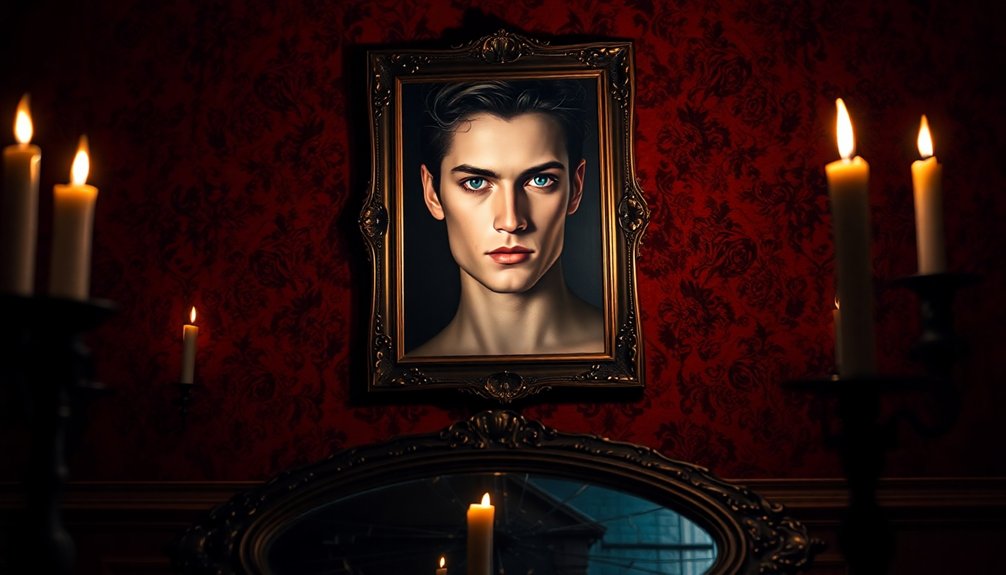
While many might dream of eternal youth, Dorian Gray‘s wish to trade his aging for the life of his portrait reveals the depths of his desperation and vanity. Influenced by Lord Henry’s hedonistic views, Dorian becomes consumed by the desire to preserve his beauty, leading him to indulge in a life of vice. The portrait, initially a source of admiration, soon reflects the moral decay of his soul, especially after Sibyl Vane’s tragic suicide. As he hides the portrait from view, he attempts to evade the consequences of his actions and the guilt that haunts him. Ultimately, the portrait’s deterioration becomes a grim reminder of his inner corruption, culminating in his tragic downfall when he tries to destroy it, sealing his fate. This exploration of class struggles and the impact of societal norms reflects themes similar to those found in Charles Dickens’ work.
Love and Tragedy With Sibyl Vane
An enchanting love story unfolds between Dorian Gray and Sibyl Vane, a talented actress whose beauty and passion captivate him. Their romance, however, turns tragic as Sibyl’s infatuation with Dorian leads her to abandon her craft.
When Dorian cruelly ends their engagement, her heartbreak drives her to suicide, marking a pivotal moment in his life.
- Dorian’s love for Sibyl reveals his idealism.
- Her tragic fate reflects the destructive influence of passion.
- Dorian’s portrait begins to change, showcasing his guilt.
- This event propels him into a life of hedonism.
Sibyl’s death haunts Dorian, symbolizing the consequences of selfish desires and the impact of love turned to tragedy. This moment echoes the themes of moral ambiguity prevalent in literary works exploring the darker aspects of human nature.
The Descent Into Moral Darkness

As you explore Dorian Gray’s journey, you’ll see how Lord Henry’s hedonistic influence pushes him into a life of excess.
The tragic fate of Sibyl Vane serves as a turning point, marking the beginning of his moral decline.
With each indulgence, Dorian faces the harsh consequences of his choices, spiraling deeper into darkness. The exploration of systemic oppression in literature often mirrors the struggles faced by individuals in their own moral dilemmas.
Influence of Lord Henry
Lord Henry Wotton’s influence on Dorian Gray serves as a pivotal turning point in the young man’s descent into moral darkness. Through Lord Henry’s hedonistic philosophy, Dorian begins to prioritize pleasure over morality, leading him to wish for the portrait to age instead of himself.
This marks the start of his moral decline, as he:
- Embraces self-indulgence and excess
- Corrupts his initial innocence, neglecting genuine connections like Sibyl Vane
- Rejects societal norms and embraces a life devoid of consequences
- Transforms into a self-absorbed antihero, ultimately committing violent acts, including Basil Hallward’s murder
As Dorian succumbs to Lord Henry’s manipulative influence, he spirals deeper into darkness, losing himself to the allure of beauty and youth.
Sibyl Vane’s Tragic Fate
Dorian Gray’s relationship with Sibyl Vane showcases the tragic consequences of his moral decline. Sibyl, a talented actress, falls deeply in love with Dorian, but her infatuation leads to a decline in her performances.
When Dorian cruelly rejects her after a poor show, her despair drives her to suicide. This tragic fate profoundly impacts Dorian, awakening a flicker of guilt amidst his detachment. As he grapples with the consequences of his actions, he notices changes in his portrait, symbolizing his moral corruption.
The influence of Lord Henry exacerbates Dorian’s hedonistic lifestyle, highlighting how obsession and self-indulgence can destroy lives. Sibyl’s death marks a pivotal moment, propelling Dorian further into darkness as he confronts the fallout of his choices.
Consequences of Indulgence
While seeking eternal youth and pleasure, one quickly realizes the perilous path of indulgence that Dorian Gray initiates. This journey leads to devastating consequences, transforming his life into a nightmare of moral decay.
- Dorian cruelly rejects Sibyl Vane, sparking a guilt that morphs into a twisted embrace of hedonism.
- His portrait bears the burden of his sins, becoming grotesque as he remains unchanged.
- The murder of Basil Hallward marks a dark turning point, revealing his complete descent into moral darkness.
- In a desperate attempt to destroy the portrait, he ultimately seals his own fate.
Dorian’s pursuit of indulgence not only leads to his downfall but also highlights the inescapable consequences of a life devoid of conscience.
The Impact of Art and Beauty
Art and beauty wield a profound influence over the human experience, shaping desires and moral choices in unexpected ways.
In *The Picture of Dorian Gray*, Dorian’s obsession with his own beautiful portrait leads him down a path of decadence and immorality. Encouraged by Lord Henry, he embraces a hedonistic philosophy that prioritizes pleasure over ethics.
Dorian’s wish for his portrait to age instead of him represents a Faustian bargain, where he seeks eternal youth, ignoring the consequences of his moral corruption. The portrait becomes a haunting reflection of his decaying soul, revealing the deceptive nature of beauty.
Ultimately, the stark contrast between Dorian’s youthful façade and the grotesque portrait underscores the destructive power of vanity and the grave implications of valuing art for art’s sake. This narrative serves as a cautionary tale about the dangers of the allure of a decadent lifestyle and the moral decay that can accompany a relentless pursuit of desire.
Basil’s Confrontation and Its Aftermath
Confronting Dorian about the rumors of his immoral behavior, Basil Hallward expresses deep concern for his friend’s reputation and the changes he’s noticed in his character.
This tense discussion escalates when Dorian reveals the hidden portrait, a shocking reflection of his inner corruption.
In a fit of rage, desperate to protect his secret, Dorian murders Basil, marking a significant turning point in his moral decline.
The aftermath is grim, as Dorian resorts to blackmailing his former friend Alan Campbell to dispose of Basil’s body.
- Dorian’s hedonism intensifies.
- He grapples with overwhelming guilt.
- The portrait becomes a symbol of his depravity.
- Dorian’s fate is sealed as a murderer.
This dark turning point serves as a reminder of the impact of past actions on Dorian’s eventual downfall.
Dorian’s Guilt and Hypocrisy
As you explore Dorian Gray’s journey, you can’t ignore how his guilt starts to consume him after Sibyl Vane’s tragic fate.
He hides the portrait that reveals his moral decay, showcasing his hypocrisy as he attempts to live a life of repentance without facing the consequences of his actions.
Ultimately, the painting becomes a powerful symbol of his internal struggle and the irreversible damage his choices inflict on his soul. Acts of defiance against one’s own nature can lead to profound consequences, as seen in both Dorian’s and Liesel’s stories.
Portrait’s Reflection of Guilt
Guilt manifests vividly in Dorian Gray’s portrait, transforming into a chilling reflection of his moral decay. As Dorian indulges in a hedonistic lifestyle, the portrait reveals the dark consequences of his actions. After rejecting Sibyl Vane, her tragic suicide haunts him, and he notices a horrifying change in the image, mirroring his internal corruption.
- The portrait grotesquely evolves, contrasting Dorian’s youthful facade.
- Dorian’s attempts to hide the portrait symbolize his denial of guilt.
- Each vice he indulges in deepens the portrait’s grotesquery.
- Ultimately, his failed effort to destroy the portrait marks his tragic downfall, highlighting his hypocrisy and inability to escape the weight of his sins.
Hypocrisy and Moral Decline
The grotesque changes in Dorian Gray’s portrait serve as a constant reminder of his moral decline and hypocrisy.
Initially desiring eternal youth, you plunge into a life of hedonism, chasing pleasure without a thought for consequences.
After Sibyl Vane’s tragic suicide, horror grips you as you see the portrait’s corruption, yet you choose to hide rather than confront your guilt.
Your hypocrisy deepens as you maintain a charming facade in high society while secretly indulging in vice.
The murder of Basil Hallward marks a critical point, as rage drives you to further moral decay and blackmail.
Ultimately, your attempt to destroy the portrait for redemption fails, leading to death—a stark symbol of the irrevocable consequences of your choices.
The Final Downfall of Dorian Gray
Despite his attempts to escape the consequences of his actions, Dorian Gray’s final downfall underscores the inescapability of moral corruption. In a desperate bid to destroy the portrait that embodies his hedonistic lifestyle, Dorian confronts the reality of his choices.
- His guilt surfaces during a hunting party, yet he’s momentarily relieved by James Vane’s accidental death, failing to absolve his sins.
- Hypocrisy prevails as Dorian seeks repentance while remaining trapped in moral decay.
- In a fateful act, he attempts to destroy the painting, only to find his disfigured body, contrasting starkly with the portrait’s beauty.
- The discovery of Dorian’s lifeless form by servants highlights the ultimate consequences of vanity and excess.
- This tragic conclusion resonates with the theme of guilt and redemption, emphasizing the profound impact of one’s choices on their identity.
Legacy and Cultural Impact of the Novel
When you explore the legacy of *The Picture of Dorian Gray*, you’ll find a wealth of adaptations that keep its themes alive in modern culture. Its influence extends beyond literature, sparking conversations about morality and art that resonate today. This novel hasn’t only shaped artistic expression but also reflects the ongoing societal struggles with beauty and vice. The enduring popularity of the work prompts a reevaluation of themes like societal transformations, emphasizing its relevance in discussions of morality and aesthetics.
Adaptations and Interpretations
- The acclaimed 1945 film, which received three Academy Award nominations.
- Various theatrical productions that bring Wilde’s themes to life.
- Operas and ballets that interpret Dorian Gray’s hedonism and aestheticism.
- Ongoing discussions in academia about its implications for ethics and duality in human nature.
Oscar Wilde’s work continues to spark dialogue about vanity and the consequences of excess, ensuring its place in both literary and queer discourse.
Influence on Modern Culture
Although Oscar Wilde’s *The Picture of Dorian Gray* was published over a century ago, its influence on modern culture remains profound.
The themes of hedonism and moral corruption resonate in contemporary discussions about beauty and identity within modern society. Dorian Gray’s quest for eternal youth serves as a cautionary tale about the dangers of superficiality, prompting critiques of today’s celebrity culture.
Wilde’s exploration of desire and sexuality has made the novel a cornerstone in LGBTQ discourse, solidifying its place in queer literature.
Its references in music, fashion, and art illustrate the story’s lasting legacy, as it continues to shape dialogues around aesthetics and the human experience, reminding us of the consequences that arise from the pursuit of pleasure.
Conclusion
In the end, Dorian Gray’s tragic tale reminds us that chasing beauty can lead to a hollow existence. Imagine a butterfly, vibrant and enchanting, that forgets its purpose and withers away, consumed by its own allure. Just like that butterfly, Dorian’s obsession with youth and pleasure ultimately traps him in a web of despair. Wilde’s masterpiece serves as a cautionary tale: true beauty lies not in appearances but in the soul’s depth and the choices we make.