
Gone With the Wind, by Margaret Mitchell, shapes cultural narratives around the Civil War, race, and identity. Its complex characters showcase the struggles of the South during and after the war, reflecting both resilience and deep-seated racism. The novel romanticizes the antebellum South and promotes the Lost Cause ideology, sparking controversy and ongoing discussions. This legacy influences literature and media today, highlighting societal issues that remain relevant. There’s much more to explore about its impact and legacy.
Historical Context of the Novel
When you explore the historical context of *Gone With the Wind*, you’ll find it set against the backdrop of the American Civil War and the Reconstruction Era, showcasing the profound societal and economic upheavals faced by the agrarian South.
The novel highlights the South’s deep-seated fears surrounding emancipation and the potential for revenge from freed slaves, capturing a sense of loss and identity.
The narrative reveals the South’s anxieties about emancipation and the haunting specter of lost identity.
Through Scarlett O’Hara, the narrative reflects the chivalric values of the antebellum South, emphasizing rigid social hierarchies and class distinctions.
Published in 1936, it coincided with a nostalgic longing for the Old South, further entrenching the Lost Cause ideology in American culture.
This context enriches your understanding of the characters and themes throughout the story. Additionally, the interplay of personal struggles with historical events showcases resilience and growth amidst the chaos of war.
Character Dynamics and Relationships
As you explore the character dynamics and relationships in *Gone With the Wind*, you’ll discover a rich tapestry of interactions that drive the narrative forward.
Scarlett O’Hara’s emotional journey unfolds through her marriages to Charles Hamilton, Frank Kennedy, and, most significantly, Rhett Butler. Each relationship reveals her relentless pursuit of love and power, particularly her unrequited affection for Ashley Wilkes.
The contrast between Scarlett and Melanie Wilkes highlights the rivalry and complexity of female bonds. Additionally, Scarlett’s dynamic with Mammy illustrates the intricate layers of race and class.
Rhett challenges and supports Scarlett, creating a tumultuous marriage that encapsulates the tension between love and ambition. Ultimately, these relationships shape Scarlett’s identity and the story itself. This narrative of rivalry and ambition mirrors the themes found in the story of Kane and Abel.
Key Themes and Motifs
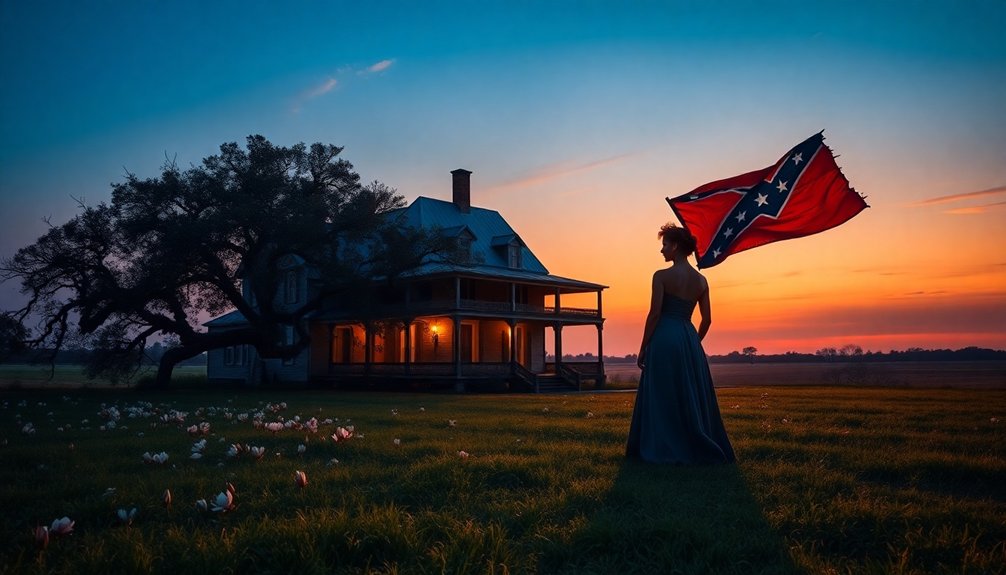
You’ll find that the story deeply explores:
- Survival and Resilience: Scarlett’s relentless pursuit of her desires amid the Civil War showcases her fierce determination to survive against all odds.
- Racial Dynamics: The novel exposes the ingrained racism of the era, presenting African American characters in a nuanced light while reflecting the harsh realities of the time.
- Feminism: Scarlett embodies strong, independent womanhood, challenging societal norms and maneuvering a patriarchal world as she asserts control over her own destiny.
These themes intertwine to create a rich narrative, revealing the complexities of human experience amidst tragedy and change. Additionally, the exploration of systemic racism in literature, as seen in both *Gone With the Wind* and Ta-Nehisi Coates’ work, highlights the ongoing relevance of these issues in contemporary discussions.
Reception and Impact on Literature
*Gone With the Wind* has left an undeniable mark on literature, capturing both acclaim and controversy.
Its themes of race and gender continue to spark debate, influencing how it’s perceived in academic circles.
As you explore its cultural significance, consider how adaptations have shaped its legacy and ongoing impact. The discussions surrounding its themes resonate today, paralleling the collective action seen in historical resistance movements that challenge the status quo.
Cultural Significance in Literature
- Enduring Popularity: Selling over 30 million copies, it ranked as America’s second favorite book in 2014.
- Cinematic Influence: The 1939 film adaptation, winning the Academy Award for Best Picture, cemented its cultural legacy.
- Contemporary Debates: Discussions about the novel often center on its portrayal of race and the Lost Cause ideology, which has led to its exclusion from some university reading lists.
These elements highlight how *Gone With the Wind* remains a pivotal literary and cultural artifact.
Controversial Themes Explored
While many readers admire *Gone With the Wind* for its sweeping narrative and complex characters, the novel’s controversial themes have sparked significant debate about its place in American literature.
Critics argue that its portrayal of race and the institution of slavery reflects inherent racism, presenting African Americans in a way that suggests inferiority. This romanticized depiction of the Lost Cause ideology perpetuates a narrative that still influences cultural and political conversations surrounding racial identity today.
Despite the backlash, the book’s massive commercial success, selling over 30 million copies, highlights its impact.
Yet, its exclusion from many university reading lists emphasizes the struggle to reconcile its historical context with modern values, ensuring that discussions about its legacy continue.
Adaptations and Influence
- The 1939 film adaptation became a cultural phenomenon, winning 10 Academy Awards and solidifying the novel’s place in American cinema.
- Over 30 million copies sold worldwide demonstrate its status as a best-seller, influencing countless authors to explore themes of Southern identity.
- The reopening of the Margaret Mitchell House Museum showcases ongoing discussions about its complex themes, particularly regarding race and memory in literature.
These adaptations and influences keep *Gone With the Wind* relevant in today’s literary landscape.
Representation of Race and Slavery
The representation of race and slavery in *Gone With the Wind* reveals deep-seated racism that persists throughout the narrative. You see African Americans portrayed in ways that often convey inferiority, despite occasional moments of loyalty and affection toward certain characters.
The novel accepts slavery as a norm, ignoring the rebellion against it and reinforcing the Lost Cause ideology. Scarlett O’Hara’s views on a potential false rape claim highlight a conflicted sensibility, framing Black actions as criminal rather than acknowledging broader social injustices.
While some characterizations show complexity, they frequently fall into stereotypes, diminishing individuality and humanity. Overall, Mitchell’s work parallels the problematic legacies of Southern literature, failing to address race and slavery with the nuance they require. The themes of systemic oppression in literature continue to resonate and provoke important discussions about race and identity.
Adaptations and Cultural Influences

The 1939 film adaptation of *Gone With the Wind* not only set a high standard for cinematic storytelling but also sparked conversations about cultural representation that continue today.
As you explore its legacy, you’ll notice the film’s influence on how we view race and history in America. This complex relationship highlights both the achievements and shortcomings in Hollywood’s approach to these themes. Additionally, the film has been critiqued for its oversimplification of race and the portrayal of African American characters, echoing ongoing debates about representation in media.
Film Adaptation Impact
- Cinematic Achievement: The film became one of the highest-grossing films ever and won ten Academy Awards, showcasing iconic performances, especially by Vivien Leigh as Scarlett.
- Historical Critique: Critics argue that the film romanticizes the antebellum South, promoting the Lost Cause ideology and glossing over the realities of slavery.
- Narrative Alteration: The omission of Ashley Wilkes’ ties to the Ku Klux Klan shifts the racial dynamics, sparking debates about racial representation and historical accuracy in both the film and the novel.
Cultural Representation Analysis
Cultural representation in adaptations of *Gone With the Wind* reveals the complexities of how stories shape and reflect societal values.
The 1939 film, while celebrated, glosses over significant themes from Margaret Mitchell’s novel, especially omitting Ashley Wilkes’ KKK ties. This alteration shifts the narrative, impacting how viewers perceive race and societal dynamics.
Rhett Butler’s character embodies the romanticized Southern gentleman, complicating the cultural representation of masculinity in that era.
Hattie McDaniel’s historic win as Mammy underscores both progress and the challenges of racial representation in Hollywood.
Today, discussions around the film’s legacy continue to engage with its portrayal of the antebellum South, making it essential to critically analyze these narratives to understand their lasting cultural influences.
The Lost Cause Ideology
While many view the Civil War as a pivotal moment in American history, the Lost Cause ideology twists this narrative, framing the Confederacy’s fight as a noble struggle for states’ rights rather than a defense of slavery.
This perspective has lasting effects, including:
- Romanticizing the Confederacy – It portrays Southern leaders as valiant heroes defending their way of life, minimizing the realities of slavery.
- Cultural Influence – The Lost Cause continues to inspire contemporary movements, keeping Confederate symbols alive in public spaces.
- Enduring Racial Tensions – The ideology fosters ongoing issues like gerrymandering, reflecting fears of Black political empowerment. Additionally, this narrative echoes the historical injustices faced by marginalized communities, as seen in the medical research conducted on African Americans.
Differences Between the Novel and Film
When comparing the novel *Gone With the Wind* to its film adaptation, you’ll notice considerable differences that affect character depth and thematic emphasis.
In the novel, Scarlett O’Hara’s manipulative nature is more nuanced, showcasing her complexities, while the film romanticizes her character.
Ashley Wilkes’ affiliation with the KKK is another critical detail omitted in the film, altering our understanding of his character.
The novel also explores a broader range of characters and the lives of enslaved individuals, which the film considerably reduces.
Furthermore, the theme of survival through Scarlett’s business ventures is emphasized in the book, whereas the film leans heavily on her romantic entanglements.
Finally, the novel’s open-ended conclusion contrasts sharply with the film’s definitive ending. This exploration of generational poverty enriches the narrative by providing insight into the characters’ motivations and struggles.
Margaret Mitchell’s Legacy
- Enduring Popularity: Selling over 30 million copies, the novel continues to captivate readers worldwide.
- Cultural Impact: The reopening of the Margaret Mitchell House Museum in 2024 commemorates her influence and the location where she penned her masterpiece.
- Complex Discussions: While celebrated, the book’s portrayal of race and romanticization of the antebellum South invites critical dialogues about identity and memory in American history. Additionally, Mitchell’s work exemplifies the cultural nuances that enrich understanding of identity and belonging, highlighting the intricate relationship between storytelling and societal issues.
Through these aspects, Margaret Mitchell’s work resonates in contemporary conversations, illustrating the intricate relationship between her storytelling and the complexities of American literature.
Ongoing Conversations and Controversies
As you explore the ongoing conversations surrounding *Gone With the Wind*, consider how its themes challenge modern perspectives on race and representation.
Many argue that the novel and its adaptations romanticize a troubling historical narrative, raising questions about their place in today’s culture.
Reflecting on its impact on Southern identity, you’ll find that the discussions are as complex as the story itself. Additionally, the examination of untold stories highlights the importance of recognizing diverse perspectives that challenge traditional narratives and enrich our understanding of history.
Cultural Reexamination of Themes
- Portrayal of Race: The novel romanticizes the antebellum South, raising concerns about its reinforcement of racial stereotypes and a hierarchical society between white and black characters.
- Lost Cause Ideology: Ongoing conversations about the book reveal its connection to the Lost Cause narrative, affecting current cultural and political movements.
- Adaptation Influence: The film’s omission of key elements, like Ashley Wilkes’ KKK ties, sparks debate on how adaptations shape perceptions of history.
These discussions are essential for understanding the novel’s enduring impact.
Representation and Historical Accuracy
While *Gone With the Wind* is often celebrated for its sweeping narrative and vivid characters, the ongoing debates surrounding its representation and historical accuracy reveal a more complicated picture.
Critics point out that the novel reflects inherent racism, depicting African Americans in a way that suggests inferiority. You’ll notice the contradictory representation of Black characters, which raises questions about authenticity.
Furthermore, the romanticization of the Lost Cause ideology glosses over the brutality of slavery and undermines the agency of enslaved people. Scarlett O’Hara’s portrayal echoes the trope of the imperiled white female, inviting further scrutiny.
These discussions highlight the need for careful reading, as the novel serves as both a romantic narrative and a historical document reflecting the complexities of its time.
Impact on Southern Identity
- Romanticization of the Past: The novel perpetuates The Lost Cause ideology, affecting how people view Southern heritage.
- Racial Representation: Its depiction of slavery and race relations reflects outdated societal values, prompting calls for reevaluation.
- Cultural Touchstone: As a bestseller and Pulitzer Prize winner, it remains a focal point in discussions about historical accuracy versus romanticized narratives.
The reopening of the Margaret Mitchell House Museum in 2024 aims to address these complexities, reminding us of the need for critical engagement with our cultural legacies.
Conclusion
As you close the pages of “Gone with the Wind,” you feel the weight of history pressing against your heart. Margaret Mitchell’s tale weaves a tapestry of love, loss, and complexity, leaving you both enchanted and unsettled. The echoes of its characters linger in your mind, challenging you to confront the shadows of the past. In the end, you realize that the legacy of this novel isn’t just in its words, but in the conversations it sparks within you.