
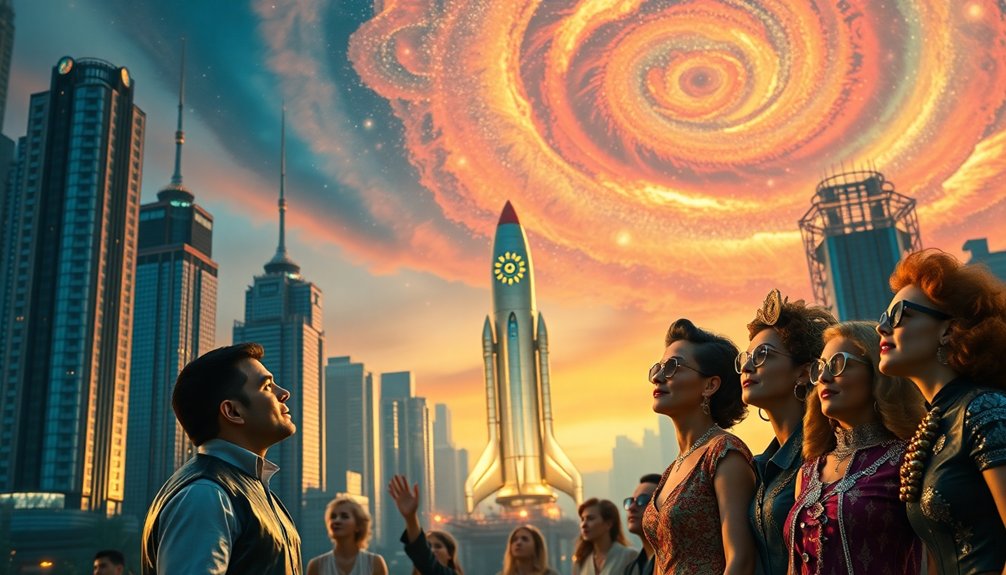
The Golden Age of Science Fiction, spanning the late 1930s to mid-1950s, transformed the genre by focusing on themes like technological optimism and space exploration. Influential figures like John W. Campbell Jr. emphasized scientific accuracy, setting new standards for storytelling. You’ll find strong protagonists and complex societal structures, exploring individuality and ethics. These elements shaped narratives that resonate today, hinting at the ongoing influence of this remarkable era in sci-fi. There’s so much more to uncover!
Defining the Golden Age of Science Fiction
The Golden Age of Science Fiction, a pivotal era from the late 1930s to the mid-1950s, reshaped the genre and its readership. This period was defined by authors like Isaac Asimov, Robert Heinlein, and Arthur C. Clarke, who explored themes of technological optimism and space exploration.
Under the editorship of John W. Campbell Jr. at *Astounding Science Fiction*, the focus shifted toward scientific accuracy, pushing writers to weave credible science into their narratives. As you immerse yourself in these stories, you’ll discover foundational tropes that continue to resonate, addressing the ethical implications of advancements in technology. This era also gave rise to classics that define the genre, inspiring new generations of readers to engage with science fiction’s rich tapestry.
This era solidified science fiction’s status as a respected literary genre, elevating it beyond mere pulp entertainment to tackle profound societal questions.
The Role of John W. Campbell Jr
While many factors shaped the Golden Age of Science Fiction, John W. Campbell Jr. played a pivotal role as the editor of *Astounding Science Fiction* beginning in 1937.
He considerably influenced the genre by promoting hard science fiction, urging authors like Isaac Asimov, Robert A. Heinlein, and A.E. van Vogt to weave scientific accuracy into their narratives. Under his guidance, *Astounding* set new standards for narrative complexity and depth, challenging writers to elevate their craft.
However, Campbell’s editorial choices often demanded rigorous revisions, aligning works with his vision. While he contributed greatly to the genre’s development, his controversial political views eventually alienated some writers and readers, signaling a shift in the landscape of science fiction by the late 1940s. This shift also mirrored the broader concerns of society, such as the rise of totalitarian regimes and control, which became prominent themes in the works he published.
Key Themes and Tropes of the Era
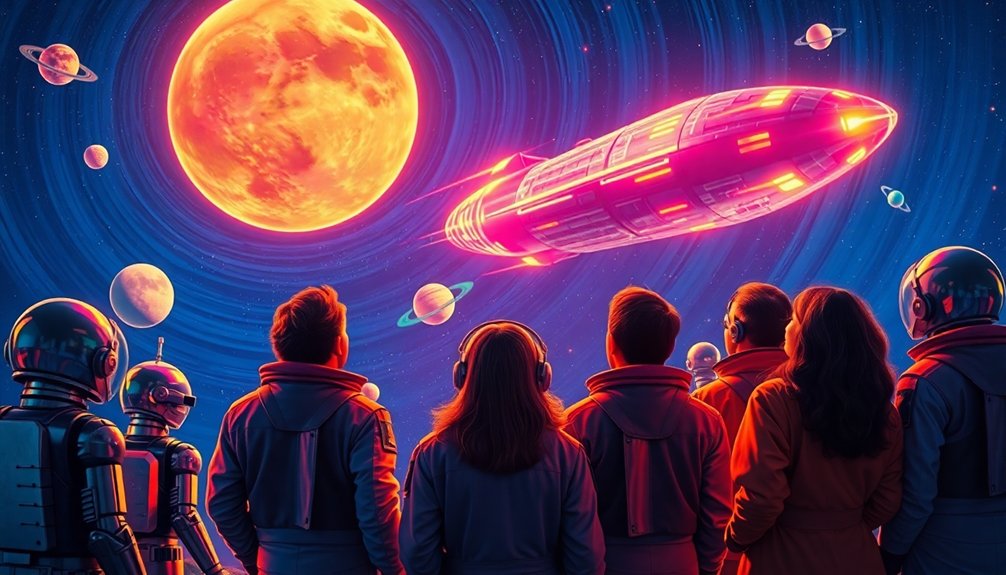
During the Golden Age of Science Fiction, authors harnessed scientific accuracy and technological optimism to craft narratives that both entertained and inspired.
You’d plunge into tales of space exploration, where strong protagonists—scientists and engineers—embarked on grand adventures. The era introduced complex societal structures, exemplified by Isaac Asimov’s Three Laws of Robotics, which explored the ethical implications of artificial intelligence.
Space opera thrived, featuring epic narratives filled with battles and expansive universes, largely thanks to authors like E.E. Doc Smith. Themes of individualism resonated through Robert A. Heinlein’s works, addressing political and social issues through speculative fiction. Additionally, the genre’s classic space opera series often reflect deep philosophical inquiries and intricate plot twists that challenge readers’ understanding of society.
Influential Authors and Their Contributions
Many influential authors shaped the Golden Age of Science Fiction, each contributing unique perspectives and groundbreaking ideas.
Isaac Asimov introduced the Foundation series and the Three Laws of Robotics, which set ethical standards in robotics and sociology.
Robert A. Heinlein’s Starship Troopers explored individualism and societal structures, impacting how military and political ideologies are represented in sci-fi.
Arthur C. Clarke, known for his hard science fiction, blended technological advancements with philosophical questions in 2001: A Space Odyssey, examining humanity’s place in the universe.
A.E. van Vogt challenged traditional storytelling with complex narratives in Slan, focusing on psychology and consciousness.
Together, these authors established core themes and tropes that define Golden Age science fiction, highlighting the impact of technology on society. Their works also reflect themes of friendship and bravery that resonate with readers, encouraging exploration of their own potential.
The Legacy of the Golden Age in Modern Sci-Fi

The influence of the Golden Age of Science Fiction continues to shape modern narratives, reflecting its foundational themes of technological optimism and space exploration.
Authors like Isaac Asimov and Arthur C. Clarke set benchmarks for scientific accuracy and storytelling complexity that inspire contemporary writers.
You’ll find that today’s science fiction often tackles ethical dilemmas surrounding technology, a theme rooted in Golden Age works.
Many films and TV series draw directly on the groundbreaking ideas introduced during this period, showcasing its lasting impact.
Additionally, character archetypes like the capable scientist hero, established during the Golden Age, remain staples in today’s storytelling, reinforcing the genre’s evolution while honoring its rich legacy.
Furthermore, the legacy of strong female protagonists has become increasingly prominent, inspiring a new generation of writers to create diverse and complex characters.
Conclusion
The Golden Age of science fiction shaped our understanding of the universe, sparked our imagination, and inspired future generations. Through groundbreaking themes, visionary authors, and the guiding hand of John W. Campbell Jr., this era not only entertained but also opened our minds to possibilities. Today, as we explore new frontiers, we carry forward the lessons learned, the dreams ignited, and the stories crafted. In every page we turn, the legacy of that golden age lives on.